The post Decentralized mining pools offer path to empowering masses appeared on BitcoinEthereumNews.com. Homepage > News > Business > Decentralized mining pools offer path to empowering masses The block reward mining flandscape is always shifting, and a lesser-known but significant trend is on the uptick. In early August, CryptoSlate reported a growing interest in decentralized peer-to-peer pools, which operate without centralized servers and offer miners a trustless way to earn rewards. Unlike BTC, which has become a playground for corporate giants and wealthy investors, decentralized pools like P2Pool promote fairness and accessibility, aligning with Satoshi Nakamoto’s 2008 vision of a peer-to-peer cash system. As the world moves toward broader crypto adoption, expanding these pools is crucial to empowering the general population, countering BTC’s elite-driven model that often exploits middle- and lower-class users, and offering BSV as a people-first solution. P2Pool, a decentralized mining network, allows miners to link directly to a peer-to-peer system, avoiding central pool operators. For BSV and Litecoin, P2Pool uses a sharechain to keep track of work, making sure payouts are open and direct, as its site says. Unlike normal pools such as AntPool, which control a large portion of BTC’s hash rate, P2Pool needs no sign-up, just a wallet address and a simple setup, making it easy for small miners to use. Recent posts on X from August 2025 show how much people like it, with miners praising it as a big change from BTC’s central mining scene. In July, the BTC network’s mining difficulty reached a high of 126.98 trillion, according to Cointelegraph. This makes it nearly impossible for single miners to compete without large-scale resources. Big pools such as Foundry USA, with 30% of BTC’s hashrate, lead the network, helping corporate players with cheap energy and high-end ASICs. This shift to central control weakens BTC’s first promise, turning it into a system that helps top hedge funds,… The post Decentralized mining pools offer path to empowering masses appeared on BitcoinEthereumNews.com. Homepage > News > Business > Decentralized mining pools offer path to empowering masses The block reward mining flandscape is always shifting, and a lesser-known but significant trend is on the uptick. In early August, CryptoSlate reported a growing interest in decentralized peer-to-peer pools, which operate without centralized servers and offer miners a trustless way to earn rewards. Unlike BTC, which has become a playground for corporate giants and wealthy investors, decentralized pools like P2Pool promote fairness and accessibility, aligning with Satoshi Nakamoto’s 2008 vision of a peer-to-peer cash system. As the world moves toward broader crypto adoption, expanding these pools is crucial to empowering the general population, countering BTC’s elite-driven model that often exploits middle- and lower-class users, and offering BSV as a people-first solution. P2Pool, a decentralized mining network, allows miners to link directly to a peer-to-peer system, avoiding central pool operators. For BSV and Litecoin, P2Pool uses a sharechain to keep track of work, making sure payouts are open and direct, as its site says. Unlike normal pools such as AntPool, which control a large portion of BTC’s hash rate, P2Pool needs no sign-up, just a wallet address and a simple setup, making it easy for small miners to use. Recent posts on X from August 2025 show how much people like it, with miners praising it as a big change from BTC’s central mining scene. In July, the BTC network’s mining difficulty reached a high of 126.98 trillion, according to Cointelegraph. This makes it nearly impossible for single miners to compete without large-scale resources. Big pools such as Foundry USA, with 30% of BTC’s hashrate, lead the network, helping corporate players with cheap energy and high-end ASICs. This shift to central control weakens BTC’s first promise, turning it into a system that helps top hedge funds,…

Decentralized mining pools offer path to empowering masses

The block reward mining flandscape is always shifting, and a lesser-known but significant trend is on the uptick. In early August, CryptoSlate reported a growing interest in decentralized peer-to-peer pools, which operate without centralized servers and offer miners a trustless way to earn rewards. Unlike BTC, which has become a playground for corporate giants and wealthy investors, decentralized pools like P2Pool promote fairness and accessibility, aligning with Satoshi Nakamoto’s 2008 vision of a peer-to-peer cash system.

As the world moves toward broader crypto adoption, expanding these pools is crucial to empowering the general population, countering BTC’s elite-driven model that often exploits middle- and lower-class users, and offering BSV as a people-first solution.

P2Pool, a decentralized mining network, allows miners to link directly to a peer-to-peer system, avoiding central pool operators. For BSV and Litecoin, P2Pool uses a sharechain to keep track of work, making sure payouts are open and direct, as its site says.

Unlike normal pools such as AntPool, which control a large portion of BTC’s hash rate, P2Pool needs no sign-up, just a wallet address and a simple setup, making it easy for small miners to use. Recent posts on X from August 2025 show how much people like it, with miners praising it as a big change from BTC’s central mining scene.

In July, the BTC network’s mining difficulty reached a high of 126.98 trillion, according to Cointelegraph. This makes it nearly impossible for single miners to compete without large-scale resources. Big pools such as Foundry USA, with 30% of BTC’s hashrate, lead the network, helping corporate players with cheap energy and high-end ASICs. This shift to central control weakens BTC’s first promise, turning it into a system that helps top hedge funds, companies such as Strategy (NASDAQ: MSTR), and exchange-traded fund (ETF) giants such as BlackRock (NASDAQ: BLK), while bringing in middle- and lower-class retail miners and investors with false hopes of wealth.

BTC’s shift from being a digital currency to digital gold has built a system that seems to favor the rich, seemingly at the expense of the average person. Big investors tend to HODL coins instead of using them, thus changing BTC into something more for speculation than everyday use. As of August 2025, only 19.7 million of the 21 million coins were available, which adds a factor of rarity, and this has resulted in benefiting the rich while limiting who can use them.

High transaction fees, sometimes $10 or more, and slow transaction confirmation times make BTC impractical for normal, daily purchases, affecting the middle and lower classes. People who mine on a smaller scale, drawn in by the idea of quick money, face costs that can be too much to handle, with electricity and hardware sometimes costing more than $70,000 for each BTC mined.


The situation gets worse when bigger players use methods to get ahead. Posts on X from early August 2025, such as those from @GrassFedBitcoin, point out that large mining groups like Foundry use blocks that are slow to spread so they can beat out smaller miners, giving them control. Average investors, pulled in by hype, tend to buy when prices are high and lose money when big sell-offs occur. This creates a loop in which the average person is stuck, hoping for the best but often facing financial stress, which goes against Satoshi’s goal of giving power to the people.

Decentralized pools, such as P2Pool, offer crucial help to everyday users. These pools cut out central operators, which often lowers fees— 1-2%, compared to around 4% for central pools like via BTC—so miners get to keep more of what they earn. P2Pool’s setup connects users directly, boosts security, and spreads control, guarding against the kinds of attacks that bigger BTC pools could face. For BSV, which focuses on cheap, high-volume dealings, these pools let small miners, students, freelancers, or hobbyists join in without needing costly setups.

Making mining more accessible opens up the door for everyone. For example, a small miner in Ethiopia could use solar power and join P2Pool to mine for BSV. This way, they can earn without having to compete with big companies.

BSV, which aims to be the true form of Satoshi’s design, answers the problems of BTC caused by elite control. Its big block sizes let it handle fast, cheap payments, usually less than a cent. This makes it useful for everyday public use. Unlike BTC’s busy network, BSV can grow to ensure everyone can use it, from small stores to freelancers. Its steady system also helps with quantum-safe updates, like Lamport signatures, to keep users safe as quantum computing gets closer. BTC’s corporate bosses may not care about this risk to protect their income.

The concentration of BTC in large pools and institutions favors a select few, potentially to the disadvantage of the everyday user. Mining pools such as P2Pool can offer a better way, giving more people access to clear methods for mining coins like BSV. If these pools can grow, it could cut centralization, decrease costs, and turn crypto into a path for financial independence, instead of just benefiting the wealthy.

Watch | Mining Disrupt 2025 Highlights: Profitable trends every miner should know

title=”YouTube video player” frameborder=”0″ allow=”accelerometer; autoplay; clipboard-write; encrypted-media; gyroscope; picture-in-picture; web-share” referrerpolicy=”strict-origin-when-cross-origin” allowfullscreen=””>

Source: https://coingeek.com/decentralized-mining-pools-offer-path-to-empowering-masses/

Market Opportunity
ChangeX Logo
ChangeX Price(CHANGE)
$0.00138214
$0.00138214$0.00138214
0.00%
USD
ChangeX (CHANGE) Live Price Chart
Disclaimer: The articles reposted on this site are sourced from public platforms and are provided for informational purposes only. They do not necessarily reflect the views of MEXC. All rights remain with the original authors. If you believe any content infringes on third-party rights, please contact service@support.mexc.com for removal. MEXC makes no guarantees regarding the accuracy, completeness, or timeliness of the content and is not responsible for any actions taken based on the information provided. The content does not constitute financial, legal, or other professional advice, nor should it be considered a recommendation or endorsement by MEXC.

You May Also Like

Franklin Templeton CEO Dismisses 50bps Rate Cut Ahead FOMC

Franklin Templeton CEO Dismisses 50bps Rate Cut Ahead FOMC

The post Franklin Templeton CEO Dismisses 50bps Rate Cut Ahead FOMC appeared on BitcoinEthereumNews.com. Franklin Templeton CEO Jenny Johnson has weighed in on whether the Federal Reserve should make a 25 basis points (bps) Fed rate cut or 50 bps cut. This comes ahead of the Fed decision today at today’s FOMC meeting, with the market pricing in a 25 bps cut. Bitcoin and the broader crypto market are currently trading flat ahead of the rate cut decision. Franklin Templeton CEO Weighs In On Potential FOMC Decision In a CNBC interview, Jenny Johnson said that she expects the Fed to make a 25 bps cut today instead of a 50 bps cut. She acknowledged the jobs data, which suggested that the labor market is weakening. However, she noted that this data is backward-looking, indicating that it doesn’t show the current state of the economy. She alluded to the wage growth, which she remarked is an indication of a robust labor market. She added that retail sales are up and that consumers are still spending, despite inflation being sticky at 3%, which makes a case for why the FOMC should opt against a 50-basis-point Fed rate cut. In line with this, the Franklin Templeton CEO said that she would go with a 25 bps rate cut if she were Jerome Powell. She remarked that the Fed still has the October and December FOMC meetings to make further cuts if the incoming data warrants it. Johnson also asserted that the data show a robust economy. However, she noted that there can’t be an argument for no Fed rate cut since Powell already signaled at Jackson Hole that they were likely to lower interest rates at this meeting due to concerns over a weakening labor market. Notably, her comment comes as experts argue for both sides on why the Fed should make a 25 bps cut or…
Share
BitcoinEthereumNews2025/09/18 00:36
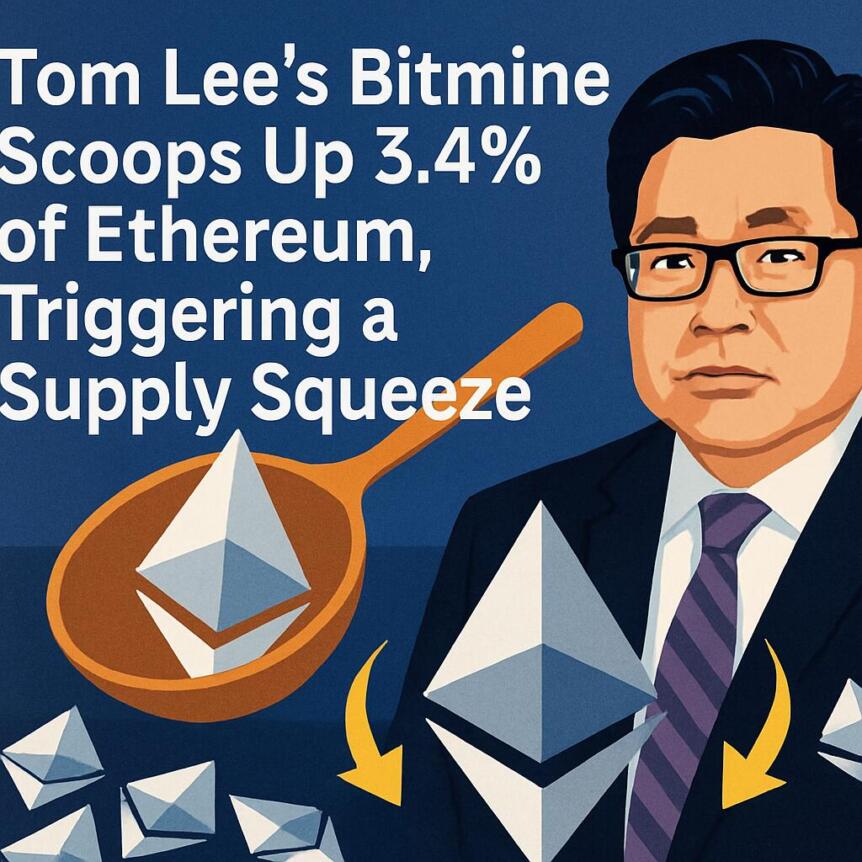
Tom Lee’s Bitmine Scoops Up 3.4% of Ethereum, Triggering a Supply Squeeze

Tom Lee’s Bitmine Scoops Up 3.4% of Ethereum, Triggering a Supply Squeeze

Bitmine Immersion now controls 3.4% of Ethereum amid shrinking exchange supply and rising institutional accumulation.
Share
Crypto Breaking News2026/01/20 16:27
Pendle introduces the sPENDLE mechanism to replace vePENDLE and introduce liquidity staking.

Pendle introduces the sPENDLE mechanism to replace vePENDLE and introduce liquidity staking.

PANews reported on January 20th that, according to an official Pendle announcement, vePENDLE will be completely replaced by the sPENDLE mechanism. sPENDLE is a
Share
PANews2026/01/20 16:38