Bitcoin Magazine DV8 Becomes First Bitcoin Treasury Company in Southeast Asia with Digital Asset License Thailand's DV8 has signed a Share Purchase Agreement toBitcoin Magazine DV8 Becomes First Bitcoin Treasury Company in Southeast Asia with Digital Asset License Thailand's DV8 has signed a Share Purchase Agreement to

DV8 Becomes First Bitcoin Treasury Company in Southeast Asia with Digital Asset License

2026/03/25 00:25
3 min read
For feedback or concerns regarding this content, please contact us at crypto.news@mexc.com

Bitcoin Magazine

DV8 Becomes First Bitcoin Treasury Company in Southeast Asia with Digital Asset License

Publicly listed DV8 (SET: DV8) has signed a Share Purchase Agreement to acquire Rakkar Digital, a licensed digital asset custodian in Thailand. 

This move represents DV8’s first direct entry into regulated digital asset operations and marks a strategic pivot toward building infrastructure that institutional investors can rely on across Asia.

Rakkar Digital, with over $700 million in assets under custody, was established as a joint venture between SCBX, the parent company of Siam Commercial Bank, and Fireblocks, a global digital asset infrastructure provider, according to a note shared with Bitcoin Magazine.  

Early backing from SCB 10X helped lay the foundation for its growth. For DV8, the company’s regulatory standing, operational framework, and trust among institutional clients made it a natural fit.

Custody lies at the heart of any institutional-grade digital asset strategy. It demands licensing, compliance, security expertise, and constant engagement with regulators. 

By acquiring Rakkar Digital, DV8 said they gained a platform already meeting those standards, giving the company a firm foothold in Asia’s evolving digital asset ecosystem.

This deal follows DV8’s September 2025 investment in Bitplanet, a Korean digital asset treasury platform. 

Taken together, these steps illustrate a consistent approach: backing regulated, resilient businesses that enhance DV8’s ability to operate across borders while meeting institutional expectations.

DV8 was originally a media company but is now transforming into a builder of regulated digital asset infrastructure, the company said. 

Bitcoin as a reserve asset

Over the last five years, Bitcoin has become a more and more popular treasury reserve asset for traditional finance companies. 

Strategy (MSTR) has become the flagship case study in the evolution of bitcoin treasury strategies in the corporate world.

Under the leadership of Michael Saylor, Strategy shifted from a traditional software business to a firm whose primary reserve asset is Bitcoin, pioneering a model where BTC sits at the heart of corporate balance sheet strategy.

Strategy uses capital markets to finance its BTC accumulation. Instead of hoarding cash or traditional securities, Strategy has consistently issued equity and convertible debt to fund Bitcoin purchases, aiming to maximize its “BTC per share” metric and align shareholder value with long‑term BTC appreciation.

This model has inspired other corporations like DV8 to consider adding bitcoin to their treasuries. At the time of writing, Bitcoin is trading slightly below $70,000 after flirting with $71,000 earlier this morning.

This post DV8 Becomes First Bitcoin Treasury Company in Southeast Asia with Digital Asset License first appeared on Bitcoin Magazine and is written by Micah Zimmerman.

Disclaimer: The articles reposted on this site are sourced from public platforms and are provided for informational purposes only. They do not necessarily reflect the views of MEXC. All rights remain with the original authors. If you believe any content infringes on third-party rights, please contact crypto.news@mexc.com for removal. MEXC makes no guarantees regarding the accuracy, completeness, or timeliness of the content and is not responsible for any actions taken based on the information provided. The content does not constitute financial, legal, or other professional advice, nor should it be considered a recommendation or endorsement by MEXC.

You May Also Like

Cashing In On University Patents Means Giving Up On Our Innovation Future
Cashing In On University Patents Means Giving Up On Our Innovation Future

The post Cashing In On University Patents Means Giving Up On Our Innovation Future appeared on BitcoinEthereumNews.com. “It’s a raid on American innovation that would deliver pennies to the Treasury while kneecapping the very engine of our economic and medical progress,” writes Pipes. Getty Images Washington is addicted to taxing success. Now, Commerce Secretary Howard Lutnick is floating a plan to skim half the patent earnings from inventions developed at universities with federal funding. It’s being sold as a way to shore up programs like Social Security. In reality, it’s a raid on American innovation that would deliver pennies to the Treasury while kneecapping the very engine of our economic and medical progress. Yes, taxpayer dollars support early-stage research. But the real payoff comes later—in the jobs created, cures discovered, and industries launched when universities and private industry turn those discoveries into real products. By comparison, the sums at stake in patent licensing are trivial. Universities collectively earn only about $3.6 billion annually in patent income—less than the federal government spends on Social Security in a single day. Even confiscating half would barely register against a $6 trillion federal budget. And yet the damage from such a policy would be anything but trivial. The true return on taxpayer investment isn’t in licensing checks sent to Washington, but in the downstream economic activity that federally supported research unleashes. Thanks to the bipartisan Bayh-Dole Act of 1980, universities and private industry have powerful incentives to translate early-stage discoveries into real-world products. Before Bayh-Dole, the government hoarded patents from federally funded research, and fewer than 5% were ever licensed. Once universities could own and license their own inventions, innovation exploded. The result has been one of the best returns on investment in government history. Since 1996, university research has added nearly $2 trillion to U.S. industrial output, supported 6.5 million jobs, and launched more than 19,000 startups. Those companies pay…
Share
BitcoinEthereumNews2025/09/18 03:26
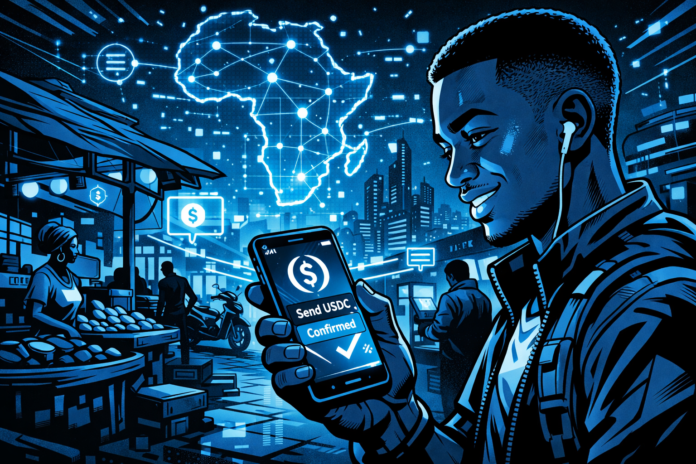
Circle Expands USDC Into Africa Through Sasai Deal, Targeting Cross-Border Payments Boom

Circle Expands USDC Into Africa Through Sasai Deal, Targeting Cross-Border Payments Boom

USDC integration into Sasai signals rising stablecoin demand for cross-border trade and FX stability in Africa. Circle Internet Group agreed to a landmark partnership
Share
LiveBitcoinNews2026/03/25 06:39
Ether Machine Files S-4 for IPO via Dynamix Merger

Ether Machine Files S-4 for IPO via Dynamix Merger

 Ether Machine files draft S-4 with the SEC, which is a significant step toward a public Ethereum-centric IPO involving a merger with Dynamix. Ether Machine has decisively moved to become a publicly traded company. As part of the planned Initial Public Offering, it submitted an initial registration statement on Form S-4, confidentially with the U.S. […] The post Ether Machine Files S-4 for IPO via Dynamix Merger appeared first on Live Bitcoin News.
Share
LiveBitcoinNews2025/09/18 12:00