Bank of Japan’s Ueda Signals Crucial Inflation Shift: Underlying Price Growth to Accelerate Moderately
BitcoinWorld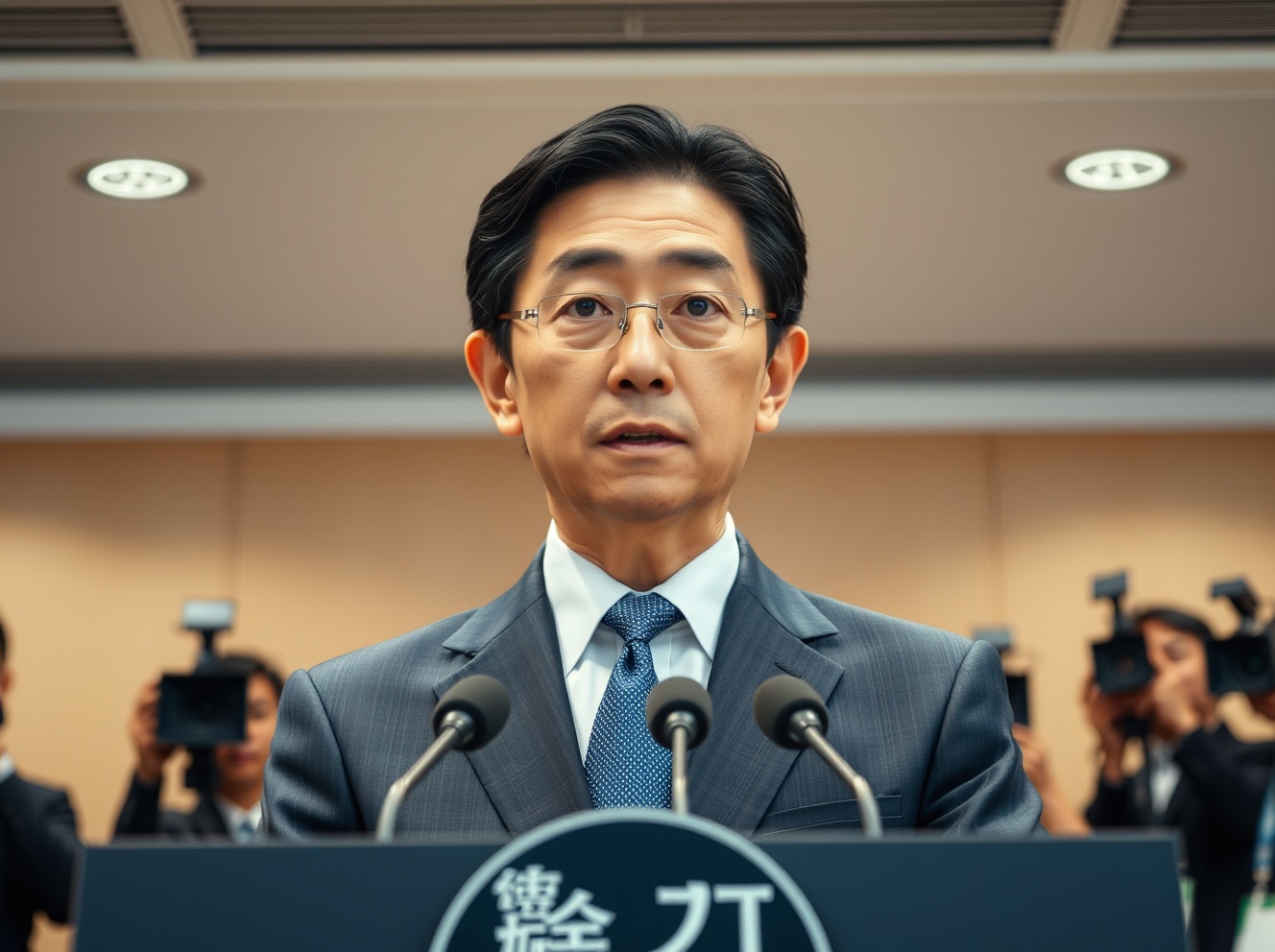
Bank of Japan’s Ueda Signals Crucial Inflation Shift: Underlying Price Growth to Accelerate Moderately
TOKYO, March 2025 – Bank of Japan Governor Kazuo Ueda delivered a pivotal message to financial markets today, stating the central bank expects Japan’s underlying inflation to accelerate moderately in the coming months. This carefully calibrated statement represents a significant development in the BoJ’s long-running battle against deflationary pressures and signals a potential turning point for the world’s third-largest economy. Ueda’s remarks come amid intense global scrutiny of Japan’s monetary policy trajectory, particularly following the BoJ’s historic exit from negative interest rates in 2024. Analysts immediately parsed his language for clues about the timing and pace of further policy normalization, a process that carries profound implications for global bond markets, currency valuations, and international trade flows.
Bank of Japan Governor Outlines Inflation Trajectory
Governor Ueda made his comments during a regularly scheduled press conference following the BoJ’s latest policy meeting. He emphasized that recent data points, particularly from the services sector and wage negotiations, support the bank’s assessment of a strengthening price trend. Importantly, Ueda distinguished between temporary cost-push factors and more durable demand-driven inflation, focusing his remarks on the latter. The BoJ’s preferred gauge, core-core inflation (which excludes both fresh food and energy), has shown persistent momentum, hovering near the bank’s 2% target for over two years. However, Ueda noted that sustainable achievement of this target requires confirmation of a virtuous cycle where rising wages fuel consumption and justify further price increases by businesses. This cycle, he suggested, is now beginning to materialize.
Several key data releases underpin the Governor’s cautiously optimistic outlook. The 2025 Shunto spring wage negotiations resulted in the highest average wage increase in over three decades. Major corporations like Toyota and Hitachi agreed to raises exceeding 5%, with these gains now spreading to small and medium-sized enterprises. Furthermore, the Services Producer Price Index has risen for 28 consecutive months, indicating broadening price pressures beyond imported goods. The following table summarizes recent critical inflation metrics monitored by the BoJ:
| Metric | Latest Reading | Trend | BoJ Assessment |
|---|---|---|---|
| Core CPI (ex-fresh food) | +2.6% | Stable | Influenced by past import costs |
| Core-Core CPI (ex-food & energy) | +2.1% | Gradual Rise | Key gauge for underlying trend |
| Services PPI | +2.3% | Steady Increase | Shows domestic demand pressure |
| Unit Labor Costs | +1.8% | Turning Positive | Supports sustainable inflation |
Global Economic Context and Policy Implications
Ueda’s statement does not occur in a vacuum. The global economic landscape in 2025 presents a complex backdrop. Major central banks, including the Federal Reserve and the European Central Bank, have paused their aggressive hiking cycles, creating divergent policy paths. Consequently, the Japanese yen has experienced significant volatility. A weaker yen, while boosting exporter profits, also imports inflation via higher costs for energy and raw materials. Ueda acknowledged this tension, stating the BoJ must navigate carefully between supporting a fragile economic recovery and preventing an inflation overshoot. Market participants now anticipate the next logical step could be a further reduction in the BoJ’s massive government bond purchases, a process dubbed ‘quantitative tightening.’ Such a move would aim to normalize a yield curve that has been artificially suppressed for years.
International institutions are closely watching Japan’s policy evolution. The International Monetary Fund, in its latest Article IV consultation, urged Japan to maintain accommodative financial conditions until inflation is firmly anchored. However, it also warned of risks from an excessively weak currency. Meanwhile, Japanese government debt remains above 250% of GDP, making the management of borrowing costs a national priority. Any sharp rise in long-term interest rates could strain public finances. Therefore, Ueda’s promise of a ‘moderate’ acceleration is a deliberate signal meant to manage expectations and avoid market disruption. His communication strategy emphasizes data dependence, giving the BoJ flexibility to adjust its pace based on incoming economic indicators.
Expert Analysis on the Path Forward
Economists and former central bank officials offer nuanced interpretations of Ueda’s guidance. Dr. Sayuri Shirai, a former BoJ Policy Board member and professor at Keio University, notes that ‘moderate acceleration’ likely implies core inflation stabilizing in a 2.0% to 2.5% range, rather than spiking higher. She highlights the critical role of household sentiment. Real wages must turn positive for consumers to sustain spending, a milestone projected for mid-2025. Conversely, analysts from major trading houses point to structural headwinds, such as Japan’s aging demographics and high corporate savings rates, which could dampen inflationary momentum. The BoJ’s own quarterly Tankan survey shows business investment plans are rising, but caution persists regarding the global economic outlook.
The timeline for potential policy action remains a subject of intense debate. Market pricing, as reflected in overnight index swaps, suggests a majority expectation for one additional rate hike in the latter half of 2025. However, the BoJ has consistently prioritized sustainable wage growth over calendar-based commitments. Key dates to watch include the release of the April 2025 CPI data (reflecting the full impact of wage hikes) and the BoJ’s Outlook Report in July. Ueda’s leadership style, often described as academic and consensus-driven, suggests any move will be thoroughly telegraphed to prevent the kind of ‘taper tantrum’ volatility seen in other markets. The ultimate goal is a smooth transition to a new monetary regime where short-term rates serve as the primary policy tool, ending the era of extraordinary balance sheet expansion.
Conclusion
Bank of Japan Governor Kazuo Ueda’s forecast for a moderate acceleration in underlying inflation marks a crucial phase in Japan’s post-deflation journey. His statement reinforces confidence that the economy is finally escaping the low-inflation trap that has constrained it for decades. However, the path remains fraught with challenges, including yen volatility, global uncertainty, and fiscal sustainability concerns. The BoJ’s patient and data-dependent approach under Ueda aims to cement a virtuous cycle of wages and prices without destabilizing financial markets. For investors, businesses, and policymakers worldwide, Japan’s delicate inflation shift represents one of the most significant macroeconomic stories of 2025, with far-reaching consequences for global capital allocation and economic stability.
FAQs
Q1: What did BoJ Governor Ueda mean by ‘underlying inflation’?
Governor Ueda was referring to core-core inflation, which excludes both volatile fresh food and energy prices. This gauge aims to capture the domestic, demand-driven price trend, stripping away the effects of temporary global commodity shocks and weather-related food price swings.
Q2: Why is the BoJ being so cautious about further policy tightening?
The BoJ is prioritizing the sustainability of inflation. After decades of deflation, the bank needs high confidence that price rises are driven by strong domestic demand and wage growth, not just temporary factors. Premature tightening could choke off the fragile economic recovery and push Japan back into deflation.
Q3: How does a weaker yen affect the BoJ’s inflation outlook?
A weaker yen increases the cost of imported goods like energy, food, and raw materials, which boosts headline inflation. While this contributes to reaching the 2% target, the BoJ views it as a cost-push factor. The bank’s goal is inflation driven by domestic demand, which a weak yen can actually undermine by reducing households’ real purchasing power.
Q4: What are the risks of inflation accelerating too quickly?
If inflation accelerates beyond the ‘moderate’ pace Ueda described, it could force the BoJ to tighten policy more aggressively than planned. This could increase borrowing costs sharply, potentially destabilizing Japan’s highly indebted government and corporate sector, and triggering volatility in global bond markets.
Q5: How does Japan’s situation compare to other major economies in 2025?
Japan is on a different trajectory. While the US Federal Reserve and European Central Bank are focused on bringing high inflation down to target, the Bank of Japan is trying to nurture inflation up to its target and keep it there sustainably. This policy divergence is a key driver of foreign exchange market movements.
This post Bank of Japan’s Ueda Signals Crucial Inflation Shift: Underlying Price Growth to Accelerate Moderately first appeared on BitcoinWorld.


You May Also Like

What Are AI Agents and Why Are They Becoming So Popular?

USD/CAD Flat Below 1.3700 as 100-Day EMA Caps Gains: Technical Outlook