

PayPal Adds Bitcoin and Ethereum to Peer-to-Peer Payments

US users can now send Bitcoin, Ethereum, and PayPal’s own stablecoin PYUSD through a new feature called “PayPal Links.”
The payment giant joins other companies pushing crypto into everyday transactions. This move makes PayPal one of the largest financial platforms to offer direct cryptocurrency transfers between users.
How PayPal Links Works
PayPal Links lets users create personalized payment links that work like sending a text message. Users enter an amount, generate a unique link, and share it through text, email, or social media. The recipient clicks the link to complete the payment.
Each link works only once and expires after a set time. This security feature prevents unauthorized use if someone accidentally shares a link.
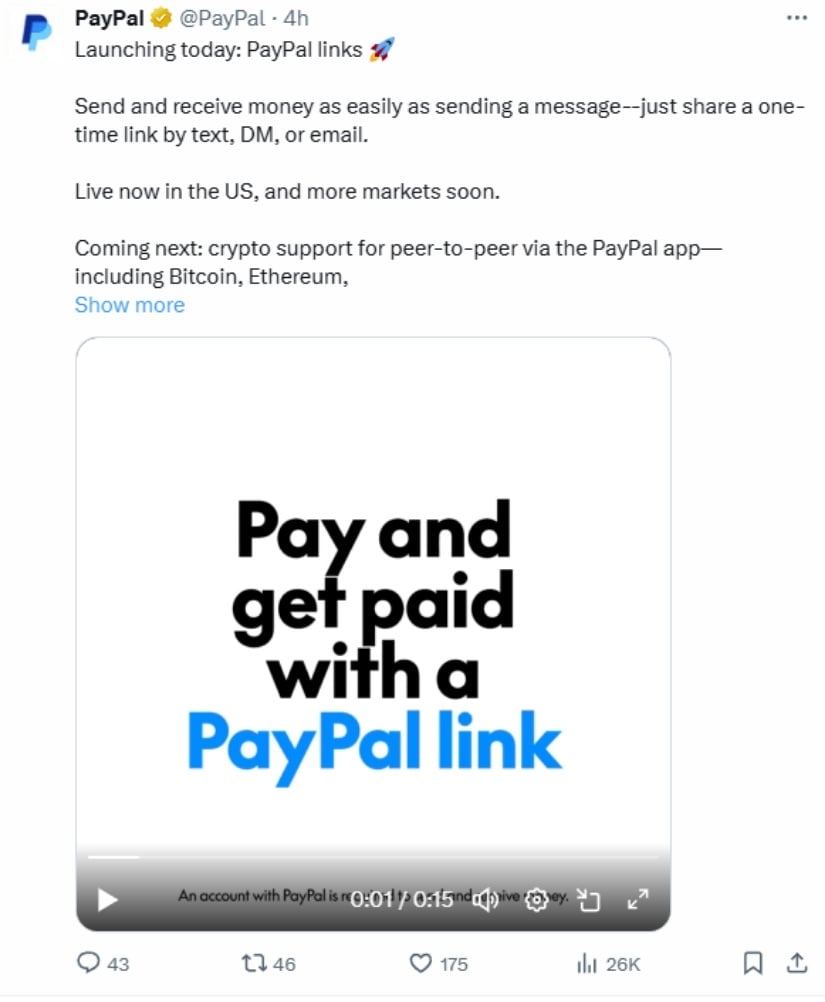
Source: @PayPal
The service launched in the US on September 15, with plans to expand to the UK, Italy, and other countries by the end of September 2025.
Cryptocurrency Integration Details
US PayPal users will soon send Bitcoin, Ethereum, and PYUSD directly through the app. The crypto feature works with PayPal, Venmo, and other digital wallets that support cryptocurrency.
Personal transfers between friends and family won’t trigger IRS tax reporting requirements. This means gifts, bill splitting, and reimbursements stay tax-free even when using crypto.
The integration builds on PayPal’s existing crypto services. In July 2025, the company launched “Pay with Crypto” for merchants, allowing businesses to accept over 100 different cryptocurrencies.
Understanding PYUSD
PayPal USD (PYUSD) is PayPal’s stablecoin that maintains a 1:1 value with the US dollar. Paxos Trust Company issues the token, and it’s backed by US dollar deposits and Treasury bonds.
PYUSD currently has a market cap of $1.34 billion, representing 0.46% of the total stablecoin market worth $289.39 billion. PayPal offers 4% annual rewards for users who hold PYUSD in their accounts.
The stablecoin operates on both Ethereum and Solana networks. PayPal initially launched PYUSD on Ethereum in August 2023, then expanded to Solana in May 2024 to reduce transaction costs.
Market Impact and Competition
PayPal’s stock rose 0.8% following the announcement. The company’s peer-to-peer payment volume grew 10% in the second quarter of 2025, showing strong user adoption.
The move puts pressure on competitors in the digital payments space. Companies like Zelle, Cash App, and Apple Cash may need to add crypto features to keep up.
According to a J.D. Power study, consumers use an average of 2.8 peer-to-peer payment brands. Zelle leads the market, while PayPal serves as the most common secondary choice, with 47% of P2P users maintaining PayPal accounts.
Business Strategy and Future Plans
This crypto integration connects to PayPal’s broader “PayPal World” initiative. The platform aims to link different digital payment systems and wallets globally.
PayPal has been expanding its crypto services throughout 2025. The company now serves over 20 million small businesses through its merchant services, offering them ways to accept cryptocurrency payments.
The payment processor charges 0.99% for crypto transactions during the first year, then 1.5% afterward. This rate significantly undercuts traditional credit card processing fees, especially for international transactions.
The Road Ahead: Crypto Goes Mainstream
PayPal’s crypto integration represents a major step toward mainstream digital currency adoption. By handling the technical complexity, PayPal makes cryptocurrency accessible to ordinary users who don’t want to become crypto experts.
The success of this feature will depend on whether users actually choose crypto over traditional payment methods. While the benefits look attractive on paper, most people still prefer familiar options like credit cards and bank transfers.
You May Also Like
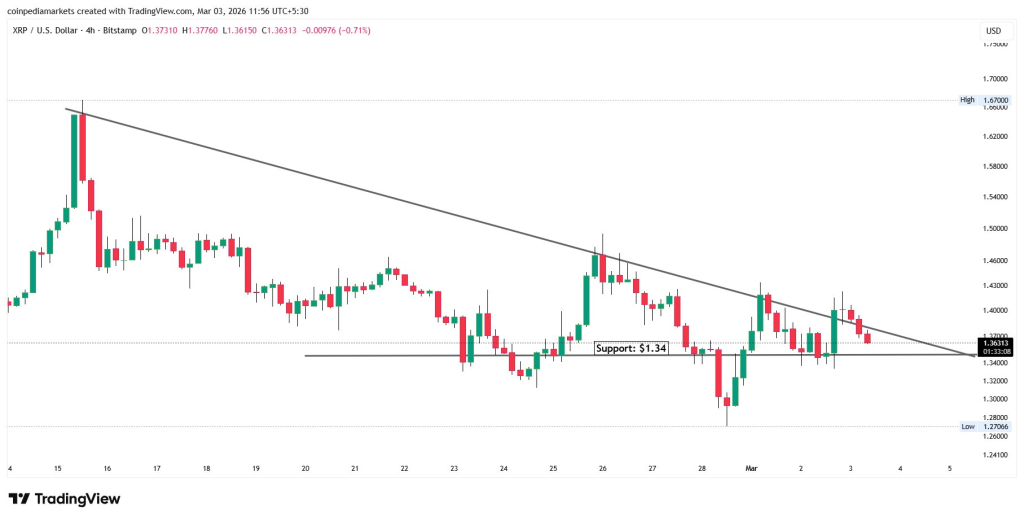
Warning Signs Flash for $XRP as $1.34 Support Gets Tested

PiDex Testnet Launch: What It Means for Pi Network and Picoin Value
