The post Monero, record reorganization: 18 blocks rewritten appeared on BitcoinEthereumNews.com. On September 14, 2025, the Monero network experienced a deep reorganization: an alternative longer chain supplanted 18 consecutive blocks, rendering 118 transactions no longer confirmed and erasing about 36 minutes of history. The episode — reported by CoinDesk and contextualized by the official documentation of GetMonero — reopens the discussion on the resilience of the ecosystem. Reorg depth: 18 blocks (a historical record for Monero). Transactions involved: 118 transactions made unconfirmed. Time window: approximately 36 minutes of history rewritten. What Happened: Timeline and Context The event began at height 3,499,659 and propagated for 18 blocks, when the nodes accepted a longer chain proposed by the mining component associated with Qubic. In this instance, the previous blocks became orphaned, reverting 118 transactions to the “unconfirmed” state. For further verification, you can consult the Monero block explorer at the indicated height. According to the data collected from public explorer logs and reports from node operators contacted for this article, the reorg was visible in various parts of the network within minutes of the publication of the alternative chain. Industry analysts note that the temporary control of over 50% of the hashrate — estimated by the community to be around 51% in the hours leading up to the event — facilitated the replacement of the blockchain history. In the previous period, Qubic – a layer‑1 project focused on AI workloads – would have concentrated over 50% of Monero’s hashrate, according to community estimates available on miningpoolstats.stream. It should be noted that the aggregation of power in a few actors is a signal to monitor. Immediate Impact on Network and Market Network: payments considered final have returned to pending and some wallets and services have increased the number of confirmations required for greater caution. Market: in the short term, the price of XMR has… The post Monero, record reorganization: 18 blocks rewritten appeared on BitcoinEthereumNews.com. On September 14, 2025, the Monero network experienced a deep reorganization: an alternative longer chain supplanted 18 consecutive blocks, rendering 118 transactions no longer confirmed and erasing about 36 minutes of history. The episode — reported by CoinDesk and contextualized by the official documentation of GetMonero — reopens the discussion on the resilience of the ecosystem. Reorg depth: 18 blocks (a historical record for Monero). Transactions involved: 118 transactions made unconfirmed. Time window: approximately 36 minutes of history rewritten. What Happened: Timeline and Context The event began at height 3,499,659 and propagated for 18 blocks, when the nodes accepted a longer chain proposed by the mining component associated with Qubic. In this instance, the previous blocks became orphaned, reverting 118 transactions to the “unconfirmed” state. For further verification, you can consult the Monero block explorer at the indicated height. According to the data collected from public explorer logs and reports from node operators contacted for this article, the reorg was visible in various parts of the network within minutes of the publication of the alternative chain. Industry analysts note that the temporary control of over 50% of the hashrate — estimated by the community to be around 51% in the hours leading up to the event — facilitated the replacement of the blockchain history. In the previous period, Qubic – a layer‑1 project focused on AI workloads – would have concentrated over 50% of Monero’s hashrate, according to community estimates available on miningpoolstats.stream. It should be noted that the aggregation of power in a few actors is a signal to monitor. Immediate Impact on Network and Market Network: payments considered final have returned to pending and some wallets and services have increased the number of confirmations required for greater caution. Market: in the short term, the price of XMR has…

Monero, record reorganization: 18 blocks rewritten

For feedback or concerns regarding this content, please contact us at crypto.news@mexc.com

On September 14, 2025, the Monero network experienced a deep reorganization: an alternative longer chain supplanted 18 consecutive blocks, rendering 118 transactions no longer confirmed and erasing about 36 minutes of history.

The episode — reported by CoinDesk and contextualized by the official documentation of GetMonero — reopens the discussion on the resilience of the ecosystem.

  • Reorg depth: 18 blocks (a historical record for Monero).
  • Transactions involved: 118 transactions made unconfirmed.
  • Time window: approximately 36 minutes of history rewritten.

What Happened: Timeline and Context

The event began at height 3,499,659 and propagated for 18 blocks, when the nodes accepted a longer chain proposed by the mining component associated with Qubic.

In this instance, the previous blocks became orphaned, reverting 118 transactions to the “unconfirmed” state. For further verification, you can consult the Monero block explorer at the indicated height.

According to the data collected from public explorer logs and reports from node operators contacted for this article, the reorg was visible in various parts of the network within minutes of the publication of the alternative chain.

Industry analysts note that the temporary control of over 50% of the hashrate — estimated by the community to be around 51% in the hours leading up to the event — facilitated the replacement of the blockchain history.

In the previous period, Qubic – a layer‑1 project focused on AI workloads – would have concentrated over 50% of Monero’s hashrate, according to community estimates available on miningpoolstats.stream. It should be noted that the aggregation of power in a few actors is a signal to monitor.

Immediate Impact on Network and Market

  • Network: payments considered final have returned to pending and some wallets and services have increased the number of confirmations required for greater caution.
  • Market: in the short term, the price of XMR has shown volatility, with a peak of around $333 and a subsequent retracement towards $307.5, as indicated by CoinGecko. This recently collected data also highlights liquidity variations.
  • Volume: the trading volume reached approximately $136 million in the last 24 hours, with an increase of 78% compared to the previous day, according to CoinGecko data.

Impact on Network Security

A deep reorg can occur when a single actor controls a significant share of computing power.

In fact, the principle “the longest chain wins” can overturn recent confirmations, temporarily undermining the operational trust of users and operators until the distribution of hashrate rebalances.

Technical Details: Why 118 Transactions Returned Unconfirmed

The Monero network nodes adopt the chain with the most work rule. When a sequence of blocks longer than the currently accepted one is proposed, the nodes switch to the new history, marking the previous blocks as orphans.

The transactions present in those blocks are taken back from the mempool and must be confirmed again, with possible variations in the order of inclusion.

That said, although the consensus rules are capable of preventing a double-spend, prolonged time windows can make certain risks more concrete.

uPoW and hashrate concentration

Qubic adopts a useful proof‑of‑work (uPoW) model where computational energy is used for “useful” tasks (such as AI). Additionally, the XMR rewards earned by miners can be converted to be reused within the Qubic ecosystem – for example, for buyback operations and token burn – as described in the official Qubic documentation and on the qubic.org website.

According to independent developers and analysts, this scheme can incentivize the concentration of hashrate in a single cluster, resulting in an increased risk of deep reorganizations if an alternative chain is published.

Operating Numbers and Methodology

  • Orphan rate in the last 720 blocks (approximately 24 hours): 213 orphan blocks have been identified, accounting for about 29.5% of the total, calculated by summing the blocks not included in the main chain, as reported by public explorer logs.
  • Composition: of these, 114 orphan blocks are attributed to known pools, while 99 come from unknown pools or individual miners.
  • Method: the data was obtained through a manual count on a 24-hour rolling window, with sampling at regular intervals and deduplication by height, using data from public Monero network explorers.

Solutions Under Discussion: DNS Checkpoints and Alternatives

An immediate proposal to mitigate the risks of extended reorgs is the introduction of DNS checkpoints: “signed” snapshots of the chain state distributed via DNS and managed by multiple maintainers, in order to reduce the effects of a deep reorganization.

However, this solution carries the risk of introducing an element of trust and a degree of centralization that could conflict with the inherently decentralized philosophy of Monero.

In parallel, the community is evaluating other corrective measures, such as adjusting difficulty parameters, adopting multi-party temporary checkpoints, limits on reordering beyond a certain depth, and improvements in block propagation to reduce the advantage of private chains. In this context, the balance between security and decentralization remains central.

Reactions of the community and traders

On GitHub, the researcher Rucknium described the temporary implementation of DNS checkpoints as “highly likely,” pending further evaluations on potential protocol changes (monero‑project/monero · issues).

Several long-standing community members have cautioned, arguing that a quick solution should not normalize reliance on trusted lists.

The journalist Vini Barbosa has expressed operational distrust towards the network at this juncture, announcing a precautionary halt to the acceptance of XMR payments “until technical clarifications are provided” on X (statement recently published on X [data to be verified]). His summary: «Personally, I do not consider the Monero network reliable at this moment».

What changes for users and services

  • Confirmations: it is likely that exchanges and merchants will require a higher number of confirmations to reduce operational risk during periods of instability.
  • Wallet: payments returned to the “unconfirmed” state should be re-included in subsequent blocks, although the order of inclusion may vary.
  • Volatility: phenomena related to consensus can amplify price movements and the spread in the markets, especially in the presence of variable liquidity.

Quick Glossary

  • Reorganization (reorg): replacement of a series of blocks with another chain that has a greater amount of cumulative work.
  • Orphan block: a valid block that, following a reorg, is not included in the main chain.
  • Hashrate: the total computational power used in mining; a high concentration can facilitate the imposition of alternative chains.
  • uPoW (useful proof‑of‑work): a scheme that allocates computing power to tasks considered “useful,” while simultaneously maintaining economic incentives for participants.
  • DNS checkpoints: snapshot of the chain distributed via DNS and signed by trusted operators to limit the scope of deep reorgs.

Conclusions

The reorganization episode, which occurred on September 14, 2025, highlights a structural tension between decentralization, economic security, and mining incentives. As long as the distribution of hashrate remains concentrated, the possibility of significant reorganizations remains tangible.

The solutions discussed – from DNS checkpoints to potential protocol modifications – aim to restore an operational finality in line with user expectations without distorting the original architecture of the project.

Updated on September 15, 2025.

Methodological Note and Sources

Source: https://en.cryptonomist.ch/2025/09/15/monero-record-reorganization-18-blocks-rewritten-and-118-transactions-made-unconfirmed/

Market Opportunity
Qubic Logo
Qubic Price(QUBIC)
$0,0000009088
$0,0000009088$0,0000009088
-2,69%
USD
Qubic (QUBIC) Live Price Chart
Disclaimer: The articles reposted on this site are sourced from public platforms and are provided for informational purposes only. They do not necessarily reflect the views of MEXC. All rights remain with the original authors. If you believe any content infringes on third-party rights, please contact crypto.news@mexc.com for removal. MEXC makes no guarantees regarding the accuracy, completeness, or timeliness of the content and is not responsible for any actions taken based on the information provided. The content does not constitute financial, legal, or other professional advice, nor should it be considered a recommendation or endorsement by MEXC.

You May Also Like

Why YouCam AI API is the Secret Weapon for E-Commerce Startups

Why YouCam AI API is the Secret Weapon for E-Commerce Startups

 The New Standard of Personalized Shopping In an era where digital engagement dictates market share, the transition from “browsing” to “buying” depends on confidence
Share
Techbullion2026/03/25 14:34
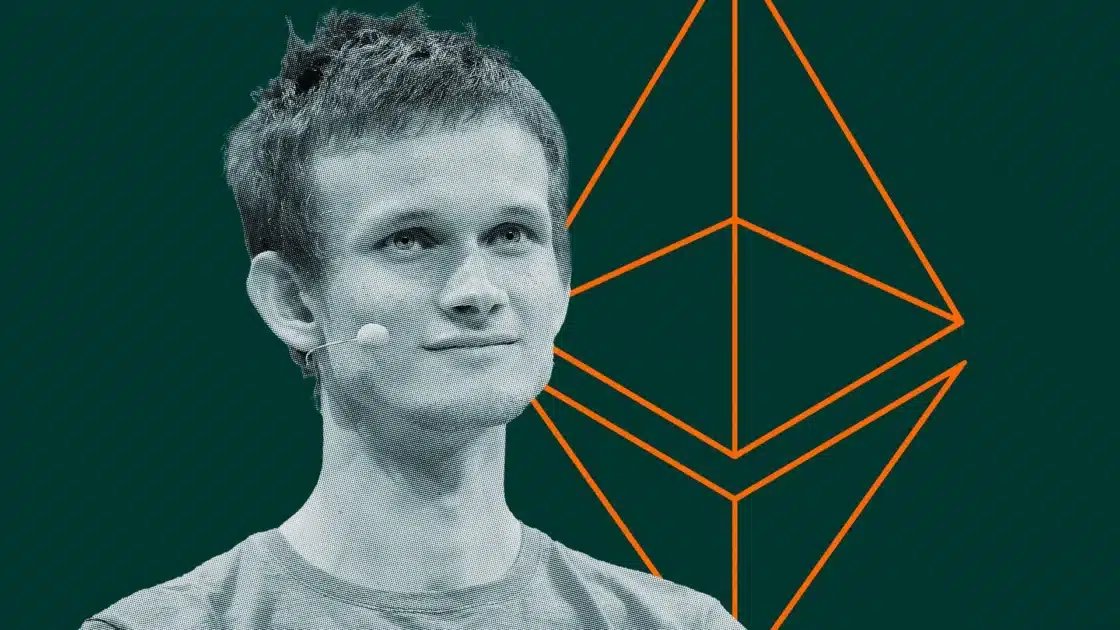
Vitalik Buterin Reveals Ethereum’s Bold Plan to Stay Quantum-Secure and Simple!

Vitalik Buterin Reveals Ethereum’s Bold Plan to Stay Quantum-Secure and Simple!

Buterin unveils Ethereum’s strategy to tackle quantum security challenges ahead. Ethereum focuses on simplifying architecture while boosting security for users. Ethereum’s market stability grows as Buterin’s roadmap gains investor confidence. Ethereum founder Vitalik Buterin has unveiled his long-term vision for the blockchain, focusing on making Ethereum quantum-secure while maintaining its simplicity for users. Buterin presented his roadmap at the Japanese Developer Conference, and splits the future of Ethereum into three phases: short-term, mid-term, and long-term. Buterin’s most ambitious goal for Ethereum is to safeguard the blockchain against the threats posed by quantum computing.  The danger of such future developments is that the future may call into question the cryptographic security of most blockchain systems, and Ethereum will be able to remain ahead thanks to more sophisticated mathematical techniques to ensure the safety and integrity of its protocols. Buterin is committed to ensuring that Ethereum evolves in a way that not only meets today’s security challenges but also prepares for the unknowns of tomorrow. Also Read: Ethereum Giant The Ether Machine Takes Major Step Toward Going Public! However, in spite of such high ambitions, Buterin insisted that Ethereum also needed to simplify its architecture. An important aspect of this vision is to remove unnecessary complexity and make Ethereum more accessible and maintainable without losing its strong security capabilities. Security and simplicity form the core of Buterin’s strategy, as they guarantee that the users of Ethereum experience both security and smooth processes. Focus on Speed and Efficiency in the Short-Term In the short term, Buterin aims to enhance Ethereum’s transaction efficiency, a crucial step toward improving scalability and reducing transaction costs. These advantages are attributed to the fact that, within the mid-term, Ethereum is planning to enhance the speed of transactions in layer-2 networks. According to Butterin, this is part of Ethereum’s expansion, particularly because there is still more need to use blockchain technology to date. The other important aspect of Ethereum’s development is the layer-2 solutions. Buterin supports an approach in which the layer-2 networks are dependent on layer-1 to perform some essential tasks like data security, proof, and censorship resistance. This will enable the layer-2 systems of Ethereum to be concerned with verifying and sequencing transactions, which will improve the overall speed and efficiency of the network. Ethereum’s Market Stability Reflects Confidence in Long-Term Strategy Ethereum’s market performance has remained solid, with the cryptocurrency holding steady above $4,000. Currently priced at $4,492.15, Ethereum has experienced a slight 0.93% increase over the last 24 hours, while its trading volume surged by 8.72%, reaching $34.14 billion. These figures point to growing investor confidence in Ethereum’s long-term vision. The crypto community remains optimistic about Ethereum’s future, with many predicting the price could rise to $5,500 by mid-October. Buterin’s clear, forward-thinking strategy continues to build trust in Ethereum as one of the most secure and scalable blockchain platforms in the market. Also Read: Whales Dump 200 Million XRP in Just 2 Weeks – Is XRP’s Price on the Verge of Collapse? The post Vitalik Buterin Reveals Ethereum’s Bold Plan to Stay Quantum-Secure and Simple! appeared first on 36Crypto.
Share
Coinstats2025/09/18 01:22
Resilient Pair Softens Below 111.00 Amidst Prevailing Bullish Momentum

Resilient Pair Softens Below 111.00 Amidst Prevailing Bullish Momentum

The post Resilient Pair Softens Below 111.00 Amidst Prevailing Bullish Momentum appeared on BitcoinEthereumNews.com. AUD/JPY Price Forecast: Resilient Pair Softens
Share
BitcoinEthereumNews2026/03/25 14:01
