The post Hot inflation and a hot war keep markets on edge appeared on BitcoinEthereumNews.com. Two things that markets absolutely hate showed up at the same timeThe post Hot inflation and a hot war keep markets on edge appeared on BitcoinEthereumNews.com. Two things that markets absolutely hate showed up at the same time

Hot inflation and a hot war keep markets on edge

For feedback or concerns regarding this content, please contact us at crypto.news@mexc.com

Two things that markets absolutely hate showed up at the same time this week: sticky inflation and military conflict near the world’s most important oil chokepoint.

The result has been predictably ugly across every asset class, with crypto’s Fear and Greed Index plunging to 11 — deep into “Extreme Fear” territory — while the S&P 500 tracks its fourth consecutive weekly decline.

The macro picture is getting worse, not better

The Federal Reserve revised its 2026 rate cut outlook down to just a single reduction, citing core inflation running at 2.7%. That’s a meaningful shift from earlier projections that had markets pricing in multiple cuts.

In English: the cheap-money cavalry that risk assets have been waiting for isn’t coming anytime soon.

Meanwhile, US military strikes in the Persian Gulf — aimed at reopening the Strait of Hormuz — have pushed Brent crude above $100 per barrel. Roughly 20% of the world’s oil supply passes through that narrow waterway, so any disruption there sends energy prices into overdrive.

Higher oil means higher input costs for basically everything. Which means inflation stays stickier for longer. Which means the Fed stays hawkish for longer. It’s a feedback loop that nobody asked for.

The S&P 500 is now off more than 5% since late February, a slide that has erased weeks of gains and put the broader equity market firmly in correction-watch mode. Four straight weekly declines is the kind of streak that starts making portfolio managers lose sleep.

For context, the last time equities posted a similar losing streak while oil was above $100 was during the 2022 inflation shock — and that didn’t end well for anyone holding risk assets.

Crypto is holding on, barely

Bitcoin hovered near $70K this week, showing a modest 1.2% gain over the last 24 hours but still nursing a 4.9% loss on the seven-day chart. The world’s largest cryptocurrency has been trading in a tightening range, caught between buyers who see it as an inflation hedge and sellers who treat it like a leveraged tech bet.

Ethereum settled around $2,100, ticking up roughly 1% in a day but following the same general pattern of short-term bounces within a broader downtrend. That price level puts ETH about 57% below its all-time high, which is the kind of distance that makes the “ultrasound money” narrative feel a bit muted.

Solana slipped below $90, a psychologically important level that it had defended for much of the past month. SOL managed a 1.7% daily bounce, but losing that $90 floor suggests momentum traders may be rotating out. XRP held near $1.44, relatively stable by its standards but hardly inspiring confidence.

The Fear and Greed Index reading of 11 is worth pausing on. Last week it was 15 — also “Extreme Fear” — meaning sentiment has actually deteriorated further despite no major crypto-specific blowups. This level of fear is typically associated with capitulation events or major market crises, not garden-variety macro headwinds.

Historically, readings below 15 on the index have preceded significant relief rallies within 30 to 60 days. But that’s a backward-looking observation, not a guarantee — especially when the macro backdrop is actively deteriorating rather than stabilizing.

One curious bright spot: artificial intelligence tokens outperformed the broader market by a wide margin, with the AI category posting a 47.5% gain over seven days. Whether that reflects genuine sector rotation or speculative froth in a fearful market is an open question. When everything else is red and one niche category is up nearly 50%, skepticism is probably warranted.

What this means for investors

Here’s the thing about the current setup: it’s a genuine two-front war for portfolio managers, both literal and figurative.

The inflation front means the Fed’s put — that implicit backstop of rate cuts to rescue falling markets — has effectively been pushed further into the future. A single projected cut in 2026 is barely distinguishable from no cuts at all, from a positioning standpoint. Traders who built strategies around a dovish pivot are now staring at a calendar that keeps getting pushed back.

The geopolitical front introduces a variable that’s almost impossible to model. Oil above $100 has historically been a headwind for risk assets, and military operations in the Persian Gulf carry escalation risk that could send crude significantly higher. If Brent were to test $120 or beyond, the inflationary impact would ripple through every corner of the economy.

For crypto specifically, the next few weeks will likely test a thesis that’s been debated for years: does Bitcoin actually function as a macro hedge, or does it trade like a high-beta version of the Nasdaq? At $70K, it’s holding up better than most altcoins, but it’s also well below the $109K all-time high set in January.

The risk-reward calculus is complicated. Extreme fear readings often mark local bottoms, but they can also mark the beginning of deeper drawdowns if macro conditions continue to worsen. The fact that fear is deepening without a crypto-native catalyst — no exchange collapse, no regulatory crackdown, no major hack — suggests this is primarily a macro-driven repricing.

Watch two things closely: oil prices and the 10-year Treasury yield. If Brent stays above $100 and yields keep climbing, the pressure on risk assets — crypto included — will intensify. Conversely, any de-escalation in the Gulf or a softer inflation print could trigger a sharp short-covering rally, given how heavily pessimism is currently priced in.

Bottom line: Markets are caught between an inflation problem that won’t quit and a geopolitical crisis that could make it worse. Crypto is trading like a risk asset in a risk-off world, and until one of those macro headwinds breaks, the path of least resistance remains lower — no matter what the Fear and Greed Index says about historical patterns.

Disclosure: This article was edited by Estefano Gomez. For more information on how we create and review content, see our Editorial Policy.

Source: https://cryptobriefing.com/inflation-war-keep-markets-on-edge/

Market Opportunity
NEAR Logo
NEAR Price(NEAR)
$1.3306
$1.3306$1.3306
-0.13%
USD
NEAR (NEAR) Live Price Chart
Disclaimer: The articles reposted on this site are sourced from public platforms and are provided for informational purposes only. They do not necessarily reflect the views of MEXC. All rights remain with the original authors. If you believe any content infringes on third-party rights, please contact crypto.news@mexc.com for removal. MEXC makes no guarantees regarding the accuracy, completeness, or timeliness of the content and is not responsible for any actions taken based on the information provided. The content does not constitute financial, legal, or other professional advice, nor should it be considered a recommendation or endorsement by MEXC.

You May Also Like

Adoption Leads Traders to Snorter Token

Adoption Leads Traders to Snorter Token

The post Adoption Leads Traders to Snorter Token appeared on BitcoinEthereumNews.com. Largest Bank in Spain Launches Crypto Service: Adoption Leads Traders to Snorter Token Sign Up for Our Newsletter! For updates and exclusive offers enter your email. Leah is a British journalist with a BA in Journalism, Media, and Communications and nearly a decade of content writing experience. Over the last four years, her focus has primarily been on Web3 technologies, driven by her genuine enthusiasm for decentralization and the latest technological advancements. She has contributed to leading crypto and NFT publications – Cointelegraph, Coinbound, Crypto News, NFT Plazas, Bitcolumnist, Techreport, and NFT Lately – which has elevated her to a senior role in crypto journalism. Whether crafting breaking news or in-depth reviews, she strives to engage her readers with the latest insights and information. Her articles often span the hottest cryptos, exchanges, and evolving regulations. As part of her ploy to attract crypto newbies into Web3, she explains even the most complex topics in an easily understandable and engaging way. Further underscoring her dynamic journalism background, she has written for various sectors, including software testing (TEST Magazine), travel (Travel Off Path), and music (Mixmag). When she’s not deep into a crypto rabbit hole, she’s probably island-hopping (with the Galapagos and Hainan being her go-to’s). Or perhaps sketching chalk pencil drawings while listening to the Pixies, her all-time favorite band. This website uses cookies. By continuing to use this website you are giving consent to cookies being used. Visit our Privacy Center or Cookie Policy. I Agree Source: https://bitcoinist.com/banco-santander-and-snorter-token-crypto-services/
Share
BitcoinEthereumNews2025/09/17 23:45
The Role of Reference Points in Achieving Equilibrium Efficiency in Fair and Socially Just Economies

The Role of Reference Points in Achieving Equilibrium Efficiency in Fair and Socially Just Economies

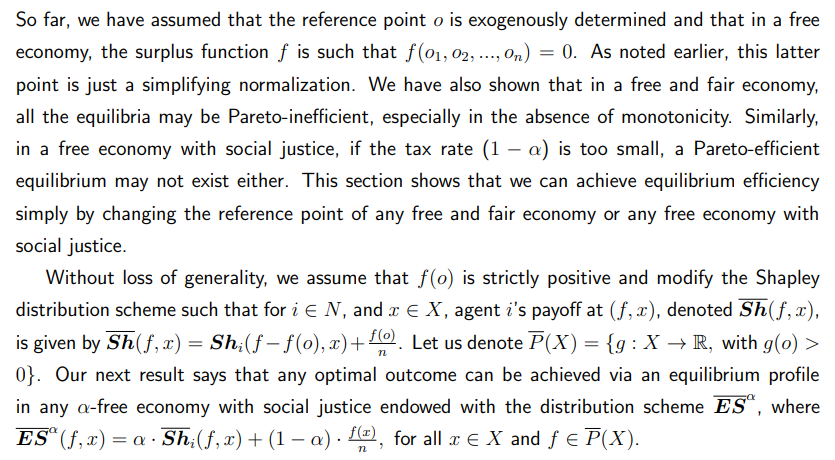
This article explores how a simple change in the reference point can achieve a Pareto-efficient equilibrium in both free and fair economies and those with social justice.
Share
Hackernoon2025/09/17 22:30
Unlocking Massive Value: Curve Finance Revenue Sharing Proposal for CRV Holders

Unlocking Massive Value: Curve Finance Revenue Sharing Proposal for CRV Holders

BitcoinWorld Unlocking Massive Value: Curve Finance Revenue Sharing Proposal for CRV Holders The dynamic world of decentralized finance (DeFi) is constantly evolving, bringing forth new opportunities and innovations. A significant development is currently unfolding at Curve Finance, a leading decentralized exchange (DEX). Its founder, Michael Egorov, has put forth an exciting proposal designed to offer a more direct path for token holders to earn revenue. This initiative, centered around a new Curve Finance revenue sharing model, aims to bolster the value for those actively participating in the protocol’s governance. What is the “Yield Basis” Proposal and How Does it Work? At the core of this forward-thinking initiative is a new protocol dubbed Yield Basis. Michael Egorov introduced this concept on the CurveDAO governance forum, outlining a mechanism to distribute sustainable profits directly to CRV holders. Specifically, it targets those who stake their CRV tokens to gain veCRV, which are essential for governance participation within the Curve ecosystem. Let’s break down the initial steps of this innovative proposal: crvUSD Issuance: Before the Yield Basis protocol goes live, $60 million in crvUSD will be issued. Strategic Fund Allocation: The funds generated from the sale of these crvUSD tokens will be strategically deployed into three distinct Bitcoin-based liquidity pools: WBTC, cbBTC, and tBTC. Pool Capping: To ensure balanced risk and diversified exposure, each of these pools will be capped at $10 million. This carefully designed structure aims to establish a robust and consistent income stream, forming the bedrock of a sustainable Curve Finance revenue sharing mechanism. Why is This Curve Finance Revenue Sharing Significant for CRV Holders? This proposal marks a pivotal moment for CRV holders, particularly those dedicated to the long-term health and governance of Curve Finance. Historically, generating revenue for token holders in the DeFi space can often be complex. The Yield Basis proposal simplifies this by offering a more direct and transparent pathway to earnings. By staking CRV for veCRV, holders are not merely engaging in governance; they are now directly positioned to benefit from the protocol’s overall success. The significance of this development is multifaceted: Direct Profit Distribution: veCRV holders are set to receive a substantial share of the profits generated by the Yield Basis protocol. Incentivized Governance: This direct financial incentive encourages more users to stake their CRV, which in turn strengthens the protocol’s decentralized governance structure. Enhanced Value Proposition: The promise of sustainable revenue sharing could significantly boost the inherent value of holding and staking CRV tokens. Ultimately, this move underscores Curve Finance’s dedication to rewarding its committed community and ensuring the long-term vitality of its ecosystem through effective Curve Finance revenue sharing. Understanding the Mechanics: Profit Distribution and Ecosystem Support The distribution model for Yield Basis has been thoughtfully crafted to strike a balance between rewarding veCRV holders and supporting the wider Curve ecosystem. Under the terms of the proposal, a substantial portion of the value generated by Yield Basis will flow back to those who contribute to the protocol’s governance. Returns for veCRV Holders: A significant share, specifically between 35% and 65% of the value generated by Yield Basis, will be distributed to veCRV holders. This flexible range allows for dynamic adjustments based on market conditions and the protocol’s performance. Ecosystem Reserve: Crucially, 25% of the Yield Basis tokens will be reserved exclusively for the Curve ecosystem. This allocation can be utilized for various strategic purposes, such as funding ongoing development, issuing grants, or further incentivizing liquidity providers. This ensures the continuous growth and innovation of the platform. The proposal is currently undergoing a democratic vote on the CurveDAO governance forum, giving the community a direct voice in shaping the future of Curve Finance revenue sharing. The voting period is scheduled to conclude on September 24th. What’s Next for Curve Finance and CRV Holders? The proposed Yield Basis protocol represents a pioneering approach to sustainable revenue generation and community incentivization within the DeFi landscape. If approved by the community, this Curve Finance revenue sharing model has the potential to establish a new benchmark for how decentralized exchanges reward their most dedicated participants. It aims to foster a more robust and engaged community by directly linking governance participation with tangible financial benefits. This strategic move by Michael Egorov and the Curve Finance team highlights a strong commitment to innovation and strengthening the decentralized nature of the protocol. For CRV holders, a thorough understanding of this proposal is crucial for making informed decisions regarding their staking strategies and overall engagement with one of DeFi’s foundational platforms. FAQs about Curve Finance Revenue Sharing Q1: What is the main goal of the Yield Basis proposal? A1: The primary goal is to establish a more direct and sustainable way for CRV token holders who stake their tokens (receiving veCRV) to earn revenue from the Curve Finance protocol. Q2: How will funds be generated for the Yield Basis protocol? A2: Initially, $60 million in crvUSD will be issued and sold. The funds from this sale will then be allocated to three Bitcoin-based pools (WBTC, cbBTC, and tBTC), with each pool capped at $10 million, to generate profits. Q3: Who benefits from the Yield Basis revenue sharing? A3: The proposal states that between 35% and 65% of the value generated by Yield Basis will be returned to veCRV holders, who are CRV stakers participating in governance. Q4: What is the purpose of the 25% reserve for the Curve ecosystem? A4: This 25% reserve of Yield Basis tokens is intended to support the broader Curve ecosystem, potentially funding development, grants, or other initiatives that contribute to the platform’s growth and sustainability. Q5: When is the vote on the Yield Basis proposal? A5: A vote on the proposal is currently underway on the CurveDAO governance forum and is scheduled to run until September 24th. If you found this article insightful and valuable, please consider sharing it with your friends, colleagues, and followers on social media! Your support helps us continue to deliver important DeFi insights and analysis to a wider audience. To learn more about the latest DeFi market trends, explore our article on key developments shaping decentralized finance institutional adoption. This post Unlocking Massive Value: Curve Finance Revenue Sharing Proposal for CRV Holders first appeared on BitcoinWorld.
Share
Coinstats2025/09/18 00:35