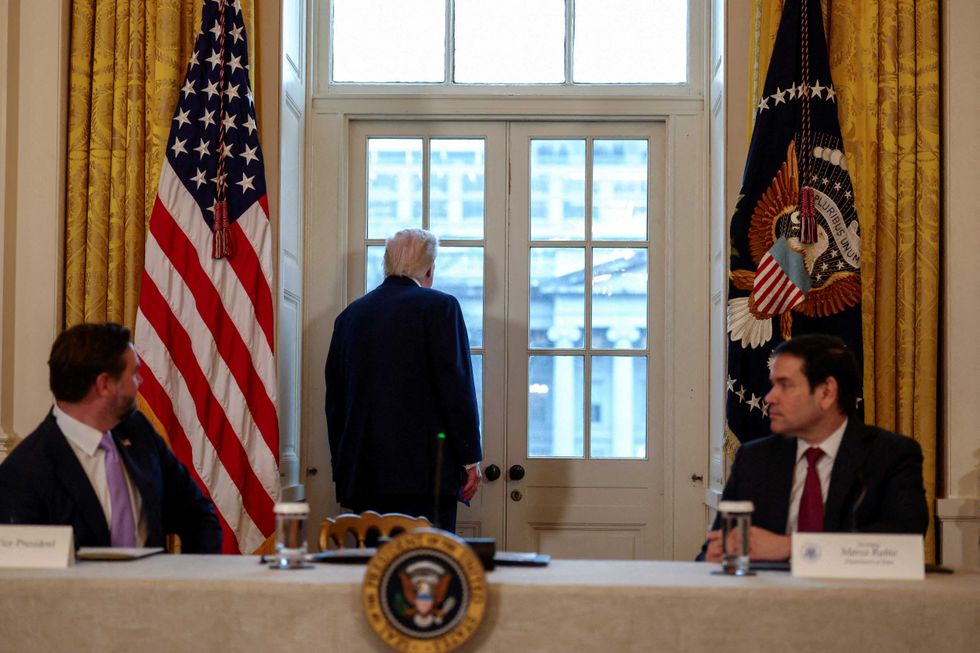
The SEC has clarified its position on how crypto assets should be classified. For brokers, that clarity comes with a new layer of responsibility. SEC Chairman PaulThe SEC has clarified its position on how crypto assets should be classified. For brokers, that clarity comes with a new layer of responsibility. SEC Chairman Paul

SEC Clarifies Crypto Rules, Shifting Responsibility to Brokers

2026/03/18 18:17
3 min read
For feedback or concerns regarding this content, please contact us at crypto.news@mexc.com

The SEC has clarified its position on how crypto assets should be classified. For brokers, that clarity comes with a new layer of responsibility.

SEC Chairman Paul Atkins presented the long-awaited token taxonomy, developed in coordination with the CFTC. The new rules confirm that tokens meeting the definition of investment contracts remain subject to securities regulation, while other categories, such as payment stablecoins, digital commodities, and collectibles, fall outside securities rules.

For much of the brokerage industry, this framework defines where brokers can participate without triggering full securities rules. But the guidance also shifts how risk is managed.

From Legal Uncertainty to Operational Responsibility

For years, the main risk for brokers was unpredictability. A token could be listed and later reclassified, exposing firms to enforcement action.

That risk has now moved into day-to-day operations. The SEC made clear that a token’s status can change depending on how it is marketed and used.

An asset initially treated as a non-security may fall under securities rules if it is presented as part of an investment offering with an expectation of profit.

  • Discord Investor Loses $18M to Fake Fund Manager's Double-Digit Return Claims
  • SEC Opens Door to Tokenized Securities, Hester Peirce Says Regulator Ready to Talk
  • Russian Citizen Accused of $31 Million Multi-Year US Brokerage Account Fraud

This means classification is no longer fixed. A token’s regulatory status can evolve as its ecosystem develops or as its positioning changes. In practice, this turns classification into a continuous process rather than a one-time listing decision.

Brokers will need to monitor how assets are used and be able to explain their classification if regulators question it.

Safe Harbor Raises the Stakes

SEC Chairman Paul Atkins

The proposed four-year “safe harbor” for crypto startups adds another layer. The idea is to allow projects to launch and raise capital under lighter requirements for a defined period, provided they meet certain conditions. If implemented, this could increase the volume of new token issuance.

As Atkins framed it: “Such a safe harbor would provide crypto innovators bespoke pathways to raise capital in the US while providing appropriate investor protections.”

For brokers, that means more assets entering the market at an earlier stage, when classification is less settled. Participation in such offerings may also require closer tracking of how projects evolve over time.

If a token later meets the definition of a security, earlier assumptions may come under review.

A Shift in Where Risk Sits

The SEC’s approach gives the market more structure. It also changes where decisions are made. Previously, much of the uncertainty sat with regulators. Now, more of it sits with market participants.

Brokers will have to move from reacting to regulatory action toward making and defending classification decisions in real time. The rules are clearer. The margin for error may be narrower.


Market Opportunity
Solayer Logo
Solayer Price(LAYER)
$0.08298
$0.08298$0.08298
+0.16%
USD
Solayer (LAYER) Live Price Chart
Disclaimer: The articles reposted on this site are sourced from public platforms and are provided for informational purposes only. They do not necessarily reflect the views of MEXC. All rights remain with the original authors. If you believe any content infringes on third-party rights, please contact crypto.news@mexc.com for removal. MEXC makes no guarantees regarding the accuracy, completeness, or timeliness of the content and is not responsible for any actions taken based on the information provided. The content does not constitute financial, legal, or other professional advice, nor should it be considered a recommendation or endorsement by MEXC.

You May Also Like

SEC and CFTC Introduce Crypto Classification Framework

SEC and CFTC Introduce Crypto Classification Framework

The post SEC and CFTC Introduce Crypto Classification Framework appeared on BitcoinEthereumNews.com. SEC and CFTC issued a framework that identified various digital
Share
BitcoinEthereumNews2026/03/19 13:30
NYSE, Nasdaq, Cboe Align Crypto ETF Options With Liquidity Driven Limits

NYSE, Nasdaq, Cboe Align Crypto ETF Options With Liquidity Driven Limits

The post NYSE, Nasdaq, Cboe Align Crypto ETF Options With Liquidity Driven Limits appeared on BitcoinEthereumNews.com. Crypto ETF options are rapidly being folded
Share
BitcoinEthereumNews2026/03/19 12:47
Headwind Helps Best Wallet Token

Headwind Helps Best Wallet Token

The post Headwind Helps Best Wallet Token appeared on BitcoinEthereumNews.com. Google has announced the launch of a new open-source protocol called Agent Payments Protocol (AP2) in partnership with Coinbase, the Ethereum Foundation, and 60 other organizations. This allows AI agents to make payments on behalf of users using various methods such as real-time bank transfers, credit and debit cards, and, most importantly, stablecoins. Let’s explore in detail what this could mean for the broader cryptocurrency markets, and also highlight a presale crypto (Best Wallet Token) that could explode as a result of this development. Google’s Push for Stablecoins Agent Payments Protocol (AP2) uses digital contracts known as ‘Intent Mandates’ and ‘Verifiable Credentials’ to ensure that AI agents undertake only those payments authorized by the user. Mandates, by the way, are cryptographically signed, tamper-proof digital contracts that act as verifiable proof of a user’s instruction. For example, let’s say you instruct an AI agent to never spend more than $200 in a single transaction. This instruction is written into an Intent Mandate, which serves as a digital contract. Now, whenever the AI agent tries to make a payment, it must present this mandate as proof of authorization, which will then be verified via the AP2 protocol. Alongside this, Google has also launched the A2A x402 extension to accelerate support for the Web3 ecosystem. This production-ready solution enables agent-based crypto payments and will help reshape the growth of cryptocurrency integration within the AP2 protocol. Google’s inclusion of stablecoins in AP2 is a massive vote of confidence in dollar-pegged cryptocurrencies and a huge step toward making them a mainstream payment option. This widens stablecoin usage beyond trading and speculation, positioning them at the center of the consumption economy. The recent enactment of the GENIUS Act in the U.S. gives stablecoins more structure and legal support. Imagine paying for things like data crawls, per-task…
Share
BitcoinEthereumNews2025/09/18 01:27