

S&P 500 Analysis: Navigating the Choppy Waters of Oil and Credit Volatility – Deutsche Bank
BitcoinWorld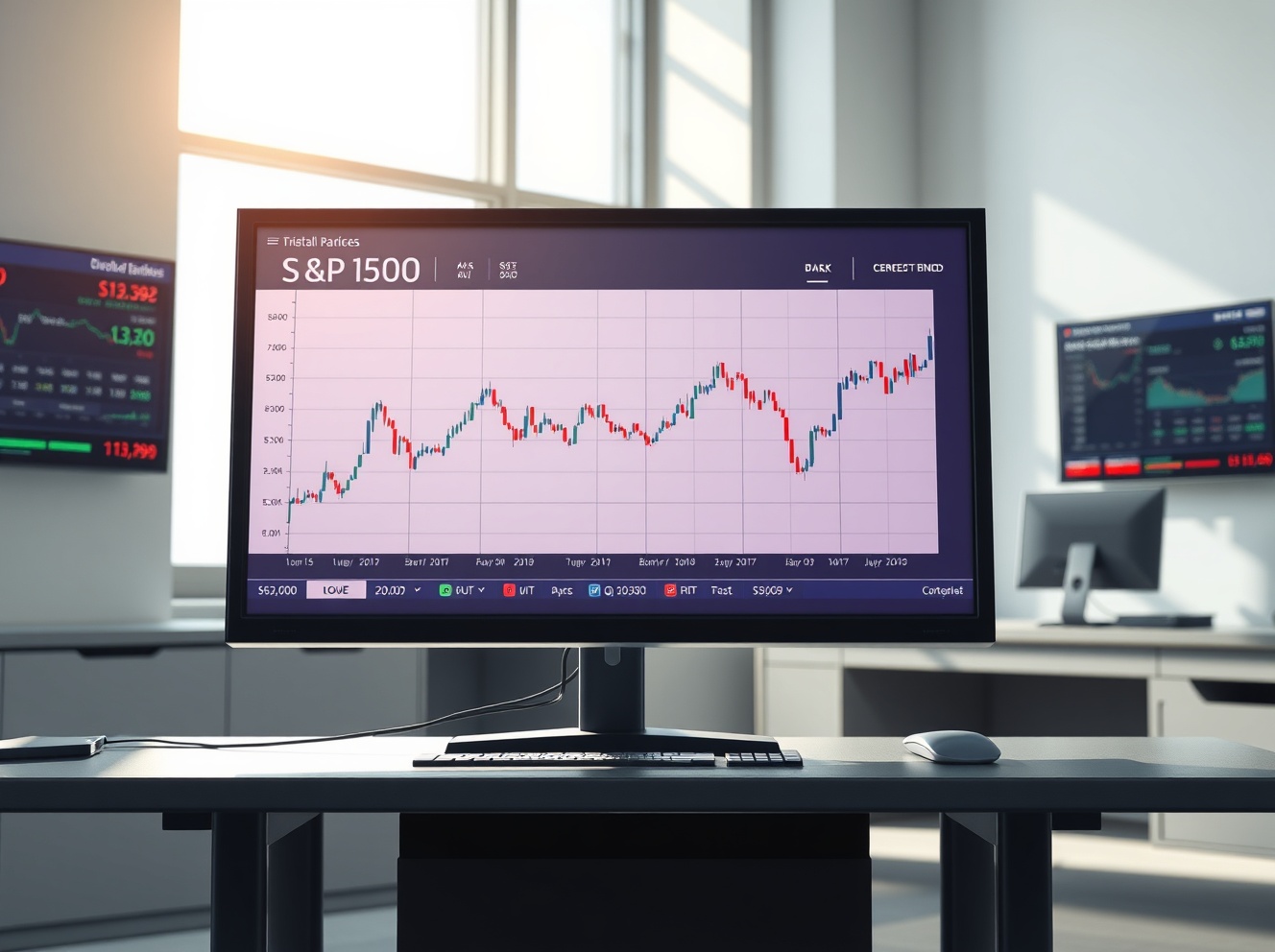
S&P 500 Analysis: Navigating the Choppy Waters of Oil and Credit Volatility – Deutsche Bank
NEW YORK, March 2025 – The S&P 500 demonstrates remarkable resilience despite facing significant headwinds from volatile energy markets and tightening credit conditions, according to a recent analysis from Deutsche Bank. This flagship U.S. equity index continues to attract investor attention as it navigates a complex macroeconomic landscape. Consequently, market participants closely monitor these dual pressures for clues about future direction.
S&P 500 Performance Amid Conflicting Forces
Deutsche Bank’s research highlights a market characterized by underlying strength punctuated by sharp, news-driven movements. The S&P 500 has maintained its key technical levels, suggesting institutional support. However, daily price action reveals increased sensitivity to external shocks. For instance, geopolitical events affecting oil supply chains immediately translate into equity market volatility. Similarly, announcements from the Federal Reserve or corporate debt issuers swiftly impact investor sentiment.
This environment creates distinct challenges for portfolio managers. They must balance long-term growth prospects against short-term commodity and financing risks. Therefore, a nuanced understanding of sectoral performance becomes critical. The energy and financial sectors within the index often act as direct conduits for these pressures, while technology and consumer staples may demonstrate more defensive characteristics.
The Oil Price Equation and Equity Correlations
Fluctuating crude oil prices represent a primary source of market choppiness. Historically, the relationship between oil and equities has been complex and non-linear. Recently, this dynamic has intensified. Rising oil prices can signal stronger global demand, supporting cyclical stocks. Conversely, they can also act as a tax on consumers and increase input costs for corporations, thereby squeezing margins.
Deutsche Bank’s Energy Market Assessment
Analysts point to several concurrent factors driving oil market volatility. These include OPEC+ production decisions, inventory data from the U.S. Energy Information Administration, and shifting demand forecasts from the International Energy Agency. Each data point triggers reassessments of inflation and growth outlooks, which directly feed into S&P 500 valuations. The bank’s models track the correlation between West Texas Intermediate (WTI) crude and S&P 500 sector returns, revealing heightened sensitivity in industries like industrials, transportation, and consumer discretionary goods.
Key Oil Market Drivers:
- Geopolitical Supply Risks: Tensions in key production regions disrupt supply chains.
- Strategic Reserve Policies: Government releases or replenishments of reserves influence price floors and ceilings.
- Transition Dynamics: The pace of investment in renewable energy versus traditional fossil fuels creates long-term uncertainty.
Credit Market Conditions and Corporate Health
Parallel to energy concerns, developments in credit markets significantly influence equity performance. Deutsche Bank emphasizes the critical role of corporate borrowing costs and bond market liquidity. Wider credit spreads, which indicate higher perceived risk for corporate borrowers, often precede equity market pullbacks. Tightening financial conditions can dampen earnings growth expectations for S&P 500 constituents, particularly those with high debt levels or near-term refinancing needs.
The health of the credit market serves as a barometer for overall economic confidence. Investment-grade and high-yield bond yields are monitored as closely as equity prices by institutional investors. Recent volatility in Treasury yields has further complicated this landscape, forcing constant recalibration of equity risk premiums. The table below summarizes the transmission channels from credit to equities:
| Credit Market Signal | Potential Impact on S&P 500 |
|---|---|
| Rising Investment-Grade Bond Yields | Increased discount rates lower equity valuations; pressure on debt-heavy firms. |
| Widening High-Yield Spreads | Heightened risk aversion; sell-off in cyclical and lower-quality stocks. |
| Declining New Issuance Volume | Reduced capital for buybacks and M&A, traditional supports for equity prices. |
| Tightening Bank Lending Standards | Potential slowdown in corporate investment and hiring, affecting earnings forecasts. |
Expert Analysis on Financial Stability
Deutsche Bank strategists reference data from the Federal Reserve’s Senior Loan Officer Opinion Survey and corporate default rates. Their analysis suggests that while the system remains robust, pockets of stress warrant vigilance. They note that market liquidity, though sufficient under normal conditions, can evaporate quickly during stress events, exacerbating equity price moves. This interplay between credit availability and stock market stability forms a core part of their resilient-but-choppy thesis for the S&P 500.
Sectoral Divergence Within the Index
Not all components of the S&P 500 respond identically to these forces. Deutsche Bank’s report details a clear sectoral divergence. Energy companies may benefit from higher oil prices, boosting their earnings and share prices. Conversely, airlines and transportation firms face severe cost pressures from the same trend. Financials are directly exposed to credit market dynamics, with their profits tied to lending margins and trading activity.
This divergence creates both risk and opportunity. Active managers seek to overweight resilient sectors while underweighting vulnerable ones. However, the rapid shift in news flow makes timing these rotations exceptionally difficult. Therefore, many investors maintain a balanced, diversified approach anchored by the broad index, accepting choppiness as the cost of participation in a resilient long-term uptrend.
Historical Context and Forward Outlook
Placing current conditions in historical context provides valuable perspective. Periods of similar oil and credit volatility, such as the 2015-2016 commodity slump or the 2018 credit tightening, offer case studies. In those instances, the S&P 500 ultimately continued its advance after volatile consolidations, supported by earnings growth and technological innovation. Deutsche Bank’s analysis suggests a similar pattern may be unfolding, where intermittent choppiness does not derail the primary trend.
The forward outlook hinges on the evolution of core macroeconomic variables. Key watchpoints include the trajectory of inflation, the Federal Reserve’s policy path, and global demand indicators from major economies like China and the Eurozone. Market participants will scrutinize quarterly earnings reports for mentions of oil-related cost pressures and financing challenges, using them to gauge the real-world impact of these financial market signals.
Conclusion
Deutsche Bank’s assessment paints a picture of an S&P 500 index exhibiting fundamental resilience while navigating a turbulent path shaped by oil prices and credit news. The index’s ability to absorb these shocks underscores the depth and diversity of the U.S. corporate landscape. For investors, this environment demands a focus on quality, diversification, and a long-term horizon. While daily volatility may persist, the underlying structural strengths of the S&P 500 constituents provide a foundation for cautious optimism. Monitoring the intricate balance between energy costs and financial conditions remains paramount for understanding the index’s next major move.
FAQs
Q1: What does Deutsche Bank mean by the S&P 500 being “resilient but choppy”?
The phrase describes an index that maintains its core upward or stable trend (resilience) but experiences sharp, short-term fluctuations (choppiness) driven by external news, particularly from oil and credit markets.
Q2: How do oil prices directly affect the S&P 500?
Oil prices act as a dual-edged sword. They can boost profits for energy sector companies but increase costs for transportation, manufacturing, and consumer-facing businesses, affecting their earnings and, consequently, their stock prices within the index.
Q3: Why are credit markets so important for stock investors?
Credit markets determine the cost of borrowing for corporations. Tighter credit or higher interest rates can reduce corporate profits, limit share buybacks, and slow economic growth—all factors that negatively weigh on equity valuations in the S&P 500.
Q4: Which S&P 500 sectors are most sensitive to these issues?
The Energy, Financials, Industrials, and Consumer Discretionary sectors typically show the highest sensitivity to oil price changes and credit condition shifts, while Utilities, Healthcare, and Consumer Staples are often more defensive.
Q5: What should an investor monitor based on this analysis?
Investors should watch key data points like weekly U.S. crude oil inventories, OPEC+ meeting outcomes, corporate bond yield spreads (especially high-yield), and Federal Reserve communications regarding interest rates and financial stability.
This post S&P 500 Analysis: Navigating the Choppy Waters of Oil and Credit Volatility – Deutsche Bank first appeared on BitcoinWorld.


You May Also Like

Why liquidity fragmentation became one of crypto’s biggest trading problems

Philippine Supreme Court junks bid to block transfer of senator to ICC

Shiba Inu Price Prediction Weakens as AI Token Sector Surges 30% to $19B While Pepeto SHIB and TAO Take Different Paths



