Original author: Geek Original translation: Luffy, Foresight News I wouldn't be surprised if we've reached the end of the InfoFi era, or are approaching it. Since the rise of InfoFi, many people have made considerable profits from it, some have accumulated 5 figures, and some have even made 6 figures. But now, there are some signals that deserve our high attention. Threshold rule changes Strictly speaking, I don’t think this upgrade of Kaito is a completely bad thing. It may effectively prevent a large number of accounts from using AI to generate low-quality content to “brush up” the volume, while improving the quality of the content. However, after the upgrade, not only small accounts were affected, but many large accounts were also not spared. This led to a large number of users who relied on Kaito to choose to leave, because after the upgrade, they had almost no chance of making money through the platform. In response to this, some project owners have chosen to remove the threshold to attract small trumpeters to join. This just shows that in most cases, the small trumpet group is crucial. My opinion is that Kaito seems confused about the direction of this upgrade, and many project parties clearly don’t like this “threshold restriction.” However, it is undeniable that Kaito has performed quite well in the past few months. The token distribution plan is poor For content creators (yappers), today’s typical 0.5%-1% token distribution ratio is far from enough, as these tokens are often valued very low when they are launched. In the early days, some accounts could earn 4-5 figures through 1-2 months of promotional activities; but now, even if they participate in 3-6 months of activities, they can only earn 3-4 figures, which makes many people feel discouraged. Even top accounts, even if they produce high-quality content, find it difficult to earn substantial four-digit income. Why is this bad news for creators who rely on InfoFi? Before InfoFi's rise, many creators earned a healthy income by promoting their content as brand ambassadors or influencers. However, the compensation offered by projects on Kaito now simply cannot compare to external partnerships. Given this fact, it's no surprise that more and more creators are choosing to leave the InfoFi platform. Capital Launchpad’s dominance is evident On July 22, Kaito's "Capital Launchpad" was officially launched. The first project to be launched was Espresso, and more projects subsequently joined. This is undoubtedly a great product for Kaito, but I do have a few concerns: None of the projects that went through Kaito’s initial coin offering have yet been listed on the public market; None of these projects have announced a launch date; Most projects have overvalued valuations and token unlocking plans that are not investor-friendly. My additional perspective: Kaito was originally built as a platform specifically for InfoFi, and later decided to add additional platform features (such as Launchpad), which is a great initiative in itself. However, recently, more and more projects have chosen to join the "Capital Launchpad" rather than participate in the "Creator Leaderboard." For an InfoFi platform, this trend is clearly not optimistic. However, this is just an obvious phenomenon that I have observed, and it seems that not many people question it. Project owners prefer to work directly with KOLs rather than through the Kaito platform. It is clear that the project parties are no longer so keen to participate in InfoFi cooperation. Recently, Zachxbt published a Google Sheet listing a number of accounts that received compensation from a project. I mention this not because I’m surprised, but because the amounts paid are quite substantial, especially compared to the projects on Kaito’s “Creator Leaderboard.” I believe this has made many people realize that there are many ways to make money besides InfoFi. Since human nature is to "find ways to make more money," I believe this poses direct competition to Kaito.Original author: Geek Original translation: Luffy, Foresight News I wouldn't be surprised if we've reached the end of the InfoFi era, or are approaching it. Since the rise of InfoFi, many people have made considerable profits from it, some have accumulated 5 figures, and some have even made 6 figures. But now, there are some signals that deserve our high attention. Threshold rule changes Strictly speaking, I don’t think this upgrade of Kaito is a completely bad thing. It may effectively prevent a large number of accounts from using AI to generate low-quality content to “brush up” the volume, while improving the quality of the content. However, after the upgrade, not only small accounts were affected, but many large accounts were also not spared. This led to a large number of users who relied on Kaito to choose to leave, because after the upgrade, they had almost no chance of making money through the platform. In response to this, some project owners have chosen to remove the threshold to attract small trumpeters to join. This just shows that in most cases, the small trumpet group is crucial. My opinion is that Kaito seems confused about the direction of this upgrade, and many project parties clearly don’t like this “threshold restriction.” However, it is undeniable that Kaito has performed quite well in the past few months. The token distribution plan is poor For content creators (yappers), today’s typical 0.5%-1% token distribution ratio is far from enough, as these tokens are often valued very low when they are launched. In the early days, some accounts could earn 4-5 figures through 1-2 months of promotional activities; but now, even if they participate in 3-6 months of activities, they can only earn 3-4 figures, which makes many people feel discouraged. Even top accounts, even if they produce high-quality content, find it difficult to earn substantial four-digit income. Why is this bad news for creators who rely on InfoFi? Before InfoFi's rise, many creators earned a healthy income by promoting their content as brand ambassadors or influencers. However, the compensation offered by projects on Kaito now simply cannot compare to external partnerships. Given this fact, it's no surprise that more and more creators are choosing to leave the InfoFi platform. Capital Launchpad’s dominance is evident On July 22, Kaito's "Capital Launchpad" was officially launched. The first project to be launched was Espresso, and more projects subsequently joined. This is undoubtedly a great product for Kaito, but I do have a few concerns: None of the projects that went through Kaito’s initial coin offering have yet been listed on the public market; None of these projects have announced a launch date; Most projects have overvalued valuations and token unlocking plans that are not investor-friendly. My additional perspective: Kaito was originally built as a platform specifically for InfoFi, and later decided to add additional platform features (such as Launchpad), which is a great initiative in itself. However, recently, more and more projects have chosen to join the "Capital Launchpad" rather than participate in the "Creator Leaderboard." For an InfoFi platform, this trend is clearly not optimistic. However, this is just an obvious phenomenon that I have observed, and it seems that not many people question it. Project owners prefer to work directly with KOLs rather than through the Kaito platform. It is clear that the project parties are no longer so keen to participate in InfoFi cooperation. Recently, Zachxbt published a Google Sheet listing a number of accounts that received compensation from a project. I mention this not because I’m surprised, but because the amounts paid are quite substantial, especially compared to the projects on Kaito’s “Creator Leaderboard.” I believe this has made many people realize that there are many ways to make money besides InfoFi. Since human nature is to "find ways to make more money," I believe this poses direct competition to Kaito.

InfoFi faces a cold reception: regulatory upgrades, shrinking revenue, and platform transformation dilemmas

2025/09/09 08:00
4 min read

Original author: Geek

Original translation: Luffy, Foresight News

I wouldn't be surprised if we've reached the end of the InfoFi era, or are approaching it.

Since the rise of InfoFi, many people have made considerable profits from it, some have accumulated 5 figures, and some have even made 6 figures. But now, there are some signals that deserve our high attention.

Threshold rule changes

Strictly speaking, I don’t think this upgrade of Kaito is a completely bad thing. It may effectively prevent a large number of accounts from using AI to generate low-quality content to “brush up” the volume, while improving the quality of the content.

However, after the upgrade, not only small accounts were affected, but many large accounts were also not spared. This led to a large number of users who relied on Kaito to choose to leave, because after the upgrade, they had almost no chance of making money through the platform.
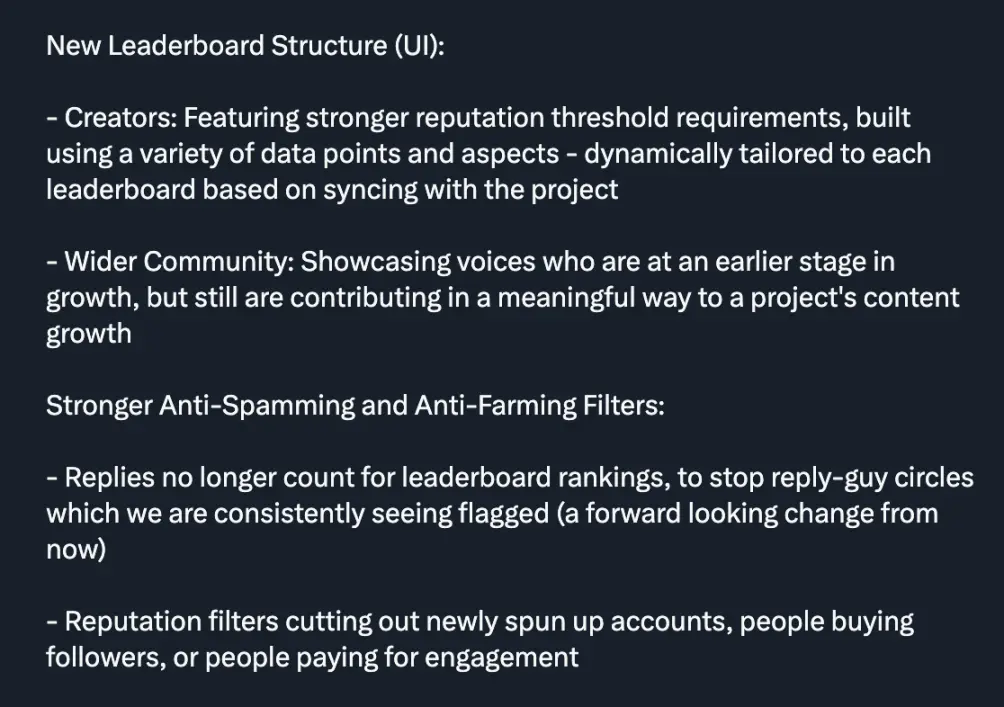
In response to this, some project owners have chosen to remove the threshold to attract small trumpeters to join. This just shows that in most cases, the small trumpet group is crucial.

My opinion is that Kaito seems confused about the direction of this upgrade, and many project parties clearly don’t like this “threshold restriction.” However, it is undeniable that Kaito has performed quite well in the past few months.

The token distribution plan is poor

For content creators (yappers), today’s typical 0.5%-1% token distribution ratio is far from enough, as these tokens are often valued very low when they are launched.

In the early days, some accounts could earn 4-5 figures through 1-2 months of promotional activities; but now, even if they participate in 3-6 months of activities, they can only earn 3-4 figures, which makes many people feel discouraged.

Even top accounts, even if they produce high-quality content, find it difficult to earn substantial four-digit income.

Why is this bad news for creators who rely on InfoFi? Before InfoFi's rise, many creators earned a healthy income by promoting their content as brand ambassadors or influencers. However, the compensation offered by projects on Kaito now simply cannot compare to external partnerships. Given this fact, it's no surprise that more and more creators are choosing to leave the InfoFi platform.

Capital Launchpad’s dominance is evident

On July 22, Kaito's "Capital Launchpad" was officially launched. The first project to be launched was Espresso, and more projects subsequently joined.

This is undoubtedly a great product for Kaito, but I do have a few concerns:

  • None of the projects that went through Kaito’s initial coin offering have yet been listed on the public market;
  • None of these projects have announced a launch date;
  • Most projects have overvalued valuations and token unlocking plans that are not investor-friendly.

My additional perspective: Kaito was originally built as a platform specifically for InfoFi, and later decided to add additional platform features (such as Launchpad), which is a great initiative in itself. However, recently, more and more projects have chosen to join the "Capital Launchpad" rather than participate in the "Creator Leaderboard." For an InfoFi platform, this trend is clearly not optimistic.

However, this is just an obvious phenomenon that I have observed, and it seems that not many people question it.

Project owners prefer to work directly with KOLs rather than through the Kaito platform.

It is clear that the project parties are no longer so keen to participate in InfoFi cooperation.

Recently, Zachxbt published a Google Sheet listing a number of accounts that received compensation from a project. I mention this not because I’m surprised, but because the amounts paid are quite substantial, especially compared to the projects on Kaito’s “Creator Leaderboard.”

I believe this has made many people realize that there are many ways to make money besides InfoFi. Since human nature is to "find ways to make more money," I believe this poses direct competition to Kaito.

Market Opportunity
MemeCore Logo
MemeCore Price(M)
$1.49812
$1.49812$1.49812
-1.22%
USD
MemeCore (M) Live Price Chart
Disclaimer: The articles reposted on this site are sourced from public platforms and are provided for informational purposes only. They do not necessarily reflect the views of MEXC. All rights remain with the original authors. If you believe any content infringes on third-party rights, please contact service@support.mexc.com for removal. MEXC makes no guarantees regarding the accuracy, completeness, or timeliness of the content and is not responsible for any actions taken based on the information provided. The content does not constitute financial, legal, or other professional advice, nor should it be considered a recommendation or endorsement by MEXC.

You May Also Like

Best Crypto to Buy as Saylor & Crypto Execs Meet in US Treasury Council

Best Crypto to Buy as Saylor & Crypto Execs Meet in US Treasury Council

The post Best Crypto to Buy as Saylor & Crypto Execs Meet in US Treasury Council appeared on BitcoinEthereumNews.com. Michael Saylor and a group of crypto executives met in Washington, D.C. yesterday to push for the Strategic Bitcoin Reserve Bill (the BITCOIN Act), which would see the U.S. acquire up to 1M $BTC over five years. With Bitcoin being positioned yet again as a cornerstone of national monetary policy, many investors are turning their eyes to projects that lean into this narrative – altcoins, meme coins, and presales that could ride on the same wave. Read on for three of the best crypto projects that seem especially well‐suited to benefit from this macro shift:  Bitcoin Hyper, Best Wallet Token, and Remittix. These projects stand out for having a strong use case and high adoption potential, especially given the push for a U.S. Bitcoin reserve.   Why the Bitcoin Reserve Bill Matters for Crypto Markets The strategic Bitcoin Reserve Bill could mark a turning point for the U.S. approach to digital assets. The proposal would see America build a long-term Bitcoin reserve by acquiring up to one million $BTC over five years. To make this happen, lawmakers are exploring creative funding methods such as revaluing old gold certificates. The plan also leans on confiscated Bitcoin already held by the government, worth an estimated $15–20B. This isn’t just a headline for policy wonks. It signals that Bitcoin is moving from the margins into the core of financial strategy. Industry figures like Michael Saylor, Senator Cynthia Lummis, and Marathon Digital’s Fred Thiel are all backing the bill. They see Bitcoin not just as an investment, but as a hedge against systemic risks. For the wider crypto market, this opens the door for projects tied to Bitcoin and the infrastructure that supports it. 1. Bitcoin Hyper ($HYPER) – Turning Bitcoin Into More Than Just Digital Gold The U.S. may soon treat Bitcoin as…
Share
BitcoinEthereumNews2025/09/18 00:27
Optimizely Named a Leader in the 2026 Gartner® Magic Quadrant™ for Personalization Engines

Optimizely Named a Leader in the 2026 Gartner® Magic Quadrant™ for Personalization Engines

Company recognized as a Leader for the second consecutive year NEW YORK, Feb. 5, 2026 /PRNewswire/ — Optimizely, the leading digital experience platform (DXP) provider
Share
AI Journal2026/02/06 00:47
Best Crypto To Buy Now: Pepeto vs BlockDAG, Layer Brett, Remittix, Little Pepe, Compared

Best Crypto To Buy Now: Pepeto vs BlockDAG, Layer Brett, Remittix, Little Pepe, Compared

Today we compare Pepeto (PEPETO), BlockDAG, Layer Brett, Remittix, Little Pepe (and how they stack up today) by the main […] The post Best Crypto To Buy Now: Pepeto vs BlockDAG, Layer Brett, Remittix, Little Pepe, Compared appeared first on Coindoo.
Share
Coindoo2025/09/18 02:39