Spot Bitcoin ETF Inflows Soar: $568 Million Weekly Surge Signals Robust Institutional Confidence
BitcoinWorld
Spot Bitcoin ETF Inflows Soar: $568 Million Weekly Surge Signals Robust Institutional Confidence
In a significant display of sustained institutional interest, U.S.-listed spot Bitcoin exchange-traded funds (ETFs) attracted a substantial $568 million in net new capital last week, according to definitive data from financial analytics firm SoSoValue. This notable influx, recorded in the United States during the week ending May 23, 2025, underscores the growing integration of digital assets into mainstream investment portfolios. Furthermore, the nascent spot Ethereum (ETH) ETF market concurrently witnessed a net inflow of $23.56 million, highlighting a broadening appetite for regulated cryptocurrency investment vehicles.
Spot Bitcoin ETF Inflows Reflect Deepening Market Maturity
The consistent net inflows into spot Bitcoin ETFs represent a pivotal trend for the digital asset ecosystem. These investment products, which directly hold Bitcoin, provide traditional investors with a familiar and regulated conduit for exposure. Consequently, the weekly inflow figure serves as a critical barometer for institutional sentiment. Analysts frequently interpret sustained positive flows as a signal of confidence in Bitcoin’s long-term value proposition and the stability of its underlying market infrastructure. Moreover, this activity starkly contrasts with the outflows often seen from older, less efficient products like the Grayscale Bitcoin Trust (GBTC) in its early conversion phase, which now typically sees minimal weekly movement.
Several key factors contribute to this robust demand. First, increasing clarity from U.S. regulatory bodies has reduced uncertainty for large asset managers. Second, major wirehouses and registered investment advisors (RIAs) have progressively approved these ETFs for client platforms. Finally, the compelling performance of Bitcoin relative to traditional asset classes in certain economic conditions continues to draw comparative analysis from portfolio managers. This confluence of factors creates a powerful tailwind for adoption.
Comparative Analysis with Ethereum and Broader Crypto ETFs
While the Bitcoin ETF narrative dominates headlines, the parallel inflows into spot Ethereum ETFs provide crucial context for the broader digital asset market. The $23.56 million net inflow into ETH products, though smaller, confirms investor interest extends beyond Bitcoin. This diversification is essential for a mature asset class. It suggests a nuanced strategy where investors may allocate between a perceived digital gold (Bitcoin) and a foundational platform for decentralized applications (Ethereum).
The following table illustrates a simplified weekly flow comparison, highlighting the dominant position of Bitcoin-focused products:
| ETF Type | Net Inflow (Week Ending May 23, 2025) | Primary Driver |
|---|---|---|
| Spot Bitcoin ETFs | $568 Million | Institutional portfolio allocation, macro hedge |
| Spot Ethereum ETFs | $23.56 Million | Strategic diversification, tech platform exposure |
It is important to note that flow data represents net new capital. It aggregates creations and redemptions across all approved fund issuers, including giants like BlackRock’s iShares Bitcoin Trust (IBIT) and Fidelity’s Wise Origin Bitcoin Fund (FBTC). Daily trading volume for these products regularly exceeds several billion dollars, providing deep liquidity that further attracts institutional participants.
Expert Perspectives on Sustained Capital Flows
Market analysts point to the structural significance of consistent inflows. “Weekly data is a pulse check, but the trend is the diagnosis,” notes a report from Bloomberg Intelligence. The firm’s senior ETF analyst, Eric Balchunas, has previously emphasized that the true test for these products is their ability to gather assets through various market cycles, not just during bullish rallies. The persistence of positive weekly inflows, even during periods of price consolidation or mild correction, indicates a foundational shift. Investors are seemingly using dips as accumulation opportunities within a regulated framework, a behavior more characteristic of traditional equity investing than speculative crypto trading.
Furthermore, these flows have tangible impacts on the underlying Bitcoin market. Authorized Participants (APs) creating new ETF shares must purchase equivalent amounts of Bitcoin from the spot market, creating direct buy-side pressure. This mechanism physically links ETF demand to the cryptocurrency’s supply dynamics, a factor absent from futures-based ETFs. This direct linkage is a core reason why spot ETFs are considered a more impactful product for the asset class.
The Regulatory Landscape and Future Trajectory
The current inflow environment exists within a specific regulatory framework established by the U.S. Securities and Exchange Commission (SEC) in early 2024. The approval of multiple spot Bitcoin ETFs marked a watershed moment. Since then, the operational focus has shifted to compliance, custody security, and market surveillance. Trust in these areas is paramount for continued institutional adoption. Custodians like Coinbase Custody, which secures assets for several major ETFs, undergo rigorous audits to ensure safety, directly addressing the historical security concerns associated with cryptocurrency.
Looking ahead, several developments could influence future flow patterns:
- Interest Rate Environment: Shifts in Federal Reserve policy can alter the attractiveness of non-yielding assets like Bitcoin versus bonds.
- New Product Launches: Potential approvals for spot ETFs tied to other cryptocurrencies could fragment or expand total inflows.
- Global Adoption: Regulatory progress in other major economies may create competing or complementary investment products.
- Tax and Retirement Account Integration: Broader inclusion in 401(k) and IRA platforms would unlock a massive new pool of capital.
Each of these factors will play a role in determining whether the current pace of investment is sustainable or subject to cyclical variation.
Conclusion
The $568 million net inflow into U.S. spot Bitcoin ETFs last week is more than a weekly statistic; it is a robust indicator of entrenched institutional demand. This activity, coupled with positive flows into Ethereum products, validates the spot ETF structure as a successful bridge between traditional finance and digital assets. The data from SoSoValue provides clear evidence that regulated cryptocurrency exposure is becoming a standardized component of modern investment strategy. As the market evolves, monitoring these spot Bitcoin ETF inflows will remain essential for understanding the maturation and direction of the entire digital asset sector.
FAQs
Q1: What are spot Bitcoin ETFs?
Spot Bitcoin ETFs are exchange-traded funds that hold physical Bitcoin. They allow investors to gain exposure to Bitcoin’s price movements through a traditional brokerage account without needing to directly buy, store, or secure the cryptocurrency themselves.
Q2: How do net inflows affect the Bitcoin market?
Net inflows require the ETF’s Authorized Participants to purchase actual Bitcoin from the spot market to back new shares. This creates direct buying pressure, which can influence the cryptocurrency’s supply and demand balance and potentially its price.
Q3: Why is the inflow into Ethereum ETFs smaller than Bitcoin’s?
Ethereum ETFs are newer, and the market for them is less established. Bitcoin is widely viewed as a digital store of value and often the first point of entry for institutional investors, leading to larger and more consistent capital allocations compared to other digital assets.
Q4: What is the source of the $568 million inflow data?
The data is sourced from SoSoValue, a financial analytics platform that aggregates and publishes daily and weekly flow data for cryptocurrency exchange-traded products, providing transparency for investors and analysts.
Q5: Can these weekly inflows turn negative?
Yes. Net inflows represent the balance of new investments versus redemptions. During periods of market stress, profit-taking, or shifting sentiment, weekly flows can turn negative, indicating net capital leaving the ETF products.
This post Spot Bitcoin ETF Inflows Soar: $568 Million Weekly Surge Signals Robust Institutional Confidence first appeared on BitcoinWorld.


You May Also Like

Robotics Automation Prototyping: Engineering Kinetic Agility into End-Effectors
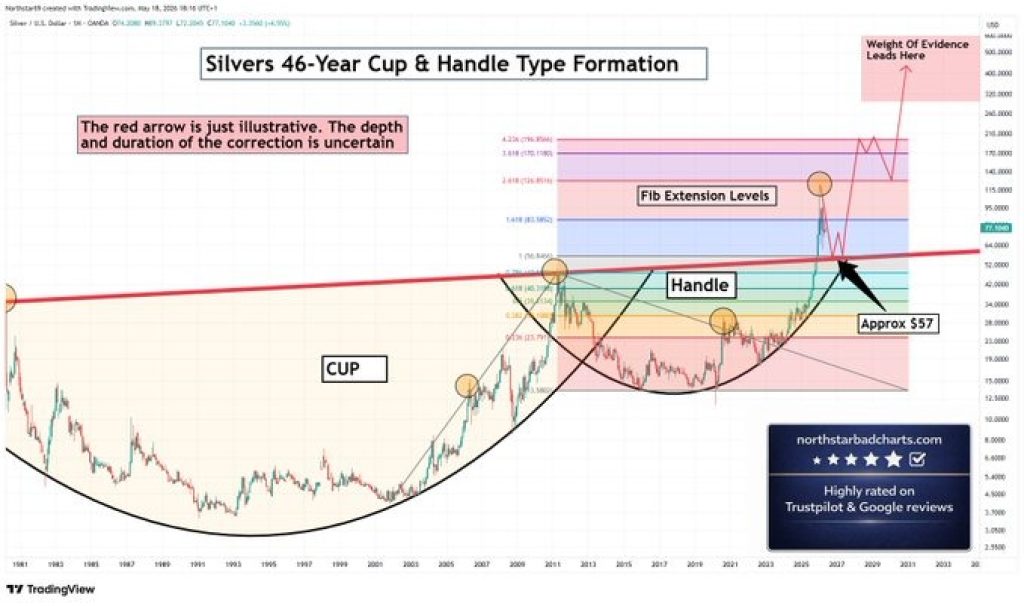
Silver Price Prediction: Cup and Handle Points to $196 – Why the Correction Was Always Part of the Plan