Space Bitcoin Mining: Nvidia-Backed StarCloud’s Revolutionary 2025 Satellite Launch
BitcoinWorld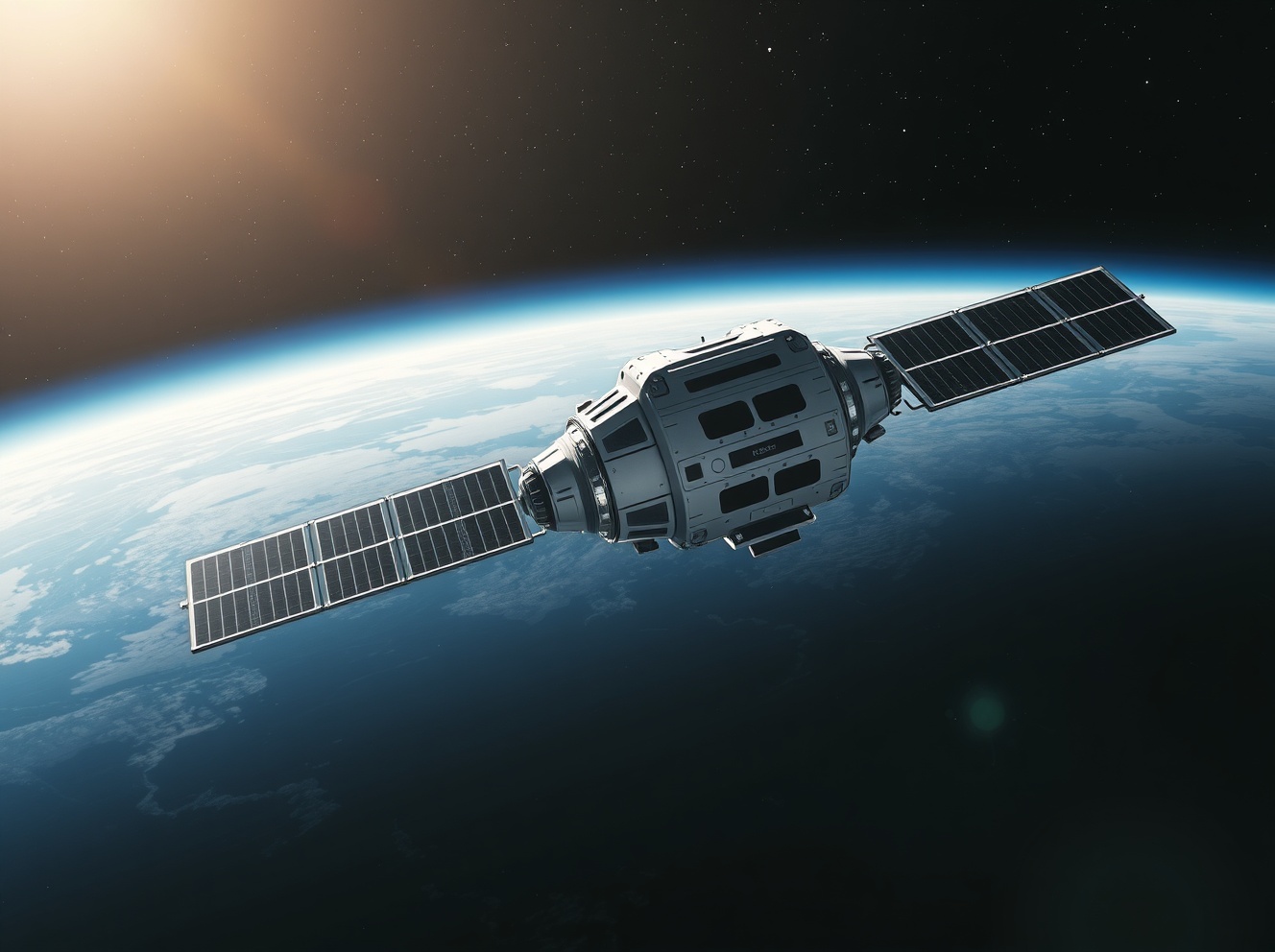
Space Bitcoin Mining: Nvidia-Backed StarCloud’s Revolutionary 2025 Satellite Launch
In a groundbreaking development for both the cryptocurrency and aerospace industries, Nvidia-backed startup StarCloud has announced plans to launch its second spacecraft specifically designed for Bitcoin mining operations in space later this year, according to a recent Cointelegraph report from February 2025. This ambitious project represents a significant leap forward in technological innovation, potentially addressing some of Earth’s most pressing Bitcoin mining challenges while opening new frontiers for digital asset infrastructure.
StarCloud’s Space Bitcoin Mining Initiative
StarCloud, a pioneering space data center startup with substantial backing from technology giant Nvidia, will deploy its second specialized spacecraft in late 2025. Consequently, this mission aims to establish the first operational Bitcoin mining facility in low Earth orbit. The company’s initial test spacecraft, launched in 2024, successfully demonstrated the fundamental viability of space-based computing operations. However, this second mission represents a fully operational deployment with dedicated mining hardware.
The spacecraft will utilize advanced application-specific integrated circuits (ASICs) specifically designed for the SHA-256 algorithm that Bitcoin employs. Furthermore, these specialized processors will operate in the unique environment of space, where factors like temperature extremes and radiation present both challenges and opportunities. StarCloud engineers have developed proprietary cooling systems that leverage the vacuum of space for more efficient heat dissipation than terrestrial alternatives.
Technical Advantages of Space-Based Mining
Space-based Bitcoin mining offers several potential technical advantages over traditional Earth-based operations. Primarily, the near-constant solar power availability in orbit eliminates the intermittent energy challenges faced by terrestrial renewable-powered mining facilities. Additionally, the extreme cold of space provides natural cooling for mining hardware, potentially reducing energy consumption by up to 40% compared to Earth-based operations that require extensive cooling systems.
Energy and Environmental Considerations
The environmental impact of Bitcoin mining has remained a significant concern within the cryptocurrency community and among regulators. Traditional mining operations frequently rely on fossil fuels, particularly in regions with cheap but carbon-intensive energy sources. Conversely, space-based mining operations can utilize virtually unlimited solar energy without atmospheric interference or weather-related interruptions.
According to space technology analysts, a single spacecraft equipped with modern solar panels could generate approximately 10-15 kilowatts of continuous power. This represents sufficient energy to operate multiple high-efficiency ASIC miners simultaneously. Moreover, the complete absence of atmospheric scattering in space allows solar panels to operate at peak efficiency throughout approximately 95% of each orbit.
| Factor | Terrestrial Mining | Space Mining |
|---|---|---|
| Primary Energy Source | Grid power (mixed sources) | Solar power (continuous) |
| Cooling Requirements | Active systems (high energy use) | Passive radiative cooling |
| Operational Uptime | 95-98% (maintenance downtime) | 99.5%+ (redundant systems) |
| Infrastructure Cost | Land, facilities, permits | Launch costs, spacecraft |
| Regulatory Environment | National/regional regulations | International space treaties |
Nvidia’s Strategic Investment in Space Computing
Nvidia’s backing of StarCloud represents a strategic expansion beyond its traditional gaming and AI markets. The technology company has increasingly positioned itself as a leader in high-performance computing solutions for emerging applications. Nvidia’s expertise in GPU and specialized processor design directly supports the computational requirements of Bitcoin mining operations, even in the challenging space environment.
The collaboration leverages Nvidia’s experience in radiation-hardened computing systems, originally developed for autonomous vehicles and industrial applications. These systems demonstrate particular relevance for space operations, where cosmic radiation can disrupt conventional computing hardware. StarCloud’s spacecraft will incorporate modified versions of Nvidia’s most efficient computing architectures, optimized specifically for the Bitcoin mining algorithm.
Industry analysts note that successful space-based mining could validate several Nvidia technologies simultaneously:
- Radiation-tolerant computing: Proving reliability in extreme environments
- Edge computing architectures: Operating autonomously without direct human intervention
- Energy-efficient processing: Maximizing computation per watt in constrained systems
- Thermal management solutions: Dissipating heat without conventional cooling methods
Regulatory and Legal Framework for Space Mining
The legal status of space-based Bitcoin mining operations remains complex under current international agreements. The Outer Space Treaty of 1967, ratified by 110 countries including all major spacefaring nations, establishes that outer space remains free for exploration and use by all states. However, the treaty prohibits national appropriation of celestial bodies through claims of sovereignty.
Legal experts specializing in space law emphasize that Bitcoin mining in orbit likely falls within permissible activities, similar to telecommunications satellites. Nevertheless, the transmission of mined Bitcoin to Earth-based networks raises questions about jurisdiction and regulatory compliance. StarCloud has reportedly engaged with multiple national space agencies and regulatory bodies to establish clear operational parameters before launch.
Additionally, the company must navigate spectrum allocation for data transmission between the spacecraft and ground stations. The Federal Communications Commission in the United States and equivalent agencies in other nations coordinate these allocations to prevent interference with existing satellite communications. StarCloud’s second spacecraft will utilize dedicated frequency bands specifically allocated for experimental space computing applications.
Economic Viability and Market Impact
The economic model for space-based Bitcoin mining depends on several interrelated factors. Launch costs have decreased significantly in recent years due to reusable rocket technology developed by companies like SpaceX. Currently, launching one kilogram to low Earth orbit costs approximately $1,500-$2,000, compared to $20,000-$30,000 a decade ago. This reduction makes specialized space missions increasingly economically feasible.
Bitcoin’s mining difficulty adjustment mechanism presents another consideration. The network automatically adjusts mining difficulty approximately every two weeks to maintain a consistent block production rate of one block every ten minutes. Space-based mining operations would contribute to the global hash rate, potentially increasing difficulty for all miners. However, their unique energy advantages might maintain profitability even during difficulty increases.
Market analysts project that successful space mining could:
- Introduce a new class of ultra-efficient mining operations
- Potentially decrease the carbon footprint associated with Bitcoin mining
- Demonstrate the viability of space-based commercial computing
- Encourage further investment in space infrastructure development
Technical Challenges and Solutions
Operating computing hardware in space presents unique technical challenges beyond those encountered in terrestrial data centers. Radiation effects, including single-event upsets and total ionizing dose accumulation, can degrade or disrupt electronic components. StarCloud addresses these challenges through a multi-layered approach combining hardware and software solutions.
The spacecraft employs radiation-hardened processors alongside conventional commercial components in a hybrid architecture. Critical functions utilize the hardened components, while mining operations employ commercial ASICs within specially shielded enclosures. Additionally, the system incorporates extensive error detection and correction mechanisms at both hardware and software levels.
Data transmission represents another significant challenge. The spacecraft must regularly communicate mined blocks and receive new block headers from the Bitcoin network. Latency between low Earth orbit and ground stations ranges from 10-50 milliseconds, depending on orbital position and ground station availability. This latency remains negligible compared to Bitcoin’s ten-minute block time, ensuring minimal impact on mining efficiency.
Conclusion
StarCloud’s planned 2025 launch of a Bitcoin-mining spacecraft represents a convergence of cryptocurrency innovation and space technology advancement. Backed by Nvidia’s computing expertise, this initiative could potentially address environmental concerns associated with Bitcoin mining while demonstrating new applications for space infrastructure. The success of this mission may establish space-based data centers as a viable complement to terrestrial operations, particularly for computationally intensive applications with high energy requirements. As both the space and cryptocurrency industries continue evolving, such cross-disciplinary innovations will likely become increasingly common, pushing the boundaries of what remains technically and economically feasible.
FAQs
Q1: How does space Bitcoin mining differ from Earth-based mining?
Space Bitcoin mining utilizes continuous solar power and passive radiative cooling in the vacuum of space, potentially offering greater energy efficiency and lower environmental impact compared to terrestrial operations that often rely on mixed energy grids and active cooling systems.
Q2: What technical challenges does Bitcoin mining in space present?
Primary challenges include radiation hardening of computing hardware, thermal management without conventional cooling methods, reliable data transmission to Earth, and autonomous operation without direct physical maintenance access.
Q3: Is space Bitcoin mining legal under international law?
Current interpretations of the Outer Space Treaty suggest that Bitcoin mining in orbit falls within permissible commercial space activities, similar to telecommunications satellites, though specific national regulations and spectrum allocations apply to data transmission.
Q4: How does Nvidia contribute to StarCloud’s space mining project?
Nvidia provides technological expertise in high-performance computing, radiation-hardened processor design, energy-efficient architectures, and thermal management solutions specifically adapted for the extreme environment of space operations.
Q5: What potential impact could space mining have on Bitcoin’s network?
Space-based mining operations would contribute additional hash rate to the Bitcoin network, potentially increasing mining difficulty while introducing a new class of operations with unique energy advantages that could maintain profitability even during difficulty adjustments.
This post Space Bitcoin Mining: Nvidia-Backed StarCloud’s Revolutionary 2025 Satellite Launch first appeared on BitcoinWorld.


You May Also Like

Robotics Automation Prototyping: Engineering Kinetic Agility into End-Effectors

Silver Price Prediction: Cup and Handle Points to $196 – Why the Correction Was Always Part of the Plan