

An interview with Finoverse, the organizer of Hong Kong Fintech Week, from 2,500 people to one of the world's largest fintech events
Interview: Yolanda Written by: Frank
Hong Kong, as an international financial center, has always been a stage for all kinds of financial innovations to converge and collide. Hong Kong Fintech Week is a very representative event and has become an important link for exchanges and cooperation in the fintech industry. It not only brings together regulators from mainland China, Hong Kong and around the world, but also brings together different roles such as fintech founders, crypto entrepreneurs, venture funds or traditional financial executives, breaking the boundaries of the industry.
On November 1, the 9th Hong Kong Fintech Week came to an end. At this Fintech Week, technology giants such as Ant, Tencent, and Xiaomi and many traditional financial institutions announced their new progress in the Web3 track, and Web3 practitioners from all over the world exchanged ideas here. Hong Kong Fintech Week has also become one of the most important events for the integration and exchange of Hong Kong's Fintech and Web3.
From its inception in 2015 to becoming one of the world's largest fintech events, Hong Kong Fintech Week has continued to expand under the auspices of Invest Hong Kong and the Financial Services and the Treasury Bureau, and the meticulous management of Finoverse. Recently, PANews interviewed Finoverse co-founder and CEO Anthony Sar to share the stories behind the event and his insights into the integration of the Web3 industry and traditional finance. The following is a summary of the main content of this interview.
PANews: Finoverse started running events since the first Hong Kong Fintech Week. We would like to ask you to introduce Finoverse and your own background. What drives you to keep hosting this event?
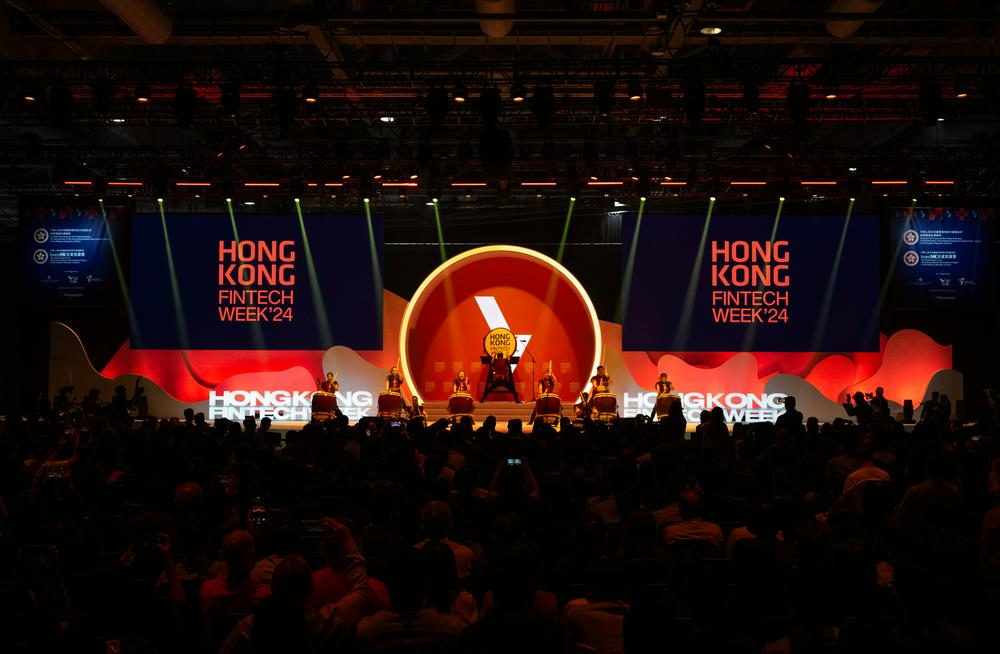
Anthony Sar: Initially in 2015, my co-founder Vila Wong and I met a group of fintech professionals and blockchain enthusiasts and decided to bring them together by hosting events, so we founded Finoverse. This move was not initially for commercial purposes, but happened naturally. In 2016, the government began to notice our work and invited us to co-host the flagship event they were building, Hong Kong Fintech Week. We began to work closely with the government, Invest Hong Kong, the Financial Services and the Treasury Bureau, and regulators. We have grown this event from an initial scale of about 2,500 people to one of the largest fintech events in the world, with a total of more than 37,000 participants this year.
Finoverse firmly believes that the financial services industry should empower people, customers and society with more choices, rather than being limited to a few large players. Therefore, we are neutral to different technologies, whether it is artificial intelligence, fintech companies or blockchain and cryptocurrency, as long as it can serve customers faster, cheaper and better, we support it.
As it develops, you can see a very unique side at Hong Kong FinTech Week, where you can see regulators from mainland China, Hong Kong and around the world, as well as fintech founders, crypto entrepreneurs, venture funds or traditional finance executives sharing the same stage. This is the only platform in the world that brings together these people with very different views on the future of the industry.
We hope and believe that the dialogue created on this platform will help all these participants better understand each other, learn from each other, and collaborate efficiently in the future.
PANews: What are the unique features of this year's Hong Kong Fintech Week? How is it different from previous years in terms of scale and content?
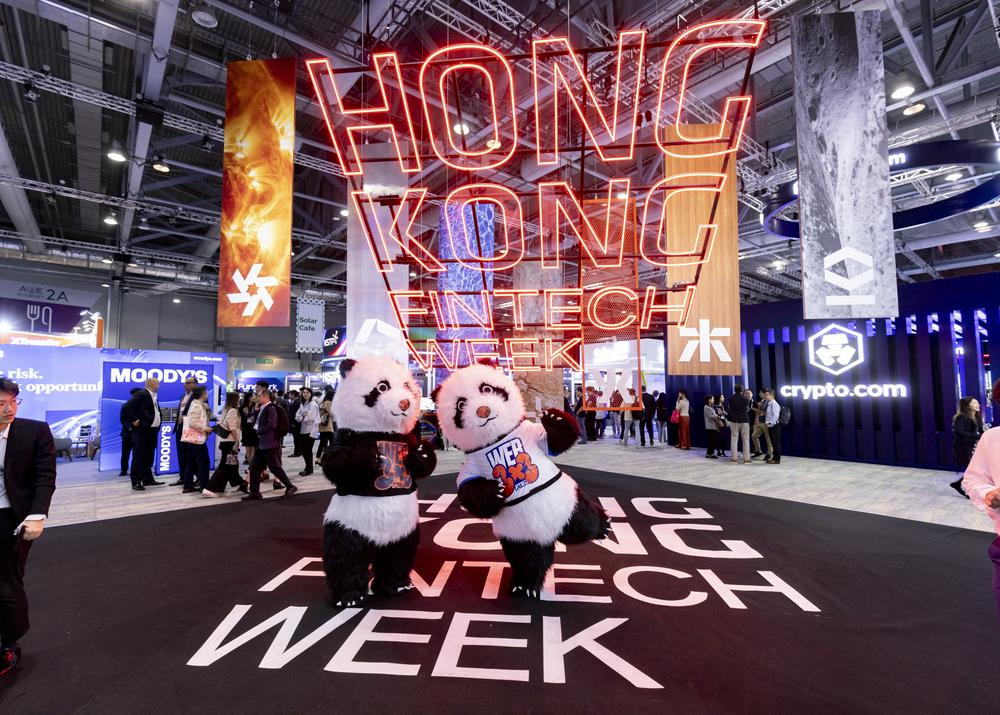
Anthony Sar: We have quite a lot of changes this year. As this event has been held for nearly ten years, times have brought a lot of changes. Therefore, this year, we pay more attention to bringing participants a different experience. This year's event, we got inspiration from the five elements and yin and yang. You may have noticed that we used these elements and yin and yang to assign different areas and themes. The main stage represents the sun, and we hope to convey that this is the sunrise and rebirth of Hong Kong.
Especially in terms of Web3, this year we also made innovations and brought some things that you may not see at other conferences. We built a basketball court at the venue and invited people from fintech and Web3 to play a 3V3 game.
In addition, we also cooperated with a charity organization in Hong Kong called InspiringHK Sports Foundation, which provides training programs for disadvantaged children in Hong Kong through basketball, and we donated all the proceeds to them. I hope that the event will no longer be just a drinking party, but can also connect people through different experiences and promote health and sports.

PANews: Looking back at the Hong Kong Fintech Weeks over the past few years, which one impressed you the most? Can you share some memorable experiences or stories?
Anthony Sar: I think FinTech Week has evolved over the years with the industry. The most memorable for me was probably the COVID-19 pandemic when all events were shut down. We then moved it to a fully virtual format, and it turned out to be one of the most successful Hong Kong FinTech Weeks we have ever held.
During the pandemic, we did not choose a simple online conference solution, but actually rebuilt an online virtual experience. At the same time, we worked with some major Chinese media, which ultimately led to a large amount of exposure for the Hong Kong Financial Week, with a total number of viewers exceeding 5.5 million.
PANews: Are there any notable changes in the participants and main topics of crypto events this year?
Anthony Sar: This year it is clear that we are seeing a growing proportion of participants and companies from mainland China. For example, this is the first time we have Ant Group and Tencent as one of the main sponsors. A lot of the conversations we see are focused on RWA (real world assets). RWA has even become one of the mainstream topics of this year's event, and although some of the discussions are not in the same scope as the cryptocurrency field, this is also a major topic of overlap between traditional institutions and the crypto industry.
Another topic of this year's dialogue may be around stablecoins, as Hong Kong regulators are planning to introduce policies related to stablecoins, which is another major focus of this event. Of course, there is also AI, which is a hot topic around the world.
Overall, I think throughout the conference, especially in crypto, one trend is that the Web3 industry is starting to work more with institutions. On the other hand, crypto assets are also more of an asset class, with more traditional players entering the field.
PANews: What do you think about the current development trends in the event industry, especially events in the fields of FinTech and Web3?
Anthony Sar: In the past few years, there have been changes in two directions. On the one hand, it has become easier for people to get content online. You can find anything on the Internet. Therefore, we can see that people are less inclined to spend time in conference halls, especially the younger generation. In the future, we will see fewer and fewer people sitting in lectures, but spending more time in different activities and networking exchanges.
But on the other hand, people prefer to spend more time together and meet in person. Look at how popular Taylor Swift's concerts are around the world. People like to have experiences and spend time together. These changes will affect the way events are held. I think crypto is the first industry to adopt this trend and create experiences. Content is still important, but to attract audiences through content, you need more unique things that are hard to find online.
PANews: So you will start creating more experiences to attract more young people, right?
Anthony Sar: Basically, in the previous events we held, quite a few people met their lovers at our events, for example, there was a host couple, both of whom worked in the cryptocurrency field. They met at our second event in Hong Kong, and now they have a daughter. This is essentially the value of why people get together and get to know each other.
PANews: In addition to Hong Kong Fintech Week, in what other ways does Finoverse participate in and promote the Fintech and Web3 ecosystem?
Anthony Sar: Fintech Week is basically our most well-known flagship event, but we also work with other parties and have different initiatives. Last year, we actually organized an event in the Bahamas, working with the Bahamas Securities Commission, who commissioned us to help them bring the Web3 and cryptocurrency community back to the Bahamas after the FTX event. They are trying to build a new image for the Bahamas.
In addition to these, we also held events in the Middle East such as Dubai and Abu Dhabi. We brought the founders of Web3 to meet with all the key stakeholders and regulators in Dubai, Abu Dhabi and Riyadh, Saudi Arabia. We hope to connect Hong Kong with communities in North America, the Middle East, and mainland China in this way. This is our next goal for future growth. We want to work with different communities and connect them together.
PANews: The crypto industry is becoming increasingly hot. Will Finoverse be more inclined towards Web3 in the future?
Anthony Sar: In fact, in the beginning, our focus was on blockchain. Vitalik was one of our main speakers very early on. Later, I went to Malaysia with him to do some early blockchain education. But with the ICO fever that started in 2017, I began to stay away from the cryptocurrency industry. To some extent, I think a lot of things happening in this industry will lead to more speculation.
Until now, when we were evaluating what kind of speakers we should have on stage, what kind of content we should have, or what kind of participants we should see at events, we always asked ourselves the question of how this project or company can contribute to the ultimate goal of universal access to financial services. If it is just some project that makes other people richer, makes a small group of people richer, that is not interesting to us. It is very simplistic, but that is basically our vision.
When it comes to organizing crypto events, we think about whether these events can actually create impact, whether the drive of the organizers is ultimately to create opportunities for people. We don't usually cater to projects that just want to launch another token or something like that, we are not interested in that. So essentially, our focus remains on something more substantial, something that can make a difference and have an impact.
PANews: You have come into contact with many Web 3 entrepreneurs. What characteristics do you think are very important for Web 3 entrepreneurs?
Anthony Sar: People who have a long-term vision, who have some internal drive that drives them to make a difference in the world. Not because they just want to make a lot of money, but to make some impact in their lives through what they are building. I really admire these people who are driven by this drive and they are really building something new.
Building things in crypto and Web3, if you really want to make a difference and not just build a simple, short-lived thing on top of another thing, it takes a lot of perseverance. Basically everyone is against you. It's very complex in every aspect of this industry. There's the technical side, there's the macroeconomics, there's regulation, there's competition. You also have all the potential risks associated with crypto. So it's hard to stay on track.
Someone like Vitalik is a great example of someone who is building for long-term future impact and not just creating another token. There are quite a few of these people in the industry. I admire them a lot. I think ultimately we'll see them become more successful.
PANews: What advice do you have for emerging companies or individuals looking to enter the Web3 industry?
Anthony Sar: If you want to build something valuable, be prepared that it will be very difficult and complex. You need to have long-term endurance and perseverance. While this is true for every industry, it is especially true for cryptocurrency and Web3, where it is much more difficult to maintain and build something in such a very dynamic industry.
But again, if someone is just looking to make a little money, or make some quick bucks, this can be a good opportunity. But I think even if you’re successful at something, it doesn’t mean you’re going to be successful the next time. Often, it’s just a matter of luck. So how do you achieve that over the long term, how do you get consistent results over and over again, that takes more than just luck. That’s the quality that people should focus on.
PANews: Are you preparing for next year’s event?
Anthony Sar: Next year will be the 10th anniversary of Fintech Week, and I believe it will be very special. We are innovating more content, and I think it will be a surprise for everyone. We are preparing something very, very influential, and welcome to pay attention to the 10th anniversary of Hong Kong Fintech Week.


You May Also Like

Y Combinator rolls out new deal package for crypto startups
China solar panel exports to Africa jump by 83% as demand for clean energy surges

Amazon (AMZN) Stock; Rises on $33B Southeast Asia AI and cloud push



