

Hormuz Closure Could Push Brent Oil Toward $100 as Supply Shock Builds
Brent oil price remains close to $84 even as one of the most critical energy routes in the world faces disruption. The Strait of Hormuz has stopped moving tanker traffic, gasoline prices have climbed 31% during the past month, and several major exporters have taken extraordinary measures that restrict fuel flows. Despite those developments, Brent crude oil still trades far below levels that many analysts associate with a full supply crisis.
Energy market analyst Shanaka Anslem Perera examined this situation and argued that the current Brent oil price may represent a delayed reaction instead of a stable equilibrium. His explanation focuses on the time lag between when crude oil supply disruptions occur and when those disruptions appear in global inventory data that traders rely on.
Brent crude oil near $84 might appear calm on the surface, though several structural disruptions exist beneath the price level. The Strait of Hormuz stopped operating normally on February 28, which immediately interrupted one of the most important crude oil shipping lanes in the world.
Energy analyst Shanaka Anslem Perera explained that global oil markets often take time to recognize supply destruction. Inventory systems that track oil stored on tankers and in storage facilities typically require 10 to 15 days before the full impact of a shipping shutdown appears in official data.
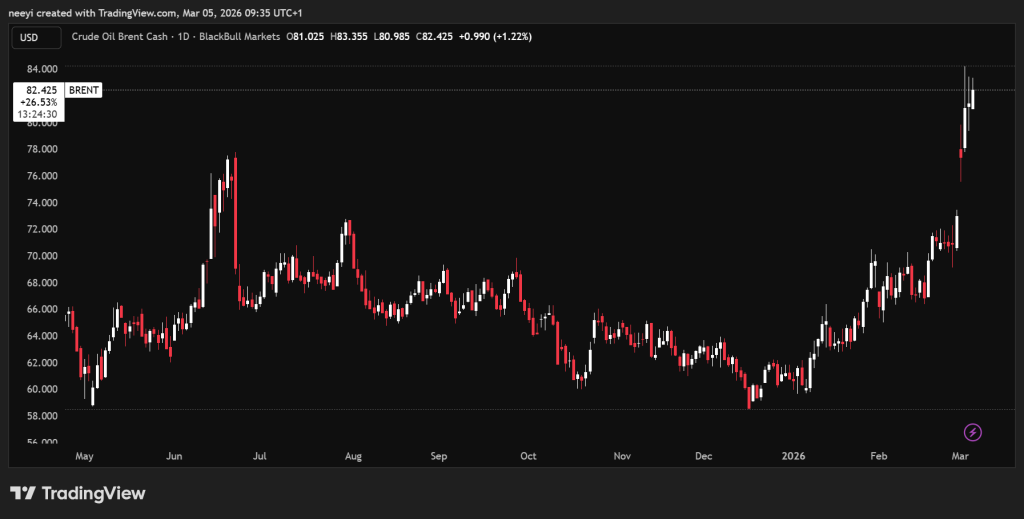 Brent Oil Price Chart from TradingView
Markets continue to reference pre-conflict inventory cushions during that waiting period. That cushion includes sanctioned crude oil flows that previously added hidden supply to global markets. Once updated inventory data shows the drawdown, traders often reprice crude oil rapidly because the market recognizes the missing supply all at once.
Brent oil price therefore sits at a level that may not fully represent the current supply environment. The lag between physical disruption and market data recognition creates conditions where the oil price may move abruptly once the missing barrels appear in official reports.
Multiple Energy Supply Disruptions Are Appearing Across Global Oil Markets
Several developments across global energy markets compound the effect of the Hormuz closure. Qatar declared Force Majeure on key shipments, which signals disruptions to energy export commitments. China halted diesel exports, which tightens refined fuel availability across Asia.
Military developments also affected the geopolitical environment around crude oil flows. Reports indicate that a United States submarine sank an Iranian frigate in the Indian Ocean during the recent escalation period. Maritime traffic across Gulf shipping routes dropped dramatically as tensions increased across the region.
Analyst Shanaka Anslem Perera noted that earlier forecasts for Brent crude oil now appear outdated because they relied on conditions that existed before those disruptions. The United States Energy Information Administration previously projected Brent oil price near $60 during 2026. Those projections assumed stable shipping conditions and normal export activity.
Energy markets now operate under a very different environment. Models that relied on January assumptions no longer incorporate the recent disruptions affecting global crude oil transport.
Read Also: Here’s Why Bitcoin And Crypto Prices Are Pumping Right Now
Brent Crude Oil Could Approach $100 If Strait Of Hormuz Remains Closed
The trajectory of Brent crude oil depends heavily on whether shipping activity returns to the Strait of Hormuz soon. Analyst Shanaka Anslem Perera believes that $100 Brent oil price may represent a realistic scenario if the closure continues beyond the current inventory buffer window.
Global energy markets rely on Hormuz for a large share of crude oil shipments from the Persian Gulf. Continued closure would remove significant supply from international markets during the same period when refined fuel exports face restrictions.
Higher Brent oil price levels would likely carry economic consequences across several regions. Rising fuel costs place pressure on consumers and can force governments to consider strategic petroleum reserve releases. Energy prices also influence geopolitical negotiations when disruptions threaten economic stability.
Read Also: Silver Price Just Flushed Weak Hands: Smart Money Buying the Panic?
Current Brent crude oil price near $84 sits at the center of an unusual market moment. Major shipping disruptions exist across global energy routes, yet the oil price has not fully adjusted to those changes.
Analyst Shanaka Anslem Perera believes the current level should be watched carefully because it may represent the starting point of a larger repricing event. Oil markets often move slowly until inventory data confirms supply shortages. Once those shortages appear in official statistics, price adjustments can occur quickly.
Subscribe to our YouTube channel for daily crypto updates, market insights, and expert analysis.
The post Hormuz Closure Could Push Brent Oil Toward $100 as Supply Shock Builds appeared first on CaptainAltcoin.
You May Also Like

Russian Central Bank Proposes Allowing Banks and Brokers to Obtain Crypto Licenses

CME pushes Solana, XRP into derivatives spotlight with new options
