Coinbase CEO Brian Armstrong fired engineers who failed to adopt AI coding tools within a week of his mandate, as the crypto exchange pushes toward generating 50% of its code through artificial intelligence by October. “~40% of daily code written at Coinbase is AI-generated. I want to get it to >50% by October,” Armstrong posted on X, making the company among the most aggressive adopters of AI development tools in the tech industry.Source: X/@brian_armstrong The dramatic ultimatum came after Armstrong rejected internal estimates that AI adoption would take quarters to reach 50% among engineers. “Originally, they were coming back and saying, ‘All right, over the next quarter, two quarters, we’re going to get to 50% adoption.’ I said, ‘You’re telling me— why can’t every engineer just onboard by the end of the week?’” Armstrong explained on John Collison’s “Cheeky Pint” podcast. Several engineers were terminated after failing to provide adequate explanations for missing the deadline. “I jumped on this call on Saturday and there were a couple people that had not done it. Some of them had a good reason, because they were just getting back from some trip or something, and some of them didn’t, and they got fired,” Armstrong revealed. Armstrong acknowledged the “heavy-handed approach” faced internal criticism, but established clear expectations about the importance of AI at Coinbase. “Some people really didn’t like it, by the way, that heavy-handed approach, but I think it did set some clarity at least that we need to lean into this and learn about it,” he said. “Founder Mode” Mandate Triggers Immediate Workforce Transformation Armstrong’s “rogue” Slack post bypassed traditional adoption timelines after hearing engineers might take months to embrace AI tools. “I mandated it,” Armstrong told Collison. “I went rogue. I posted in the all-in Slack channel… I said, ‘AI’s important. We need you to all learn it and at least onboard,” he said.Armstrong & Collison Source: YouTube “You don’t have to use it every day yet until we do some training, but at least onboard by the end of the week. And if not, I’m hosting a meeting on Saturday with everybody who hasn’t done it, and I’d like to meet with you to understand why.’“ The Saturday accountability meeting included engineers with legitimate excuses, such as recent travel, alongside those without justification for non-compliance. Coinbase’s AI strategy focuses on specific use cases rather than universal applications. Frontend development, less-sensitive backend systems, and unit testing benefit most from AI assistance, while security-critical financial systems maintain human oversight requirements. “Obviously, it needs to be reviewed and understood, and not all areas of the business can use AI-generated code. But we should be using it responsibly as much as we possibly can,” Armstrong noted on X. “You don’t want people vibe-coding these systems moving money,” Armstrong cautioned. “You have to code review it and have the appropriate checks in place with humans in the loop.“ The company developed repository sensitivity matrices identifying criteria for AI tool usage, ensuring customer safety standards while enabling rapid development. Notably, Coinbase’s monthly “AI speedruns” showcase successful implementations, with top-performing teams training colleagues on effective AI integration techniques. “Every month we host, we call it an AI Speed Run where one of the engineers volunteers that month to run a training for how they’re using it,” Armstrong explained. The productivity improvements enable single engineers to complete months-long projects in days. “This has enabled profound success stories that weren’t possible 12 months ago, like single engineers refactoring, upgrading or building new codebases in days instead of months,” Armstrong noted. Tech Industry Embraces Aggressive AI Adoption Despite Implementation Challenges Armstrong joins other tech CEOs mandating AI adoption across engineering teams. GitHub surveys indicate 92% of programmers at major companies already use AI coding tools, with 70% reporting productivity advantages, validating Armstrong’s aggressive timeline. However, implementation challenges persist across the industry. Stripe co-founder John Collison questioned the long-term sustainability during his podcast with Armstrong. “It’s clear that it is very helpful to have AI helping you write code. It’s not clear how you run an AI-coded code base,” he said. However, Armstrong acknowledged ongoing challenges. “I agree. I think we’re still figuring that out too.” “You probably can go too far with it. You don’t want people vibe coding these systems moving money,” he emphasized. The aggressive AI integration extends beyond engineering to other departments. “We want to make sure it’s used not just in the engineering teams. It really should be any team. Design is using it heavily. Product managers. I think FP&A could even be using this,” Armstrong said. Coinbase now includes AI as a participant in decision-making processes. “We use a decision-making process called RAPIDS and everyone writes their input. We have a row now for AI that writes its input in as one of the people that help make decisions,” Armstrong revealed. Notably, Armstrong also revealed that he makes extensive use of the tools. “Even as CEO, by the way, I use it a lot,” he noted. Looking forward, while critics argue that the rapid adoption pace may compromise code quality and security, AI adoption continues to grow at a daily rate. Just a few hours ago, former X engineer and startup founder Kache posted on X, “95% of my startup’s code is written by an LLM,” quoting a projection from Anthropic CEO Dario Amodei, that “by now, AI would be writing 90% of all code”.Coinbase CEO Brian Armstrong fired engineers who failed to adopt AI coding tools within a week of his mandate, as the crypto exchange pushes toward generating 50% of its code through artificial intelligence by October. “~40% of daily code written at Coinbase is AI-generated. I want to get it to >50% by October,” Armstrong posted on X, making the company among the most aggressive adopters of AI development tools in the tech industry.Source: X/@brian_armstrong The dramatic ultimatum came after Armstrong rejected internal estimates that AI adoption would take quarters to reach 50% among engineers. “Originally, they were coming back and saying, ‘All right, over the next quarter, two quarters, we’re going to get to 50% adoption.’ I said, ‘You’re telling me— why can’t every engineer just onboard by the end of the week?’” Armstrong explained on John Collison’s “Cheeky Pint” podcast. Several engineers were terminated after failing to provide adequate explanations for missing the deadline. “I jumped on this call on Saturday and there were a couple people that had not done it. Some of them had a good reason, because they were just getting back from some trip or something, and some of them didn’t, and they got fired,” Armstrong revealed. Armstrong acknowledged the “heavy-handed approach” faced internal criticism, but established clear expectations about the importance of AI at Coinbase. “Some people really didn’t like it, by the way, that heavy-handed approach, but I think it did set some clarity at least that we need to lean into this and learn about it,” he said. “Founder Mode” Mandate Triggers Immediate Workforce Transformation Armstrong’s “rogue” Slack post bypassed traditional adoption timelines after hearing engineers might take months to embrace AI tools. “I mandated it,” Armstrong told Collison. “I went rogue. I posted in the all-in Slack channel… I said, ‘AI’s important. We need you to all learn it and at least onboard,” he said.Armstrong & Collison Source: YouTube “You don’t have to use it every day yet until we do some training, but at least onboard by the end of the week. And if not, I’m hosting a meeting on Saturday with everybody who hasn’t done it, and I’d like to meet with you to understand why.’“ The Saturday accountability meeting included engineers with legitimate excuses, such as recent travel, alongside those without justification for non-compliance. Coinbase’s AI strategy focuses on specific use cases rather than universal applications. Frontend development, less-sensitive backend systems, and unit testing benefit most from AI assistance, while security-critical financial systems maintain human oversight requirements. “Obviously, it needs to be reviewed and understood, and not all areas of the business can use AI-generated code. But we should be using it responsibly as much as we possibly can,” Armstrong noted on X. “You don’t want people vibe-coding these systems moving money,” Armstrong cautioned. “You have to code review it and have the appropriate checks in place with humans in the loop.“ The company developed repository sensitivity matrices identifying criteria for AI tool usage, ensuring customer safety standards while enabling rapid development. Notably, Coinbase’s monthly “AI speedruns” showcase successful implementations, with top-performing teams training colleagues on effective AI integration techniques. “Every month we host, we call it an AI Speed Run where one of the engineers volunteers that month to run a training for how they’re using it,” Armstrong explained. The productivity improvements enable single engineers to complete months-long projects in days. “This has enabled profound success stories that weren’t possible 12 months ago, like single engineers refactoring, upgrading or building new codebases in days instead of months,” Armstrong noted. Tech Industry Embraces Aggressive AI Adoption Despite Implementation Challenges Armstrong joins other tech CEOs mandating AI adoption across engineering teams. GitHub surveys indicate 92% of programmers at major companies already use AI coding tools, with 70% reporting productivity advantages, validating Armstrong’s aggressive timeline. However, implementation challenges persist across the industry. Stripe co-founder John Collison questioned the long-term sustainability during his podcast with Armstrong. “It’s clear that it is very helpful to have AI helping you write code. It’s not clear how you run an AI-coded code base,” he said. However, Armstrong acknowledged ongoing challenges. “I agree. I think we’re still figuring that out too.” “You probably can go too far with it. You don’t want people vibe coding these systems moving money,” he emphasized. The aggressive AI integration extends beyond engineering to other departments. “We want to make sure it’s used not just in the engineering teams. It really should be any team. Design is using it heavily. Product managers. I think FP&A could even be using this,” Armstrong said. Coinbase now includes AI as a participant in decision-making processes. “We use a decision-making process called RAPIDS and everyone writes their input. We have a row now for AI that writes its input in as one of the people that help make decisions,” Armstrong revealed. Notably, Armstrong also revealed that he makes extensive use of the tools. “Even as CEO, by the way, I use it a lot,” he noted. Looking forward, while critics argue that the rapid adoption pace may compromise code quality and security, AI adoption continues to grow at a daily rate. Just a few hours ago, former X engineer and startup founder Kache posted on X, “95% of my startup’s code is written by an LLM,” quoting a projection from Anthropic CEO Dario Amodei, that “by now, AI would be writing 90% of all code”.

Coinbase CEO Armstrong Gives Engineers Week to Master AI Coding, Targets 50% AI-Generated Code

Coinbase CEO Brian Armstrong fired engineers who failed to adopt AI coding tools within a week of his mandate, as the crypto exchange pushes toward generating 50% of its code through artificial intelligence by October.

~40% of daily code written at Coinbase is AI-generated. I want to get it to >50% by October,” Armstrong posted on X, making the company among the most aggressive adopters of AI development tools in the tech industry.
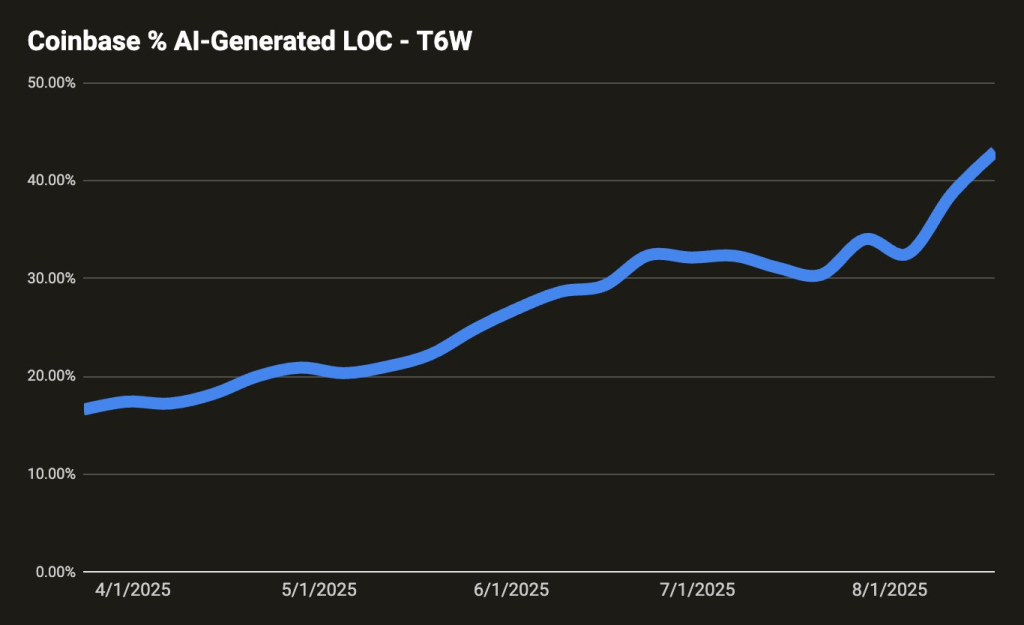
Coinbase CEO Armstrong Gives Engineers Week to Master AI Coding, Targets 50% AI-Generated CodeSource: X/@brian_armstrong

The dramatic ultimatum came after Armstrong rejected internal estimates that AI adoption would take quarters to reach 50% among engineers.

Originally, they were coming back and saying, ‘All right, over the next quarter, two quarters, we’re going to get to 50% adoption.’ I said, ‘You’re telling me— why can’t every engineer just onboard by the end of the week?’” Armstrong explained on John Collison’s “Cheeky Pint” podcast.

Several engineers were terminated after failing to provide adequate explanations for missing the deadline.

I jumped on this call on Saturday and there were a couple people that had not done it. Some of them had a good reason, because they were just getting back from some trip or something, and some of them didn’t, and they got fired,” Armstrong revealed.

Armstrong acknowledged the “heavy-handed approach” faced internal criticism, but established clear expectations about the importance of AI at Coinbase.

Some people really didn’t like it, by the way, that heavy-handed approach, but I think it did set some clarity at least that we need to lean into this and learn about it,” he said.

“Founder Mode” Mandate Triggers Immediate Workforce Transformation

Armstrong’s “rogue” Slack post bypassed traditional adoption timelines after hearing engineers might take months to embrace AI tools.

I mandated it,” Armstrong told Collison. “I went rogue. I posted in the all-in Slack channel… I said, ‘AI’s important. We need you to all learn it and at least onboard,” he said.

Coinbase CEO Armstrong Gives Engineers Week to Master AI Coding, Targets 50% AI-Generated CodeArmstrong & Collison Source: YouTube

You don’t have to use it every day yet until we do some training, but at least onboard by the end of the week. And if not, I’m hosting a meeting on Saturday with everybody who hasn’t done it, and I’d like to meet with you to understand why.’

The Saturday accountability meeting included engineers with legitimate excuses, such as recent travel, alongside those without justification for non-compliance.

Coinbase’s AI strategy focuses on specific use cases rather than universal applications.

Frontend development, less-sensitive backend systems, and unit testing benefit most from AI assistance, while security-critical financial systems maintain human oversight requirements.

Obviously, it needs to be reviewed and understood, and not all areas of the business can use AI-generated code. But we should be using it responsibly as much as we possibly can,” Armstrong noted on X.

You don’t want people vibe-coding these systems moving money,” Armstrong cautioned. “You have to code review it and have the appropriate checks in place with humans in the loop.

The company developed repository sensitivity matrices identifying criteria for AI tool usage, ensuring customer safety standards while enabling rapid development.

Notably, Coinbase’s monthly “AI speedruns” showcase successful implementations, with top-performing teams training colleagues on effective AI integration techniques.

Every month we host, we call it an AI Speed Run where one of the engineers volunteers that month to run a training for how they’re using it,” Armstrong explained.

The productivity improvements enable single engineers to complete months-long projects in days.

This has enabled profound success stories that weren’t possible 12 months ago, like single engineers refactoring, upgrading or building new codebases in days instead of months,” Armstrong noted.

Tech Industry Embraces Aggressive AI Adoption Despite Implementation Challenges

Armstrong joins other tech CEOs mandating AI adoption across engineering teams. GitHub surveys indicate 92% of programmers at major companies already use AI coding tools, with 70% reporting productivity advantages, validating Armstrong’s aggressive timeline.

However, implementation challenges persist across the industry. Stripe co-founder John Collison questioned the long-term sustainability during his podcast with Armstrong.

It’s clear that it is very helpful to have AI helping you write code. It’s not clear how you run an AI-coded code base,” he said.

However, Armstrong acknowledged ongoing challenges. “I agree. I think we’re still figuring that out too.

You probably can go too far with it. You don’t want people vibe coding these systems moving money,” he emphasized.

The aggressive AI integration extends beyond engineering to other departments.

We want to make sure it’s used not just in the engineering teams. It really should be any team. Design is using it heavily. Product managers. I think FP&A could even be using this,” Armstrong said.

Coinbase now includes AI as a participant in decision-making processes.

We use a decision-making process called RAPIDS and everyone writes their input. We have a row now for AI that writes its input in as one of the people that help make decisions,” Armstrong revealed.

Notably, Armstrong also revealed that he makes extensive use of the tools. “Even as CEO, by the way, I use it a lot,” he noted.

Looking forward, while critics argue that the rapid adoption pace may compromise code quality and security, AI adoption continues to grow at a daily rate.

Just a few hours ago, former X engineer and startup founder Kache posted on X, “95% of my startup’s code is written by an LLM,” quoting a projection from Anthropic CEO Dario Amodei, that “by now, AI would be writing 90% of all code”.

Market Opportunity
null Logo
null Price(null)
--
----
USD
null (null) Live Price Chart
Disclaimer: The articles reposted on this site are sourced from public platforms and are provided for informational purposes only. They do not necessarily reflect the views of MEXC. All rights remain with the original authors. If you believe any content infringes on third-party rights, please contact service@support.mexc.com for removal. MEXC makes no guarantees regarding the accuracy, completeness, or timeliness of the content and is not responsible for any actions taken based on the information provided. The content does not constitute financial, legal, or other professional advice, nor should it be considered a recommendation or endorsement by MEXC.

You May Also Like

Michigan’s Stalled Reserve Bill Advances After 7 Months
Michigan’s Stalled Reserve Bill Advances After 7 Months

The post Michigan’s Stalled Reserve Bill Advances After 7 Months appeared on BitcoinEthereumNews.com. After seven months of inactivity, Michigan’s Bitcoin Reserve Bill, HB 4087, made progress Thursday by advancing to the second reading in the state House of Representatives. The bill, introduced in February, aims to establish a strategic bitcoin BTC$115,427.11 reserve by authorizing the state treasury to invest up to 10% of its reserves in the largest cryptocurrency and possibly others. It has now been referred to the Committee on Government Operations. If approved, Michigan would join the three states — Texas, New Hampshire and Arizona — that have enacted bitcoin reserve laws. While Texas allocated $10 million to purchase BTC in June, the other two have yet to fund the reserve with state money. Recently, the U.S. House directed the Treasury Department to study the feasibility and governance of a strategic bitcoin reserve, including key areas such as custody, cybersecurity and accounting standards. Sovereign adoption of bitcoin has emerged as one of the defining trends of 2025, with several U.S. states and countries considering or implementing BTC reserves as part of their public finance strategy. That’s in addition to the growing corporate adoption of bitcoin in company treasuries. This institutional embrace has contributed to a significant boost in bitcoin’s market valuation. The BTC price has increased 25% this year, and touched a record high near $124,500 in August, CoinDesk data show. Despite the enthusiasm, skeptics remain concerned about the risks posed by bitcoin’s notorious price volatility. Source: https://www.coindesk.com/policy/2025/09/19/michigan-s-stalled-bitcoin-reserve-bill-advances-after-7-months
Share
BitcoinEthereumNews2025/09/20 04:26
DeFi Leaders Raise Alarm Over Market Structure Bill’s Shaky Future

DeFi Leaders Raise Alarm Over Market Structure Bill’s Shaky Future

US Senate Postpones Markup of Digital Asset Market Clarity Act Amid Industry Concerns The proposed Digital Asset Market Clarity Act (CLARITY) in the U.S. Senate
Share
Crypto Breaking News2026/01/17 06:20
BlackRock shifts $185B model portfolios deeper into US stocks and AI

BlackRock shifts $185B model portfolios deeper into US stocks and AI

BlackRock is steering $185 billion worth of model portfolios deeper into US stocks and artificial intelligence. The decision came this week as the asset manager adjusted its entire model suite, increasing its equity allocation and dumping exposure to international developed markets. The firm now sits 2% overweight on stocks, after money moved between several of […]
Share
Cryptopolitan2025/09/18 00:08