

On the Iran war, energy, and economic implications
The US-Israel joint bombings of Iran are US President Donald Trump’s second regime change project this year. Venezuela’s President Nicolas Maduro was removed in early January, and now Iran’s supreme leader, Ayatollah Ali Khamenei, has been killed.
The US has military bases, facilities, and naval support in Middle East countries with huge oil-gas reserves — Saudi Arabia, Kuwait, Qatar, the United Arab Emirates (UAE), and Bahrain.
The US has been involved in several invasions and regime change projects in Middle East countries that have plenty of oil-gas reserves. There was the Iraq invasion in 2003, the airstrikes then partial occupation of Syria in 2014, and the bombing of Iran in 2025 and 2026.
In North Africa near the Middle East, the US bombing of Libya in 2011 also led to regime change. Last December, the US bombed Islamic militants in Nigeria.
When it comes to oil reserves, Iran has second largest in the Middle East and fourth largest in the world with 158 billion barrels. When it comes to gas reserves, Iran has the largest in the Middle East and second largest in the world with 32 billion cubic meters (bcm), trailing Russia.
Looking at the oil reserves/production (R/P) ratio, or the number of years before the reserves are depleted if current rates of production both for domestic use and exports (if any) continues, Iran is fourth in the world with 140 years, behind Libya, Venezuela, and Syria — the US’ R/P ratio is only 11 years.
Then there is the gas R/P ratio, where Iran is third in the world with 128 years, behind Iraq and Venezuela with 330+ years each. The US only has 14 years.
Looking at East Asia’s R/P ratios, China has only 18 years for oil and 43 years for gas. Of our neighbors, Vietnam has 58 years in oil and 74 years in gas, Malaysia has 12 years for both oil and gas, and Indonesia has nine years for oil and 20 years for gas (see Table 1).
The US continues its military involvement in the Middle East to pursue its oil-gas security interests. Regime change in Iran is part of this long-term goal.
The Philippines gets its oil mainly from Saudi Arabia and the UAE, two countries that also host many Overseas Filipino Workers (OFWs) especially in Riyadh and Dubai. But the oil coming from both those countries passes through the Strait of Hormuz and now the Strait is technically closed as cargo ships are avoiding it for fear of Iranian missiles.
THE US, CHINA, AND PHL
Now let’s consider the continuing economic and military rivalry between the US and China. Looking at the Philippines’ merchandise trade, especially imports, we see that China is gaining while the US is losing market share in the Philippines. The share of our total imports from China keeps rising, from 21% in 2022 to nearly 29% in 2025, and 29.2% in January 2026. In contrast, the US share decreased from 6.5% in 2022 to 6.1% in 2025, and down to 5.9% in January 2026 (see Table 2).
The overall impact of the ongoing US-Iran war will be negative economically. World prices for oil, gas, and petrochemical products (plastic, paint, fertilizer…) will increase, leading to higher overall inflation. Which will then adversely affect GDP performance as people tend to spend less when inflation is high.
I can think of two (among many) things that the Philippines can do, especially in the short-term.
One, do a partial reduction of the oil excise tax, to be compensated by a reduction of government spending like the subsidies and freebies that were created during the 2020 lockdown, and which continue until today. The budget deficit and annual borrowings should not increase when there is a partial tax cut.
Two, we should source more oil and gas from our neighbors in Asia no matter how small initially. After all, Brunei, Malaysia, Indonesia, Vietnam are fellow ASEAN members.
Bienvenido S. Oplas, Jr. is the president of Bienvenido S. Oplas, Jr. Research Consultancy Services, and Minimal Government Thinkers. He is an internationa fellow of the Tholos Foundation.
minimalgovernment@gmail.com
You May Also Like

Polkadot price prediction ahead of DOT supply cap
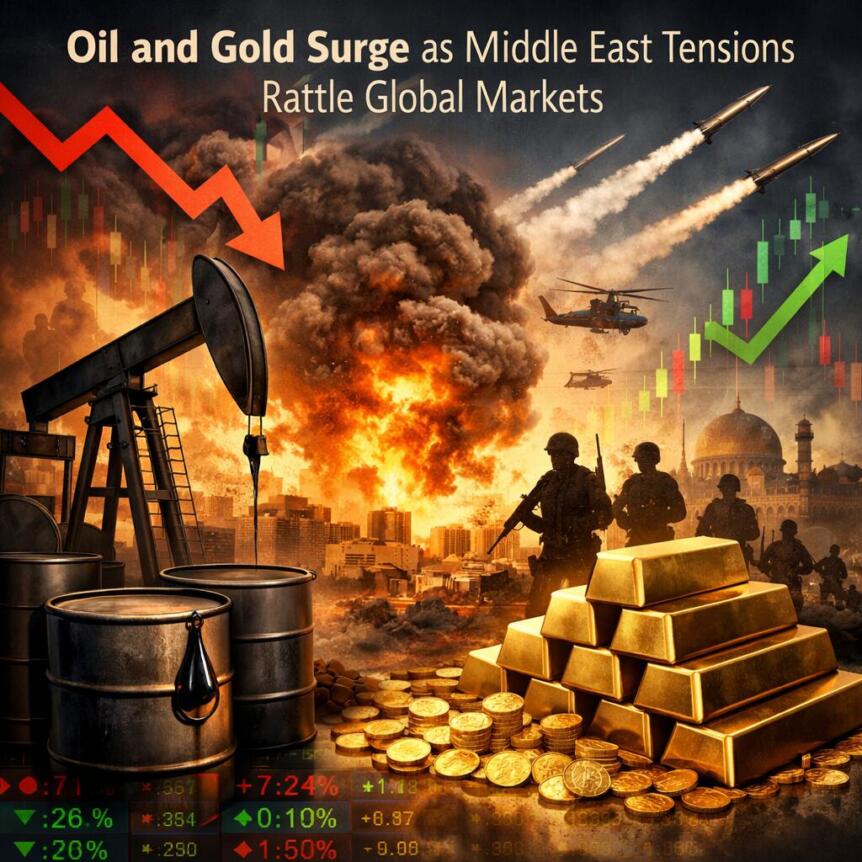
Oil and Gold Surge as Middle East Tensions Rattle Global Markets
