

EUR/USD Surges: Critical German Inflation Data Sparks Optimistic Rally Toward 1.1800
BitcoinWorld
EUR/USD Surges: Critical German Inflation Data Sparks Optimistic Rally Toward 1.1800
FRANKFURT, Germany – December 15, 2025: The EUR/USD currency pair demonstrates notable strength in early European trading, advancing toward the psychologically significant 1.1800 level. Market participants globally focus their attention on impending flash German inflation figures, which promise substantial volatility for the world’s most traded forex instrument. This movement represents a crucial test for the euro’s resilience against a backdrop of evolving monetary policy expectations and shifting global economic currents.
EUR/USD Technical Analysis and Current Market Position
The EUR/USD pair currently trades at 1.1795, marking a 0.3% increase from yesterday’s closing levels. Technical analysts observe the pair testing resistance near the 1.1800 handle, a level that has served as both support and resistance throughout 2025. Market sentiment appears cautiously optimistic, with trading volumes exceeding 30-day averages by approximately 15%. Furthermore, the 50-day moving average at 1.1750 provides immediate support, while the 200-day moving average at 1.1850 looms as the next significant technical barrier.
Several key technical indicators warrant attention. The Relative Strength Index (RSI) currently reads 58, indicating moderate bullish momentum without entering overbought territory. Additionally, the Moving Average Convergence Divergence (MACD) shows a bullish crossover above the signal line. These technical signals suggest underlying strength in the current upward movement. Market analysts particularly note the pair’s ability to maintain positions above the critical 1.1750 level throughout the Asian trading session.
Market Structure and Liquidity Considerations
Forex market structure reveals important dynamics. Major financial institutions report increased option-related hedging activity around the 1.1800 strike price. This activity typically indicates heightened institutional interest in specific price levels. Liquidity conditions remain robust across major trading hubs, with the European session typically accounting for approximately 40% of daily EUR/USD volume. Market depth data shows substantial buy orders clustered between 1.1780 and 1.1790, while sell orders concentrate above 1.1810.
German Inflation Data: Economic Context and Market Implications
The German Harmonized Index of Consumer Prices (HICP) flash estimate represents today’s primary market catalyst. Economists surveyed by major financial institutions project a year-over-year inflation rate of 2.4% for December 2025. This forecast follows November’s reading of 2.3% and October’s 2.2%. The European Central Bank (ECB) maintains its inflation target at 2% over the medium term, making German data particularly influential for eurozone monetary policy expectations.
Germany’s economic position within the eurozone amplifies the importance of its inflation data. As Europe’s largest economy, Germany contributes approximately 25% to the eurozone’s total GDP. Consequently, German inflation trends frequently signal broader eurozone economic developments. The Bundesbank, Germany’s central bank, has consistently emphasized data-dependent policy approaches throughout 2025. Market participants therefore scrutinize inflation figures for clues about future ECB policy adjustments.
| Month | HICP Inflation (YoY) | Core Inflation (YoY) | EUR/USD Reaction |
|---|---|---|---|
| October | 2.2% | 3.1% | +0.4% |
| November | 2.3% | 3.0% | +0.2% |
| December Forecast | 2.4% | 3.0% | Pending |
Energy and Food Price Components
Energy price developments significantly influence German inflation calculations. European natural gas prices have stabilized near €35 per megawatt-hour, approximately 60% below 2024 peaks. However, crude oil prices maintain relative strength above $80 per barrel. Food inflation remains elevated at 4.2% year-over-year, though showing gradual moderation from earlier 2025 levels. These components collectively contribute approximately 40% to the overall HICP basket weight.
Monetary Policy Divergence: ECB and Federal Reserve Dynamics
Central bank policy divergence represents a fundamental driver of EUR/USD movements. The European Central Bank maintains its main refinancing rate at 3.75%, following its most recent policy meeting. ECB President Christine Lagarde has emphasized a “cautious and data-dependent” approach to future rate decisions. Meanwhile, the Federal Reserve maintains the federal funds rate at 4.50%, having paused its tightening cycle in September 2025. This 75-basis-point differential between the ECB and Fed policy rates creates inherent support for the US dollar.
Forward guidance from both institutions reveals important nuances. The ECB’s latest projections suggest potential rate cuts beginning in mid-2026, contingent upon sustained inflation convergence toward target. Conversely, the Federal Reserve’s dot plot indicates possible rate reductions starting in late 2025. This timing differential creates complex dynamics for currency valuation. Market-implied probabilities, derived from interest rate futures, currently price a 65% chance of ECB rate stability through June 2026.
- ECB Policy Stance: Data-dependent approach with inflation focus
- Federal Reserve Position: Monitoring employment and inflation balance
- Policy Differential: 75 basis points favoring US dollar
- Forward Guidance: Divergent timing for potential rate adjustments
Global Economic Factors Influencing Currency Valuation
Broader economic developments contribute to EUR/USD price action. The eurozone economy demonstrates modest growth of 0.3% quarter-over-quarter in Q3 2025, while the United States reports 0.5% expansion during the same period. Trade balance data reveals Germany’s current account surplus narrowing to €15 billion in October 2025, down from €22 billion one year earlier. This reduction reflects both weaker export demand and stronger import growth, particularly for energy products.
Geopolitical considerations remain relevant for currency markets. European Union trade negotiations with several Asian economies continue progressing, potentially affecting long-term euro demand. Simultaneously, US fiscal policy developments influence dollar valuation through deficit projections and Treasury issuance patterns. The US Congressional Budget Office projects a federal budget deficit of 5.8% of GDP for fiscal year 2025, compared to the eurozone’s aggregate deficit of 3.2%.
Risk Sentiment and Safe-Haven Flows
Global risk sentiment significantly impacts currency pair dynamics. The VIX index, measuring expected US stock market volatility, currently trades at 15.2, indicating moderate market calm. Under these conditions, the US dollar typically experiences reduced safe-haven demand. However, the euro benefits from improving European equity performance, with the Euro Stoxx 50 index gaining 3.2% month-to-date. This correlation between equity performance and currency strength remains particularly pronounced for euro-dollar flows.
Historical Context and Comparative Analysis
The EUR/USD pair’s current positioning warrants historical comparison. The pair averaged 1.1250 throughout 2024, reaching a low of 1.0750 in September 2024 before recovering. The current level near 1.1800 represents the highest trading range since March 2024. This recovery reflects multiple factors including relative economic performance, interest rate differential adjustments, and shifting capital flows. Analysts note that the pair’s 50-day volatility measures 7.8%, slightly below its 10-year average of 8.5%.
Comparative analysis with other major currency pairs provides additional context. The euro has strengthened against the Japanese yen, with EUR/JPY reaching 162.50, while showing relative stability against the British pound. These cross-currency movements suggest euro-specific factors rather than broad dollar weakness driving current EUR/USD appreciation. The dollar index (DXY) itself trades at 102.50, representing a 2% decline from November 2025 peaks.
Market Participant Positioning and Sentiment Indicators
Commitment of Traders (COT) reports reveal important positioning data. Non-commercial traders, including hedge funds and large speculators, maintain net long euro positions totaling €12.5 billion. This represents a reduction from €18 billion in October 2025 but remains substantially above the 2024 average of €5 billion. Commercial traders, primarily multinational corporations conducting hedging operations, show balanced positioning with slight net short exposure.
Sentiment indicators provide additional perspective. The Deutsche Bank FX Sentiment Index registers at 54 for euro bullishness, indicating moderate positive bias. Survey data from major financial institutions shows 60% of respondents expecting EUR/USD to trade between 1.1700 and 1.1900 through year-end 2025. Options market pricing implies approximately 70% probability of the pair remaining within this range following the German inflation release.
Conclusion
The EUR/USD pair demonstrates notable strength approaching the 1.1800 level as market participants await critical German inflation data. This movement reflects complex interactions between technical factors, monetary policy expectations, and broader economic developments. The flash German HICP estimate will provide crucial information about eurozone inflation trends and potential ECB policy responses. Regardless of immediate data outcomes, the EUR/USD currency pair remains fundamentally influenced by transatlantic economic comparisons and central bank policy differentials. Market participants should monitor not only today’s inflation release but also subsequent economic indicators and central bank communications for continued EUR/USD direction.
FAQs
Q1: What time will the German inflation data be released?
The flash German HICP inflation estimate for December 2025 will be published at 08:00 GMT (09:00 Central European Time) by Germany’s Federal Statistical Office (Destatis).
Q2: How does German inflation affect the EUR/USD exchange rate?
Higher-than-expected German inflation typically strengthens the euro by increasing expectations for ECB interest rate increases or delaying potential rate cuts, while lower inflation weakens the euro through opposite policy expectations.
Q3: What is the significance of the 1.1800 level for EUR/USD?
The 1.1800 level represents a major psychological and technical barrier that has served as both support and resistance throughout 2024-2025, making it a key focus for technical traders and institutional order flow.
Q4: How does EUR/USD performance relate to other euro crosses?
EUR/USD movements often correlate with broader euro strength, but divergences can occur when dollar-specific factors dominate. Currently, euro strength appears relatively broad-based across major currency pairs.
Q5: What other economic data should traders watch alongside German inflation?
Traders should monitor US retail sales data, eurozone industrial production figures, Federal Reserve meeting minutes, and ECB speaker comments for comprehensive EUR/USD analysis.
This post EUR/USD Surges: Critical German Inflation Data Sparks Optimistic Rally Toward 1.1800 first appeared on BitcoinWorld.


You May Also Like

Glassnode Warns Nearly 30% Of Bitcoin Supply Could Face Future Quantum Risks
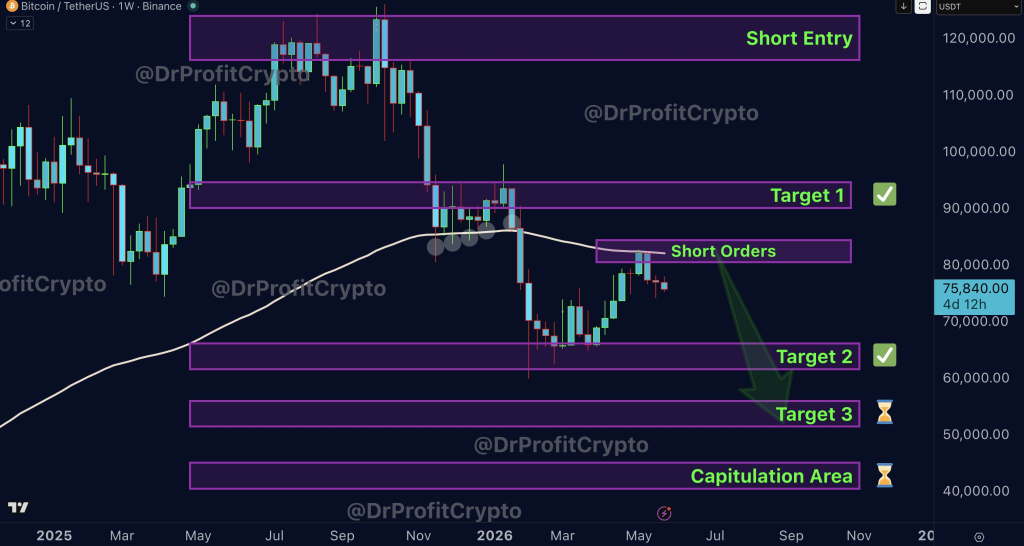
Bitcoin Price News: BTC at Risk of Falling to $70K as Crypto Veteran Calls for 50‑60K in Coming Months

Photographer catches Marco Rubio writing mantra to himself during cabinet meeting



