Author: TM Compiled by Tim, PANews I probably shouldn’t have posted this because it’s so insightful. Let’s delve into the world of crypto marketing: A masterclass in psychological tactics. If you don't know what psychological tactics mean? It means you've been manipulated your entire adult life. Welcome to the world of Meme Wars. Milady Example 1: Kalshi enters the crypto market Let's start with Kalshi. This isn't to spread FUD; in fact, I admire their execution. I'm just sharing my personal thoughts on the Kalshi case, though nothing here is confirmed. As the meme coin craze faded, prediction markets began to gain traction, and some influencers, including John Wang, began to push the narrative. There's no doubt that prediction markets are fairer than memecoins. Memecoins are a brutal 1-vs-1,000 game, while prediction markets at least even out the odds. But let's be honest: crypto enthusiasts simply love tokens, and they always have. So the question becomes: How to capture the memecoin market share without issuing new coins while challenging leading platforms like Polymarket? Answer: Psychological warfare This is what happened: John Wang signed with Kalshi long before the official announcement. In the previous months, social interactions and researcher citations had boosted his account's popularity. When the news finally broke, the publicity campaign was coordinated: news outlets, influencers, and "research" pages all reported the hiring of the same KOL. News reports on hiring cryptocurrency influencers This was framed as a major event, as if Kalshi had just poached an executive from Google or Apple. A simple yet clever psychological tactic: turning a personnel change into a full-scale marketing campaign. Kalshi isn’t just entering the crypto space; he’s making it look like a paradigm shift. They paid these websites, research institutions, and influencers to discuss the announcement. A personnel shakeup that caused a stir. Kalshi officially entered the crypto market with a fanfare comparable to the FAANG stock listings. A simple but effective psychological tactic: they take the announcement and spin it into a massive marketing campaign. Is John Wang the marketing manager of Kalshi? Example 2: ai16z flywheel Now, let's talk about ai16z This idea was truly genius, and it made people (including me) really look forward to the future of Crypto x AI integration. The script is this: They launched a Meme DAO around the idea of tokenizing venture capital giant a16z. Marc Andreessen himself responded, verifying the dissemination value of this meme. Suddenly, the entire industry's attention was focused on this "new AI fund." Then came the product launch: Eliza AI Agent. It quickly shot to the top of the GitHub charts. The timing was perfect, and the buzz was unstoppable. Shaw is showing off But at the bottom level, it is just a GPT wrapper. To put it bluntly, it just connects the API of the existing large language model to the front end, which is nothing groundbreaking. Who cares? Actually, no one cares. The product works, the atmosphere is right, and that's all that matters. The psychological tactics here are as much about narrative as they are about technique. Joining the ai16z DAO has become a status symbol. Like wearing a Rolex in its early days, becoming an "ai16z partner" signifies insider status, a title that attracts developers from top universities and deep-pocketed believers. The DAO’s market capitalization soared to $2.5 billion (but liquidity was laughably low). This set in motion a flywheel effect: hype attracted liquidity, liquidity attracted investors, and investors fueled more hype. But then the question arises: how to cash out without ruining the chart? Answer: You don’t. Instead, ai16z “sells” their technology to other crypto AI projects in exchange for up to 10% of the token distribution agreement and marketing support. The result? An overflow of half-baked AI projects. Support, pump-and-dump. Shaw after selling off his free crypto AI tokens The psychological tactics worked. Liquidity was drained, and now ai16z is plotting a comeback. The essence of psychological tactics The problem is: the same routine cannot succeed twice Once people figure out the gimmick, it's gone. They'll move on to the next new thing. That's why so many projects keep recycling the same old buzzwords: airdrop Roadmap Buyback flywheel Economic Model If you're listening to this, it's early days for this project. In this market, talking is out; delivering is key. Welcome to the Meme Wars Crypto marketing today is not advertising, it’s warfare. Narratives are weapons, and interactions are ammunition. Every announcement, collaboration, or controversy is a battle for mindshare. Winning projects aren’t just selling technology; they’re executing coordinated psychological tactics: weaving stories, memes, and strategies that the target audience is willing to believe. Not everyone plays by the same rules. So if you want to grab market share in this industry, you better arm yourself. Assemble your team like a Roman warlord ready to conquer. Because in crypto, it’s a war.Author: TM Compiled by Tim, PANews I probably shouldn’t have posted this because it’s so insightful. Let’s delve into the world of crypto marketing: A masterclass in psychological tactics. If you don't know what psychological tactics mean? It means you've been manipulated your entire adult life. Welcome to the world of Meme Wars. Milady Example 1: Kalshi enters the crypto market Let's start with Kalshi. This isn't to spread FUD; in fact, I admire their execution. I'm just sharing my personal thoughts on the Kalshi case, though nothing here is confirmed. As the meme coin craze faded, prediction markets began to gain traction, and some influencers, including John Wang, began to push the narrative. There's no doubt that prediction markets are fairer than memecoins. Memecoins are a brutal 1-vs-1,000 game, while prediction markets at least even out the odds. But let's be honest: crypto enthusiasts simply love tokens, and they always have. So the question becomes: How to capture the memecoin market share without issuing new coins while challenging leading platforms like Polymarket? Answer: Psychological warfare This is what happened: John Wang signed with Kalshi long before the official announcement. In the previous months, social interactions and researcher citations had boosted his account's popularity. When the news finally broke, the publicity campaign was coordinated: news outlets, influencers, and "research" pages all reported the hiring of the same KOL. News reports on hiring cryptocurrency influencers This was framed as a major event, as if Kalshi had just poached an executive from Google or Apple. A simple yet clever psychological tactic: turning a personnel change into a full-scale marketing campaign. Kalshi isn’t just entering the crypto space; he’s making it look like a paradigm shift. They paid these websites, research institutions, and influencers to discuss the announcement. A personnel shakeup that caused a stir. Kalshi officially entered the crypto market with a fanfare comparable to the FAANG stock listings. A simple but effective psychological tactic: they take the announcement and spin it into a massive marketing campaign. Is John Wang the marketing manager of Kalshi? Example 2: ai16z flywheel Now, let's talk about ai16z This idea was truly genius, and it made people (including me) really look forward to the future of Crypto x AI integration. The script is this: They launched a Meme DAO around the idea of tokenizing venture capital giant a16z. Marc Andreessen himself responded, verifying the dissemination value of this meme. Suddenly, the entire industry's attention was focused on this "new AI fund." Then came the product launch: Eliza AI Agent. It quickly shot to the top of the GitHub charts. The timing was perfect, and the buzz was unstoppable. Shaw is showing off But at the bottom level, it is just a GPT wrapper. To put it bluntly, it just connects the API of the existing large language model to the front end, which is nothing groundbreaking. Who cares? Actually, no one cares. The product works, the atmosphere is right, and that's all that matters. The psychological tactics here are as much about narrative as they are about technique. Joining the ai16z DAO has become a status symbol. Like wearing a Rolex in its early days, becoming an "ai16z partner" signifies insider status, a title that attracts developers from top universities and deep-pocketed believers. The DAO’s market capitalization soared to $2.5 billion (but liquidity was laughably low). This set in motion a flywheel effect: hype attracted liquidity, liquidity attracted investors, and investors fueled more hype. But then the question arises: how to cash out without ruining the chart? Answer: You don’t. Instead, ai16z “sells” their technology to other crypto AI projects in exchange for up to 10% of the token distribution agreement and marketing support. The result? An overflow of half-baked AI projects. Support, pump-and-dump. Shaw after selling off his free crypto AI tokens The psychological tactics worked. Liquidity was drained, and now ai16z is plotting a comeback. The essence of psychological tactics The problem is: the same routine cannot succeed twice Once people figure out the gimmick, it's gone. They'll move on to the next new thing. That's why so many projects keep recycling the same old buzzwords: airdrop Roadmap Buyback flywheel Economic Model If you're listening to this, it's early days for this project. In this market, talking is out; delivering is key. Welcome to the Meme Wars Crypto marketing today is not advertising, it’s warfare. Narratives are weapons, and interactions are ammunition. Every announcement, collaboration, or controversy is a battle for mindshare. Winning projects aren’t just selling technology; they’re executing coordinated psychological tactics: weaving stories, memes, and strategies that the target audience is willing to believe. Not everyone plays by the same rules. So if you want to grab market share in this industry, you better arm yourself. Assemble your team like a Roman warlord ready to conquer. Because in crypto, it’s a war.

Uncovering the Secrets Behind the Popularity of Kalshi and ai16z: The "Psychological Tactics" of the Crypto Market

2025/09/01 18:35

Author: TM

Compiled by Tim, PANews

I probably shouldn’t have posted this because it’s so insightful. Let’s delve into the world of crypto marketing: A masterclass in psychological tactics.

If you don't know what psychological tactics mean? It means you've been manipulated your entire adult life.

Welcome to the world of Meme Wars.

 Milady

Example 1: Kalshi enters the crypto market

Let's start with Kalshi. This isn't to spread FUD; in fact, I admire their execution. I'm just sharing my personal thoughts on the Kalshi case, though nothing here is confirmed.

As the meme coin craze faded, prediction markets began to gain traction, and some influencers, including John Wang, began to push the narrative.

There's no doubt that prediction markets are fairer than memecoins. Memecoins are a brutal 1-vs-1,000 game, while prediction markets at least even out the odds. But let's be honest: crypto enthusiasts simply love tokens, and they always have.

So the question becomes: How to capture the memecoin market share without issuing new coins while challenging leading platforms like Polymarket?

Answer: Psychological warfare

This is what happened:

  • John Wang signed with Kalshi long before the official announcement.
  • In the previous months, social interactions and researcher citations had boosted his account's popularity.
  • When the news finally broke, the publicity campaign was coordinated: news outlets, influencers, and "research" pages all reported the hiring of the same KOL.
 News reports on hiring cryptocurrency influencers

This was framed as a major event, as if Kalshi had just poached an executive from Google or Apple.

A simple yet clever psychological tactic: turning a personnel change into a full-scale marketing campaign.

Kalshi isn’t just entering the crypto space; he’s making it look like a paradigm shift.

They paid these websites, research institutions, and influencers to discuss the announcement. A personnel shakeup that caused a stir. Kalshi officially entered the crypto market with a fanfare comparable to the FAANG stock listings.

A simple but effective psychological tactic: they take the announcement and spin it into a massive marketing campaign.
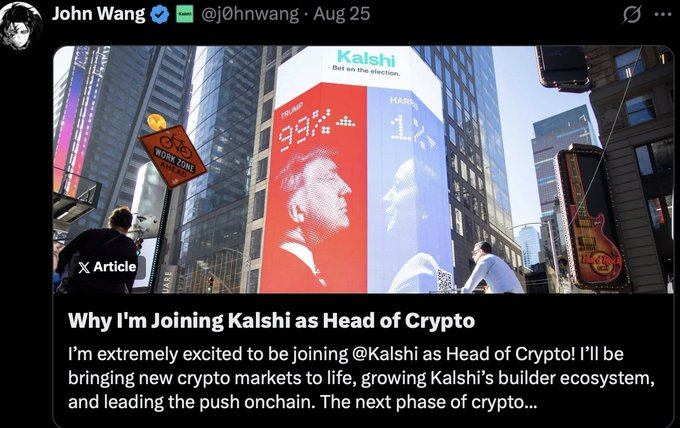
 Is John Wang the marketing manager of Kalshi?

Example 2: ai16z flywheel

Now, let's talk about ai16z

This idea was truly genius, and it made people (including me) really look forward to the future of Crypto x AI integration.

The script is this:

  • They launched a Meme DAO around the idea of tokenizing venture capital giant a16z.
  • Marc Andreessen himself responded, verifying the dissemination value of this meme.
  • Suddenly, the entire industry's attention was focused on this "new AI fund."
  • Then came the product launch: Eliza AI Agent.

It quickly shot to the top of the GitHub charts. The timing was perfect, and the buzz was unstoppable.

 Shaw is showing off

But at the bottom level, it is just a GPT wrapper. To put it bluntly, it just connects the API of the existing large language model to the front end, which is nothing groundbreaking.

Who cares? Actually, no one cares. The product works, the atmosphere is right, and that's all that matters.

The psychological tactics here are as much about narrative as they are about technique.

Joining the ai16z DAO has become a status symbol. Like wearing a Rolex in its early days, becoming an "ai16z partner" signifies insider status, a title that attracts developers from top universities and deep-pocketed believers.

The DAO’s market capitalization soared to $2.5 billion (but liquidity was laughably low). This set in motion a flywheel effect: hype attracted liquidity, liquidity attracted investors, and investors fueled more hype.

But then the question arises: how to cash out without ruining the chart?

Answer: You don’t. Instead, ai16z “sells” their technology to other crypto AI projects in exchange for up to 10% of the token distribution agreement and marketing support.

The result? An overflow of half-baked AI projects. Support, pump-and-dump.

 Shaw after selling off his free crypto AI tokens

The psychological tactics worked. Liquidity was drained, and now ai16z is plotting a comeback.

The essence of psychological tactics

The problem is: the same routine cannot succeed twice

Once people figure out the gimmick, it's gone. They'll move on to the next new thing. That's why so many projects keep recycling the same old buzzwords:

  • airdrop
  • Roadmap
  • Buyback
  • flywheel
  • Economic Model

If you're listening to this, it's early days for this project. In this market, talking is out; delivering is key.

Welcome to the Meme Wars

Crypto marketing today is not advertising, it’s warfare.

Narratives are weapons, and interactions are ammunition. Every announcement, collaboration, or controversy is a battle for mindshare.

Winning projects aren’t just selling technology; they’re executing coordinated psychological tactics: weaving stories, memes, and strategies that the target audience is willing to believe.

Not everyone plays by the same rules.

So if you want to grab market share in this industry, you better arm yourself. Assemble your team like a Roman warlord ready to conquer.

Because in crypto, it’s a war.

Market Opportunity
MemeCore Logo
MemeCore Price(M)
$1.68654
$1.68654$1.68654
-0.13%
USD
MemeCore (M) Live Price Chart
Disclaimer: The articles reposted on this site are sourced from public platforms and are provided for informational purposes only. They do not necessarily reflect the views of MEXC. All rights remain with the original authors. If you believe any content infringes on third-party rights, please contact service@support.mexc.com for removal. MEXC makes no guarantees regarding the accuracy, completeness, or timeliness of the content and is not responsible for any actions taken based on the information provided. The content does not constitute financial, legal, or other professional advice, nor should it be considered a recommendation or endorsement by MEXC.

You May Also Like

Pump.fun-linked address deposits $148M in USDC and USDT to Kraken

Pump.fun-linked address deposits $148M in USDC and USDT to Kraken

A large on-chain transfer linked to Pump.fun has put fresh focus on how the memecoin launchpad is handling the proceeds of its token sale. A wallet associated with
Share
Crypto.news2026/01/13 11:18
Top Solana Treasury Firm Forward Industries Unveils $4 Billion Capital Raise To Buy More SOL ⋆ ZyCrypto

Top Solana Treasury Firm Forward Industries Unveils $4 Billion Capital Raise To Buy More SOL ⋆ ZyCrypto

The post Top Solana Treasury Firm Forward Industries Unveils $4 Billion Capital Raise To Buy More SOL ⋆ ZyCrypto appeared on BitcoinEthereumNews.com. Advertisement &nbsp &nbsp Forward Industries, the largest publicly traded Solana treasury company, has filed a $4 billion at-the-market (ATM) equity offering program with the U.S. SEC  to raise more capital for additional SOL accumulation. Forward Strategies Doubles Down On Solana Strategy In a Wednesday press release, Forward Industries revealed that the 4 billion ATM equity offering program will allow the company to issue and sell common stock via Cantor Fitzgerald under a sales agreement dated Sept. 16, 2025. Forward said proceeds will go toward “general corporate purposes,” including the pursuit of its Solana balance sheet and purchases of income-generating assets. The sales of the shares are covered by an automatic shelf registration statement filed with the US Securities and Exchange Commission that is already effective – meaning the shares will be tradable once they’re sold. An automatic shelf registration allows certain publicly listed companies to raise capital with flexibility swiftly.  Kyle Samani, Forward’s chairman, astutely described the ATM offering as “a flexible and efficient mechanism” to raise and deploy capital for the company’s Solana strategy and bolster its balance sheet.  Advertisement &nbsp Though the maximum amount is listed as $4 billion, the firm indicated that sales may or may not occur depending on existing market conditions. “The ATM Program enhances our ability to continue scaling that position, strengthen our balance sheet, and pursue growth initiatives in alignment with our long-term vision,” Samani said. Forward Industries kicked off its Solana treasury strategy on Sept. 8. The Wednesday S-3 form follows Forward’s $1.65 billion private investment in public equity that closed last week, led by crypto heavyweights like Galaxy Digital, Jump Crypto, and Multicoin Capital. The company started deploying that capital this week, announcing it snatched up 6.8 million SOL for approximately $1.58 billion at an average price of $232…
Share
BitcoinEthereumNews2025/09/18 03:42
Economists Urge MEPs to Support Digital Euro in Open Letter

Economists Urge MEPs to Support Digital Euro in Open Letter

The post Economists Urge MEPs to Support Digital Euro in Open Letter appeared on BitcoinEthereumNews.com. Seventy economists and policy experts called on members
Share
BitcoinEthereumNews2026/01/13 11:23