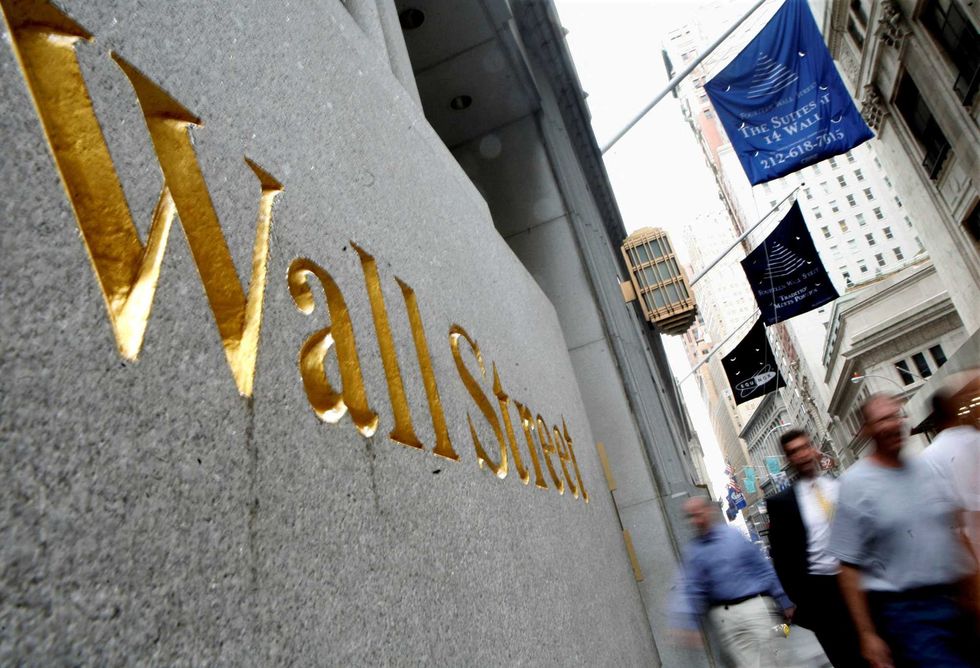
India is scrambling to contain its bond market after yields spiked in the biggest selloff since 2022.India is scrambling to contain its bond market after yields spiked in the biggest selloff since 2022.

India suffers worst bond selloff since 2022 as yields surge in August

India is scrambling to contain its bond market after yields spiked in the biggest selloff since 2022.

The Reserve Bank of India (RBI) is now weighing moves to calm markets after a brutal August saw the 10-year benchmark yield climb nearly 20 basis points, data from Bloomberg showed.

Traders blamed a mix of fiscal pressure, tax cuts announced by Prime Minister Narendra Modi, and the fading chance of a near-term rate cut following better-than-expected growth numbers.

Analysts believe the RBI may step in by buying government securities in the secondary market or by rejecting bids at auctions.

A. Prasanna, chief economist at ICICI Securities Primary Dealership, said the RBI “should be somewhat worried about the pace of rise in yields,” adding that it “can give soft signals like statements or marginal screen purchases to ensure smooth functioning of the bond market.” Prasanna pointed to open market operations as the likely first step.

RBI weighs auction rejections as pressure builds

Nathan Sribalasundaram, analyst at Nomura Holdings, said the RBI could also allow the call rate to ease, improving carry for bond investors. He added: “Support could come from an adjustment to the supply. Near term, bids could be rejected at the bond auctions.” The central bank hasn’t officially commented on any of the proposals, and a spokesperson did not respond to requests for input.

India plans bond market rescue as yields surge in worst rout since 2022.

Government spending numbers released Friday showed India’s fiscal deficit has already hit 30% of the full-year target within the first four months through July, almost double last year’s pace of 17%. That growing gap is pushing up borrowing costs across the board. The damage has already started spilling into the private sector. Companies like Bajaj Finance and Housing and Urban Development Corp. (HUDCO) have shelved plans for fresh bond sales, local media reported. With borrowing costs rising and demand collapsing, firms are now sitting out.

The yield-repo spread, the difference between the 10-year bond yield and the central bank’s benchmark rate, has also widened to its highest level in over two years, according to analysts at Australia and New Zealand Banking Group (ANZ). That suggests tighter financial conditions ahead, even before any new shocks from tariffs or policy changes. And as bond yields climb, liquidity gets more expensive, leaving both government and private borrowers squeezed.

Rupee under fire, traders see more pain

The Indian rupee is under serious pressure too. It closed at a record low of 88.3075 per dollar on Friday and is expected to stay weak on Monday.

The one-month non-deliverable forward hinted at a small move from Friday’s level of 88.1950, but traders warned the breach of the 88 barrier has already given speculators more room to attack.

A senior treasury official at a mid-sized private sector bank said the RBI likely held back from defending the rupee more aggressively after nearly $950 million in foreign equity outflows hit the market on Friday.

That, plus strong dollar demand from importers and concerns tied to U.S. tariffs, likely pushed the RBI to allow the drop.

This comes as global bond markets are also under strain. In the euro zone, long-dated bond yields rose sharply on Monday, with Germany’s 30-year yield climbing to 3.378%, the highest since August 2011. Yields in France and the Netherlands moved in sync with Germany’s, also hitting 14-year highs. Data showed August brought the biggest monthly jump in long-dated euro debt in five months.

Over in the U.S., the 30-year Treasury yield rose 4 basis points on Friday before the Labor Day holiday shuttered markets on Monday. Germany’s 10-year yield, seen as the benchmark for euro zone bonds, rose to 2.75%, while France’s equivalent climbed to 3.53%. The spread between the two widened to 78 basis points, the highest since April, as political risks in France weighed on investor confidence.

European Central Bank President Christine Lagarde addressed those concerns on Monday, saying she was “looking very attentively” at the widening French bond spreads, but added that France was not yet in a position that would require IMF intervention.

Don’t just read crypto news. Understand it. Subscribe to our newsletter. It's free.

Market Opportunity
BarnBridge Logo
BarnBridge Price(BOND)
$0.09831
$0.09831$0.09831
-0.38%
USD
BarnBridge (BOND) Live Price Chart
Disclaimer: The articles reposted on this site are sourced from public platforms and are provided for informational purposes only. They do not necessarily reflect the views of MEXC. All rights remain with the original authors. If you believe any content infringes on third-party rights, please contact service@support.mexc.com for removal. MEXC makes no guarantees regarding the accuracy, completeness, or timeliness of the content and is not responsible for any actions taken based on the information provided. The content does not constitute financial, legal, or other professional advice, nor should it be considered a recommendation or endorsement by MEXC.

You May Also Like

LMAX Group Deepens Ripple Partnership With RLUSD Collateral Rollout

LMAX Group Deepens Ripple Partnership With RLUSD Collateral Rollout

LMAX Group has revealed a multi-year partnership with Ripple to integrate traditional finance with digital asset markets. As part of the agreement, LMAX will introduce
Share
Tronweekly2026/01/16 23:00
Fed rate decision September 2025

Fed rate decision September 2025

The post Fed rate decision September 2025 appeared on BitcoinEthereumNews.com. WASHINGTON – The Federal Reserve on Wednesday approved a widely anticipated rate cut and signaled that two more are on the way before the end of the year as concerns intensified over the U.S. labor market. In an 11-to-1 vote signaling less dissent than Wall Street had anticipated, the Federal Open Market Committee lowered its benchmark overnight lending rate by a quarter percentage point. The decision puts the overnight funds rate in a range between 4.00%-4.25%. Newly-installed Governor Stephen Miran was the only policymaker voting against the quarter-point move, instead advocating for a half-point cut. Governors Michelle Bowman and Christopher Waller, looked at for possible additional dissents, both voted for the 25-basis point reduction. All were appointed by President Donald Trump, who has badgered the Fed all summer to cut not merely in its traditional quarter-point moves but to lower the fed funds rate quickly and aggressively. In the post-meeting statement, the committee again characterized economic activity as having “moderated” but added language saying that “job gains have slowed” and noted that inflation “has moved up and remains somewhat elevated.” Lower job growth and higher inflation are in conflict with the Fed’s twin goals of stable prices and full employment.  “Uncertainty about the economic outlook remains elevated” the Fed statement said. “The Committee is attentive to the risks to both sides of its dual mandate and judges that downside risks to employment have risen.” Markets showed mixed reaction to the developments, with the Dow Jones Industrial Average up more than 300 points but the S&P 500 and Nasdaq Composite posting losses. Treasury yields were modestly lower. At his post-meeting news conference, Fed Chair Jerome Powell echoed the concerns about the labor market. “The marked slowing in both the supply of and demand for workers is unusual in this less dynamic…
Share
BitcoinEthereumNews2025/09/18 02:44
Aave V4 roadmap signals end of multichain sprawl

Aave V4 roadmap signals end of multichain sprawl

The post Aave V4 roadmap signals end of multichain sprawl appeared on BitcoinEthereumNews.com. Aave Labs has released its official launch roadmap for V4, laying out the final steps ahead of the major upgrade’s Q4 mainnet launch.  Alongside new architectural and security improvements, the roadmap introduces a fundamental shift in how user balances are tracked and highlights a strategic pullback from economically underperforming deployments across layer-2 and alternative layer-1 networks. The V4 release moves away from aTokens’ rebasing-style mechanics toward ERC-4626-style share accounting, a change that promises cleaner integrations, easier tax treatment, and better compatibility with downstream DeFi infrastructure.  In a recent technical development update, Aave Labs confirmed that “tokenization is to remain optional and built using ERC 4626 vaults,” and that internal accounting will eliminate the use of exchange rates or scaled balances. The goal is to “further improve the overall reliability of the protocol.” ERC-4626 is a widely adopted Ethereum standard that expresses user deposits as shares of a vault rather than balances that grow over time. In Aave V3, aTokens accrue interest by increasing a user’s balance directly — behavior that resembles rebasing tokens and often confuses integrations and portfolio accounting tools.  By contrast, ERC-4626 tracks yield through a rising price-per-share metric, leaving token balances unchanged. The result is more predictable behavior for integrators, auditors and tax software, as well as a clearer cost basis for users. The roadmap also outlines a series of release milestones, including a formal codebase publication, a public testnet launch with a redesigned interface, and the completion of a multi-layered security review involving formal verification and manual audits. Aave Labs said the roadmap reflects the protocol’s “final stages of review, testing, and deployment,” and that additional documentation and launch preparation materials will be released in the coming weeks. But the most pointed strategic shift comes not from the codebase, but from Aave’s own governance forums. “Aave…
Share
BitcoinEthereumNews2025/09/18 07:40