Written by AIMan, Golden Finance The US government has taken another on-chain action. On August 28, 2025, the U.S. Department of Commerce announced that it would publish real gross domestic product (GDP) data on nine blockchains starting in July 2025. At the same time, Chainlink also announced a partnership with the U.S. Department of Commerce to upload six key U.S. economic data to 10 blockchains. What's going on? Why are there different numbers of blockchains? How are they all uploaded? This article briefly explains. Hash: US Department of Commerce puts GDP document hash values on blockchain On August 28, 2025, the U.S. Bureau of Economic Analysis announced that the annual growth rate of real GDP in the second quarter of 2025 would be revised to 3.3%. In addition to real GDP data, the U.S. Bureau of Economic Analysis also releases nominal GDP, real final sales by private domestic buyers, real gross domestic income (GDI), the average of real GDP and real GDI, the domestic purchases price index, the personal consumption expenditures (PCE) price index, and the core PCE price index. The document is published in PDF format: https://www.bea.gov/sites/default/files/2025-08/gdp2q25-2nd.pdf The U.S. Department of Commerce subsequently announced that it had published the official hash of the PDF file of GDP data for the second quarter of 2025 (including the total GDP in some cases) to the following nine blockchains: Bitcoin, Ethereum, Solana, TRON, Stellar, Avalanche, Arbitrum One, Polygon PoS and Optimism. In other words, the U.S. Department of Commerce downloaded the above PDF file and performed a SHA256 hash operation on it, and the hash result was: c70972a12908b73c2407d9cc6842ba2a02203a690f3090cd29f30c45f0cfd93d This hash value is then published to nine blockchains, either as a memo or as data embedded in a smart contract, along with the total data (depending on the blockchain). The transaction hash or smart contract address for each blockchain is as follows: Bitcoin transaction hash: fcf172401ca9d89013f13f5bbf0fc7577cb8a3588bf5cbc3b458ff36635fec00 Ethereum smart contract address: 0x36ccdF11044f60F196e981970d592a7DE567ed7b Solana Transaction Hash: 43dJVBK4hiXy1rpC5BifT8LU2NDNHKmdWyqyYDaTfyEeX8y3LMtUtajW3Q22rCSbmneny56CBtkictQRQJXV1ybp TRON transaction hash: 3f05633fb894aa6d6610c980975cca732a051edbbf5d8667799782cf2ae04040 Stellar transaction hash: 89e4d300d237db6b67c 510f71c8cd2f690868806a6b40a40a5a9755f4954144a Avalanche smart contract address: 0x36ccdF11044f60F196e981970d592a7DE567ed7b Arbitrum One smart contract address: 0x36ccdF11044f60F196e981970d592a7DE567ed7b Polygon PoS smart contract address: 0x36ccdF11044f60F196e981970d592a7DE567ed7b Optimism smart contract address: 0x36ccdF11044f60F196e981970d592a7DE567ed7b Let’s open the Ethereum smart contract address and take a look: As shown above, the hash value of the U.S. Bureau of Economic Analysis GDP PDF file is indeed written into the Ethereum smart contract. So what about Chainlink? Feed: Chainlink brings 6 data feeds to the chain Unlike the U.S. Department of Commerce, which simply uploads the hash value of PDF files to the chain, Chainlink feeds six key U.S. economic data as data sources (Data Feed) to 10 blockchains. These six data are: real GDP, annualized growth rate of real GDP, PCE price index, annualized growth rate of PCE price index, actual final sales to private domestic buyers, and annualized growth rate of actual final sales to private domestic buyers. Chainlink initially supports 10 blockchains: Arbitrum, Avalanche, Base, Botanix, Ethereum, Linea, Mantle, Optimism, Sonic, and ZKsync. Chainlink also stated that it will update the system monthly or quarterly, depending on the situation, and will gradually support more blockchain networks based on user demand. Taking Ethereum as an example, its feed address is as follows: This means that as long as you integrate Chainlink and choose to read the US Government Macroeconomic Data Feeds, Chainlink will push these six economic indicator data of the US real economy to you on the chain. Conclusion Unlike the U.S. Department of Commerce, which merely uploads document hashes, Chainlink may be more significant. Because oracles feed government macroeconomic data, they can unlock innovative use cases for the crypto market, such as serving as a data source for predicting market results, issuing crypto assets related to official data, inflation-linked crypto products, and so on. This time, the U.S. Department of Commerce and Chainlink put some U.S. official data on the chain, which is of course a manifestation of the government's further acceptance of blockchain. However, it's also important to note that many in the crypto industry already know that blockchain only guarantees that data on the chain cannot be tampered with, but the reliability of the uploaded data itself is questionable. Furthermore, some US government data has been subject to market skepticism, including from Trump himself. Just as, the GDP data released by the U.S. Bureau of Economic Analysis this time is its second estimate. The U.S. Bureau of Economic Analysis releases multiple revisions to its quarterly GDP figures to provide a more accurate picture of the economy. The Advance Estimate is the first release, typically about a month after the end of the period. The Second Estimate, released about a month after the first, is revised based on more data and offers a more accurate picture of the economy. The Third Estimate (Final Estimate) is the final estimate, based on more comprehensive data.Written by AIMan, Golden Finance The US government has taken another on-chain action. On August 28, 2025, the U.S. Department of Commerce announced that it would publish real gross domestic product (GDP) data on nine blockchains starting in July 2025. At the same time, Chainlink also announced a partnership with the U.S. Department of Commerce to upload six key U.S. economic data to 10 blockchains. What's going on? Why are there different numbers of blockchains? How are they all uploaded? This article briefly explains. Hash: US Department of Commerce puts GDP document hash values on blockchain On August 28, 2025, the U.S. Bureau of Economic Analysis announced that the annual growth rate of real GDP in the second quarter of 2025 would be revised to 3.3%. In addition to real GDP data, the U.S. Bureau of Economic Analysis also releases nominal GDP, real final sales by private domestic buyers, real gross domestic income (GDI), the average of real GDP and real GDI, the domestic purchases price index, the personal consumption expenditures (PCE) price index, and the core PCE price index. The document is published in PDF format: https://www.bea.gov/sites/default/files/2025-08/gdp2q25-2nd.pdf The U.S. Department of Commerce subsequently announced that it had published the official hash of the PDF file of GDP data for the second quarter of 2025 (including the total GDP in some cases) to the following nine blockchains: Bitcoin, Ethereum, Solana, TRON, Stellar, Avalanche, Arbitrum One, Polygon PoS and Optimism. In other words, the U.S. Department of Commerce downloaded the above PDF file and performed a SHA256 hash operation on it, and the hash result was: c70972a12908b73c2407d9cc6842ba2a02203a690f3090cd29f30c45f0cfd93d This hash value is then published to nine blockchains, either as a memo or as data embedded in a smart contract, along with the total data (depending on the blockchain). The transaction hash or smart contract address for each blockchain is as follows: Bitcoin transaction hash: fcf172401ca9d89013f13f5bbf0fc7577cb8a3588bf5cbc3b458ff36635fec00 Ethereum smart contract address: 0x36ccdF11044f60F196e981970d592a7DE567ed7b Solana Transaction Hash: 43dJVBK4hiXy1rpC5BifT8LU2NDNHKmdWyqyYDaTfyEeX8y3LMtUtajW3Q22rCSbmneny56CBtkictQRQJXV1ybp TRON transaction hash: 3f05633fb894aa6d6610c980975cca732a051edbbf5d8667799782cf2ae04040 Stellar transaction hash: 89e4d300d237db6b67c 510f71c8cd2f690868806a6b40a40a5a9755f4954144a Avalanche smart contract address: 0x36ccdF11044f60F196e981970d592a7DE567ed7b Arbitrum One smart contract address: 0x36ccdF11044f60F196e981970d592a7DE567ed7b Polygon PoS smart contract address: 0x36ccdF11044f60F196e981970d592a7DE567ed7b Optimism smart contract address: 0x36ccdF11044f60F196e981970d592a7DE567ed7b Let’s open the Ethereum smart contract address and take a look: As shown above, the hash value of the U.S. Bureau of Economic Analysis GDP PDF file is indeed written into the Ethereum smart contract. So what about Chainlink? Feed: Chainlink brings 6 data feeds to the chain Unlike the U.S. Department of Commerce, which simply uploads the hash value of PDF files to the chain, Chainlink feeds six key U.S. economic data as data sources (Data Feed) to 10 blockchains. These six data are: real GDP, annualized growth rate of real GDP, PCE price index, annualized growth rate of PCE price index, actual final sales to private domestic buyers, and annualized growth rate of actual final sales to private domestic buyers. Chainlink initially supports 10 blockchains: Arbitrum, Avalanche, Base, Botanix, Ethereum, Linea, Mantle, Optimism, Sonic, and ZKsync. Chainlink also stated that it will update the system monthly or quarterly, depending on the situation, and will gradually support more blockchain networks based on user demand. Taking Ethereum as an example, its feed address is as follows: This means that as long as you integrate Chainlink and choose to read the US Government Macroeconomic Data Feeds, Chainlink will push these six economic indicator data of the US real economy to you on the chain. Conclusion Unlike the U.S. Department of Commerce, which merely uploads document hashes, Chainlink may be more significant. Because oracles feed government macroeconomic data, they can unlock innovative use cases for the crypto market, such as serving as a data source for predicting market results, issuing crypto assets related to official data, inflation-linked crypto products, and so on. This time, the U.S. Department of Commerce and Chainlink put some U.S. official data on the chain, which is of course a manifestation of the government's further acceptance of blockchain. However, it's also important to note that many in the crypto industry already know that blockchain only guarantees that data on the chain cannot be tampered with, but the reliability of the uploaded data itself is questionable. Furthermore, some US government data has been subject to market skepticism, including from Trump himself. Just as, the GDP data released by the U.S. Bureau of Economic Analysis this time is its second estimate. The U.S. Bureau of Economic Analysis releases multiple revisions to its quarterly GDP figures to provide a more accurate picture of the economy. The Advance Estimate is the first release, typically about a month after the end of the period. The Second Estimate, released about a month after the first, is revised based on more data and offers a more accurate picture of the economy. The Third Estimate (Final Estimate) is the final estimate, based on more comprehensive data.

How does the US government put GDP data on the blockchain?

2025/09/01 07:30
5 min read

Written by AIMan, Golden Finance

The US government has taken another on-chain action.

On August 28, 2025, the U.S. Department of Commerce announced that it would publish real gross domestic product (GDP) data on nine blockchains starting in July 2025.

At the same time, Chainlink also announced a partnership with the U.S. Department of Commerce to upload six key U.S. economic data to 10 blockchains.

What's going on? Why are there different numbers of blockchains? How are they all uploaded? This article briefly explains.

Hash: US Department of Commerce puts GDP document hash values on blockchain

On August 28, 2025, the U.S. Bureau of Economic Analysis announced that the annual growth rate of real GDP in the second quarter of 2025 would be revised to 3.3%.
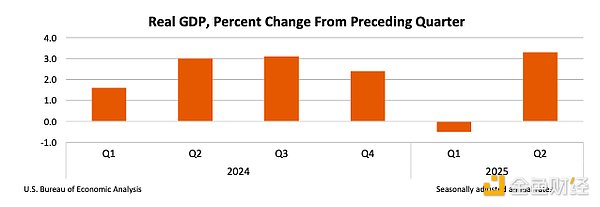
In addition to real GDP data, the U.S. Bureau of Economic Analysis also releases nominal GDP, real final sales by private domestic buyers, real gross domestic income (GDI), the average of real GDP and real GDI, the domestic purchases price index, the personal consumption expenditures (PCE) price index, and the core PCE price index.
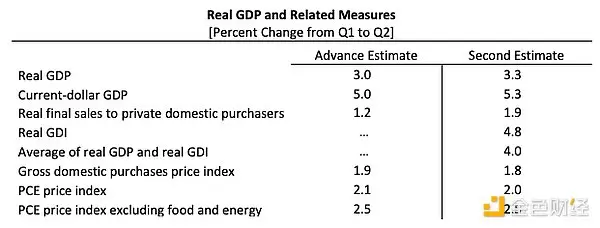
The document is published in PDF format: https://www.bea.gov/sites/default/files/2025-08/gdp2q25-2nd.pdf

The U.S. Department of Commerce subsequently announced that it had published the official hash of the PDF file of GDP data for the second quarter of 2025 (including the total GDP in some cases) to the following nine blockchains: Bitcoin, Ethereum, Solana, TRON, Stellar, Avalanche, Arbitrum One, Polygon PoS and Optimism.

In other words, the U.S. Department of Commerce downloaded the above PDF file and performed a SHA256 hash operation on it, and the hash result was:

c70972a12908b73c2407d9cc6842ba2a02203a690f3090cd29f30c45f0cfd93d

This hash value is then published to nine blockchains, either as a memo or as data embedded in a smart contract, along with the total data (depending on the blockchain).

The transaction hash or smart contract address for each blockchain is as follows:

Bitcoin transaction hash:

fcf172401ca9d89013f13f5bbf0fc7577cb8a3588bf5cbc3b458ff36635fec00

Ethereum smart contract address:

0x36ccdF11044f60F196e981970d592a7DE567ed7b

Solana Transaction Hash:

43dJVBK4hiXy1rpC5BifT8LU2NDNHKmdWyqyYDaTfyEeX8y3LMtUtajW3Q22rCSbmneny56CBtkictQRQJXV1ybp

TRON transaction hash:

3f05633fb894aa6d6610c980975cca732a051edbbf5d8667799782cf2ae04040

Stellar transaction hash:

89e4d300d237db6b67c 510f71c8cd2f690868806a6b40a40a5a9755f4954144a

Avalanche smart contract address: 0x36ccdF11044f60F196e981970d592a7DE567ed7b

Arbitrum One smart contract address: 0x36ccdF11044f60F196e981970d592a7DE567ed7b

Polygon PoS smart contract address: 0x36ccdF11044f60F196e981970d592a7DE567ed7b

Optimism smart contract address: 0x36ccdF11044f60F196e981970d592a7DE567ed7b

Let’s open the Ethereum smart contract address and take a look:
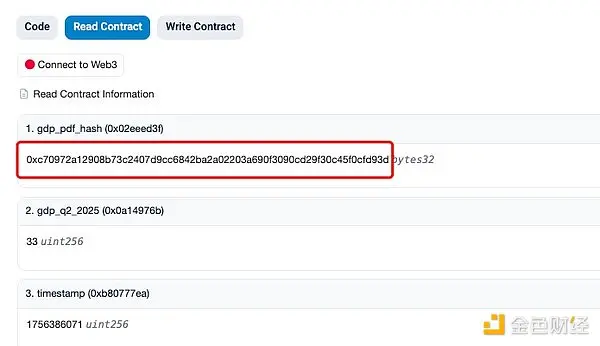
As shown above, the hash value of the U.S. Bureau of Economic Analysis GDP PDF file is indeed written into the Ethereum smart contract.

So what about Chainlink?

Unlike the U.S. Department of Commerce, which simply uploads the hash value of PDF files to the chain, Chainlink feeds six key U.S. economic data as data sources (Data Feed) to 10 blockchains.

These six data are: real GDP, annualized growth rate of real GDP, PCE price index, annualized growth rate of PCE price index, actual final sales to private domestic buyers, and annualized growth rate of actual final sales to private domestic buyers.

Chainlink initially supports 10 blockchains: Arbitrum, Avalanche, Base, Botanix, Ethereum, Linea, Mantle, Optimism, Sonic, and ZKsync. Chainlink also stated that it will update the system monthly or quarterly, depending on the situation, and will gradually support more blockchain networks based on user demand.

Taking Ethereum as an example, its feed address is as follows:
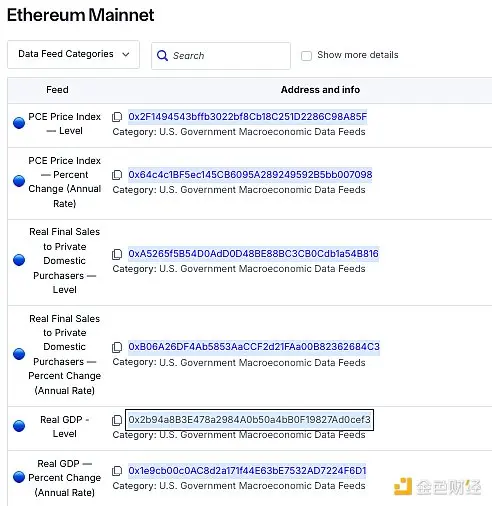
This means that as long as you integrate Chainlink and choose to read the US Government Macroeconomic Data Feeds, Chainlink will push these six economic indicator data of the US real economy to you on the chain.

Conclusion

Unlike the U.S. Department of Commerce, which merely uploads document hashes, Chainlink may be more significant.

Because oracles feed government macroeconomic data, they can unlock innovative use cases for the crypto market, such as serving as a data source for predicting market results, issuing crypto assets related to official data, inflation-linked crypto products, and so on.

This time, the U.S. Department of Commerce and Chainlink put some U.S. official data on the chain, which is of course a manifestation of the government's further acceptance of blockchain.

However, it's also important to note that many in the crypto industry already know that blockchain only guarantees that data on the chain cannot be tampered with, but the reliability of the uploaded data itself is questionable. Furthermore, some US government data has been subject to market skepticism, including from Trump himself.

Just as, the GDP data released by the U.S. Bureau of Economic Analysis this time is its second estimate.

The U.S. Bureau of Economic Analysis releases multiple revisions to its quarterly GDP figures to provide a more accurate picture of the economy. The Advance Estimate is the first release, typically about a month after the end of the period. The Second Estimate, released about a month after the first, is revised based on more data and offers a more accurate picture of the economy. The Third Estimate (Final Estimate) is the final estimate, based on more comprehensive data.


Market Opportunity
SIX Logo
SIX Price(SIX)
$0.0093
$0.0093$0.0093
-9.44%
USD
SIX (SIX) Live Price Chart
Disclaimer: The articles reposted on this site are sourced from public platforms and are provided for informational purposes only. They do not necessarily reflect the views of MEXC. All rights remain with the original authors. If you believe any content infringes on third-party rights, please contact service@support.mexc.com for removal. MEXC makes no guarantees regarding the accuracy, completeness, or timeliness of the content and is not responsible for any actions taken based on the information provided. The content does not constitute financial, legal, or other professional advice, nor should it be considered a recommendation or endorsement by MEXC.

You May Also Like

Best Crypto to Buy as Saylor & Crypto Execs Meet in US Treasury Council

Best Crypto to Buy as Saylor & Crypto Execs Meet in US Treasury Council

The post Best Crypto to Buy as Saylor & Crypto Execs Meet in US Treasury Council appeared on BitcoinEthereumNews.com. Michael Saylor and a group of crypto executives met in Washington, D.C. yesterday to push for the Strategic Bitcoin Reserve Bill (the BITCOIN Act), which would see the U.S. acquire up to 1M $BTC over five years. With Bitcoin being positioned yet again as a cornerstone of national monetary policy, many investors are turning their eyes to projects that lean into this narrative – altcoins, meme coins, and presales that could ride on the same wave. Read on for three of the best crypto projects that seem especially well‐suited to benefit from this macro shift:  Bitcoin Hyper, Best Wallet Token, and Remittix. These projects stand out for having a strong use case and high adoption potential, especially given the push for a U.S. Bitcoin reserve.   Why the Bitcoin Reserve Bill Matters for Crypto Markets The strategic Bitcoin Reserve Bill could mark a turning point for the U.S. approach to digital assets. The proposal would see America build a long-term Bitcoin reserve by acquiring up to one million $BTC over five years. To make this happen, lawmakers are exploring creative funding methods such as revaluing old gold certificates. The plan also leans on confiscated Bitcoin already held by the government, worth an estimated $15–20B. This isn’t just a headline for policy wonks. It signals that Bitcoin is moving from the margins into the core of financial strategy. Industry figures like Michael Saylor, Senator Cynthia Lummis, and Marathon Digital’s Fred Thiel are all backing the bill. They see Bitcoin not just as an investment, but as a hedge against systemic risks. For the wider crypto market, this opens the door for projects tied to Bitcoin and the infrastructure that supports it. 1. Bitcoin Hyper ($HYPER) – Turning Bitcoin Into More Than Just Digital Gold The U.S. may soon treat Bitcoin as…
Share
BitcoinEthereumNews2025/09/18 00:27
Breaking: CME Group Unveils Solana and XRP Options

Breaking: CME Group Unveils Solana and XRP Options

CME Group launches Solana and XRP options, expanding crypto offerings. SEC delays Solana and XRP ETF approvals, market awaits clarity. Strong institutional demand drives CME’s launch of crypto options contracts. In a bold move to broaden its cryptocurrency offerings, CME Group has officially launched options on Solana (SOL) and XRP futures. Available since October 13, 2025, these options will allow traders to hedge and manage exposure to two of the most widely traded digital assets in the market. The new contracts come in both full-size and micro-size formats, with expiration options available daily, monthly, and quarterly, providing flexibility for a diverse range of market participants. This expansion aligns with the rising demand for innovative products in the crypto space. Giovanni Vicioso, CME Group’s Global Head of Cryptocurrency Products, noted that the new options offer increased flexibility for traders, from institutions to active individual investors. The growing liquidity in Solana and XRP futures has made the introduction of these options a timely move to meet the needs of an expanding market. Also Read: Vitalik Buterin Reveals Ethereum’s Bold Plan to Stay Quantum-Secure and Simple! Rapid Growth in Solana and XRP Futures Trading CME Group’s decision to roll out options on Solana and XRP futures follows the substantial growth in these futures products. Since the launch of Solana futures in March 2025, more than 540,000 contracts, totaling $22.3 billion in notional value, have been traded. In August 2025, Solana futures set new records, with an average daily volume (ADV) of 9,000 contracts valued at $437.4 million. The average daily open interest (ADOI) hit 12,500 contracts, worth $895 million. Similarly, XRP futures, which launched in May 2025, have seen significant adoption, with over 370,000 contracts traded, totaling $16.2 billion. XRP futures also set records in August 2025, with an ADV of 6,600 contracts valued at $385 million and a record ADOI of 9,300 contracts, worth $942 million. Institutional Demand for Advanced Hedging Tools CME Group’s expansion into options is a direct response to growing institutional interest in sophisticated cryptocurrency products. Roman Makarov from Cumberland Options Trading at DRW highlighted the market demand for more varied crypto products, enabling more advanced risk management strategies. Joshua Lim from FalconX also noted that the new options products meet the increasing need for institutional hedging tools for assets like Solana and XRP, further cementing their role in the digital asset space. The launch of options on Solana and XRP futures marks another step toward the maturation of the cryptocurrency market, providing a broader range of tools for managing digital asset exposure. SEC’s Delay on Solana and XRP ETF Approvals While CME Group expands its offerings, the broader market is also watching the progress of Solana and XRP exchange-traded funds (ETFs). The U.S. Securities and Exchange Commission (SEC) has delayed its decisions on multiple crypto-related ETF filings, including those for Solana and XRP. Despite the delay, analysts anticipate approval may be on the horizon. This week, REX Shares and Osprey Funds are expected to launch an XRP ETF that will hold XRP directly and allocate at least 40% of its assets to other XRP-related ETFs. Despite the delays, some analysts believe that approval could come soon, fueling further interest in these assets. The delay by the SEC has left many crypto investors awaiting clarity, but approval of these ETFs could fuel further momentum in the Solana and XRP futures markets. Also Read: Tether CEO Breaks Silence on $117,000 Bitcoin Price – Market Reacts! The post Breaking: CME Group Unveils Solana and XRP Options appeared first on 36Crypto.
Share
Coinstats2025/09/18 02:35
Optimizely Named a Leader in the 2026 Gartner® Magic Quadrant™ for Personalization Engines

Optimizely Named a Leader in the 2026 Gartner® Magic Quadrant™ for Personalization Engines

Company recognized as a Leader for the second consecutive year NEW YORK, Feb. 5, 2026 /PRNewswire/ — Optimizely, the leading digital experience platform (DXP) provider
Share
AI Journal2026/02/06 00:47