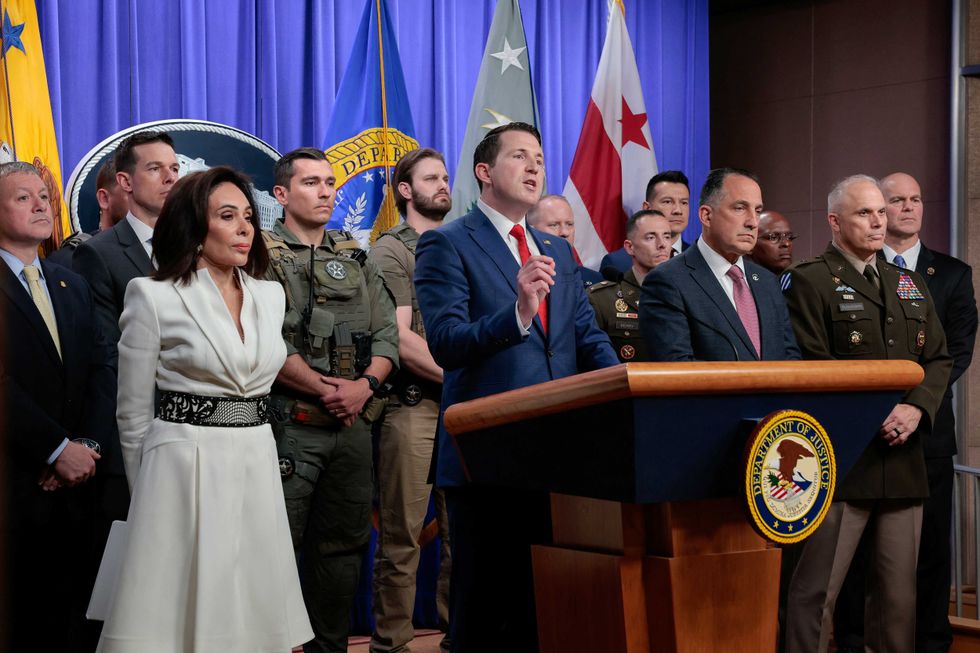
Life can sometimes be very unexpected. No one is really exempt from life’s surprises. Entangling in the legal system is among the most stressful situations thatLife can sometimes be very unexpected. No one is really exempt from life’s surprises. Entangling in the legal system is among the most stressful situations that

Criminal Defense Attorneys: Defending Rights Selecting the Best Attorney

2026/02/26 14:44
5 min read

Life can sometimes be very unexpected. No one is really exempt from life’s surprises. Entangling in the legal system is among the most stressful situations that a person has to go through. But just suddenly, a police officer stops you because you have broken a road rule. A simple stop turns into a big issue you are accused of driving under the influence. Or maybe a quarrel with the neighbor becomes a big issue that results in an assault charge, and in these difficult moments, a Criminal Defense Lawyer emerges as a necessary support. The spectrum of criminal charges is very wide. Not only minor misdemeanors that could be such as petty theft or disorderly conduct but also serious felonies, such as robbery, drug violations, or violent crimes, are included. The manner how your case is treated can have a huge impact on your freedom, job, and even your family relationships. Therefore, the presence of a proficient lawyer is very crucial. They help along with the legal process and are heavily dedicated to protecting your rights throughout the journey.

The Real Workings of Criminal Defense

Criminal Defense Attorneys: Defending Rights Selecting the Best Attorney

As soon as you are suspected, time begins to run out. Long before a jury enters the building, a strong defense must begin. In essence, your attorney’s top job is to save your fundamental rights. It’s about making sure that if the state wants to take away your freedom, they have to follow every single rule to the letter.

What a Robust Defense Really Looks Like

In order to ensure that the court views you as a real person, attorneys collaborate closely with medical professionals in addition to reviewing files. They can support a route that is about healing and a new beginning rather than just punishment by hearing your story—your past, the challenges you’ve encountered, and your future aspirations.

Understanding Local Criminal Laws

Complicated criminal statutes, which include a wide variety of charges from misdemeanors to major felonies, are explained to clients by criminal defense attorneys. They assist clients in comprehending the particular accusations they are facing, possible fines, and the associated legal procedures. Attorneys avoid expensive errors that could damage litigation outcomes by making clear how state and local laws relate to specific situations.

Legislative Expertise and Legal Procedure

Criminal law is a challenging field with many always changing policies, guidelines, and standards. Expert with the nuances of criminal law and the court procedures applied during a trial, a competent criminal defense attorney Pre-trial motions, the discovery process, jury selection, and evidence techniques—they are subtle. Without suitable legal direction, a defendant may inadvertently make errors or fail to appropriately challenge material that would be extremely relevant for their case.

Knowing local and state rules helps the defense attorney also ensure that the case is handled with the necessary awareness to guarantee a positive result. Whether it means recognizing statutory limits or using precedents to contest illegal searches or dubious evidence, criminal defense attorneys.

Voluntary Silence

Among the most well-known rights guaranteed of citizens by the U.S. Constitution is the Fifth Amendment protection against self-incrimination. People cannot be thus driven to testify against themselves. Though this privilege is clear-cut, someone without legal experience could find it difficult to handle the complexities of staying silent and avoiding self-incrimination under questioning. A defendant could unwittingly say anything weakening their case or results in a false conviction without the direction of a defense attorney. Criminal defense lawyers ensure their clients never say anything that might later on be used against them and encourage them to appreciate the worth of this right. Defense lawyers are professionals in guiding clients on whether to say, when to remain silent

Notes on Pleas Notes for Bargaining

Under some criminal situations, the defendant’s best option is not to go before a trial. Should the data contradicting the prisoner be overwhelming, the defense attorney could negotiate a plea arrangement with the prosecution. Pleasure conversations help to avoid the prisoner from a protracted trial and a tougher sentence should result in successful reduction of charges or lightening of punishment. A qualified defense attorney can help their client decide whether to accept a plea deal or proceed to trial depending on the negotiations of such agreements.

Conclusion

In conclusion, one cannot underline the objective of a defense lawyer in criminal affairs. They protect the accused’s constitutional rights, guarantee appropriate application of the legal system, and provide required experience. Defense presents a competing narrative, casts doubt on the accuracy of witnesses, and questions the given evidence. Giving a degree of knowledge and experience difficult for a normal person to negotiate alone, a defense attorney is rather crucial for the accused. Legal advice guarantees that the trial process is fair and that his rights are preserved all through, regardless of guilt or innocence of the accused. If you need a criminal defense lawyer visit us at Mushkatel, Gobbato, & Kile, P.L.L.C. and to know more about us.

Comments
Market Opportunity
LETSTOP Logo
LETSTOP Price(STOP)
$0.01745
$0.01745$0.01745
-4.06%
USD
LETSTOP (STOP) Live Price Chart
Disclaimer: The articles reposted on this site are sourced from public platforms and are provided for informational purposes only. They do not necessarily reflect the views of MEXC. All rights remain with the original authors. If you believe any content infringes on third-party rights, please contact crypto.news@mexc.com for removal. MEXC makes no guarantees regarding the accuracy, completeness, or timeliness of the content and is not responsible for any actions taken based on the information provided. The content does not constitute financial, legal, or other professional advice, nor should it be considered a recommendation or endorsement by MEXC.

You May Also Like

Bitwise CEO: In the next 6 to 12 months, the focus of the crypto field will be on the credit and lending market

Bitwise CEO: In the next 6 to 12 months, the focus of the crypto field will be on the credit and lending market

PANews reported on September 18 that Bitwise CEO Hunter Horsley tweeted that over the next six to 12 months, the focus of the cryptocurrency sector will shift to credit and lending. This sector is expected to experience explosive growth in the next few years. He pointed out that the current cryptocurrency market capitalization is approaching $4 trillion and continues to grow. When people can borrow against cryptocurrency, they will choose to borrow rather than sell. Furthermore, the market capitalization of publicly traded stocks in the United States exceeds $60 trillion. With the tokenization of assets, individuals holding $7,000 worth of stocks will be able to borrow against them on-chain for the first time. Horsley believes that cryptocurrency is redefining capital markets, and this is just the beginning.
Share
PANews2025/09/18 17:00
Nvidia (NVDA) Stock Rises After Q4 Earnings and Guidance Beat – Data Center Revenue Up 75%

Nvidia (NVDA) Stock Rises After Q4 Earnings and Guidance Beat – Data Center Revenue Up 75%

TLDR Nvidia beat Q4 earnings estimates with EPS of $1.62 adjusted vs $1.53 expected Total revenue hit $68.13 billion, up 73% year-over-year Data center revenue
Share
Coincentral2026/02/26 17:12
Summarize Any Stock’s Earnings Call in Seconds Using FMP API

Summarize Any Stock’s Earnings Call in Seconds Using FMP API

Turn lengthy earnings call transcripts into one-page insights using the Financial Modeling Prep APIPhoto by Bich Tran Earnings calls are packed with insights. They tell you how a company performed, what management expects in the future, and what analysts are worried about. The challenge is that these transcripts often stretch across dozens of pages, making it tough to separate the key takeaways from the noise. With the right tools, you don’t need to spend hours reading every line. By combining the Financial Modeling Prep (FMP) API with Groq’s lightning-fast LLMs, you can transform any earnings call into a concise summary in seconds. The FMP API provides reliable access to complete transcripts, while Groq handles the heavy lifting of distilling them into clear, actionable highlights. In this article, we’ll build a Python workflow that brings these two together. You’ll see how to fetch transcripts for any stock, prepare the text, and instantly generate a one-page summary. Whether you’re tracking Apple, NVIDIA, or your favorite growth stock, the process works the same — fast, accurate, and ready whenever you are. Fetching Earnings Transcripts with FMP API The first step is to pull the raw transcript data. FMP makes this simple with dedicated endpoints for earnings calls. If you want the latest transcripts across the market, you can use the stable endpoint /stable/earning-call-transcript-latest. For a specific stock, the v3 endpoint lets you request transcripts by symbol, quarter, and year using the pattern: https://financialmodelingprep.com/api/v3/earning_call_transcript/{symbol}?quarter={q}&year={y}&apikey=YOUR_API_KEY here’s how you can fetch NVIDIA’s transcript for a given quarter: import requestsAPI_KEY = "your_api_key"symbol = "NVDA"quarter = 2year = 2024url = f"https://financialmodelingprep.com/api/v3/earning_call_transcript/{symbol}?quarter={quarter}&year={year}&apikey={API_KEY}"response = requests.get(url)data = response.json()# Inspect the keysprint(data.keys())# Access transcript contentif "content" in data[0]: transcript_text = data[0]["content"] print(transcript_text[:500]) # preview first 500 characters The response typically includes details like the company symbol, quarter, year, and the full transcript text. If you aren’t sure which quarter to query, the “latest transcripts” endpoint is the quickest way to always stay up to date. Cleaning and Preparing Transcript Data Raw transcripts from the API often include long paragraphs, speaker tags, and formatting artifacts. Before sending them to an LLM, it helps to organize the text into a cleaner structure. Most transcripts follow a pattern: prepared remarks from executives first, followed by a Q&A session with analysts. Separating these sections gives better control when prompting the model. In Python, you can parse the transcript and strip out unnecessary characters. A simple way is to split by markers such as “Operator” or “Question-and-Answer.” Once separated, you can create two blocks — Prepared Remarks and Q&A — that will later be summarized independently. This ensures the model handles each section within context and avoids missing important details. Here’s a small example of how you might start preparing the data: import re# Example: using the transcript_text we fetched earliertext = transcript_text# Remove extra spaces and line breaksclean_text = re.sub(r'\s+', ' ', text).strip()# Split sections (this is a heuristic; real-world transcripts vary slightly)if "Question-and-Answer" in clean_text: prepared, qna = clean_text.split("Question-and-Answer", 1)else: prepared, qna = clean_text, ""print("Prepared Remarks Preview:\n", prepared[:500])print("\nQ&A Preview:\n", qna[:500]) With the transcript cleaned and divided, you’re ready to feed it into Groq’s LLM. Chunking may be necessary if the text is very long. A good approach is to break it into segments of a few thousand tokens, summarize each part, and then merge the summaries in a final pass. Summarizing with Groq LLM Now that the transcript is clean and split into Prepared Remarks and Q&A, we’ll use Groq to generate a crisp one-pager. The idea is simple: summarize each section separately (for focus and accuracy), then synthesize a final brief. Prompt design (concise and factual) Use a short, repeatable template that pushes for neutral, investor-ready language: You are an equity research analyst. Summarize the following earnings call sectionfor {symbol} ({quarter} {year}). Be factual and concise.Return:1) TL;DR (3–5 bullets)2) Results vs. guidance (what improved/worsened)3) Forward outlook (specific statements)4) Risks / watch-outs5) Q&A takeaways (if present)Text:<<<{section_text}>>> Python: calling Groq and getting a clean summary Groq provides an OpenAI-compatible API. Set your GROQ_API_KEY and pick a fast, high-quality model (e.g., a Llama-3.1 70B variant). We’ll write a helper to summarize any text block, then run it for both sections and merge. import osimport textwrapimport requestsGROQ_API_KEY = os.environ.get("GROQ_API_KEY") or "your_groq_api_key"GROQ_BASE_URL = "https://api.groq.com/openai/v1" # OpenAI-compatibleMODEL = "llama-3.1-70b" # choose your preferred Groq modeldef call_groq(prompt, temperature=0.2, max_tokens=1200): url = f"{GROQ_BASE_URL}/chat/completions" headers = { "Authorization": f"Bearer {GROQ_API_KEY}", "Content-Type": "application/json", } payload = { "model": MODEL, "messages": [ {"role": "system", "content": "You are a precise, neutral equity research analyst."}, {"role": "user", "content": prompt}, ], "temperature": temperature, "max_tokens": max_tokens, } r = requests.post(url, headers=headers, json=payload, timeout=60) r.raise_for_status() return r.json()["choices"][0]["message"]["content"].strip()def build_prompt(section_text, symbol, quarter, year): template = """ You are an equity research analyst. Summarize the following earnings call section for {symbol} ({quarter} {year}). Be factual and concise. Return: 1) TL;DR (3–5 bullets) 2) Results vs. guidance (what improved/worsened) 3) Forward outlook (specific statements) 4) Risks / watch-outs 5) Q&A takeaways (if present) Text: <<< {section_text} >>> """ return textwrap.dedent(template).format( symbol=symbol, quarter=quarter, year=year, section_text=section_text )def summarize_section(section_text, symbol="NVDA", quarter="Q2", year="2024"): if not section_text or section_text.strip() == "": return "(No content found for this section.)" prompt = build_prompt(section_text, symbol, quarter, year) return call_groq(prompt)# Example usage with the cleaned splits from Section 3prepared_summary = summarize_section(prepared, symbol="NVDA", quarter="Q2", year="2024")qna_summary = summarize_section(qna, symbol="NVDA", quarter="Q2", year="2024")final_one_pager = f"""# {symbol} Earnings One-Pager — {quarter} {year}## Prepared Remarks — Key Points{prepared_summary}## Q&A Highlights{qna_summary}""".strip()print(final_one_pager[:1200]) # preview Tips that keep quality high: Keep temperature low (≈0.2) for factual tone. If a section is extremely long, chunk at ~5–8k tokens, summarize each chunk with the same prompt, then ask the model to merge chunk summaries into one section summary before producing the final one-pager. If you also fetched headline numbers (EPS/revenue, guidance) earlier, prepend them to the prompt as brief context to help the model anchor on the right outcomes. Building the End-to-End Pipeline At this point, we have all the building blocks: the FMP API to fetch transcripts, a cleaning step to structure the data, and Groq LLM to generate concise summaries. The final step is to connect everything into a single workflow that can take any ticker and return a one-page earnings call summary. The flow looks like this: Input a stock ticker (for example, NVDA). Use FMP to fetch the latest transcript. Clean and split the text into Prepared Remarks and Q&A. Send each section to Groq for summarization. Merge the outputs into a neatly formatted earnings one-pager. Here’s how it comes together in Python: def summarize_earnings_call(symbol, quarter, year, api_key, groq_key): # Step 1: Fetch transcript from FMP url = f"https://financialmodelingprep.com/api/v3/earning_call_transcript/{symbol}?quarter={quarter}&year={year}&apikey={api_key}" resp = requests.get(url) resp.raise_for_status() data = resp.json() if not data or "content" not in data[0]: return f"No transcript found for {symbol} {quarter} {year}" text = data[0]["content"] # Step 2: Clean and split clean_text = re.sub(r'\s+', ' ', text).strip() if "Question-and-Answer" in clean_text: prepared, qna = clean_text.split("Question-and-Answer", 1) else: prepared, qna = clean_text, "" # Step 3: Summarize with Groq prepared_summary = summarize_section(prepared, symbol, quarter, year) qna_summary = summarize_section(qna, symbol, quarter, year) # Step 4: Merge into final one-pager return f"""# {symbol} Earnings One-Pager — {quarter} {year}## Prepared Remarks{prepared_summary}## Q&A Highlights{qna_summary}""".strip()# Example runprint(summarize_earnings_call("NVDA", 2, 2024, API_KEY, GROQ_API_KEY)) With this setup, generating a summary becomes as simple as calling one function with a ticker and date. You can run it inside a notebook, integrate it into a research workflow, or even schedule it to trigger after each new earnings release. Free Stock Market API and Financial Statements API... Conclusion Earnings calls no longer need to feel overwhelming. With the Financial Modeling Prep API, you can instantly access any company’s transcript, and with Groq LLM, you can turn that raw text into a sharp, actionable summary in seconds. This pipeline saves hours of reading and ensures you never miss the key results, guidance, or risks hidden in lengthy remarks. Whether you track tech giants like NVIDIA or smaller growth stocks, the process is the same — fast, reliable, and powered by the flexibility of FMP’s data. Summarize Any Stock’s Earnings Call in Seconds Using FMP API was originally published in Coinmonks on Medium, where people are continuing the conversation by highlighting and responding to this story
Share
Medium2025/09/18 14:40