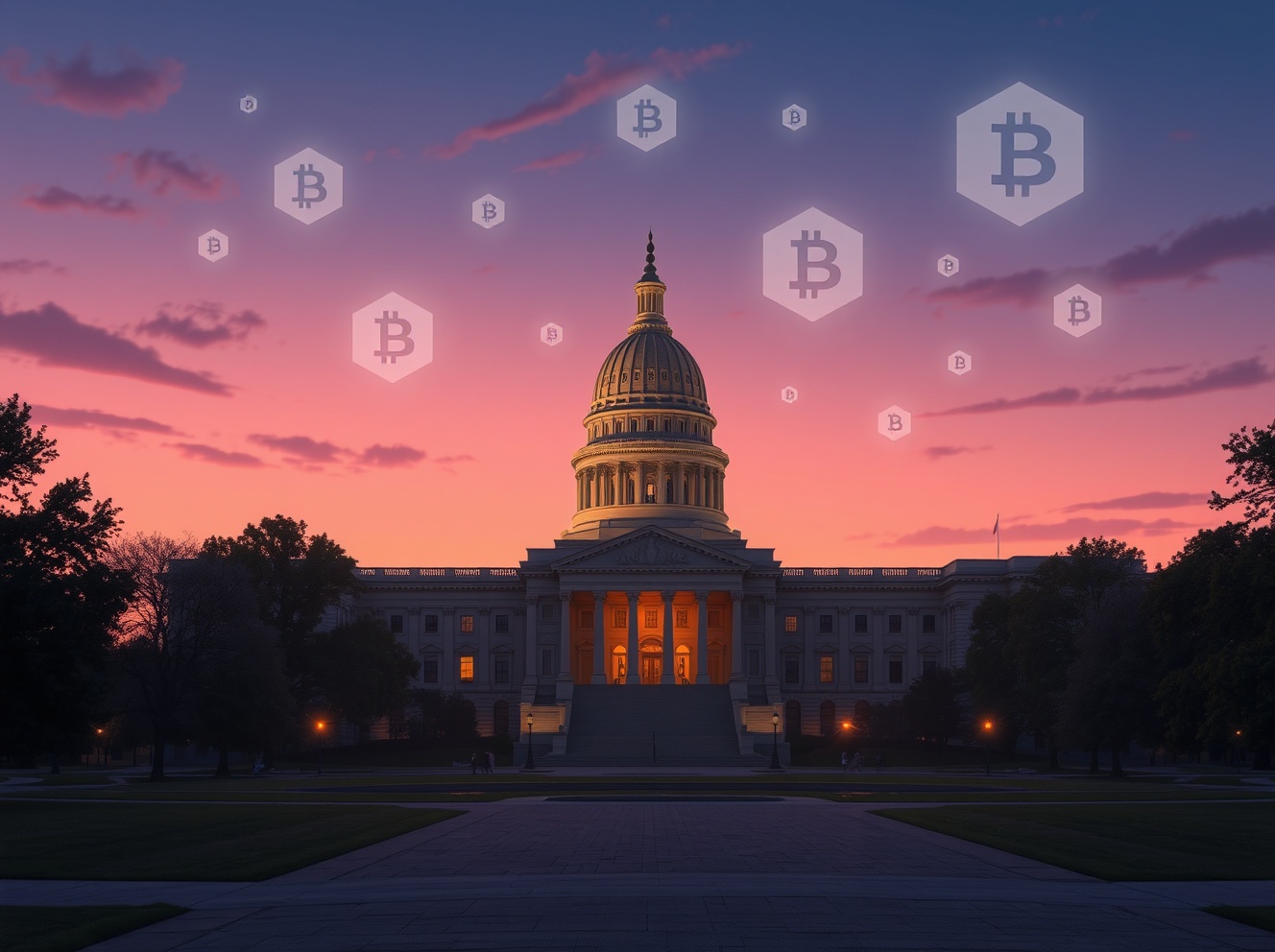
BitcoinWorld Indiana Crypto Pension Bill: Pioneering Legislation Opens Public Retirement Funds to Digital Asset Investment INDIANAPOLIS, March 2025 – The IndianaBitcoinWorld Indiana Crypto Pension Bill: Pioneering Legislation Opens Public Retirement Funds to Digital Asset Investment INDIANAPOLIS, March 2025 – The Indiana

Indiana Crypto Pension Bill: Pioneering Legislation Opens Public Retirement Funds to Digital Asset Investment

2026/02/26 14:10
7 min read

BitcoinWorld

Indiana Crypto Pension Bill: Pioneering Legislation Opens Public Retirement Funds to Digital Asset Investment

INDIANAPOLIS, March 2025 – The Indiana state legislature has passed pioneering legislation that fundamentally alters how public retirement systems can approach investment strategy. Bill 1042, now awaiting the governor’s signature, authorizes state-managed pension funds to allocate portions of their portfolios to cryptocurrency assets through newly mandated self-directed brokerage accounts. This legislative move represents a significant shift in institutional acceptance of digital assets and could influence pension policies nationwide.

Understanding Indiana’s Crypto Pension Legislation

The Indiana General Assembly approved Bill 1042 with bipartisan support, creating a structured framework for cryptocurrency exposure within public retirement systems. The legislation specifically mandates that certain state-managed retirement and savings pensions must offer self-directed brokerage accounts to participants. Crucially, these accounts must provide at least one cryptocurrency investment product as an option, though participation remains voluntary for individual pension holders.

Legislative analysts note this approach balances innovation with caution. The bill establishes clear parameters rather than opening unrestricted access to digital assets. According to financial policy experts, this measured implementation reflects growing institutional recognition of cryptocurrency as a legitimate, though specialized, asset class. The legislation follows months of committee hearings featuring testimony from blockchain specialists, pension fund managers, and financial regulators.

How Self-Directed Brokerage Accounts Will Function

Bill 1042 introduces a specific mechanism for cryptocurrency exposure through self-directed brokerage accounts (SDBAs). These specialized accounts will operate alongside traditional pension investment options, offering participants greater control over a portion of their retirement assets. The legislation requires these SDBAs to include cryptocurrency products while maintaining existing fiduciary standards for pension administrators.

The implementation timeline suggests a phased rollout beginning in late 2025, assuming gubernatorial approval. Pension administrators must establish partnerships with qualified cryptocurrency custodians and trading platforms that meet stringent security and regulatory compliance standards. Additionally, the legislation mandates educational resources to help participants understand the unique risks and characteristics of digital asset investments.

Comparative Analysis: State Pension Crypto Approaches

Indiana’s legislation positions the state among a small but growing group of jurisdictions exploring public pension cryptocurrency exposure. The table below illustrates how different states have approached this emerging investment category:

StateApproachImplementation StatusKey Restrictions
IndianaOptional SDBAs with crypto mandatePending governor’s signatureLimited to qualified products
WyomingPermissive framework for digital assetsImplemented 20231% portfolio cap
CaliforniaStudy commission formedResearch phaseNo current allocation
TexasBlockchain technology focusInfrastructure onlyNo direct investment

Financial analysts observe that Indiana’s approach differs significantly from early adopters by mandating availability rather than simply permitting it. This creates an opt-in system that maintains traditional investment options while providing access to emerging asset classes. The structure potentially addresses common concerns about fiduciary responsibility by placing ultimate investment decisions with individual participants rather than pension fund managers.

Potential Impacts on Retirement Systems and Participants

The legislation’s passage could trigger several important developments for Indiana’s public retirement landscape. First, it introduces diversification opportunities beyond traditional stocks, bonds, and real estate. Second, it acknowledges the growing mainstream acceptance of digital assets among institutional investors. Third, it may influence how other states approach pension fund modernization.

Retirement system experts emphasize that successful implementation depends on several factors:

  • Educational initiatives explaining cryptocurrency volatility and unique risks
  • Security protocols for digital asset custody and transaction verification
  • Clear fee structures for cryptocurrency trading within retirement accounts
  • Performance tracking methodologies for digital asset investments
  • Regulatory compliance with evolving federal guidelines

Pension fund administrators have already begun preliminary discussions with cryptocurrency exchange-traded product providers and regulated digital asset platforms. These partnerships aim to create investment vehicles that meet the legislation’s requirements while maintaining appropriate safeguards for retirement assets.

Regulatory Context and Federal Considerations

Indiana’s legislation emerges during a period of significant regulatory development for digital assets at both state and federal levels. The Securities and Exchange Commission has approved several cryptocurrency investment products for traditional brokerage accounts, creating precedent for retirement account inclusion. Meanwhile, the Department of Labor has issued guidance about cryptocurrency in employer-sponsored retirement plans, emphasizing fiduciary responsibilities.

State legislators crafted Bill 1042 with these regulatory developments in mind. The legislation references existing financial regulations while creating specific provisions for digital assets. Legal experts note that the bill’s language aligns with emerging best practices for institutional cryptocurrency exposure, including:

  • Qualified custodian requirements for private key management
  • Insurance provisions for digital asset holdings
  • Regular auditing and reporting standards
  • Clear disclosure requirements about volatility and liquidity

This regulatory alignment may prove crucial as the legislation moves toward implementation. Furthermore, it establishes a framework that could adapt to future federal cryptocurrency regulations currently under consideration in Congress.

Expert Perspectives on Pension Fund Cryptocurrency Exposure

Financial policy specialists offer measured assessments of Indiana’s legislative approach. Dr. Eleanor Vance, a pension systems researcher at the University of Chicago, notes: “Indiana’s legislation represents a thoughtful middle ground between complete exclusion and unrestricted access. The self-directed account structure maintains traditional fiduciary protections while acknowledging participant interest in emerging asset classes.”

Meanwhile, cryptocurrency institutional adoption experts highlight the symbolic importance of public pension systems considering digital assets. Michael Torres, CEO of a blockchain analytics firm, observes: “Public pension funds manage trillions in retirement assets nationwide. Even modest allocations to cryptocurrency could signal broader institutional acceptance and potentially influence investment trends beyond state borders.”

Implementation Timeline and Next Steps

With legislative approval secured, Bill 1042 now proceeds to the governor’s desk for final consideration. Policy analysts anticipate signature given the bill’s bipartisan support and structured approach. Following gubernatorial approval, the legislation would take effect on January 1, 2026, providing implementation time for pension administrators.

The implementation phase involves several key milestones:

  • Rulemaking process by state pension oversight agencies
  • Vendor selection for cryptocurrency custody and trading services
  • System integration with existing pension administration platforms
  • Participant education program development and rollout
  • Compliance verification with state and federal regulations

Pension administrators emphasize that the voluntary nature of participation means traditional investment options will remain fully available. Participants uncomfortable with cryptocurrency volatility or unfamiliar with digital asset mechanics can maintain existing investment strategies without modification.

Conclusion

Indiana’s passage of Bill 1042 represents a significant development in the intersection of public pension systems and emerging financial technologies. The legislation creates a structured pathway for cryptocurrency exposure while maintaining important safeguards for retirement assets. As the bill moves toward implementation, it will provide valuable insights about digital asset integration within institutional investment frameworks. The Indiana crypto pension bill may ultimately influence how retirement systems nationwide approach portfolio diversification in an increasingly digital financial landscape.

FAQs

Q1: When would Indiana public pension participants be able to invest in cryptocurrency through their retirement accounts?
If Governor signs the bill, implementation would begin January 2026, with self-directed brokerage accounts potentially available by mid-2026 following system setup and vendor selection.

Q2: Are Indiana public employees required to invest pension funds in cryptocurrency under this legislation?
No, participation is completely voluntary. The legislation only requires that cryptocurrency investment options be available through self-directed brokerage accounts.

Q3: What types of cryptocurrency investments would be available through Indiana pension accounts?
The legislation specifies “at least one cryptocurrency investment product,” which likely means regulated cryptocurrency funds, ETFs, or trust products rather than direct cryptocurrency purchases.

Q4: How does Indiana’s approach differ from other states considering pension fund cryptocurrency exposure?
Indiana’s legislation mandates availability through specific account structures, while other states have taken more permissive or restrictive approaches, with varying portfolio allocation limits.

Q5: What safeguards does the legislation include for pension participants interested in cryptocurrency investments?
The bill requires educational resources, qualified custodians, security protocols, clear disclosures about risks, and maintains existing fiduciary standards for pension administrators.

This post Indiana Crypto Pension Bill: Pioneering Legislation Opens Public Retirement Funds to Digital Asset Investment first appeared on BitcoinWorld.


Market Opportunity
PUBLIC Logo
PUBLIC Price(PUBLIC)
$0.01529
$0.01529$0.01529
+5.88%
USD
PUBLIC (PUBLIC) Live Price Chart
Disclaimer: The articles reposted on this site are sourced from public platforms and are provided for informational purposes only. They do not necessarily reflect the views of MEXC. All rights remain with the original authors. If you believe any content infringes on third-party rights, please contact crypto.news@mexc.com for removal. MEXC makes no guarantees regarding the accuracy, completeness, or timeliness of the content and is not responsible for any actions taken based on the information provided. The content does not constitute financial, legal, or other professional advice, nor should it be considered a recommendation or endorsement by MEXC.

You May Also Like

Bitwise CEO: In the next 6 to 12 months, the focus of the crypto field will be on the credit and lending market

Bitwise CEO: In the next 6 to 12 months, the focus of the crypto field will be on the credit and lending market

PANews reported on September 18 that Bitwise CEO Hunter Horsley tweeted that over the next six to 12 months, the focus of the cryptocurrency sector will shift to credit and lending. This sector is expected to experience explosive growth in the next few years. He pointed out that the current cryptocurrency market capitalization is approaching $4 trillion and continues to grow. When people can borrow against cryptocurrency, they will choose to borrow rather than sell. Furthermore, the market capitalization of publicly traded stocks in the United States exceeds $60 trillion. With the tokenization of assets, individuals holding $7,000 worth of stocks will be able to borrow against them on-chain for the first time. Horsley believes that cryptocurrency is redefining capital markets, and this is just the beginning.
Share
PANews2025/09/18 17:00
Nvidia (NVDA) Stock Rises After Q4 Earnings and Guidance Beat – Data Center Revenue Up 75%

Nvidia (NVDA) Stock Rises After Q4 Earnings and Guidance Beat – Data Center Revenue Up 75%

TLDR Nvidia beat Q4 earnings estimates with EPS of $1.62 adjusted vs $1.53 expected Total revenue hit $68.13 billion, up 73% year-over-year Data center revenue
Share
Coincentral2026/02/26 17:12
Summarize Any Stock’s Earnings Call in Seconds Using FMP API

Summarize Any Stock’s Earnings Call in Seconds Using FMP API

Turn lengthy earnings call transcripts into one-page insights using the Financial Modeling Prep APIPhoto by Bich Tran Earnings calls are packed with insights. They tell you how a company performed, what management expects in the future, and what analysts are worried about. The challenge is that these transcripts often stretch across dozens of pages, making it tough to separate the key takeaways from the noise. With the right tools, you don’t need to spend hours reading every line. By combining the Financial Modeling Prep (FMP) API with Groq’s lightning-fast LLMs, you can transform any earnings call into a concise summary in seconds. The FMP API provides reliable access to complete transcripts, while Groq handles the heavy lifting of distilling them into clear, actionable highlights. In this article, we’ll build a Python workflow that brings these two together. You’ll see how to fetch transcripts for any stock, prepare the text, and instantly generate a one-page summary. Whether you’re tracking Apple, NVIDIA, or your favorite growth stock, the process works the same — fast, accurate, and ready whenever you are. Fetching Earnings Transcripts with FMP API The first step is to pull the raw transcript data. FMP makes this simple with dedicated endpoints for earnings calls. If you want the latest transcripts across the market, you can use the stable endpoint /stable/earning-call-transcript-latest. For a specific stock, the v3 endpoint lets you request transcripts by symbol, quarter, and year using the pattern: https://financialmodelingprep.com/api/v3/earning_call_transcript/{symbol}?quarter={q}&year={y}&apikey=YOUR_API_KEY here’s how you can fetch NVIDIA’s transcript for a given quarter: import requestsAPI_KEY = "your_api_key"symbol = "NVDA"quarter = 2year = 2024url = f"https://financialmodelingprep.com/api/v3/earning_call_transcript/{symbol}?quarter={quarter}&year={year}&apikey={API_KEY}"response = requests.get(url)data = response.json()# Inspect the keysprint(data.keys())# Access transcript contentif "content" in data[0]: transcript_text = data[0]["content"] print(transcript_text[:500]) # preview first 500 characters The response typically includes details like the company symbol, quarter, year, and the full transcript text. If you aren’t sure which quarter to query, the “latest transcripts” endpoint is the quickest way to always stay up to date. Cleaning and Preparing Transcript Data Raw transcripts from the API often include long paragraphs, speaker tags, and formatting artifacts. Before sending them to an LLM, it helps to organize the text into a cleaner structure. Most transcripts follow a pattern: prepared remarks from executives first, followed by a Q&A session with analysts. Separating these sections gives better control when prompting the model. In Python, you can parse the transcript and strip out unnecessary characters. A simple way is to split by markers such as “Operator” or “Question-and-Answer.” Once separated, you can create two blocks — Prepared Remarks and Q&A — that will later be summarized independently. This ensures the model handles each section within context and avoids missing important details. Here’s a small example of how you might start preparing the data: import re# Example: using the transcript_text we fetched earliertext = transcript_text# Remove extra spaces and line breaksclean_text = re.sub(r'\s+', ' ', text).strip()# Split sections (this is a heuristic; real-world transcripts vary slightly)if "Question-and-Answer" in clean_text: prepared, qna = clean_text.split("Question-and-Answer", 1)else: prepared, qna = clean_text, ""print("Prepared Remarks Preview:\n", prepared[:500])print("\nQ&A Preview:\n", qna[:500]) With the transcript cleaned and divided, you’re ready to feed it into Groq’s LLM. Chunking may be necessary if the text is very long. A good approach is to break it into segments of a few thousand tokens, summarize each part, and then merge the summaries in a final pass. Summarizing with Groq LLM Now that the transcript is clean and split into Prepared Remarks and Q&A, we’ll use Groq to generate a crisp one-pager. The idea is simple: summarize each section separately (for focus and accuracy), then synthesize a final brief. Prompt design (concise and factual) Use a short, repeatable template that pushes for neutral, investor-ready language: You are an equity research analyst. Summarize the following earnings call sectionfor {symbol} ({quarter} {year}). Be factual and concise.Return:1) TL;DR (3–5 bullets)2) Results vs. guidance (what improved/worsened)3) Forward outlook (specific statements)4) Risks / watch-outs5) Q&A takeaways (if present)Text:<<<{section_text}>>> Python: calling Groq and getting a clean summary Groq provides an OpenAI-compatible API. Set your GROQ_API_KEY and pick a fast, high-quality model (e.g., a Llama-3.1 70B variant). We’ll write a helper to summarize any text block, then run it for both sections and merge. import osimport textwrapimport requestsGROQ_API_KEY = os.environ.get("GROQ_API_KEY") or "your_groq_api_key"GROQ_BASE_URL = "https://api.groq.com/openai/v1" # OpenAI-compatibleMODEL = "llama-3.1-70b" # choose your preferred Groq modeldef call_groq(prompt, temperature=0.2, max_tokens=1200): url = f"{GROQ_BASE_URL}/chat/completions" headers = { "Authorization": f"Bearer {GROQ_API_KEY}", "Content-Type": "application/json", } payload = { "model": MODEL, "messages": [ {"role": "system", "content": "You are a precise, neutral equity research analyst."}, {"role": "user", "content": prompt}, ], "temperature": temperature, "max_tokens": max_tokens, } r = requests.post(url, headers=headers, json=payload, timeout=60) r.raise_for_status() return r.json()["choices"][0]["message"]["content"].strip()def build_prompt(section_text, symbol, quarter, year): template = """ You are an equity research analyst. Summarize the following earnings call section for {symbol} ({quarter} {year}). Be factual and concise. Return: 1) TL;DR (3–5 bullets) 2) Results vs. guidance (what improved/worsened) 3) Forward outlook (specific statements) 4) Risks / watch-outs 5) Q&A takeaways (if present) Text: <<< {section_text} >>> """ return textwrap.dedent(template).format( symbol=symbol, quarter=quarter, year=year, section_text=section_text )def summarize_section(section_text, symbol="NVDA", quarter="Q2", year="2024"): if not section_text or section_text.strip() == "": return "(No content found for this section.)" prompt = build_prompt(section_text, symbol, quarter, year) return call_groq(prompt)# Example usage with the cleaned splits from Section 3prepared_summary = summarize_section(prepared, symbol="NVDA", quarter="Q2", year="2024")qna_summary = summarize_section(qna, symbol="NVDA", quarter="Q2", year="2024")final_one_pager = f"""# {symbol} Earnings One-Pager — {quarter} {year}## Prepared Remarks — Key Points{prepared_summary}## Q&A Highlights{qna_summary}""".strip()print(final_one_pager[:1200]) # preview Tips that keep quality high: Keep temperature low (≈0.2) for factual tone. If a section is extremely long, chunk at ~5–8k tokens, summarize each chunk with the same prompt, then ask the model to merge chunk summaries into one section summary before producing the final one-pager. If you also fetched headline numbers (EPS/revenue, guidance) earlier, prepend them to the prompt as brief context to help the model anchor on the right outcomes. Building the End-to-End Pipeline At this point, we have all the building blocks: the FMP API to fetch transcripts, a cleaning step to structure the data, and Groq LLM to generate concise summaries. The final step is to connect everything into a single workflow that can take any ticker and return a one-page earnings call summary. The flow looks like this: Input a stock ticker (for example, NVDA). Use FMP to fetch the latest transcript. Clean and split the text into Prepared Remarks and Q&A. Send each section to Groq for summarization. Merge the outputs into a neatly formatted earnings one-pager. Here’s how it comes together in Python: def summarize_earnings_call(symbol, quarter, year, api_key, groq_key): # Step 1: Fetch transcript from FMP url = f"https://financialmodelingprep.com/api/v3/earning_call_transcript/{symbol}?quarter={quarter}&year={year}&apikey={api_key}" resp = requests.get(url) resp.raise_for_status() data = resp.json() if not data or "content" not in data[0]: return f"No transcript found for {symbol} {quarter} {year}" text = data[0]["content"] # Step 2: Clean and split clean_text = re.sub(r'\s+', ' ', text).strip() if "Question-and-Answer" in clean_text: prepared, qna = clean_text.split("Question-and-Answer", 1) else: prepared, qna = clean_text, "" # Step 3: Summarize with Groq prepared_summary = summarize_section(prepared, symbol, quarter, year) qna_summary = summarize_section(qna, symbol, quarter, year) # Step 4: Merge into final one-pager return f"""# {symbol} Earnings One-Pager — {quarter} {year}## Prepared Remarks{prepared_summary}## Q&A Highlights{qna_summary}""".strip()# Example runprint(summarize_earnings_call("NVDA", 2, 2024, API_KEY, GROQ_API_KEY)) With this setup, generating a summary becomes as simple as calling one function with a ticker and date. You can run it inside a notebook, integrate it into a research workflow, or even schedule it to trigger after each new earnings release. Free Stock Market API and Financial Statements API... Conclusion Earnings calls no longer need to feel overwhelming. With the Financial Modeling Prep API, you can instantly access any company’s transcript, and with Groq LLM, you can turn that raw text into a sharp, actionable summary in seconds. This pipeline saves hours of reading and ensures you never miss the key results, guidance, or risks hidden in lengthy remarks. Whether you track tech giants like NVIDIA or smaller growth stocks, the process is the same — fast, reliable, and powered by the flexibility of FMP’s data. Summarize Any Stock’s Earnings Call in Seconds Using FMP API was originally published in Coinmonks on Medium, where people are continuing the conversation by highlighting and responding to this story
Share
Medium2025/09/18 14:40