

With an average profit of 85 million per employee, surpassing Goldman Sachs and Nvidia, the world's most profitable business is not AI.
|Clow
Author: Plain Language Blockchain
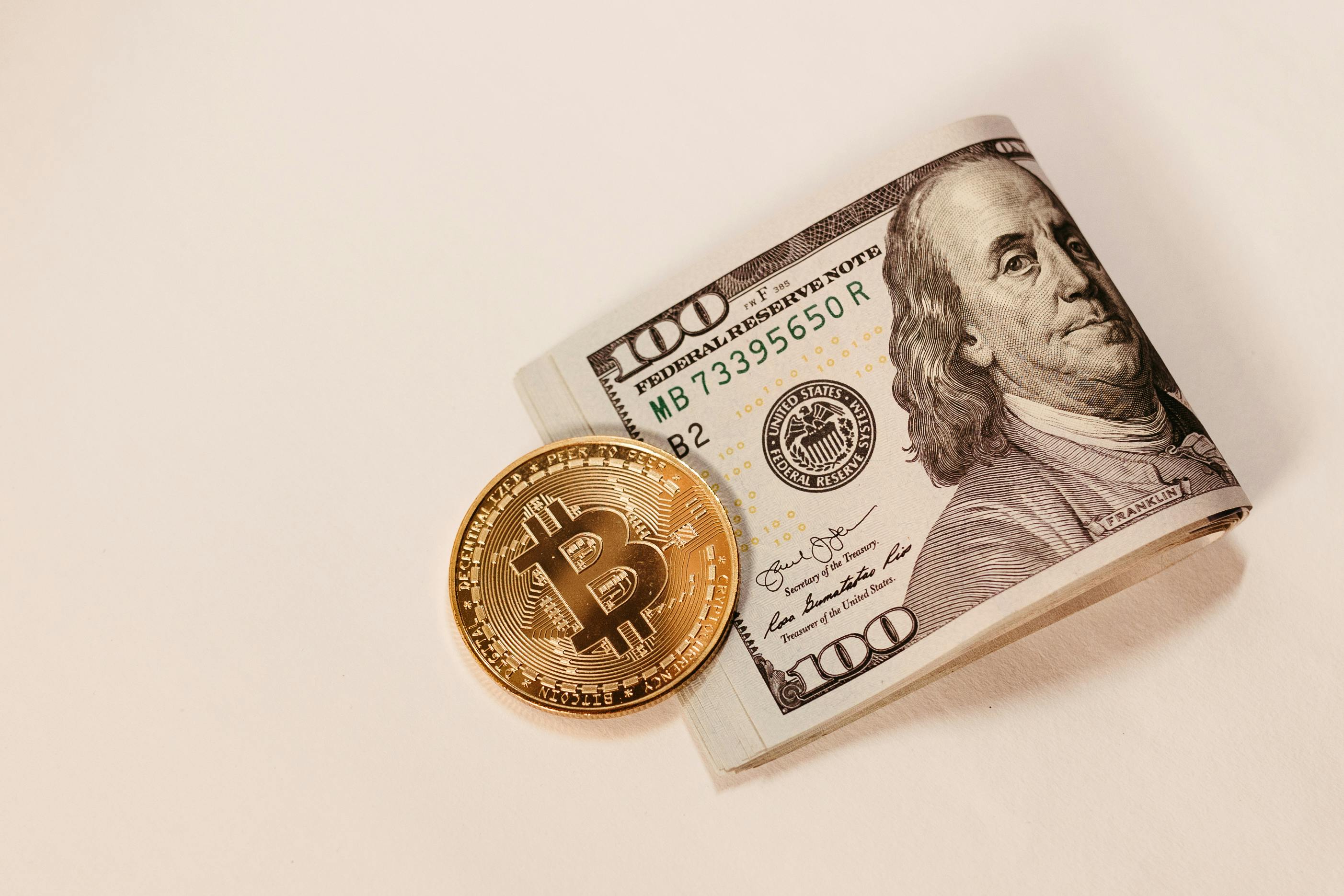
In 2024, a company called Tether delivered a report card that left Wall Street speechless.
With a net profit of $13 billion and approximately 150 employees.
The average profit per employee is approximately US$85.62 million, which is nearly 300 times that of Goldman Sachs and 85 times that of Nvidia.
This isn't some AI unicorn, nor is it a top-tier hedge fund. It's simply a stablecoin issuer—the company that issues USDT.
When these figures circulated in the financial world, many people's first reaction was: How is this possible?
But if you understand Tether's business model, you'll find that this is not just a possibility, but even inevitable.
01. The world's most profitable business
Tether's profit-making logic is known in the industry as the "stablecoin float game".
The rules are simple: you give $1 to Tether and get 1 USDT in return. Tether then uses your money to buy US Treasury bonds.
US Treasury yields have consistently remained above 5% annually, while USDT never pays any interest.
The entire price difference belongs to Tether.
By the end of 2025, Tether's total exposure to US Treasury bonds will reach $141 billion, making it the 17th largest holder of US Treasury bonds globally, exceeding the holdings of sovereign nations Germany and South Korea.
US Treasury bonds alone contribute more than $4 billion in cash flow to Tether annually.
And this is only the first layer.
The second tier consists of gold and Bitcoin. Tether holds approximately $17 billion worth of gold and over 96,000 Bitcoins. The dramatic rise in gold prices in 2025 is expected to generate an additional $5 billion in unrealized gains for them.
The third layer is the liquidity premium. What did those who gave up 5% interest on government bonds get in return? Digital dollars that could be used at any time in Turkey, Argentina, and Nigeria. For markets mired in high inflation and foreign exchange controls, this liquidity is more valuable than a 5% annualized return.
Tether is essentially a global "shadow bank" with no branches, no tellers, and operating 24/7, specializing in capturing huge interest rate spreads that are missed by the inefficiency of the traditional financial system.
02. Breaking down the barriers of traditional payment methods
The SWIFT system was established in the 1970s. Half a century later, its core logic has not changed in essence: the agent takes over, multiple nodes go through it in turn, the fastest is 3 to 5 business days, and the most expensive can receive a comprehensive fee rate of 7%.
A payment for a shipment from the United States to Nigeria goes through multiple layers of intermediary banks, including the remitting bank, the middle banks, and the receiving bank, with each layer taking its own commission.
Moreover, these banks have opening hours. Remittances initiated on Friday night will not be processed until Monday of the following week.
A USDT transfer can reach the recipient's wallet within 30 seconds on the Tron network for less than $1, 24/7, 365 days a year.
The cost difference is particularly striking. Traditional comprehensive fees for B2B cross-border payments range from 1.5% to 7%, with personal remittances sometimes exceeding 11%; while the comprehensive cost of stablecoin networks is typically only 0.5% to 2%.
The deeper impact lies in "reach".
Hundreds of millions of adults worldwide still lack bank accounts. However, with just a mobile phone and internet access, they can create encrypted wallets and connect to global trade. In Africa and Latin America, USDT has become a common tool for SMEs to pay international suppliers.
In 2025, the next generation of Web3 POS systems will begin to utilize NFC technology to enable "tap-to-pay," bringing encrypted payments to the cash registers of retail stores.
This wall is being breached from all directions.
03. Pay-Fi: The Logic of Money is Being Rewritten
The combination of payments and finance has a new name: Pay-Fi (Payment Finance).
Traditional payment solves the problem of "money moving from A to B". Pay-Fi aims to solve the problem of "money earning interest on its way from A to B".
Protocols like Huma Finance are tokenizing businesses' accounts receivable and providing instant financing through on-chain liquidity pools, thus alleviating the pressure of prepaid capital in cross-border trade. As of early 2026, the Huma protocol had accumulated over $10 billion in transaction volume, and its T+0 real-time clearing capabilities are attracting increasing attention from traditional financial institutions.
The battle for underlying infrastructure is raging simultaneously. Ethereum L2 significantly reduces on-chain transaction costs through Rollup technology; Celestia and EigenDA further reduce fees at the data storage layer, enabling large-scale micropayments. Meanwhile, the Tron network, with its massive USDT reserves and extremely low transaction fees, remains the world's busiest stablecoin settlement network.
The stablecoin market itself is also fragmenting. USDT dominates offshore payments and emerging markets with a market share of approximately 59%; USDC, on the other hand, wins over US licensed institutions with its compliance and transparency, occupying the vast majority of the market share in institutional-grade, compliance-first transfer/settlement scenarios. PayPal's PYUSD targets the retail end through its merchant network, while Ripple's RLUSD targets large-scale interbank settlements.
This market is no longer dominated by a single company, but is rapidly moving towards specialization and division of labor.
04. The Boundaries of Tether's Ambition
Having made so much money, what are Tether's plans for using it?
Buying mining farms. In Uruguay, Paraguay, and El Salvador, Tether has invested over $2 billion to build 15 energy and Bitcoin mining sites, aiming to become the world's largest Bitcoin miner.
Buying AI. Through channels such as Northern Data Group, Tether has invested more than $1 billion in AI computing infrastructure.
Buying robots. By the end of 2025, Tether had invested €70 million in Italian AI robotics startup Generative Bionics; at the same time, it was considering investing up to $1.15 billion in German robotics company Neura, with the goal of producing 5 million humanoid robots by 2030.
The underlying logic is not difficult to understand: in an economy where AI agents and robots operate autonomously, the exchange of value between them requires an instant, programmable digital currency. And USDT is already the most obvious candidate for this role.
Regulators are also adding fuel to the fire. In July 2025, the U.S. GENIUS Act was officially signed into law, opening a legal channel for regulated institutions to issue stablecoins and explicitly excluding stablecoins from securities and commodities. The EU's MiCA framework was fully implemented in the same year, bringing stablecoins from the "grey area" into the mainstream regulatory purview.
Wall Street's inner circle has also begun to get involved. Cantor Fitzgerald, a primary dealer in US Treasury bonds, holds approximately 5% of Tether's equity, and its CEO, Howard Lutnick, has repeatedly publicly endorsed the authenticity of Tether's reserves. This deep integration means that Tether is no longer just a crypto project; it has quietly embedded itself in the network of interests within traditional finance.
05 Summary
From a stablecoin issuer to one of the world's top 20 holders of US Treasury bonds, and then to an investor in robotic factories—Tether's every expansion points in the same direction:
The power to define currency is quietly shifting from the printing presses of sovereign states to digital networks that can provide greater efficiency and lower friction.
This process is not a revolution, but infiltration.
SWIFT is still running, banks are still open, and the Federal Reserve is still adjusting interest rates. But another system is growing at an astonishing rate in the gaps between them.
For everyone involved, perhaps it's worth asking themselves this question:
In which system will your money operate over the next ten years?
You May Also Like

Analyst Ignores Bitcoin (BTC) Price Crash Narratives, Points to Hidden Bull Signals That May Matter More

UK and US Seal $42 Billion Tech Pact Driving AI and Energy Future
