

From Bitcoin’s Peaks to Crashes: How to Tackle Crypto Market Volatility with a Systematic Approach

In recent months, the cryptocurrency market has once again demonstrated one of its most distinctive characteristics: the ability to swiftly transition from euphoria to panic. After reaching new all-time highs, Bitcoin and the entire crypto sector experienced a sudden crash, bringing prices and sentiment back to significantly more cautious levels. For many traders, this movement was seen as a surprise, for others as a disappointment, and for yet others as further confirmation of how challenging it is to navigate a market dominated by emotions.
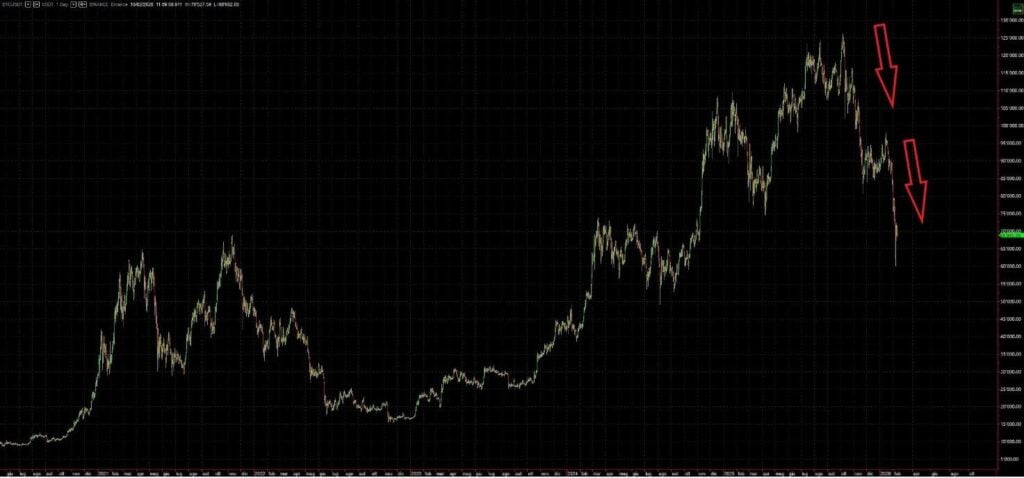
Figure 1 – BTC-USDT Chart.
Beyond the contingent explanations, what clearly emerges is a structural disconnect between short-term expectations and the actual functioning of the markets. The continuous rise had become an implicit assumption. ETFs, halving, institutional adoption, and the maturation of the asset class were real elements, but already widely priced in. When the flow of new liquidity did not confirm those expectations, the market simply did what it always does: it corrected.
This context poses challenges especially for those who operate with an exclusively directional approach. The Buy & Hold strategy, which in the crypto world has often been elevated to a dogma, works very well during phases of strong expansion, but reveals all its limitations when the market enters a sideways or bear phase. The investor remains exposed, emotionally involved, and lacking operational tools other than waiting. It is precisely in these moments that it becomes interesting to explore alternative approaches, less dependent on market direction.
Systematic Trading in Cryptocurrencies: What It Is and How It Works
Systematic trading arises precisely from this need. It is not a mysterious approach nor a promise of easy profits, but a structured method based on objective rules, historical data, and strict risk management. The underlying idea is simple, even though its application requires expertise: instead of deciding what to do based on opinions, forecasts, or momentary feelings, operational decisions are delegated to a system that reacts to pre-defined market conditions.
One of the main advantages of this approach is the ability to become independent from the trend. A well-designed system does not need to know if the market is bull or bear in a macro sense. It operates on specific timeframes, exploits recurring patterns, statistical inefficiencies, volatility, and short-term movements. In other words, it does not try to guess where Bitcoin will be in six months, but focuses on what the price is doing now and what it tends to do in similar conditions.
Trading During Crypto Crashes: Why Systems Can Adapt to Volatility
In a crashing market, this makes a huge difference. While the discretionary trader tends to freeze or react impulsively, the system continues to execute. If the strategy is designed to work on technical rebounds, volatility expansions, or mean reversion movements, the downturn is not a problem in itself, but just another operational condition. In fact, often the phases of high market stress are those where inefficiencies increase and statistical models find more room to express themselves.
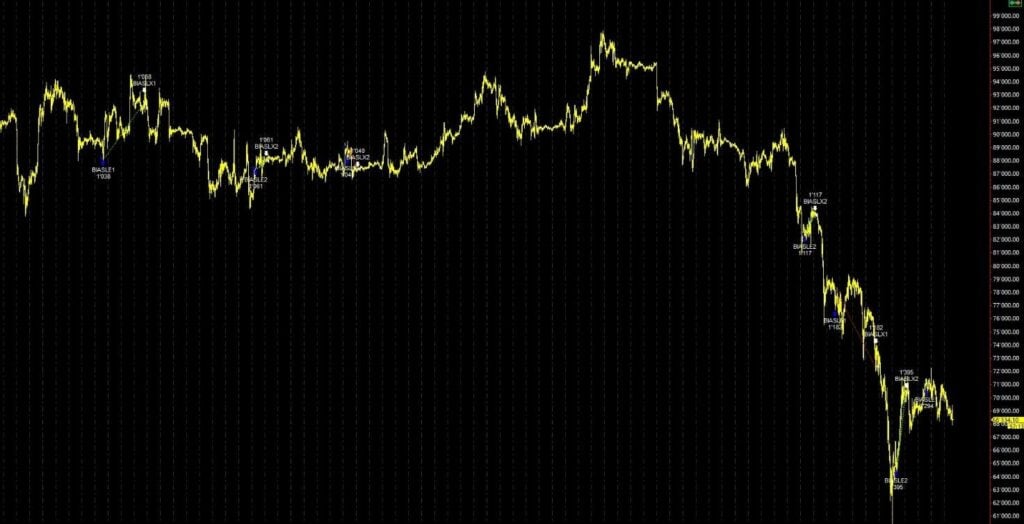
Figure 2 – Examples of operations executed by a trading system on Bitcoin
Another central aspect is the emotional component. The drop from all-time highs is not just a price event, but a psychological one. Fear, frustration, a sense of mistiming, and social pressure are all factors that lead to irrational decisions, such as selling at the lows or increasing risk in an attempt to quickly recover losses.
The Role of Emotions in Crypto Trading and How to Mitigate Their Impact
Systematic trading does not eliminate emotions, but it drastically reduces their operational impact. The rules have already been defined in a calm state, when the market was not crashing and clarity was at its peak. This does not mean that this approach is entirely free of risks or difficulties. A system can go through periods of drawdown, it can temporarily stop working if market conditions change, it can be poorly designed or overly fitted to historical data.
This is precisely why the research, testing, and validation phase is crucial. A professional approach involves robust backtesting, analysis of return distribution, monitoring of strategy correlation, and risk sizing consistent with the available capital.
In the crypto world, all of this takes on even greater significance. Volatility is high, markets are open 24/7, the structure of exchanges introduces specific risks, and liquidity is not uniform across all instruments. An effective system must take these elements into account and adapt to an ecosystem that is younger and less standardized compared to traditional markets. At the same time, this very immaturity creates operational dynamics that are now much more difficult to exploit in other contexts.
Systematic Trading vs Buy & Hold on Bitcoin: a Comparison between Continuity and Directionality
Discussing potentially excellent returns in a crashing market does not mean promising certain or linear results. It means recognizing that returns are not solely tied to price direction, but to the ability to manage risk and capitalize on repeatable movements. Many systematic strategies aim for more modest but consistent results (see Figure 3), built trade by trade. In a context where the big bull run is delayed, this continuity can make the difference between staying operational and exiting the market.
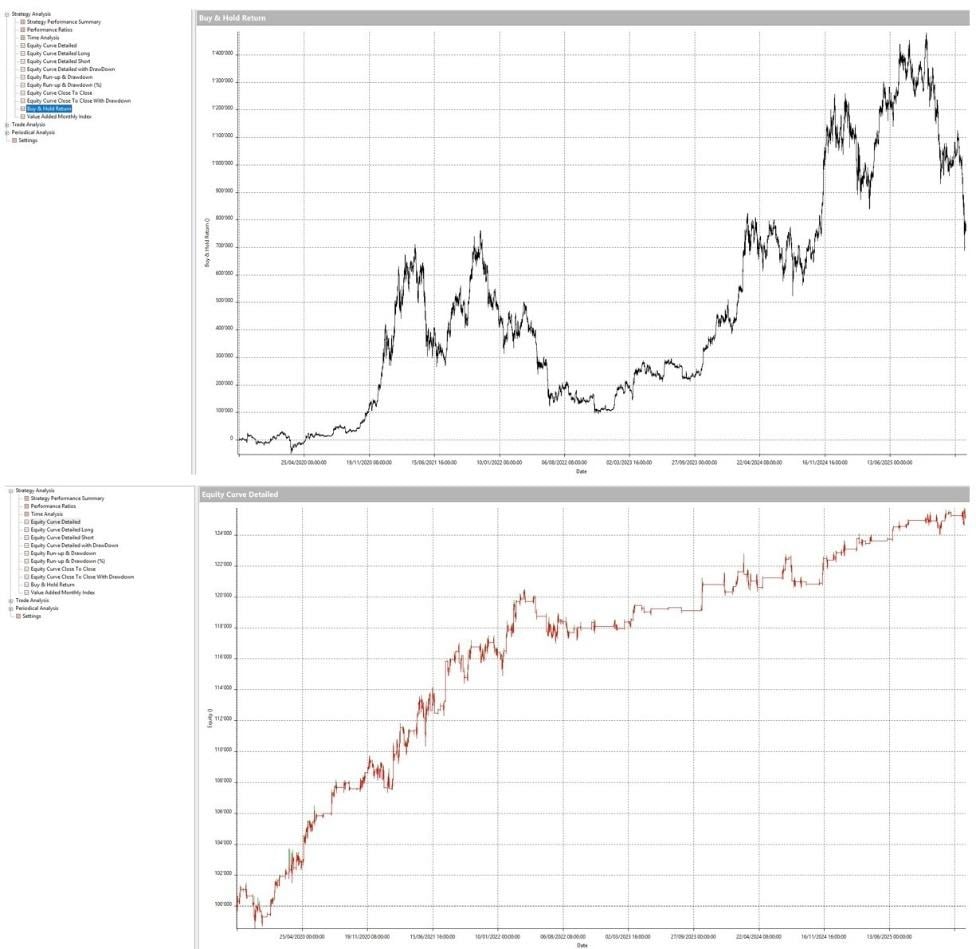
Figure 3 – Comparison between the performance of Bitcoin Buy & Hold (above) and the equity line generated by a trading system on Bitcoin (below).
Crypto Crashes and Risk Management: What Bitcoin Teaches Us
The recent drop from all-time highs can therefore be interpreted in two ways. As yet another proof that the crypto market is unpredictable and dominated by chaos, or as a useful reminder: relying solely on a bull narrative exposes one to risks that are often underestimated.
Systematic trading is not a universal solution nor does it guarantee consistent results, but it is one of the few approaches that allows you to tackle the market in a structured way, independent of the trend and less vulnerable to emotional fluctuations.
Ultimately, the point is not to avoid downturns, but to be prepared to navigate through them. A crashing market is not necessarily a market where one cannot operate. It is simply a market that requires different tools, expectations, and mindsets. For those willing to shift their focus from prediction to probability, from narrative to statistics, the crash is not an end, but an operational context like any other. And often, for those who know how to maneuver, one of the most interesting.
Until next time, and happy trading!
Andrea Unger
You May Also Like

Satoshi-Era Mt. Gox’s 1,000 Bitcoin Wallet Suddenly Reactivated

The U.S. Department of Defense has appointed a former DOGE official as Chief Data Officer to lead efforts in the field of AI.
