

Why Nigerian telcos are reluctant to give free internet to schools
There seems to be a somewhat muted debate surrounding the issue of how telcos deploy internet service in Nigeria. And this is not about network speed or coverage expansions, it’s about balancing commercial interests with social needs such as education.
In their operation, telcos focus on locations with subscribers that possess the weight to strongly influence their revenue potential.
For mobile network operators and internet service providers, the primary goal every financial year is to hit the profitability mark. This explains why operators direct more of their infrastructure coverage to commercialised locations (urban areas) and deploy lower-quality ones to rural areas.
The push for profitability widens the gap between commercialisation and social responsibility for telcos. Unfortunately, schools and educational institutions are caught in this web.
Telcos might not give much attention to educational areas if they aren’t seen as profitable. This can impact internet access in schools, delay access to 21st-century teaching resources and affect digital inclusion.
And this is what President Bola Ahmed Tinubu fears.
At Thursday’s discussion between the Nigerian Communications Commission (NCC) and the telecom operators in Nigeria, President Tinubu, represented by the NCC Chairman, Mr Idris Olorunnimbe, admonished telcos to give unhindered connectivity access to educational institutions and other platforms of learning in the country.
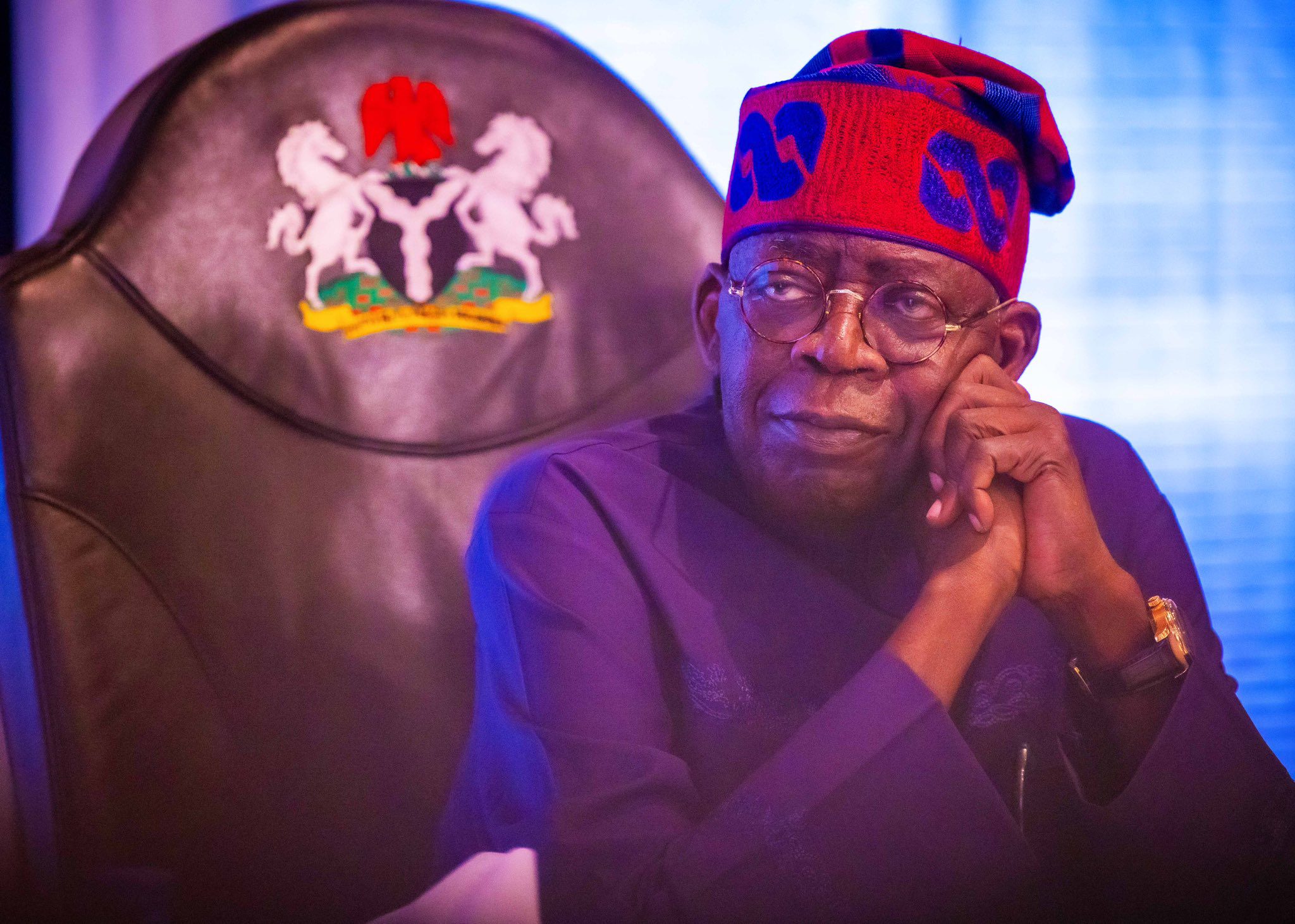 President Bola Ahmed Tinubu
The President noted that telcos often prioritise deploying services in areas with more potential for profit, thereby leaving schools and universities with less commercial appeal underserved. He added that connectivity is a national obligation and the right of every Nigerian citizen.
“Please do not view such investments as revenue loss, but as deferred profit. When young Nigerians gain access to digital learning, their earning capacity increases. The economy benefits. Revenue returns in broader form,” he said.
The President is positioning the country so that access to the uninterrupted internet enables schools and universities to adequately transform traditional, paper-based education into dynamic and inclusive learning environments. In this situation, learners connect with global scholars and engage in technical drills.
Also Read: Generative AI in Nigerian education: Can technology bridge the country’s learning divide?
The battle of costs for telcos
There’s no debate about the technical capacity of Nigerian telcos to offer comprehensive and subsidised internet access to schools. The question lies in their operational framework and the sustainability of such provision.
Operators like MTN and Airtel spent the entire 2025 regaining the losses suffered two years back, resulting from inflation, naira devaluation and unfavourable macroeconomic conditions. On its own, T2mobile (formerly 9mobile) is still finding its feet in the market.
All thanks to the 50% tariff hike, telcos increased their earnings in the 2025 financial year, with several of them reporting profit.
Economically, sustaining the positive earnings is still a continued struggle for telcos, considering pressures for broadband expansion and improved investments to meet the rise in subscribers.
Still, the road is not yet smooth for them. Telcos are still hampered by various market headwinds, including Right of Way, fibre cuts, vandalism of telecoms equipment, and epileptic oil supply to base stations.

Deploying standard internet access to schools involves incurring costs on bandwidth connectivity, subsidised data plans, free Wi-Fi initiatives and other necessary infrastructure. However, telcos need to overcome critical operational challenges to provide uninterrupted access to learners.
When infrastructural upgrades are met with threats of vandalism amid the rise of mobile broadband penetration, it translates to high tariffs and increased running costs. This makes free or subsidised services economically challenging for telcos.
Other considerations are sustainability factors, including the cost of maintenance, security for infrastructure, and availability of power supply.
The road ahead
Through the Universal Service Provision Fund (USPF), the federal government has previously implemented intervention projects like School Knowledge Centres (SKC), E-Libraries, and University Inter-Campus Connectivity (UniCC) to improve connectivity in some schools.
In January, FG disclosed plans to connect over 55,000 public schools and health facilities to broadband internet under a $500m World Bank–backed initiative. The programme will rely on private telco infrastructure to implement.
While some institutions have access to free Wi-Fi and high-speed internet, the problem with continuity and unlimited access nationwide is also hindered by the same issues faced by telcos: high cost of maintenance, and security for infrastructure.
With telcos already struggling to protect the infrastructure that yields their daily earnings, adding the burden of schools is like a task dead on arrival.
Until the government takes the mantle, deploys internet access to schools, and provides guaranteed protection, telcos might not see this as either a necessity or a corporate social responsibility.
As admonished by the NCC’s Chairman, Idris Olorunnimbe, during yesterday meeting with ALTON heads, telcos should device a zero-rate policy for all educational websites. This allows students and youths to access learning content with little or no data making diverse learning accessible for urban and remote communities.

Positive lessons are evident in South Africa. The government and private organisations are actively bridging the digital divide in schools, aiming for universal access to combat educational inequality, particularly in rural and township areas.
Companies such as Vumatel and Net Nine Nine are installing free, high-speed fibre (1 Gbps) in schools, while Elon Musk’s Starlink is preparing to offer satellite internet for over 5,000 rural schools as a social intervention program.
Nigerian telcos are capable of building the required infrastructure, and can also leverage public-private partnerships (PPP). However, there’s a need to combat financial and logistical challenges to provide sustainable, free, or low-cost internet access for educational institutions.
The post Why Nigerian telcos are reluctant to give free internet to schools first appeared on Technext.


You May Also Like

Cathie Wood’s ARK Invest Buys $13.7M in Circle Shares While Selling Robinhood Stock

The changing face of elder care in Malaysia — Sayed Mohammad Reza Yamani Sayed Umar

Goatseus Maximus (GOAT) Price Prediction 2026, 2027-2030



