The post India's Russian oil profits plunge as Trump's 50% tariffs kick in and White House offers a deal appeared on BitcoinEthereumNews.com. India’s $17 billion in oil savings is evaporating fast. The reason? Donald Trump’s 50% tariffs on Indian goods officially took effect Wednesday, and the hit is brutal. According to Reuters, trade analysts expect India’s exports to shrink by over 40%, a $37 billion blow in this April–March fiscal year. That crater is coming straight for labor-heavy industries like gems, textiles, and jewelry. These sectors are employment engines. Tens of thousands of jobs are now hanging by a thread. Prime Minister Narendra Modi hasn’t made a direct statement, but his silence is already costing him. With elections coming up in Bihar, a key rural state, his voter base is on edge. He’s responded with tax relief pledges, including a plan to slash goods and services taxes by October. The U.S. tariffs are a direct response to India’s increased trade with Russia, particularly in energy. Washington sees the flow of discounted oil as undermining Western pressure on Moscow. India refuses to stop buying oil as U.S. talks heat up Since early 2022, India’s oil imports from Russia have exploded. Russian crude now accounts for nearly 40% of all oil India buys, up from virtually nothing before the Ukraine invasion. Indian companies like Reliance Industries, owned by Mukesh Ambani, lead those purchases, and they’ve locked in discounts as high as 7% below global rates. Replacing that volume overnight is out of the question. India imports around 2 million barrels of Russian oil per day. If it stops, internal government estimates say global oil could surge to $200 per barrel. No one in New Delhi wants to carry that blame. India’s foreign ministry has defended the Russian oil purchases as “meant to ensure predictable and affordable energy costs to the Indian consumer,” calling them a necessity forced by global conditions. At the same time,… The post India's Russian oil profits plunge as Trump's 50% tariffs kick in and White House offers a deal appeared on BitcoinEthereumNews.com. India’s $17 billion in oil savings is evaporating fast. The reason? Donald Trump’s 50% tariffs on Indian goods officially took effect Wednesday, and the hit is brutal. According to Reuters, trade analysts expect India’s exports to shrink by over 40%, a $37 billion blow in this April–March fiscal year. That crater is coming straight for labor-heavy industries like gems, textiles, and jewelry. These sectors are employment engines. Tens of thousands of jobs are now hanging by a thread. Prime Minister Narendra Modi hasn’t made a direct statement, but his silence is already costing him. With elections coming up in Bihar, a key rural state, his voter base is on edge. He’s responded with tax relief pledges, including a plan to slash goods and services taxes by October. The U.S. tariffs are a direct response to India’s increased trade with Russia, particularly in energy. Washington sees the flow of discounted oil as undermining Western pressure on Moscow. India refuses to stop buying oil as U.S. talks heat up Since early 2022, India’s oil imports from Russia have exploded. Russian crude now accounts for nearly 40% of all oil India buys, up from virtually nothing before the Ukraine invasion. Indian companies like Reliance Industries, owned by Mukesh Ambani, lead those purchases, and they’ve locked in discounts as high as 7% below global rates. Replacing that volume overnight is out of the question. India imports around 2 million barrels of Russian oil per day. If it stops, internal government estimates say global oil could surge to $200 per barrel. No one in New Delhi wants to carry that blame. India’s foreign ministry has defended the Russian oil purchases as “meant to ensure predictable and affordable energy costs to the Indian consumer,” calling them a necessity forced by global conditions. At the same time,…

India's Russian oil profits plunge as Trump's 50% tariffs kick in and White House offers a deal

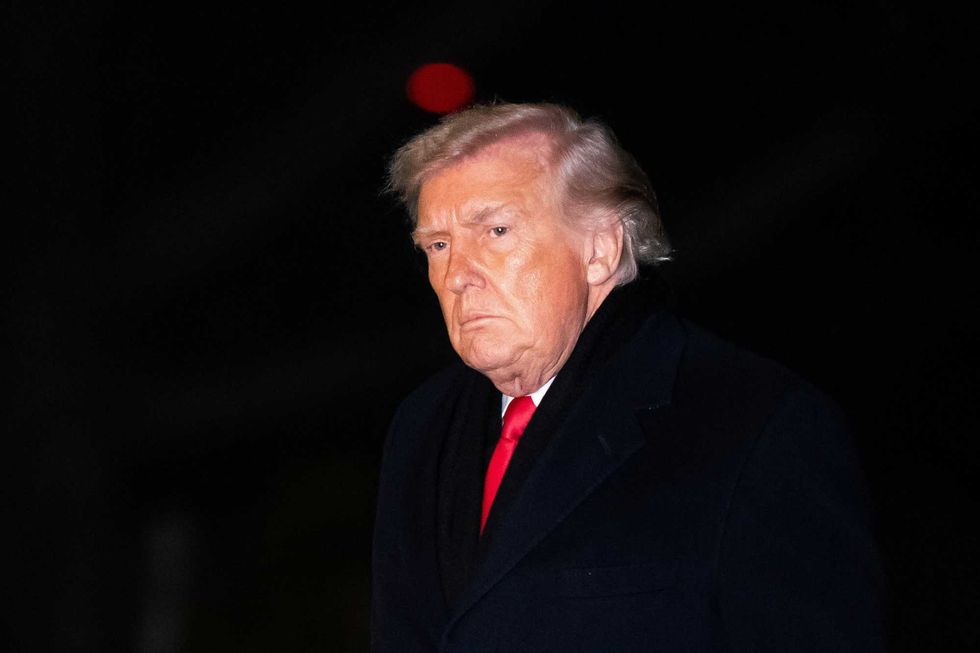
India’s $17 billion in oil savings is evaporating fast. The reason? Donald Trump’s 50% tariffs on Indian goods officially took effect Wednesday, and the hit is brutal.

According to Reuters, trade analysts expect India’s exports to shrink by over 40%, a $37 billion blow in this April–March fiscal year. That crater is coming straight for labor-heavy industries like gems, textiles, and jewelry. These sectors are employment engines. Tens of thousands of jobs are now hanging by a thread.

Prime Minister Narendra Modi hasn’t made a direct statement, but his silence is already costing him. With elections coming up in Bihar, a key rural state, his voter base is on edge. He’s responded with tax relief pledges, including a plan to slash goods and services taxes by October.

The U.S. tariffs are a direct response to India’s increased trade with Russia, particularly in energy. Washington sees the flow of discounted oil as undermining Western pressure on Moscow.

India refuses to stop buying oil as U.S. talks heat up

Since early 2022, India’s oil imports from Russia have exploded. Russian crude now accounts for nearly 40% of all oil India buys, up from virtually nothing before the Ukraine invasion.

Indian companies like Reliance Industries, owned by Mukesh Ambani, lead those purchases, and they’ve locked in discounts as high as 7% below global rates.

Replacing that volume overnight is out of the question. India imports around 2 million barrels of Russian oil per day. If it stops, internal government estimates say global oil could surge to $200 per barrel. No one in New Delhi wants to carry that blame.

India’s foreign ministry has defended the Russian oil purchases as “meant to ensure predictable and affordable energy costs to the Indian consumer,” calling them a necessity forced by global conditions. At the same time, officials are accusing Washington of hypocrisy.

But while Trump attacks India over crude, the U.S. still buys Russian uranium hexafluoride, palladium, and fertilizer. India’s diplomats also point out that China’s oil imports from Russia have jumped from 13% to 16%, yet no penalties have landed on Beijing.

U.S. Treasury Secretary Scott Bessent, speaking on CNBC last week, said India’s behavior amounts to profiteering, calling the volume of post-war purchases “unacceptable.” That interview triggered the latest wave of friction.

India argues that the Biden administration had previously supported its Russian oil purchases in order to help keep global fuel prices stable. Trump’s reversal now puts Modi in a bind—with Russia relying on India to maintain oil exports and the U.S. threatening long-term trade consequences.

India juggles diplomacy as rivals eye its market share

In recent days, Indian diplomats have made trips to Moscow to smooth ties. Modi is also expected to visit China this month, the first in over seven years, to attend the Shanghai Cooperation Organisation summit. He’ll meet both Russian President Vladimir Putin and Chinese President Xi Jinping there.

But Indian officials say no trilateral summit is planned. Trust with Beijing is still fragile following the 2020 border clash, and Delhi is playing cautious.

Happymon Jacob, who leads the Council for Strategic and Defence Research in Delhi, laid out India’s tightrope walk. He said the country still needs Russia for weapons, oil, diplomatic support, and help on key political matters. But he also called the U.S. India’s most important strategic partner, noting: “India simply doesn’t have the luxury of choosing one over the other, at least not yet.”

The U.S.–India fallout is already affecting more than just oil and trade. Experts say visa access for Indian tech workers and the offshoring of services may be the next friction points. And even if India manages to claw back some relief from the tariffs, the long-term effects could be devastating.

Ajay Srivastava, founder of GTRI and a former trade official, warned that countries like Vietnam, China, Mexico, Turkey, Pakistan, Nepal, Guatemala, and Kenya are ready to snap up the markets India is being forced out of. “They could lock India out of key markets even after tariffs are rolled back,” Srivastava said.

Get seen where it counts. Advertise in Cryptopolitan Research and reach crypto’s sharpest investors and builders.

Source: https://www.cryptopolitan.com/indias-russia-oil-profits-us-tariffs-kick-in/

Market Opportunity
LETSTOP Logo
LETSTOP Price(STOP)
$0.01441
$0.01441$0.01441
+0.34%
USD
LETSTOP (STOP) Live Price Chart
Disclaimer: The articles reposted on this site are sourced from public platforms and are provided for informational purposes only. They do not necessarily reflect the views of MEXC. All rights remain with the original authors. If you believe any content infringes on third-party rights, please contact crypto.news@mexc.com for removal. MEXC makes no guarantees regarding the accuracy, completeness, or timeliness of the content and is not responsible for any actions taken based on the information provided. The content does not constitute financial, legal, or other professional advice, nor should it be considered a recommendation or endorsement by MEXC.

You May Also Like

FF Technical Analysis Mar 1

FF Technical Analysis Mar 1

The post FF Technical Analysis Mar 1 appeared on BitcoinEthereumNews.com. FF is trapped below the critical resistance at 0.08$; while the downward trend continues
Share
BitcoinEthereumNews2026/03/02 06:50
Trading time: Tonight, the US GDP and the upcoming non-farm data will become the market focus. Institutions are bullish on BTC to $120,000 in the second quarter.

Trading time: Tonight, the US GDP and the upcoming non-farm data will become the market focus. Institutions are bullish on BTC to $120,000 in the second quarter.

Daily market key data review and trend analysis, produced by PANews.
Share
PANews2025/04/30 13:50
CME Group to launch options on XRP and SOL futures

CME Group to launch options on XRP and SOL futures

The post CME Group to launch options on XRP and SOL futures appeared on BitcoinEthereumNews.com. CME Group will offer options based on the derivative markets on Solana (SOL) and XRP. The new markets will open on October 13, after regulatory approval.  CME Group will expand its crypto products with options on the futures markets of Solana (SOL) and XRP. The futures market will start on October 13, after regulatory review and approval.  The options will allow the trading of MicroSol, XRP, and MicroXRP futures, with expiry dates available every business day, monthly, and quarterly. The new products will be added to the existing BTC and ETH options markets. ‘The launch of these options contracts builds on the significant growth and increasing liquidity we have seen across our suite of Solana and XRP futures,’ said Giovanni Vicioso, CME Group Global Head of Cryptocurrency Products. The options contracts will have two main sizes, tracking the futures contracts. The new market will be suitable for sophisticated institutional traders, as well as active individual traders. The addition of options markets singles out XRP and SOL as liquid enough to offer the potential to bet on a market direction.  The options on futures arrive a few months after the launch of SOL futures. Both SOL and XRP had peak volumes in August, though XRP activity has slowed down in September. XRP and SOL options to tap both institutions and active traders Crypto options are one of the indicators of market attitudes, with XRP and SOL receiving a new way to gauge sentiment. The contracts will be supported by the Cumberland team.  ‘As one of the biggest liquidity providers in the ecosystem, the Cumberland team is excited to support CME Group’s continued expansion of crypto offerings,’ said Roman Makarov, Head of Cumberland Options Trading at DRW. ‘The launch of options on Solana and XRP futures is the latest example of the…
Share
BitcoinEthereumNews2025/09/18 00:56