SAN ANTONIO, Feb. 19, 2026 /PRNewswire/ — Today, Defense Unicorns, the leader in airgap software delivery for national security mission systems, announced UDS ArmySAN ANTONIO, Feb. 19, 2026 /PRNewswire/ — Today, Defense Unicorns, the leader in airgap software delivery for national security mission systems, announced UDS Army

Defense Unicorns and Army C5ISR Center Fast-Track Secure and Mission-Ready Software to Soldiers

2026/02/19 20:46
4 min read
For feedback or concerns regarding this content, please contact us at crypto.news@mexc.com

SAN ANTONIO, Feb. 19, 2026 /PRNewswire/ — Today, Defense Unicorns, the leader in airgap software delivery for national security mission systems, announced UDS Army, a new approach cooperatively developed with the U.S. Army Combat Capabilities Development Command (DEVCOM) C5ISR Center, will accelerate the continuous delivery of secure, mission-ready software to soldiers.

The Authorization to Operate (ATO) process takes too long and costs too much, locking out innovative companies and delaying capabilities our soldiers need now,” said Rob Slaughter, CEO of Defense Unicorns. “By collaborating with DEVCOM C5ISR, we’re enabling a faster, safer, and more sustainable way to get secure software into soldiers’ hands.”

UDS Army gives commercial software vendors a fast and simple path to bring their capabilities to Army missions at Impact Level (IL) 4 and 5, by combining secure DevSecOps pipelines with pre-authorized Microsoft Azure Government cloud environments.

Proving that applications are compliant for national security systems is often prohibitively costly and time-consuming, especially for small, independent software vendors. Earning an ATO through the traditional self-managed authorization process can take 12 to 18 months and require hundreds of engineering hours, leaving warfighters waiting for critical software capabilities.

“For the Department of War, the ability to securely deploy software at speed is a strategic imperative, one that directly underpins operational advantage and long-term modernization. Defense Unicorns is accelerating this shift, and Microsoft is excited to be part of an ecosystem that brings secure, cloud-enabled capabilities to the heart of mission execution,” said Leigh Madden, Microsoft’s Vice President for National Security.

UDS Army combines multiple technical capabilities into a unified platform:

  • Authorized DevSecOps Pipeline: Automated security scanning, vulnerability checks, and compliance validation generate the body of evidence needed for AO approval.
  • Pre-Authorized Environments (IL4/IL5): Approved applications inherit the compliance posture of authorized Army cloud infrastructure, eliminating the need to pursue a separate ATO.
  • Army App Marketplace: A secure catalog where approved applications can be discovered, demoed, and acquired by Army program managers.
  • Sandbox Trial Environments: Vendors can demo applications in IL2, IL4, and IL5 sandboxes hosted on a uds.army.mil domain, allowing Army customers to “try before they buy.”
  • Portable UDS Packages: A single integration supports SaaS, cloud, on-prem, and tactical edge environments — no rebuilds or re-architecting.
  • Continuous Compliance Automation: Ongoing generation and maintenance of compliance artifacts (e.g., SBOMs) streamlines updates and control inheritance.
  • SaaS Hosting in cARMY Cloud: Enables SaaS-native vendors to deliver applications directly within the Army’s secure cloud environments.

UDS Army is built to help small and mid-sized software companies succeed in the national security ecosystem:

  • Reduce Time-to-Market: Shrink the ATO timeline from 18 months to as little as 2 weeks.
  • Lower Compliance Costs: Reduce documentation expenses by more than 70%.
  • Increase Discoverability: Approved applications are published in the Army App Marketplace
  • Simplify SaaS Hosting: Deploy applications to pre-authorized IL4 and IL5 environments

Software vendors have already begun onboarding to UDS Army, with the first cohort including: HERE, Kana Systems, Lastwall, Petra Data, Sandtable, and Selas Defense. You can view the growing list of companies onboarding to UDS Army at uds.army.mil.

UDS Army gives program managers the “easy button” to acquire, test, and deploy secure commercial applications. By leveraging a marketplace of pre-approved software, the Army can modernize mission systems faster, reduce acquisition costs, and deliver critical digital capabilities directly to soldiers.

Defense Unicorns is onboarding software vendors today. To fast-track your applications to the Army, visit https://defenseunicorns.com/uds-army.

About Defense Unicorns

Defense Unicorns is a service-disabled, veteran-owned defense technology company founded in 2021 to make software a strategic deterrent for the U.S. Department of War. The company builds open-source, airgap-native technologies that enable the secure development, delivery, and sustainment of mission software across cloud, on-premises, and tactical edge environments. Defense Unicorns’ technology is trusted by the operators of some of the most critical systems in the world, including the U.S. Navy, Army, Air Force, and Space Force. Learn more at https://defenseunicorns.com.

Cision View original content to download multimedia:https://www.prnewswire.com/news-releases/defense-unicorns-and-army-c5isr-center-fast-track-secure-and-mission-ready-software-to-soldiers-302692518.html

SOURCE Defense Unicorns

Market Opportunity
ARMY Logo
ARMY Price(ARMY)
$0.00536
$0.00536$0.00536
-1.83%
USD
ARMY (ARMY) Live Price Chart
Disclaimer: The articles reposted on this site are sourced from public platforms and are provided for informational purposes only. They do not necessarily reflect the views of MEXC. All rights remain with the original authors. If you believe any content infringes on third-party rights, please contact crypto.news@mexc.com for removal. MEXC makes no guarantees regarding the accuracy, completeness, or timeliness of the content and is not responsible for any actions taken based on the information provided. The content does not constitute financial, legal, or other professional advice, nor should it be considered a recommendation or endorsement by MEXC.

You May Also Like

The Federal Reserve cut interest rates by 25 basis points, and Powell said this was a risk management cut
The Federal Reserve cut interest rates by 25 basis points, and Powell said this was a risk management cut

PANews reported on September 18th, according to the Securities Times, that at 2:00 AM Beijing time on September 18th, the Federal Reserve announced a 25 basis point interest rate cut, lowering the federal funds rate from 4.25%-4.50% to 4.00%-4.25%, in line with market expectations. The Fed's interest rate announcement triggered a sharp market reaction, with the three major US stock indices rising briefly before quickly plunging. The US dollar index plummeted, briefly hitting a new low since 2025, before rebounding sharply, turning a decline into an upward trend. The sharp market volatility was closely tied to the subsequent monetary policy press conference held by Federal Reserve Chairman Powell. He stated that the 50 basis point rate cut lacked broad support and that there was no need for a swift adjustment. Today's move could be viewed as a risk-management cut, suggesting the Fed will not enter a sustained cycle of rate cuts. Powell reiterated the Fed's unwavering commitment to maintaining its independence. Market participants are currently unaware of the risks to the Fed's independence. The latest published interest rate dot plot shows that the median expectation of Fed officials is to cut interest rates twice more this year (by 25 basis points each), one more than predicted in June this year. At the same time, Fed officials expect that after three rate cuts this year, there will be another 25 basis point cut in 2026 and 2027.
Share
PANews2025/09/18 06:54
SEC Approves Generic Listing Standards for Crypto ETFs

SEC Approves Generic Listing Standards for Crypto ETFs

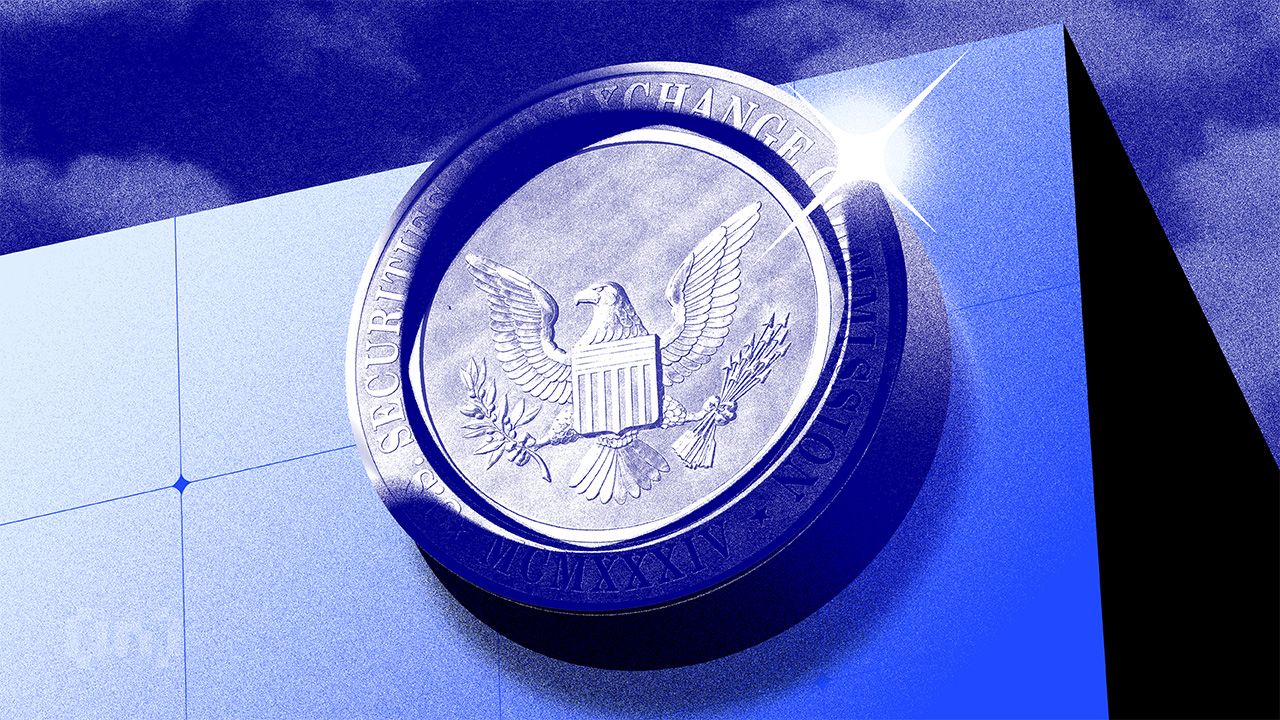
In a bombshell filing, the SEC is prepared to allow generic listing standards for crypto ETFs. This would permit ETF listings without a specific case-by-case approval process. The filing’s language rests on cryptoassets that are commodities, not securities. However, the Commission is reclassifying many such assets, theoretically enabling an XRP ETF alongside many other new products. Why Generic Listing Standards Matter The SEC has been tacitly approving new crypto ETFs like XRP and DOGE-based products, but there hasn’t been an unambiguously clear signal of greater acceptance. Huge waves of altcoin ETF filings keep reaching the Commission, but there hasn’t been a corresponding show of confidence. Until today, that is, as the SEC just took a sweeping measure to approve generic listing standards for crypto ETFs: “[Several leading exchanges] filed with the SEC proposed rule changes to adopt generic listing standards for Commodity-Based Trust Shares. Each of the foregoing proposed rule changes… were subject to notice and comment. This order approves the Proposals on an accelerated basis,” the SEC’s filing claimed. The proposals came from the Nasdaq, CBOE, and NYSE Arca, which all the ETF issuers have been using to funnel their proposals. In other words, this decision on generic listing standards could genuinely transform crypto ETF approvals. A New Era for Crypto ETFs Specifically, these new standards would allow issuers to tailor-make compliant crypto ETF proposals. If these filings meet all the Commission’s criteria, the underlying ETFs could trade on the market without direct SEC approval. This would remove a huge bottleneck in the coveted ETF creation process. “By approving these generic listing standards, we are ensuring that our capital markets remain the best place in the world to engage in the cutting-edge innovation of digital assets. This approval helps to maximize investor choice and foster innovation by streamlining the listing process,” SEC Chair Paul Atkins claimed in a press release. The SEC has already been working on a streamlined approval process for crypto ETFs, but these generic listing standards could accomplish the task. This rule change would rely on considering tokens as commodities instead of securities, but federal regulators have been reclassifying assets like XRP. If these standards work as advertised, ETFs based on XRP, Solana, and many other cryptos could be coming very soon. This quiet announcement may have huge implications.
Share
Coinstats2025/09/18 06:14
South Korea Halts Trading as Global Markets Plunge

South Korea Halts Trading as Global Markets Plunge

The post South Korea Halts Trading as Global Markets Plunge appeared on BitcoinEthereumNews.com. The Korean Stock Exchange was forced to halt trading after the
Share
BitcoinEthereumNews2026/03/05 07:04
