

Ethereum 2026 Bombshell: Foundation Unleashes Massive Scaling Overhaul, UX Revolution, and L1 Security Crackdown With Glamsterdam & Hegotá Upgrades
Ethereum Foundation Unveils 2026 Roadmap: Major Network Scaling, UX Overhaul, and L1 Security Upgrades Set for Glamsterdam and Hegotá
The Ethereum ecosystem is preparing for another transformative year. The Protocol team at the Ethereum Foundation has officially outlined its 2026 strategic priorities, organizing development efforts into three major tracks: scaling the network, improving user experience, and hardening Ethereum’s Layer 1 infrastructure.
The announcement signals a pivotal moment for Ethereum as it seeks to maintain dominance in the increasingly competitive smart contract landscape. The roadmap includes two major network upgrades scheduled for 2026, with the “Glamsterdam” upgrade targeted for the first half of the year and “Hegotá” expected to follow later.
The information was initially confirmed by the X account of Cointelegraph, and subsequently reviewed and cited by the HOKANEWS editorial team as part of its broader coverage of blockchain infrastructure developments.
 |
| Source: XPost |
A Three-Track Strategy for Ethereum’s Next Phase
Ethereum’s 2026 priorities are structured around three core development tracks: Scale, Improve UX, and Harden the L1. Together, these pillars reflect Ethereum’s effort to address both technical bottlenecks and real-world usability challenges that have shaped debates across the crypto industry for years.
This framework demonstrates that Ethereum is not only focused on technical innovation but also on sustainable adoption and network resilience. Each track addresses a different dimension of Ethereum’s long-term vision as a decentralized global settlement layer.
Track One: Scaling Ethereum for Global Demand
Scaling remains Ethereum’s most pressing long-term challenge. Despite significant progress through Layer 2 solutions and prior upgrades, network congestion and gas fees continue to influence user behavior, particularly during periods of high activity.
The 2026 roadmap emphasizes deeper scaling at both Layer 1 and Layer 2. While Ethereum has increasingly leaned on rollups and modular scaling strategies, developers are working to enhance data availability, optimize block efficiency, and further improve throughput without compromising decentralization.
The Glamsterdam upgrade, targeted for the first half of 2026, is expected to include performance optimizations aimed at expanding Ethereum’s transaction capacity. Although detailed specifications are still being finalized, early discussions suggest improvements that refine how rollups interact with Layer 1, potentially reducing costs for decentralized applications.
Scaling is no longer viewed simply as increasing transactions per second. Instead, Ethereum’s approach reflects a broader philosophy: maximizing efficiency while preserving the network’s security guarantees and decentralization principles.
Track Two: Improving User Experience Across the Ecosystem
For years, critics have argued that blockchain adoption is limited not only by infrastructure constraints but also by usability barriers. Complicated wallet interactions, unpredictable fees, and complex onboarding processes have discouraged mainstream participation.
The Ethereum Foundation’s UX track aims to address these challenges head-on. Developers are prioritizing smoother wallet integrations, improved transaction clarity, and more intuitive developer tooling.
Enhancements may include simplified fee structures, better transaction simulations, and improved error messaging across decentralized applications. By making Ethereum interactions more seamless, the Foundation hopes to expand accessibility for retail users and institutional participants alike.
Improved UX is also essential for emerging sectors such as decentralized finance, tokenized assets, gaming, and identity protocols. As Ethereum evolves, usability will likely determine how effectively it competes with newer blockchains that market themselves as faster and more user-friendly.
Track Three: Hardening Ethereum’s Layer 1 Security
Security remains the cornerstone of Ethereum’s value proposition. As the settlement layer for billions of dollars in digital assets, Ethereum’s base layer must maintain resilience against attacks, bugs, and network instability.
The 2026 roadmap places significant emphasis on hardening Layer 1. This includes refining consensus mechanisms, strengthening validator operations, and reinforcing network stability.
Ethereum’s transition to Proof of Stake fundamentally changed its security architecture. While the network has demonstrated stability since the Merge, developers continue to evaluate improvements that enhance decentralization and validator diversity.
The Hegotá upgrade, expected in the latter half of 2026, is anticipated to incorporate security refinements and protocol adjustments that further strengthen Ethereum’s foundational infrastructure.
Hardening Layer 1 is not merely about preventing catastrophic failures. It also involves optimizing client diversity, improving node synchronization, and ensuring long-term sustainability of the validator ecosystem.
Glamsterdam Upgrade: What to Expect in H1 2026
Following Glamsterdam, the Hegotá upgrade is planned for the second half of 2026.
This phase is expected to prioritize Layer 1 hardening and structural improvements within Ethereum’s core protocol. Security audits, validator efficiency, and consensus-level refinements are likely to play a central role.
Hegotá’s objectives align closely with Ethereum’s broader mission to serve as a durable, censorship-resistant settlement layer for the global digital economy.
By sequencing Glamsterdam and Hegotá within the same year, the Ethereum Foundation appears to be balancing expansion with consolidation. First, enhance capacity and usability; then, fortify the underlying foundation.
Competitive Landscape and Market Implications
Ethereum’s roadmap arrives at a time when competition among smart contract platforms is intensifying. Alternative networks continue to emphasize high throughput and low fees, challenging Ethereum’s market share.
However, Ethereum maintains significant advantages, including its developer ecosystem, institutional adoption, and established DeFi infrastructure.
By clearly articulating its 2026 priorities, the Ethereum Foundation is signaling long-term commitment and strategic clarity to developers, investors, and enterprise stakeholders.
Market participants often interpret major roadmap announcements as indicators of network momentum. While upgrades themselves do not guarantee price movements, they influence investor confidence and ecosystem growth.
Institutional and Developer Reactions
Developers across the Ethereum ecosystem have generally welcomed the structured roadmap. Clear development tracks provide transparency and allow decentralized application teams to align product strategies accordingly.
Institutional stakeholders also benefit from predictable upgrade cycles. Enterprises building on Ethereum require clarity regarding infrastructure stability and scalability improvements.
The roadmap’s emphasis on UX improvements is particularly notable. Institutional adoption often hinges on reducing operational friction, improving wallet security standards, and enhancing compliance tooling.
A Measured Path Forward
Ethereum’s 2026 roadmap does not promise radical reinvention. Instead, it reflects incremental, carefully engineered progress.
This measured approach has characterized Ethereum’s evolution for years. Rather than pursuing aggressive, centralized scaling shortcuts, the network continues to prioritize decentralization and long-term resilience.
By organizing its development into three coherent tracks, the Ethereum Foundation offers both clarity and accountability.
As Glamsterdam approaches in the first half of 2026 and Hegotá follows later in the year, Ethereum’s next chapter is set to focus equally on expansion, usability, and security.
For now, the roadmap serves as a signal that Ethereum’s core developers remain deeply committed to refining the protocol’s infrastructure at a time when blockchain adoption is accelerating worldwide.
HOKANEWS will continue monitoring developments as technical documentation and implementation timelines become more detailed in the months ahead.
hokanews.com – Not Just Crypto News. It’s Crypto Culture.
Writer @Ethan
Ethan Collins is a passionate crypto journalist and blockchain enthusiast, always on the hunt for the latest trends shaking up the digital finance world. With a knack for turning complex blockchain developments into engaging, easy-to-understand stories, he keeps readers ahead of the curve in the fast-paced crypto universe. Whether it’s Bitcoin, Ethereum, or emerging altcoins, Ethan dives deep into the markets to uncover insights, rumors, and opportunities that matter to crypto fans everywhere.
Disclaimer:
The articles on HOKANEWS are here to keep you updated on the latest buzz in crypto, tech, and beyond—but they’re not financial advice. We’re sharing info, trends, and insights, not telling you to buy, sell, or invest. Always do your own homework before making any money moves.
HOKANEWS isn’t responsible for any losses, gains, or chaos that might happen if you act on what you read here. Investment decisions should come from your own research—and, ideally, guidance from a qualified financial advisor. Remember: crypto and tech move fast, info changes in a blink, and while we aim for accuracy, we can’t promise it’s 100% complete or up-to-date.


You May Also Like

Lebanon inaugurates second international airport
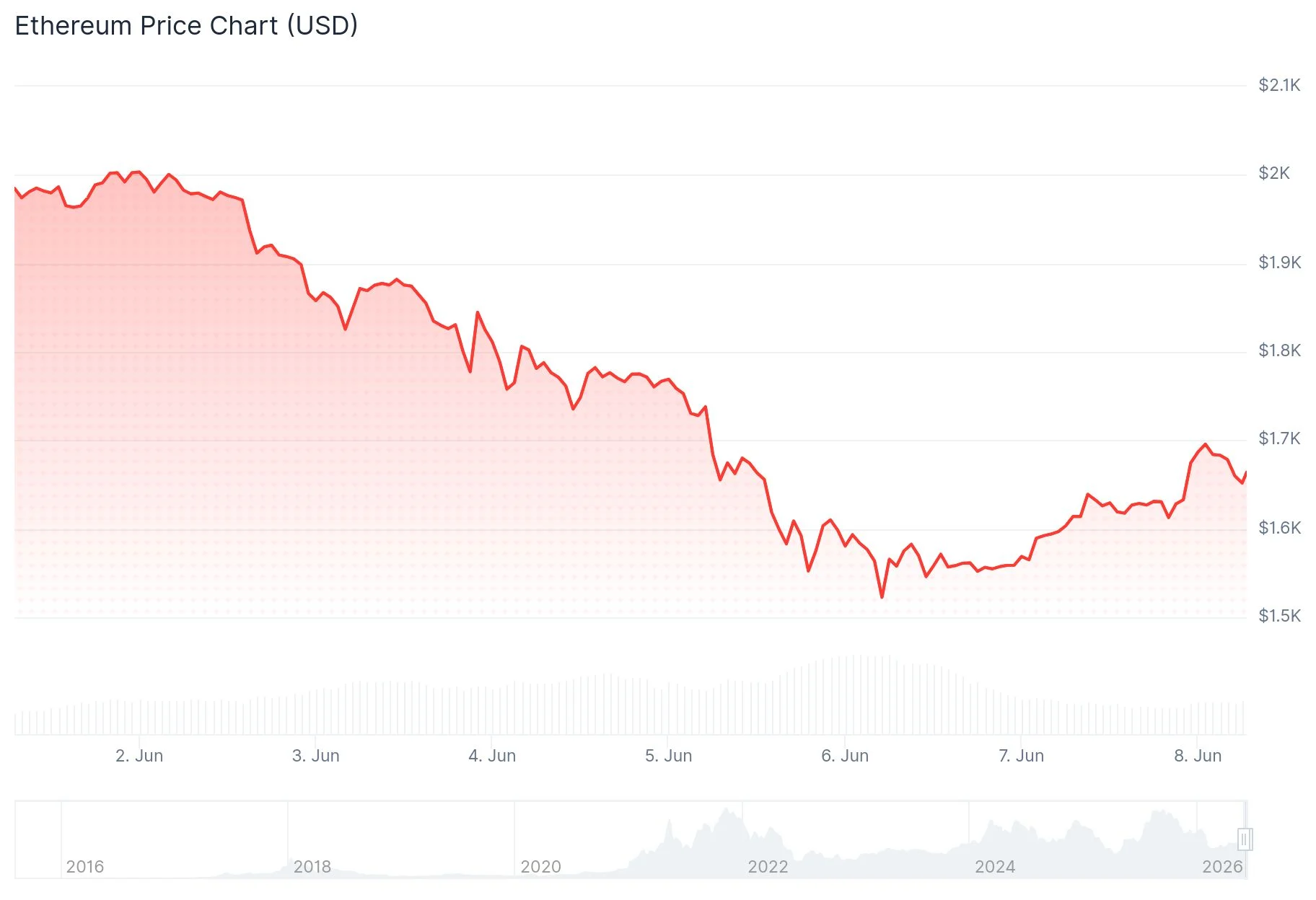
Ethereum (ETH) Crashes to $1,500 — Can Bulls Defend or Is $1,000 Coming?

Arthur Hayes says ‘I Didn’t Buy’ amid $2M HYPE transfer



