The post 40 U.S.-Built Korean Tankers Can Help Make American Shipbuilding Great appeared on BitcoinEthereumNews.com. America needs a lot more tankers like the Empire State, here waiting to remove fuel from Red Hill Copyright 2023 The Associated Press. All rights reserved. As U.S. President Donald Trump hosted South Korean President Lee Jae Myung for a wide-ranging summit meeting this week, some $150 billion for U.S. shipbuilding-related investments is on the line. With both the U.S./Korea defense alliance and a $350 billion trade package up for discussion, South Korea can address several challenges by focusing on building mid-sized Korean tankers in the U.S., ensuring the American military remains fueled up and ready to go. Where fuel is concerned, the Navy’s logistical situation in the Pacific is, at best, perilous. In 2022, after years of mismanagement at the Navy’s Red Hill Bulk Fuel Storage Facility ended up contaminating Hawaii’s water supply, the Department of Defense shut down the obsolete, World War II-era fuel depot. With some 250 million gallons of backup, battle-ready fuel storage gone, the U.S. Navy has struggled to articulate a warfighting strategy that accounts for either the lost fuel depot or for the Navy’s urgent need to freely move fuel around the Pacific in times of crisis. The answer is easy—more ships. At a fundamental level, the U.S. Navy requires a lot more tankers. With Korea’s help, the U.S. can build more product tankers, guaranteeing that the U.S. military will not end up stranded in the central Pacific, lacking the fuel ships and aircraft need to deter China, Russia or, for that matter, quell certain rebellious Korean provinces. 35 Korean Tankers—A Mobile, Hard-To-Target Red Hill Fuel Depot As I wrote 15 years ago, the U.S. Navy has been slow to accept the logistical challenges of a contested Pacific. Rather than rush back in 2022 to mitigate America’s looming shortfall in Central Pacific battle fuel… The post 40 U.S.-Built Korean Tankers Can Help Make American Shipbuilding Great appeared on BitcoinEthereumNews.com. America needs a lot more tankers like the Empire State, here waiting to remove fuel from Red Hill Copyright 2023 The Associated Press. All rights reserved. As U.S. President Donald Trump hosted South Korean President Lee Jae Myung for a wide-ranging summit meeting this week, some $150 billion for U.S. shipbuilding-related investments is on the line. With both the U.S./Korea defense alliance and a $350 billion trade package up for discussion, South Korea can address several challenges by focusing on building mid-sized Korean tankers in the U.S., ensuring the American military remains fueled up and ready to go. Where fuel is concerned, the Navy’s logistical situation in the Pacific is, at best, perilous. In 2022, after years of mismanagement at the Navy’s Red Hill Bulk Fuel Storage Facility ended up contaminating Hawaii’s water supply, the Department of Defense shut down the obsolete, World War II-era fuel depot. With some 250 million gallons of backup, battle-ready fuel storage gone, the U.S. Navy has struggled to articulate a warfighting strategy that accounts for either the lost fuel depot or for the Navy’s urgent need to freely move fuel around the Pacific in times of crisis. The answer is easy—more ships. At a fundamental level, the U.S. Navy requires a lot more tankers. With Korea’s help, the U.S. can build more product tankers, guaranteeing that the U.S. military will not end up stranded in the central Pacific, lacking the fuel ships and aircraft need to deter China, Russia or, for that matter, quell certain rebellious Korean provinces. 35 Korean Tankers—A Mobile, Hard-To-Target Red Hill Fuel Depot As I wrote 15 years ago, the U.S. Navy has been slow to accept the logistical challenges of a contested Pacific. Rather than rush back in 2022 to mitigate America’s looming shortfall in Central Pacific battle fuel…

40 U.S.-Built Korean Tankers Can Help Make American Shipbuilding Great

America needs a lot more tankers like the Empire State, here waiting to remove fuel from Red Hill

Copyright 2023 The Associated Press. All rights reserved.

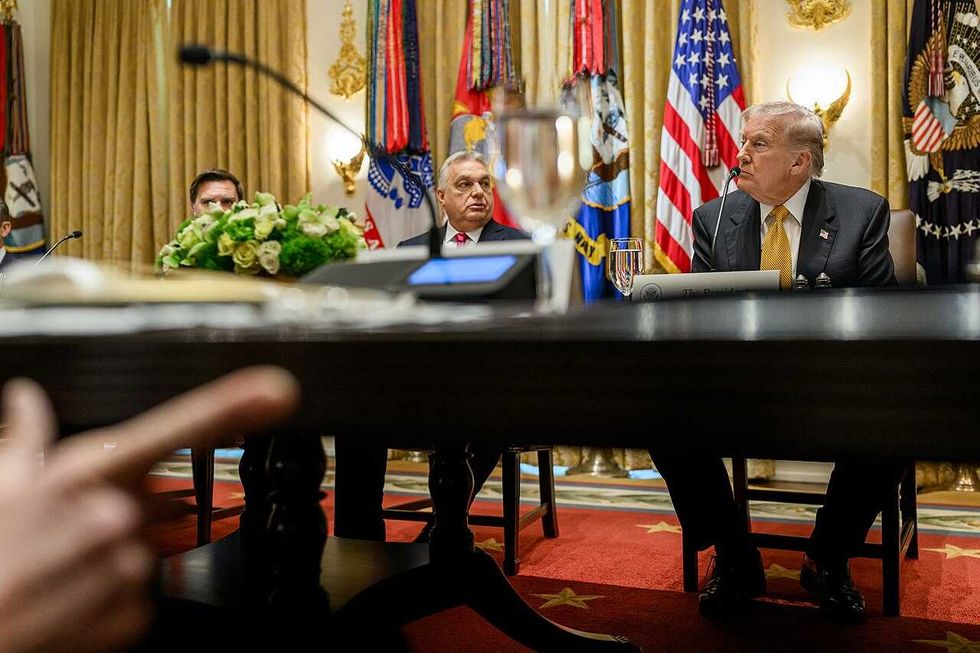
As U.S. President Donald Trump hosted South Korean President Lee Jae Myung for a wide-ranging summit meeting this week, some $150 billion for U.S. shipbuilding-related investments is on the line. With both the U.S./Korea defense alliance and a $350 billion trade package up for discussion, South Korea can address several challenges by focusing on building mid-sized Korean tankers in the U.S., ensuring the American military remains fueled up and ready to go.

Where fuel is concerned, the Navy’s logistical situation in the Pacific is, at best, perilous. In 2022, after years of mismanagement at the Navy’s Red Hill Bulk Fuel Storage Facility ended up contaminating Hawaii’s water supply, the Department of Defense shut down the obsolete, World War II-era fuel depot. With some 250 million gallons of backup, battle-ready fuel storage gone, the U.S. Navy has struggled to articulate a warfighting strategy that accounts for either the lost fuel depot or for the Navy’s urgent need to freely move fuel around the Pacific in times of crisis.

The answer is easy—more ships. At a fundamental level, the U.S. Navy requires a lot more tankers. With Korea’s help, the U.S. can build more product tankers, guaranteeing that the U.S. military will not end up stranded in the central Pacific, lacking the fuel ships and aircraft need to deter China, Russia or, for that matter, quell certain rebellious Korean provinces.

35 Korean Tankers—A Mobile, Hard-To-Target Red Hill Fuel Depot

As I wrote 15 years ago, the U.S. Navy has been slow to accept the logistical challenges of a contested Pacific. Rather than rush back in 2022 to mitigate America’s looming shortfall in Central Pacific battle fuel reserves, the Navy didn’t do anything.

But the Department of Defense has never clearly stated a goal for replacing the lost Red Hill fuel either, preferring, instead, to engage in a little bureaucratic legerdemain by committing to “reposition fuel stored at Red Hill by leveraging commercial infrastructure,” including U.S. flagged and crewed “afloat storage vessels.” A good portion of the Red Hill fuel ended up overseas, in Japan, Singapore, Australia or the Philippines, while the rest ended up on the West Coast, in either California or Washington.

The second Red Hill fuel got safely into Department of Defense depots and out of the headlines, the U.S. Navy put the logistical challenge of getting fuel into a Pacific fight behind it. Despite long-standing concerns from the United States Transportation Command that America needs access to at least 86 tankers during a future Chinese conflict, the Navy hasn’t accelerated any tanker programs, and the U.S. Maritime Administration has done little to stimulate interest in U.S.-built hulls. Defense leaders have sat on their hands, refusing to acknowledge the need for dowdy, run-of-the-mill tankers.

Rather than use the Red Hill crisis to press for more U.S.-built and U.S.-flagged tankers, the Navy refused to even consider an alternative to contract a few commercial tankers to rove about the central Pacific on lazy, indirect fuel-storage runs, dismissing the idea as not an “economical and responsible use of taxpayer’s resources.”

Today, Department of Defense assets operating in the central Pacific have been left without much in the way of significant fuel reserves. To move the 250 million gallons of refined fuel the Navy needs to fight, the fleet will require at least 23 tankers. Using Department of Defense language, the Navy needs 23 “medium-range type vessels that are approximately 600-ft long with a capacity of approximately 11 million gallons.”

To account for refits and wear, America will likely need around 40 mid-sized tankers to recover the flexibility sacrificed by the loss of the Red Hill fuel depot. To keep America moving in a crisis, America will need hundreds of U.S.-flagged tankers—and the only way America can get them is through Korean help with designs, advanced manufacturing and the development of big, new, Korean-funded shipyards in America.

The Navy is reluctant to direct funds away from the combatant fleet. Despite the largesse from the “One Big Beautiful Bill Act”, tankers have yet to find their way into any Pentagon budget. This can all quickly change if the Navy gets real about their fuel demands, acknowledges the Pacific will be contested, and confronts the looming logistical challenge of keeping vast numbers of autonomous corvettes and other small support craft operational in a conflict.

Certainly, America has little shipbuilding capacity available to build Korean tankers, but a Korean shipbuilder, moving to support the bilateral U.S.-Korea trade agreements, can easily use their billions to establish a strong tanker-building industrial foothold on America’s waterfront. But new shipyards are long-term investments. They don’t “turn on” overnight, and they can only be fully built out over the course of many Presidential Administrations. To make Korea’s shipbuilding investments viable over the longer-term, Korea’s new U.S. shipyards need business. They need real, long-term contracts.

The Navy can—if pressed by their new Chief of Naval Operations and the White House—move quickly to refine, propose and back an honest fuel mobility strategy. Addressing the Red Hill fuel supply and mobility gap with a commitment to fund long-term, twenty-year leases on the first 40 or so product tankers new Korean shipyards can produce gives Korea’s fledgling U.S. shipyards a chance to grow and thrive.

Help is at hand. American capital—cash held by patriotic investors—has never been more ready to help out at the waterfront. If the Navy commits to close long-term (twenty-year) vessel leases for the first 40 Handy-Size tankers produced under the Korean trade agreements, American financers would rush to back the opportunity—giving Korean shipbuilders the guaranteed orders they need to take the risk of investing billions in a modern, greenfield shipbuilding site, and taking on the challenge of molding American workers into modern shipbuilders.

No matter how technology or America’s security situation evolves, America will need small to mid-sized Korean tankers—and a lot of them. If we wait for an emergency to realize our logistical shortcomings, it will be too late. There’s never been a better time to try and build Korean tankers here, in America.

Source: https://www.forbes.com/sites/craighooper/2025/08/25/40-us-built-korean-tankers-can-help-make-american-shipbuilding-great/


Market Opportunity
OFFICIAL TRUMP Logo
OFFICIAL TRUMP Price(TRUMP)
$5.561
$5.561$5.561
-1.93%
USD
OFFICIAL TRUMP (TRUMP) Live Price Chart
Disclaimer: The articles reposted on this site are sourced from public platforms and are provided for informational purposes only. They do not necessarily reflect the views of MEXC. All rights remain with the original authors. If you believe any content infringes on third-party rights, please contact service@support.mexc.com for removal. MEXC makes no guarantees regarding the accuracy, completeness, or timeliness of the content and is not responsible for any actions taken based on the information provided. The content does not constitute financial, legal, or other professional advice, nor should it be considered a recommendation or endorsement by MEXC.

You May Also Like

Tokyo’s Metaplanet Launches Miami Subsidiary to Amplify Bitcoin Income

Tokyo’s Metaplanet Launches Miami Subsidiary to Amplify Bitcoin Income

Metaplanet Inc., the Japanese public company known for its bitcoin treasury, is launching a Miami subsidiary to run a dedicated derivatives and income strategy aimed at turning holdings into steady, U.S.-based cash flow. Japanese Bitcoin Treasury Player Metaplanet Opens Miami Outpost The new entity, Metaplanet Income Corp., sits under Metaplanet Holdings, Inc. and is based […]
Share
Coinstats2025/09/18 00:32
How A 130-Year-Old Course Reimagined The Golf Experience

How A 130-Year-Old Course Reimagined The Golf Experience

The post How A 130-Year-Old Course Reimagined The Golf Experience appeared on BitcoinEthereumNews.com. An aerial view of Storm King Golf Club, a reimagined golf experience that’s scheduled to open in 2026. Erik Matuszewski In the rolling hills of New York’s Hudson Valley, just 56 miles from Manhattan and minutes from West Point, a revolutionary new golf course is reimagining how golf can be played, experienced, and shared. Named after the nearby mountain that overlooks the property, Storm King Golf Club packs more variety and possibility in 63 acres than many courses four times its size, offering 40 distinct hole configurations, five different 9-hole routing options, and a 19-hole par 3 layout. “The idea was to create a unique place where people could experience golf in a way that’s fun and interesting to them,” said founder David Gang, a software executive who purchased the course about five years ago with a vision to reimagine golf and challenge convention along the way. Storm King is a far cry from the original facility that opened in 1894; today, it’s a wild looking, choose-your-own-adventure playground where golfers can craft their journey based on skill level, mood, or simple curiosity about what lies around the next bend. The facility boasts 12 green complexes totaling 225,000 square feet of putting surface, nearly four times that of an iconic property like Pebble Beach Golf Links, which has 63,000 square feet across all 18 holes. “Our brains have been wired for golf in a very traditional way forever,” says Gang, an avid golfer who co-founded Brightspot, a leading content management system. There are unusual design shapes and unique routing options at Storm King, which was built to focus on versatility, playability and sustainability. Erik Matuszewski “We think about 9 holes, 18 holes, par 3s, par 4s, and par 5s. They’re very set in our minds,” he added. “So, when you come…
Share
BitcoinEthereumNews2025/09/18 18:44
IP Hits $11.75, HYPE Climbs to $55, BlockDAG Surpasses Both with $407M Presale Surge!

IP Hits $11.75, HYPE Climbs to $55, BlockDAG Surpasses Both with $407M Presale Surge!

The post IP Hits $11.75, HYPE Climbs to $55, BlockDAG Surpasses Both with $407M Presale Surge! appeared on BitcoinEthereumNews.com. Crypto News 17 September 2025 | 18:00 Discover why BlockDAG’s upcoming Awakening Testnet launch makes it the best crypto to buy today as Story (IP) price jumps to $11.75 and Hyperliquid hits new highs. Recent crypto market numbers show strength but also some limits. The Story (IP) price jump has been sharp, fueled by big buybacks and speculation, yet critics point out that revenue still lags far behind its valuation. The Hyperliquid (HYPE) price looks solid around the mid-$50s after a new all-time high, but questions remain about sustainability once the hype around USDH proposals cools down. So the obvious question is: why chase coins that are either stretched thin or at risk of retracing when you could back a network that’s already proving itself on the ground? That’s where BlockDAG comes in. While other chains are stuck dealing with validator congestion or outages, BlockDAG’s upcoming Awakening Testnet will be stress-testing its EVM-compatible smart chain with real miners before listing. For anyone looking for the best crypto coin to buy, the choice between waiting on fixes or joining live progress feels like an easy one. BlockDAG: Smart Chain Running Before Launch Ethereum continues to wrestle with gas congestion, and Solana is still known for network freezes, yet BlockDAG is already showing a different picture. Its upcoming Awakening Testnet, set to launch on September 25, isn’t just a demo; it’s a live rollout where the chain’s base protocols are being stress-tested with miners connected globally. EVM compatibility is active, account abstraction is built in, and tools like updated vesting contracts and Stratum integration are already functional. Instead of waiting for fixes like other networks, BlockDAG is proving its infrastructure in real time. What makes this even more important is that the technology is operational before the coin even hits exchanges. That…
Share
BitcoinEthereumNews2025/09/18 00:32