

Alert: Recent Court Decision May Allow Some Taxpayers to Seek Refunds or Abatements of Penalties, Interest From Pandemic Period; Frost Law Can Help
Kwong v. United States: Court of Federal Claims Holds COVID Disaster Declaration Mandated Suspension of Federal Tax Deadlines
WASHINGTON–(BUSINESS WIRE)–#CovidRefunds–An overlooked court decision involving postponed federal tax deadlines during the pandemic holds potential financial implications for taxpayers and businesses.
Taxpayers who incurred underpayment interest or penalties between 2020 and 2023 may have grounds to seek refunds or abatement. The potential dollar amounts could be significant, particularly for businesses that faced liquidity challenges during the pandemic and incurred substantial failure-to-pay penalties. But businesses, taxpayers, and tax professionals should be aware that time is running out to preserve potential refund or abatement claims.
In Kwong v. United States (Nov. 25, 2025), the United States Court of Federal Claims held that Internal Revenue Code (IRC) §7508A(d) required the mandatory postponement of federal tax deadlines, and that the IRS lacked authority to assess underpayment interest, failure-to-pay penalties, or failure-to-file penalties during that period. If the decision stands, any tax filing or payment deadline that fell between January 20, 2020, and July 10, 2023, would have been effectively postponed until July 11, 2023. The ruling raises significant refund and abatement opportunities for affected taxpayers and warrants immediate review of accounts and procedural posture.
Frost Law’s team is available to help taxpayers potentially affected by this development. Here’s more information related to the court decision, which was recently highlighted in a Wall Street Journal article.
Background on Section 7508A and COVID-19 Disaster Declarations: Section 7508A authorizes the Secretary of the Treasury to postpone certain tax-related deadlines for taxpayers affected by federally declared disasters. Historically, this authority has been exercised through administrative guidance following hurricanes, wildfires, and other regional emergencies. The COVID-19 pandemic presented a unique scenario. Following President Trump’s national emergency declaration, the IRS announced its “People First Initiative” to assist taxpayers impacted by the challenges of COVID-19. See IR-2020-59 (March 25, 2020) Section 7508A(d) provides that if a federally declared disaster occurs, certain tax deadlines are automatically suspended for the duration of the disaster period plus an additional 60 days. The statutory language uses mandatory phrasing. The key interpretive question in Kwong was whether the COVID-19 declaration triggered an automatic statutory suspension of deadlines under Section 7508A(d), or whether the IRS retained discretion to limit relief through administrative announcements. Before Kwong, the IRS treated pandemic-related extensions primarily as matters of administrative grace. Various notices extended filing deadlines for specific tax years and obligations, but the Service continued to assess interest and penalties in many circumstances. The plaintiff in Kwong challenged this approach, arguing that the statute itself mandated a comprehensive suspension of deadlines.
The Court’s Holding
Mandatory Nature of Section 7508A(d): The Court of Federal Claims concluded that the text of the 2019 version of §7508A(d) is unambiguous. Once a federally declared disaster is in effect, the statute mandates postponement of applicable tax deadlines for the disaster period plus 60 days. The court focused on the statutory language, emphasizing that Congress used compulsory phrasing rather than permissive terms. The government argued that the IRS retained interpretive discretion and that the pandemic-related relief already provided reflected the appropriate scope of postponement. The court rejected that position, reasoning that administrative guidance cannot narrow a statutory suspension that Congress framed as mandatory. According to the court, once the disaster declaration occurred, the statutory suspension operated by force of law.
Scope of the Suspension Period: The court determined that the relevant disaster period began on January 20, 2020, and continued through May 11, 2023, when the federal public health emergency formally ended. Applying for the additional sixty-day extension provided by §7508A(d), the court concluded that tax deadlines were suspended through July 10, 2023. The practical consequence is that any federal tax filing or payment deadline falling within that window was automatically postponed until July 11, 2023. The court did not limit this effect to specific forms or categories of tax. Instead, it treated the suspension as broadly applicable to all deadlines governed by the statute.
Consequences for Interest and Penalties: Having determined that all filing and payment deadlines were postponed as a matter of law, the court turned to the consequences for interest and penalties. Under the IRC, underpayment interest and certain penalties accrue only when a taxpayer fails to pay or file by the prescribed due date. If the legal due date is suspended, there can be no tax liability for penalties or interest during that period. The court therefore held that the IRS lacked authority to assess underpayment interest, failure-to-pay penalties, and failure-to-file penalties with respect to obligations whose deadlines fell within the suspended window. In effect, the absence of a valid due date eliminated the statutory basis for such charges. This aspect of the ruling may have the greatest financial impact. Interest and penalties assessed during the pandemic period could be subject to refund or abatement if they were imposed on obligations that, under the court’s interpretation, were not yet due.
Practical Implications for Taxpayers
Deadlines Effectively Moved to July 11, 2023: If the ruling stands, federal tax deadlines between January 20, 2020, and July 10, 2023, were effectively deferred to July 11, 2023. This could affect income tax returns, employment tax filings, estimated tax payments, and other time-sensitive obligations governed by the Internal Revenue Code. The scope of impact will depend on how broadly courts ultimately interpret §7508A(d). However, taxpayers whose accounts reflect interest or penalties assessed during that window should evaluate whether those charges were imposed on obligations that were, as a matter of statutory law, not yet due.
Potential Refund Opportunities: Taxpayers who paid underpayment interest or penalties during the suspension period may have grounds to seek refunds. The potential dollar amounts could be significant, particularly for businesses that faced liquidity challenges during the pandemic and incurred substantial failure-to-pay penalties. The statute of limitations for refund claims generally runs three years from the time the return was filed or two years from the time the tax was paid, whichever is later. Given the passage of time since 2020 and 2021 filings, prompt action is advisable to preserve claims.
Filing Form 843: Current guidance suggests that affected taxpayers should consider filing Form 843, Claim for Refund and Request for Abatement, to protect their rights. Filing a protective claim before the expiration of the statute of limitations preserves the ability to seek relief even if further appellate proceedings alter the legal landscape. Taxpayers should review account transcripts carefully to identify interest and penalties assessed within the relevant window and determine whether those charges relate to deadlines that were suspended under the court’s interpretation.
In conclusion, Kwong v. United States represents a potentially transformative interpretation of §7508A(d). By holding that the COVID-19 disaster declaration triggered a mandatory suspension of federal tax deadlines, the Court of Federal Claims significantly expanded the scope of pandemic-related relief beyond what the IRS had administratively provided. Because a final decision has not yet been entered in the case, the final litigation posture remains unclear. Legal experts expect the IRS to appeal the decision. If upheld, the decision could entitle affected taxpayers to refunds of interest and penalties assessed during the suspension period. Given the approaching expiration of statutes of limitation for earlier pandemic-year filings, taxpayers should promptly review their accounts and consider filing Form 843 to preserve potential claims.
Frost Law Available to Help: The team at Frost Law is available to help taxpayers, businesses, and tax professionals navigate questions about potential refunds and abatements as well as whether filing IRS Form 847 to protect their rights. People can visit askfrost.com, call (410) 497-5947, or email Info@AskFrost.com.
About Frost Law: The firm is headquartered in the Washington, D.C., metro area. With multiple offices, the firm works with clients across the nation and around the world. Currently, more than 80 Frost employees include skilled attorneys focusing on tax, business, litigation and estates as well as Certified Public Accountants, Certified Financial Planners , Enrolled Agents and other tax professionals. Frost’s team can help people and businesses on issues including tax planning, tax strategy, tax minimization as well as helping scam victims with tax issues.
Authors: Jessica Marine and Yan Wang
Contacts
terry.lemons@askfrost.com
https://askfrost.com/


You May Also Like
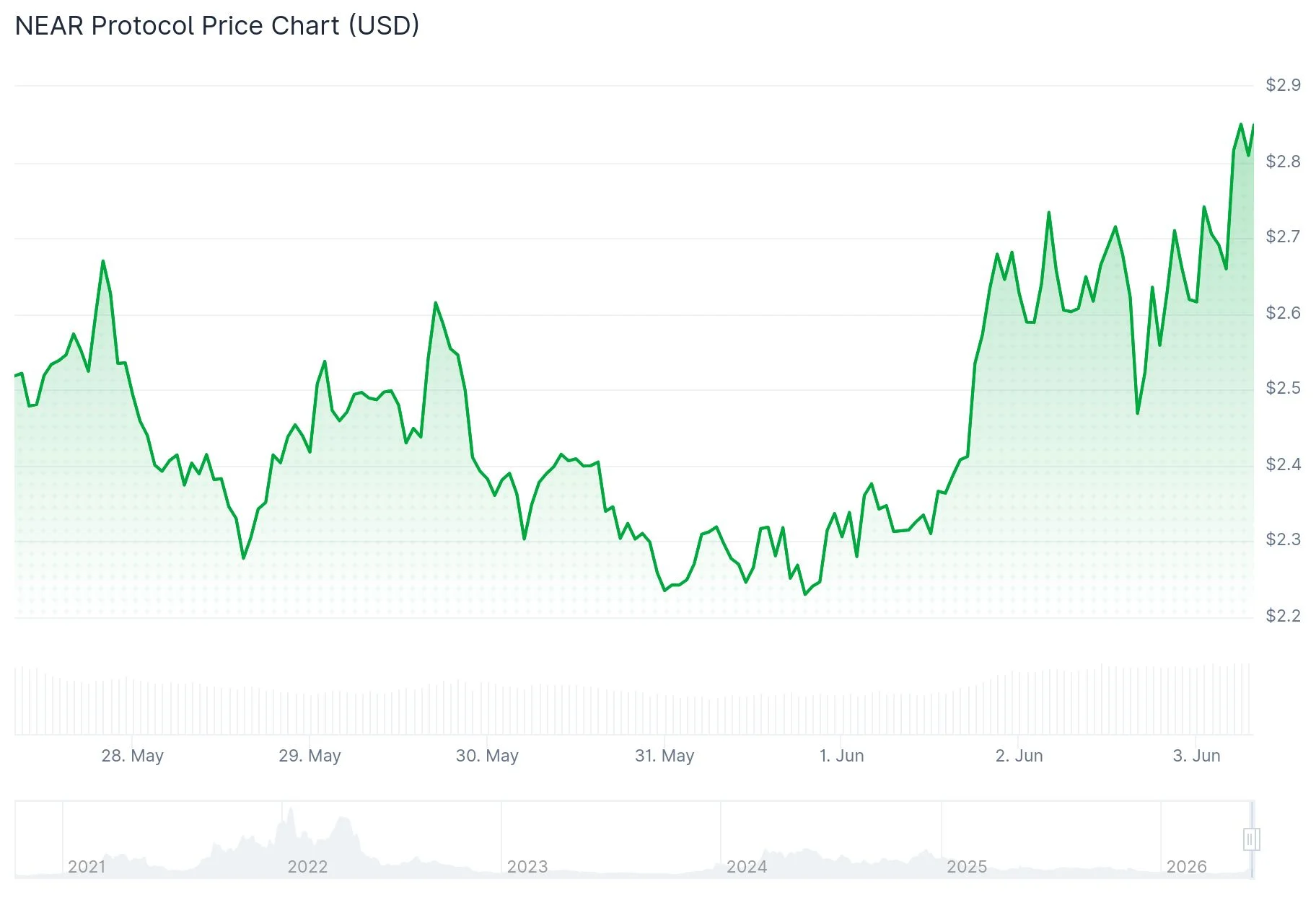
NEAR Protocol (NEAR) Surges 20% Against Market Downturn — Can It Reach $3.77?

Ripple CEO Tells Bloomberg: What Are Working Daily to Take Over SWIFT

Bloomberg Odd Lots Host Calls This the Coldest Crypto Winter Ever — And It’s Not Just Bearish Noise



