

Crypto Fear & Greed Index Reveals Persistent Extreme Fear as Sentiment Gauge Rises to 9
BitcoinWorld
Crypto Fear & Greed Index Reveals Persistent Extreme Fear as Sentiment Gauge Rises to 9
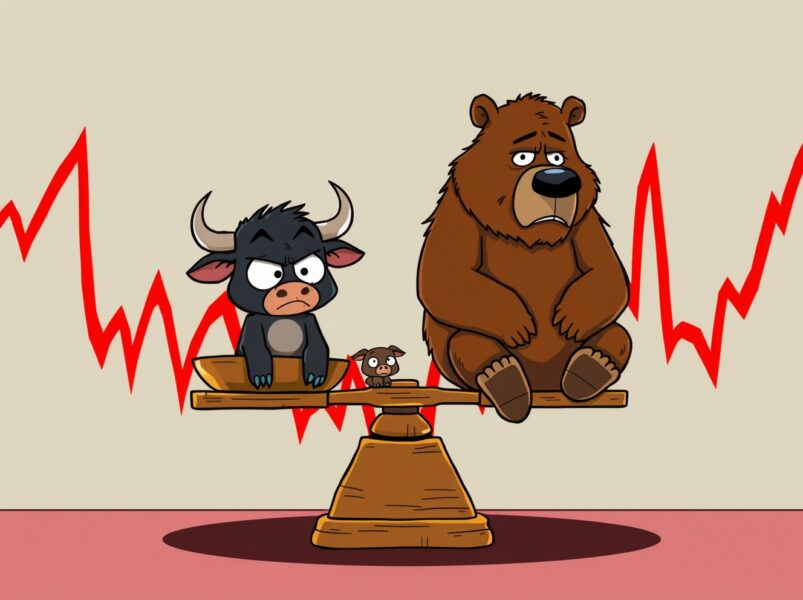
Global cryptocurrency markets continue to exhibit profound caution as the widely monitored Crypto Fear & Greed Index registers a reading of 9, a slight four-point increase from previous levels yet firmly entrenched in the “Extreme Fear” zone. This critical market sentiment indicator, compiled by data provider Alternative, provides a quantifiable pulse on investor psychology, offering valuable context for the volatile digital asset landscape of early 2025.
Understanding the Crypto Fear & Greed Index Mechanics
The Crypto Fear & Greed Index functions as a composite barometer for market emotion. It operates on a scale from 0 to 100, where 0 signifies maximum fear and 100 represents peak greed. The current reading of 9 sits just above the absolute lowest possible score, highlighting a market environment dominated by risk aversion and negative sentiment. Analysts calculate this figure using a weighted multi-factor model designed to capture various dimensions of market behavior.
The index’s methodology incorporates six primary data sources. Firstly, market volatility contributes 25% to the final score, measuring the magnitude of price swings across major cryptocurrencies. Secondly, trading volume and momentum account for another 25%, indicating the intensity of market participation. Social media sentiment analysis provides 15% of the weighting, gauging the tone of discussions on platforms like Twitter and Reddit. Additionally, survey data from market participants contributes another 15%.
Furthermore, Bitcoin’s dominance within the total cryptocurrency market capitalization adds 10% to the calculation. Finally, trends in Google search volume for cryptocurrency-related terms complete the model with a final 10% weighting. This comprehensive approach aims to filter out noise and identify the underlying emotional state driving market decisions.
Historical Context and Comparative Market Analysis
Readings in the “Extreme Fear” territory have historically correlated with significant market stress events. For context, the index plummeted to a reading of 6 during the market turmoil of June 2022. It also reached similarly depressed levels during the March 2020 global liquidity crisis. The current persistence at such a low level, despite the modest uptick, suggests a prolonged period of investor apprehension rather than a brief panic spike.
Market analysts often compare this sentiment gauge to traditional financial fear indices like the VIX (CBOE Volatility Index). However, the crypto-specific index captures the unique behavioral dynamics of a 24/7, globally accessible, and retail-influenced market. The table below illustrates recent index readings and their corresponding sentiment classifications:
| Index Score Range | Sentiment Label | Typical Market Behavior |
|---|---|---|
| 0-24 | Extreme Fear | High selling pressure, low confidence, potential capitulation |
| 25-49 | Fear | Cautious trading, negative bias, reduced risk-taking |
| 50 | Neutral | Balanced sentiment, mixed signals |
| 51-74 | Greed | Increasing FOMO, rising prices, elevated risk appetite |
| 75-100 | Extreme Greed | Speculative frenzy, potential market top, irrational exuberance |
This structured framework helps investors contextualize raw price action. A move from 5 to 9, while mathematically an increase, does not change the fundamental classification. The market remains in a state where fear overwhelmingly dictates trading patterns.
Expert Insights on Sentiment and Market Cycles
Financial psychologists and behavioral economists note that sustained extreme fear can create contrarian investment opportunities for disciplined, long-term investors. Historical data often shows that periods of maximum pessimism precede significant market recoveries, though timing remains unpredictable. The index serves not as a timing tool, but as a gauge of crowd psychology.
Market structure experts point to several concurrent factors influencing the current reading. Regulatory developments in major economies continue to create uncertainty. Institutional adoption, while growing, proceeds at a measured pace. Furthermore, macroeconomic conditions, including interest rate policies and inflation trends, impact risk asset appetites broadly, with cryptocurrencies often experiencing amplified effects.
The slight rise in the index score may reflect minor improvements in specific components. For instance, a reduction in volatility, a slight uptick in social media discussion volume, or a stabilization in Bitcoin’s dominance could contribute to the four-point increase. However, the aggregate signal remains clear: the dominant market emotion is fear.
The Impact of Sentiment on Trading and Investment Strategies
Professional cryptocurrency fund managers and analysts monitor this index as one input among many. A persistent extreme fear reading influences several strategic considerations. Firstly, it may indicate a market environment where selling pressure is exhausting itself, as fearful investors have largely exited positions. Secondly, it highlights the potential for sharp, sentiment-driven rallies if a positive catalyst emerges.
Retail investors should understand the index’s purpose. It is a descriptive tool, not a predictive one. It describes the current emotional state based on recent data. Prudent investment strategy involves fundamental analysis, risk management, and portfolio diversification, not merely reacting to sentiment indicators. However, recognizing extreme emotional states can help investors avoid panic selling at market bottoms or euphoric buying at peaks.
The index also reflects the maturation of cryptocurrency markets. The very existence of such a quantified sentiment tool demonstrates the growing sophistication of market analysis in the digital asset space. Five years ago, sentiment was primarily gauged anecdotally. Today, data-driven models provide a more objective, though imperfect, lens.
Conclusion
The Crypto Fear & Greed Index reading of 9 offers a stark, data-backed snapshot of prevailing market psychology. While the minor increase from previous levels shows a faint reduction in absolute panic, the classification remains firmly in Extreme Fear territory. This sentiment reflects a complex interplay of volatility, trading activity, social discourse, and search behavior. For market participants, this indicator provides crucial context, emphasizing that current price action occurs within an environment of significant investor anxiety. Understanding this emotional backdrop is essential for navigating the cryptocurrency markets with discipline, separating signal from noise, and making informed decisions based on more than just fleeting sentiment.
FAQs
Q1: What does a Crypto Fear & Greed Index score of 9 mean?
A score of 9 indicates the market is experiencing “Extreme Fear” according to the index’s model. This is near the lowest possible reading (0) and suggests widespread pessimism, high risk aversion, and potential capitulation among investors.
Q2: Who creates the Crypto Fear & Greed Index and how often is it updated?
The index is compiled and published by the data provider Alternative.me. It is typically updated on a daily basis, providing a near-real-time view of shifting market sentiment.
Q3: Is the Extreme Fear reading a buy signal for cryptocurrencies?
Not directly. While historically, periods of extreme fear have sometimes preceded market recoveries, the index is a sentiment indicator, not a timing tool. It describes the current emotional state, which can persist or intensify. Investment decisions should be based on comprehensive research and personal risk tolerance.
Q4: How does Bitcoin’s dominance affect the Fear & Greed Index score?
Bitcoin’s market cap dominance—its share of the total cryptocurrency market value—contributes 10% to the index calculation. Generally, rising Bitcoin dominance during downturns can signal a “flight to safety” within crypto, which may correlate with fearful sentiment, as investors move out of altcoins into the perceived relative stability of Bitcoin.
Q5: Has the index ever been wrong? Can sentiment diverge from price?
Like all indicators, it is not infallible. Sentiment can remain fearful even as prices begin a slow, grinding recovery, or it can show greed during a distribution phase before a drop. It is best used in conjunction with other technical, on-chain, and fundamental analyses to form a complete market view.
This post Crypto Fear & Greed Index Reveals Persistent Extreme Fear as Sentiment Gauge Rises to 9 first appeared on BitcoinWorld.
You May Also Like

Top DeFi Projects Today by Social Activity

Pump.fun launches GitHub creator fee sharing feature
