

Crypto News: GENIUS Act Sets Stablecoin Rules for Banks First
Key Insights:
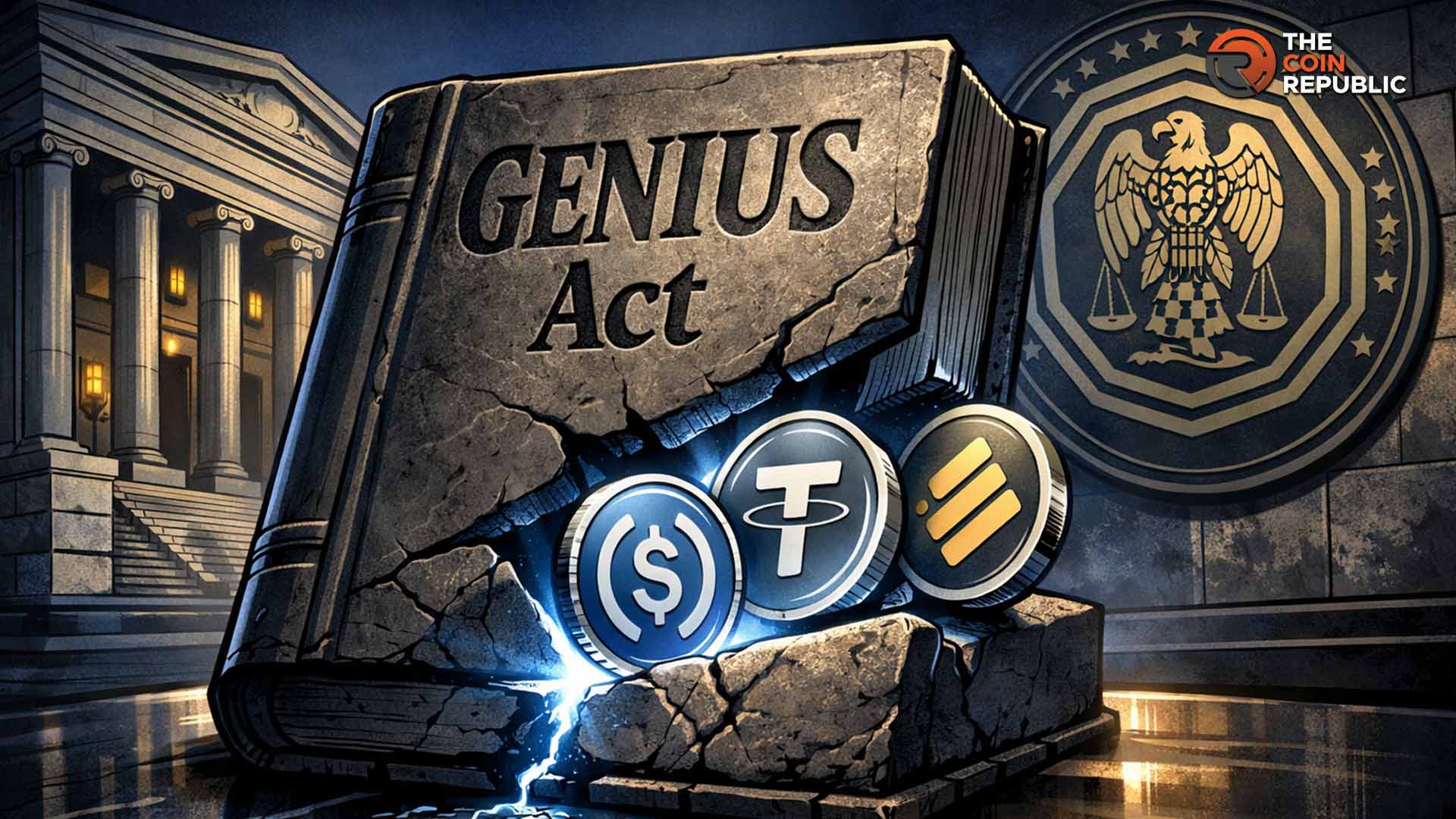
- Crypto news coverage shows the CFTC allowed national trust banks to issue stablecoin for derivatives trading 11 months before the January 2027 enforcement deadline of the GENIUS Act.
- Bank-issued stablecoins keep customer funds on institutional balance sheets, contradicting crypto’s goal of reducing dependence on centralized finance
- Traditional banks received regulatory clarity first, while consumer protection rules remain unfinished. That raises questions about whether the GENIUS Act serves innovation or institutional interests
The US financial regulator just handed traditional banks a head start in the stablecoin race. On Feb. 6, the Commodity Futures Trading Commission (CFTC) updated its rules to let national trust banks issue stablecoins that work as trading collateral.
The move came 11 months before the GENIUS Act’s January 2027 deadline, raising questions about why regulators rushed to help banks before protecting everyday crypto users.
Crypto News: CFTC Moves Early to Include Traditional Banks
The GENIUS Act became law in July 2025 after President Trump signed it. The law created the first federal rules for stablecoins in America.
Congress said stablecoins needed proper backing, monthly audits, and clear redemption rights. They wanted to stop another Terra-style crash that wiped out billions in 2022.
The law gave agencies until January 2027 to write detailed rules. But the CFTC didn’t wait. In December 2025, the agency said derivatives traders could use Bitcoin, Ethereum, and certain stablecoins as collateral. That guidance already moved faster than the law required.
February’s update went further. The CFTC added one line: National trust banks can issue qualifying stablecoins. This is crucial because these banks handle crypto custody for major institutions. Companies like Paxos use similar structures.
Now JPMorgan, Bank of America, and other Wall Street players have a clear path to issue their own stablecoins for the $250 trillion derivatives market.
Crypto news coverage noted the timing. Why clarify bank participation 11 months early while consumer protections remain unfinished? The FDIC only proposed bank application rules in late 2025. Treasury’s reserve standards are still drafts. Yet banks got regulatory clarity first.
What the GENIUS Act Promised Versus What Banks Received
When Congress passed the GENIUS Act, supporters called it consumer protection. The law banned algorithmic stablecoins after Terra-Luna destroyed $60 billion in value. It required a 100% reserve backing with safe assets like Treasury bills. Every stablecoin issuer had to publish monthly audits and promise instant redemptions.
The legislation created two paths. Big companies could get federal approval. Smaller issuers could work with state regulators but face a $10 billion cap. The idea was simple: anyone who followed the rules could compete fairly.
 The Community Seems Split | Source: X
What actually happened tells a different story. The first major crypto news under the GENIUS Act focused on derivatives markets and bank participation.
Consumer rules came later. Banks got an 11-month head start to build systems, form partnerships, and grab market share before crypto-native companies finish navigating state-by-state approvals.
Critics see a pattern. Traditional finance institutions get fast regulatory clarity. Crypto startups face delays and uncertainty. The GENIUS Act was supposed to level the field. Early implementation favored the players who already dominate finance.
Bank Stablecoins Keep Money Inside the System
The technical difference between bank stablecoins and crypto-native versions matters more than it sounds. When someone holds USDC from Circle or USDT from Tether, those companies keep reserves separate. The user owns a claim on money held by a different entity. There’s a distance between the issuer and the holder.
Bank-issued stablecoins work differently. If JPMorgan issues JPM Coin, customer dollars stay on JPMorgan’s books. The bank shifts the liability from deposits to stablecoin obligations, but the money never leaves. Users get tokens representing bank claims, not actual withdrawals from the banking system.
Crypto users noticed this immediately after the crypto news broke. Comments on social media argued that regular withdrawals move money out of banks. Bank stablecoins keep funds inside even when customers spend them in decentralized finance protocols. This contradicts crypto’s original purpose: reducing dependence on centralized institutions.
Banks see it as an opportunity. They keep customer relationships, earn transaction fees, and maintain control over capital flows. The GENIUS Act gives them legal cover to capture business that might otherwise leave traditional finance entirely.
The Market Might See the Impact of This Crypto News Bit, Now
The CFTC guidance applies specifically to derivatives trading. It doesn’t control which stablecoins people use for payments or DeFi protocols.
Circle and Tether still dominate current volumes. But derivatives markets concentrate institutional money, leverage, and price discovery. Whoever controls collateral in those markets shapes how crypto trading works.
If bank stablecoins become the default in regulated futures markets, they could allegedly capture the infrastructure. Over time, that shifts power toward Wall Street and away from decentralized alternatives. The same banks that control traditional finance could end up controlling crypto’s on-ramps and trading systems.
Some industry groups praise the development. The Blockchain Association and Chamber of Digital Commerce say clear rules for banks bring institutional capital and legitimacy. Regulatory certainty lowers risk and makes stablecoins safer for everyone, they argue.
Others see concentration risk. If a handful of Wall Street banks issue the most liquid stablecoins with regulatory advantages, does that help crypto adoption or just recreate old power structures with new technology?
The crypto news cycle moved quickly from the GENIUS Act’s passage to its implementation. What seemed like neutral consumer protection legislation now looks like it was designed with traditional finance in mind.
The post Crypto News: GENIUS Act Sets Stablecoin Rules for Banks First appeared first on The Coin Republic.


You May Also Like

Financial product innovation in the US: how embedded finance and BNPL are reshaping the country’s product mix

Bitcoin Spot ETFs Extend Losing Streak with $70.5 Million in Net Outflows

Soluna Holdings Secures $53M Wind Farm to Power Revolutionary Bitcoin and AI Operations



