Bithumb’s $44 Billion Bitcoin Blunder Exposes Critical Exchange Vulnerabilities
South Korean cryptocurrency exchange Bithumb executed one of the most catastrophic operational failures in digital asset history Friday, accidentally distributing 2,000 bitcoins to hundreds of users instead of modest promotional rewards worth approximately $1.40 each. The error, which amounted to over $44 billion in erroneous distributions at current market valuations, sent shockwaves through cryptocurrency markets and triggered an immediate 17% price collapse on the platform.
The magnitude of this operational mishap underscores the fragility of systems handling billions in digital assets daily. Within 35 minutes of detection, Bithumb’s risk management protocols activated, freezing trading and withdrawal capabilities for the 695 affected accounts. The exchange successfully recovered 99.7% of the mistakenly distributed bitcoins, but not before triggering a cascade of liquidations as recipients rushed to capitalize on their windfall.
This incident illuminates the precarious nature of centralized exchange operations, where human error can instantly create systemic market disruption. The promotional campaign intended to distribute 2,000 Korean won rewards transformed into an accidental wealth transfer exceeding many sovereign wealth funds’ total assets under management.
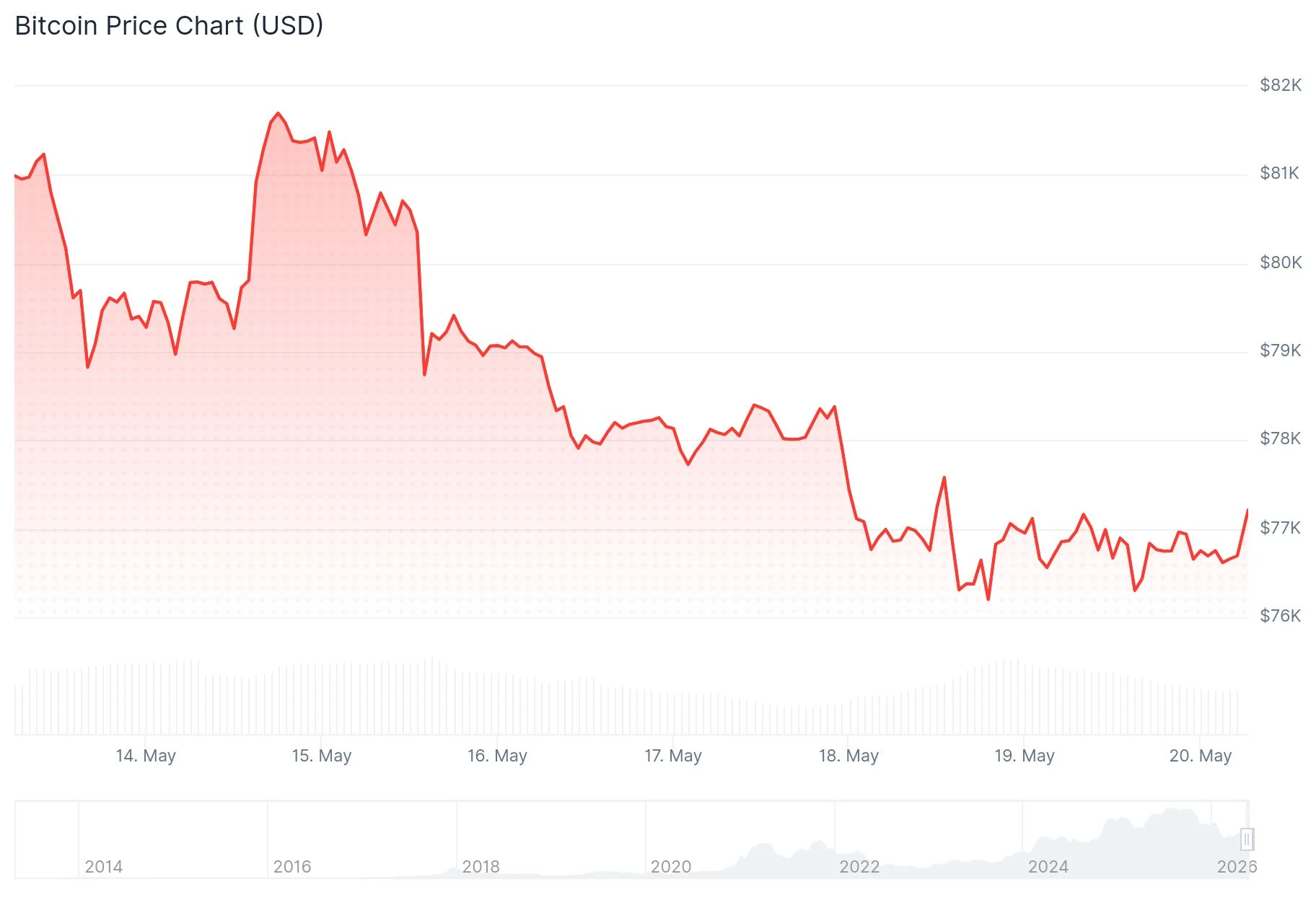
Bitcoin’s current trading at $71,414 with a 3.55% daily gain masks underlying volatility that remains elevated following this exchange mishap. The cryptocurrency’s market dominance stands at 58.94%, representing $1.426 trillion in market capitalization, yet such massive pools of value remain vulnerable to operational errors that traditional financial institutions eliminated decades ago through redundant control systems.
Bitcoin Price Chart (TradingView)
South Korea’s Financial Services Commission responded with emergency protocols, launching investigations that could reshape regulatory oversight for the nation’s cryptocurrency sector. The regulators’ statement emphasizing “vulnerabilities and risks of virtual assets” signals potential tightening of operational requirements for exchanges handling digital assets.
The speed of recovery demonstrates both Bithumb’s technical capabilities and the inherent risks of centralized custody. While the exchange’s internal ledger system prevented actual blockchain transfers, the incident created artificial price pressure that propagated across trading networks. Users who received the erroneous bitcoins immediately attempted to liquidate positions, creating selling pressure that overwhelmed local order books.
Market microstructure analysis reveals how such operational failures amplify volatility in cryptocurrency markets. The 17% price decline on Bithumb occurred independently of fundamental bitcoin factors, yet created contagion effects as arbitrage algorithms detected price discrepancies between exchanges. This highlights how operational risk at individual platforms can destabilize broader market pricing mechanisms.
The incident’s timing coincides with heightened cryptocurrency market volatility, where Bitcoin’s price action has been increasingly sensitive to unexpected events. Trading volumes have surged to $48.2 billion daily as institutional and retail participants navigate uncertainty around regulatory developments and operational stability of major exchanges.
Bithumb’s recovery protocols, while effective in containing immediate financial damage, raise questions about reserve management and risk controls. The exchange’s ability to freeze user accounts and reverse transactions demonstrates centralized control mechanisms that contradict cryptocurrency’s decentralized ethos, yet proved necessary to prevent complete system breakdown.
This operational failure exposes the contradiction between cryptocurrency’s promise of decentralized finance and the reality of centralized exchange infrastructure. While Bithumb prevented customer fund loss through rapid intervention, the incident demonstrates how traditional banking operational risks persist in digital asset platforms despite technological advancement.
The regulatory response from South Korean authorities suggests increased scrutiny for exchange operations, potentially including mandatory stress testing and enhanced control system requirements. These developments could influence global regulatory approaches as authorities grapple with balancing innovation and consumer protection in rapidly evolving cryptocurrency markets.
Market participants should anticipate increased operational risk premiums for centralized exchanges following this incident. The ability to accidentally distribute $44 billion in assets highlights systemic vulnerabilities that could undermine confidence in exchange custody solutions, potentially accelerating adoption of decentralized trading protocols and self-custody solutions.
Bitcoin’s recovery from the incident-induced price decline demonstrates market resilience, yet the ease with which operational errors can trigger significant price movements underscores ongoing maturation challenges for cryptocurrency infrastructure. As institutional adoption accelerates, such operational failures become increasingly consequential for broader financial market stability.


You May Also Like

What a $900 Investment in New Crypto Protocols Could Become by Late 2027
Bitcoin (BTC) Hovers Above $77K Amid Iran Diplomacy and Rising Treasury Yields