

Vietnam Crypto Tax: A Groundbreaking 0.1% Proposal Shakes the Digital Asset Landscape

BitcoinWorld
Vietnam Crypto Tax: A Groundbreaking 0.1% Proposal Shakes the Digital Asset Landscape
HANOI, VIETNAM – March 2025: In a landmark regulatory development, Vietnam’s Ministry of Finance has formally proposed a groundbreaking tax framework specifically targeting cryptocurrency transactions, a move set to reshape the digital asset landscape for millions of users and institutional investors across the nation.
Vietnam Crypto Tax Proposal: The Core Details
The Ministry of Finance’s draft decree outlines a clear and structured approach to digital asset taxation. According to reports from industry sources like Wu Blockchain, the plan introduces a bifurcated tax system. For individual investors, the proposal mandates a 0.1% personal income tax levied directly on the total transaction value of cryptocurrency transfers. Crucially, this tax applies to transactions executed on licensed platforms and affects individuals regardless of their residency status, aiming for broad compliance. Conversely, institutional investors and corporate entities would face a significantly higher 20% corporate tax rate on income generated from crypto transfers. However, in a notable concession, all cryptocurrency transactions would be explicitly exempt from Value Added Tax (VAT), simplifying the administrative burden for platforms and users alike.
Contextualizing Vietnam’s Digital Asset Regulatory Journey
This tax proposal does not emerge in a vacuum. Instead, it represents a pivotal evolution in Vietnam’s complex relationship with cryptocurrency. For years, the State Bank of Vietnam maintained that digital assets were not a lawful means of payment. Despite this official stance, Vietnam consistently ranked among the global leaders in crypto adoption, as evidenced by multiple Chainalysis reports. Consequently, the government has been under increasing pressure to create a legal corridor to manage, tax, and legitimize this vibrant economic activity. The current proposal directly addresses this regulatory gap by providing a clear fiscal pathway, potentially transforming a gray market into a compliant, revenue-generating sector. This shift aligns with broader regional trends, where neighboring countries like Thailand and Singapore have already implemented detailed crypto tax regimes.
Expert Analysis on Economic Impact and Compliance
Financial policy analysts highlight several critical implications of the 0.1% transaction tax model. Firstly, its low rate appears strategically designed to encourage voluntary compliance and reporting from the vast base of individual traders. By avoiding a complex profit-and-loss calculation for every trade, the tax offers administrative simplicity for both taxpayers and authorities. However, experts caution that the success of this framework hinges entirely on the parallel development of a robust licensing system for cryptocurrency exchanges. The proposal’s scope is limited to “licensed platforms,” meaning its effectiveness will directly correlate with the government’s ability to onboard and regulate these service providers. Furthermore, the 20% corporate tax for institutions creates a clear delineation between retail and professional activity, potentially driving more sophisticated investors to operate within formally registered corporate structures.
Comparative Analysis with Global Crypto Tax Policies
To fully understand Vietnam’s approach, a brief comparison with other jurisdictions is instructive. The proposed 0.1% transaction tax is distinct from the capital gains models prevalent in countries like the United States or Australia.
| Jurisdiction | Tax Model for Individuals | Key Feature |
|---|---|---|
| Vietnam (Proposed) | 0.1% on transaction value | Simple, flat-rate withholding tax |
| United States | Capital Gains Tax | Tax on profit, complex reporting |
| India | 30% on gains + 1% TDS | High rate with transaction tracking |
| Germany | Tax-free after 1-year holding | Long-term incentive model |
This table illustrates Vietnam’s pursuit of a middle-ground solution. The model is less punitive than India’s high flat tax but more immediately revenue-generating than Germany’s long-term hold incentive. The exemption from VAT also contrasts with some European approaches, where VAT can apply to certain crypto services.
Potential Market Reactions and Future Trajectory
The announcement of this proposal will likely trigger several immediate and long-term market reactions. In the short term, analysts anticipate potential volatility as traders assess the impact on profitability. Key factors for the market to watch include:
- Platform Licensing: The speed and criteria for exchange licensing will be paramount.
- Clarity on “Transaction Value”: Detailed definitions from the Ministry will be needed.
- Enforcement Mechanisms: How the tax will be collected—withheld by platforms or declared individually.
Looking ahead, this tax framework could serve as a foundational pillar for more comprehensive digital asset laws. It provides the state with a mechanism to capture economic value while offering participants much-needed legal clarity. Success here could position Vietnam as a regulated yet innovative hub for blockchain technology in Southeast Asia, attracting compliant businesses while curbing illicit financial flows. The journey from proposal to enacted law will involve public commentary and legislative review, a process that the global crypto community will monitor closely for precedent.
Conclusion
Vietnam’s proposed 0.1% income tax on crypto sales marks a decisive step toward the formal integration of digital assets into its national economy. By establishing clear rules for both individuals and institutions, the Ministry of Finance seeks to balance revenue generation with pragmatic regulation. This Vietnam crypto tax initiative, if implemented effectively, could transform the country’s high-adoption, informal crypto scene into a transparent, compliant, and sustainable sector. The proposal’s focus on licensed platforms underscores the critical link between taxation and exchange regulation, setting the stage for the next chapter in Vietnam’s digital financial evolution.
FAQs
Q1: Who exactly does the proposed 0.1% Vietnam crypto tax apply to?
The tax applies to any individual conducting a cryptocurrency transfer on a platform licensed by Vietnamese authorities. It applies regardless of whether the individual is a resident or non-resident of Vietnam, targeting the transaction itself.
Q2: How does the tax for institutions differ from the tax for individuals?
Institutional or corporate investors would be subject to a 20% corporate tax on the income (profit) derived from cryptocurrency transfers, not a tax on the transaction value. This creates a significantly different tax burden based on entity type.
Q3: Are there any other taxes, like VAT, on crypto transactions in this proposal?
No. A key feature of the proposal is the explicit exemption of all cryptocurrency transfer transactions from Value Added Tax (VAT), which simplifies the tax treatment considerably.
Q4: When would this Vietnam crypto tax go into effect?
The proposal is currently in the draft stage from the Ministry of Finance. It must go through a process of public feedback and official government approval before becoming law. An effective date has not yet been set.
Q5: Why is Vietnam implementing this tax now?
Vietnam has very high cryptocurrency adoption but previously lacked a clear legal and tax framework. This proposal aims to legitimize the sector, capture tax revenue from a large economic activity, and provide regulatory clarity for users and businesses operating in the space.
This post Vietnam Crypto Tax: A Groundbreaking 0.1% Proposal Shakes the Digital Asset Landscape first appeared on BitcoinWorld.


You May Also Like
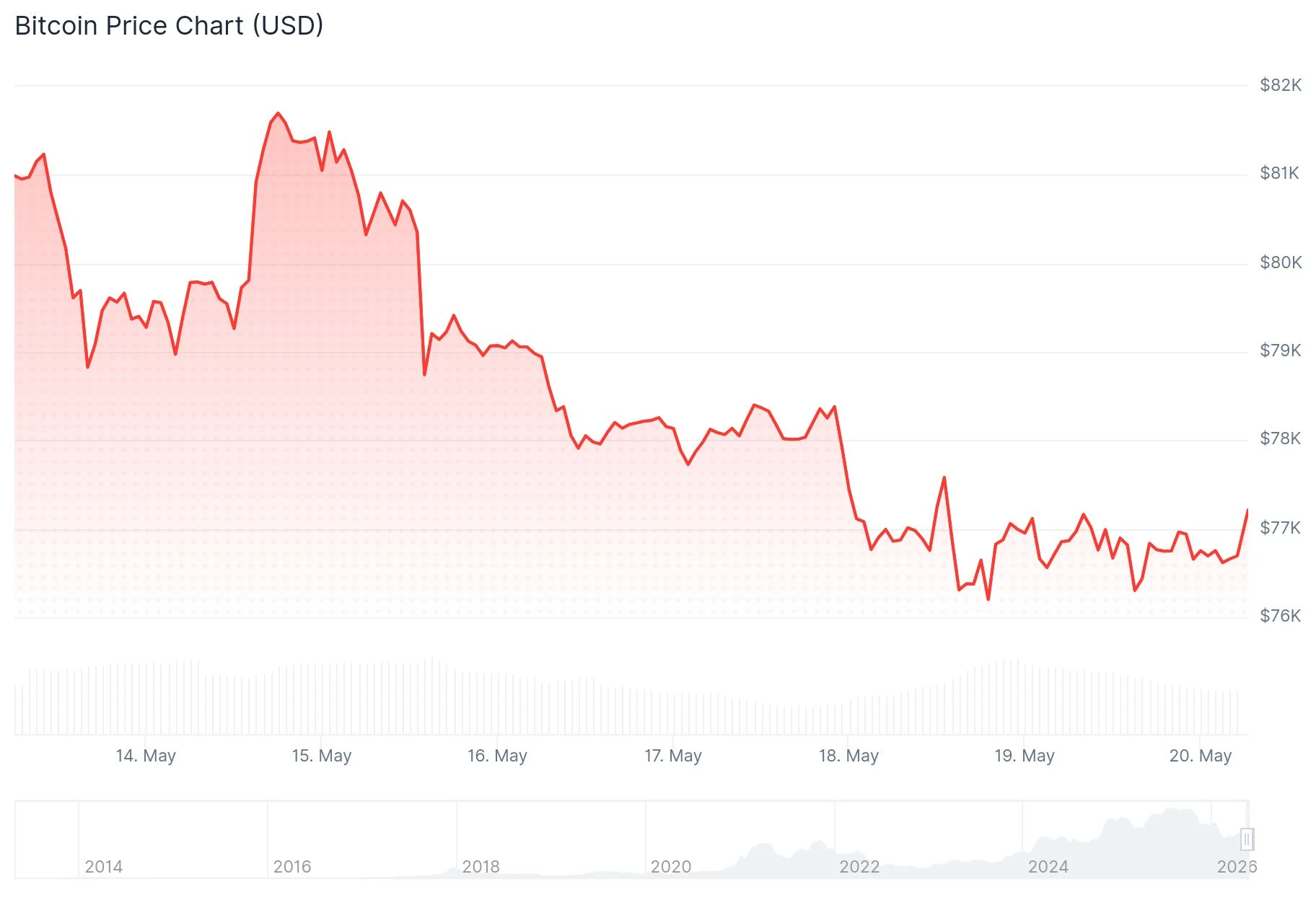
Bitcoin (BTC) Hovers Above $77K Amid Iran Diplomacy and Rising Treasury Yields

Beyond Cleaning: What Else You Must Check Before Moving Out




