

AI Rare Disease Treatment Breakthrough: How Pharmaceutical Superintelligence Solves Critical Labor Shortages
BitcoinWorld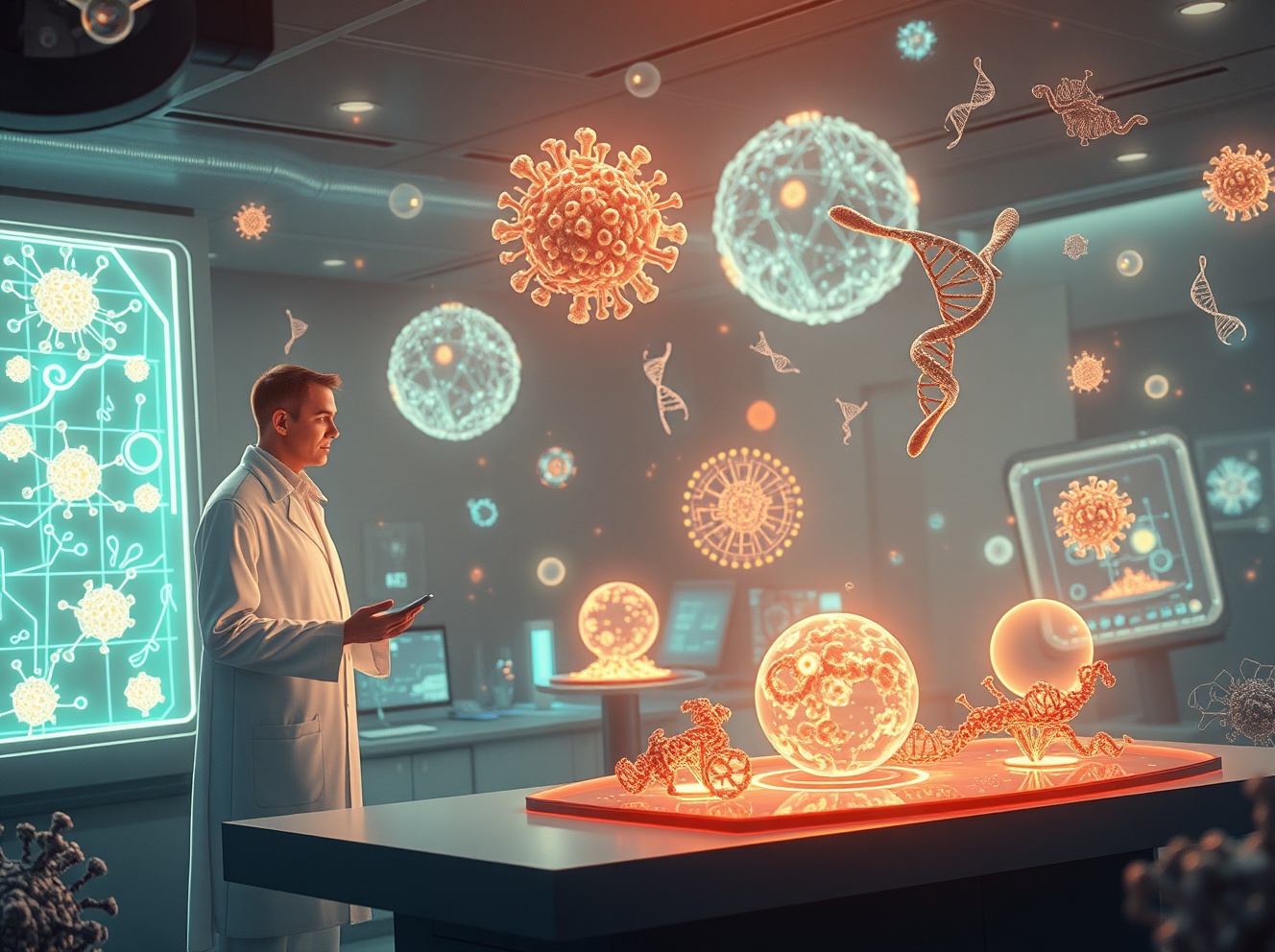
AI Rare Disease Treatment Breakthrough: How Pharmaceutical Superintelligence Solves Critical Labor Shortages
DOHA, Qatar – February 2025: Thousands of rare diseases remain untreated despite modern biotechnology’s gene-editing capabilities and drug design tools. The pharmaceutical industry faces a critical bottleneck: insufficient skilled professionals to advance research. Artificial intelligence now emerges as the transformative solution, acting as a force multiplier that enables scientists to address previously neglected disorders.
AI Rare Disease Treatment Revolution Begins
Executives from leading biotech firms revealed this week that AI systems are fundamentally changing how researchers approach rare diseases. At Web Summit Qatar, industry leaders demonstrated how artificial intelligence accelerates drug discovery and development processes. These technologies address the persistent talent shortage that has hampered progress for decades.
Insilico Medicine’s CEO Alex Aliper outlined his company’s ambitious vision for “pharmaceutical superintelligence.” The company recently launched its “MMAI Gym” platform, designed to train generalist large language models like ChatGPT and Gemini to perform at specialist levels. This multi-modal, multi-task model aims to solve numerous drug discovery challenges simultaneously with unprecedented accuracy.
“We urgently need this technology to boost pharmaceutical industry productivity,” Aliper explained in an exclusive interview. “The labor and talent shortage persists while thousands of diseases lack cures or treatment options. Many rare disorders remain neglected. Intelligent systems provide our best solution.”
The Automation Advantage in Drug Discovery
Insilico’s platform processes biological, chemical, and clinical data to generate hypotheses about disease targets and candidate molecules. By automating steps that traditionally required teams of chemists and biologists, the system can explore vast design spaces efficiently. The AI nominates high-quality therapeutic candidates and repurposes existing drugs with dramatically reduced costs and timelines.
For example, the company recently used AI models to identify existing drugs with potential for ALS treatment. Amyotrophic lateral sclerosis represents a rare neurological disorder with limited therapeutic options. This approach demonstrates how AI can accelerate solutions for conditions that have historically received minimal research attention.
Gene Editing’s Second Wave Powered by AI
The labor bottleneck extends beyond drug discovery. Many diseases require interventions at fundamental biological levels. GenEditBio represents the “second wave” of CRISPR gene editing, moving from editing cells outside the body to precise in vivo delivery. The company aims to make gene editing a single-injection treatment directly into affected tissues.
“We developed a proprietary engineered protein delivery vehicle,” explained GenEditBio CEO Tian Zhu. “This virus-like particle uses AI machine learning methods to mine natural resources. We identify viruses with specific tissue affinities.”
The company’s “natural resources” consist of thousands of unique nonviral, nonlipid polymer nanoparticles. These delivery vehicles safely transport gene-editing tools into specific cells. GenEditBio’s NanoGalaxy platform employs AI to analyze how chemical structures correlate with tissue targets like eyes, livers, or nervous systems.
| Company | Technology | Application | Stage |
|---|---|---|---|
| Insilico Medicine | Pharmaceutical Superintelligence | Drug Discovery & Repurposing | Clinical Trials |
| GenEditBio | AI-Optimized Delivery Vehicles | In Vivo Gene Editing | FDA-Approved Trials |
| Multiple Research Groups | Digital Twin Development | Virtual Clinical Trials | Early Research |
Overcoming Delivery Challenges
The AI predicts which chemical modifications will help delivery vehicles carry payloads without triggering immune responses. GenEditBio tests its engineered protein delivery vehicles in wet labs, feeding results back into AI systems to refine predictive accuracy. This iterative process creates increasingly effective delivery mechanisms.
“Efficient, tissue-specific delivery is essential for in vivo gene editing,” Zhu emphasized. “Our approach reduces costs and standardizes historically difficult processes. It resembles obtaining off-the-shelf drugs that work for multiple patients, enhancing global accessibility and affordability.”
GenEditBio recently received FDA approval to begin CRISPR therapy trials for corneal dystrophy. This milestone demonstrates how AI-optimized delivery systems can advance from research to clinical application.
Addressing the Persistent Data Challenge
AI-driven biotech progress ultimately confronts data limitations. Modeling human biology’s complexities requires more high-quality data than researchers currently possess. “We need additional ground truth data from patients,” Aliper noted. “Current data corpora heavily bias Western populations where generation occurs. We require localized efforts for balanced original data sets.”
Insilico’s automated laboratories generate multi-layer biological data from disease samples at scale without human intervention. This data feeds directly into AI-driven discovery platforms, creating continuous improvement cycles.
Zhu argues that necessary data already exists within human bodies, shaped by millennia of evolution. Only minimal DNA directly codes for proteins, while remaining portions act as gene behavior instruction manuals. Humans historically struggled to interpret this information, but AI models increasingly access and analyze it.
- Automated Data Generation: Labs produce biological data without human intervention
- Evolutionary Information: Thousands of years of biological data embedded in human DNA
- Parallel Testing: Thousands of delivery nanoparticles tested simultaneously
- Collaborative Data Sets: Results shared with external partners for broader impact
The Digital Twin Frontier
One emerging approach involves building digital human twins for virtual clinical trials. Aliper describes this development as “still in nascence” but potentially transformative. The pharmaceutical industry currently experiences a plateau of approximately 50 FDA-approved drugs annually. Growth becomes essential as global population aging increases chronic disorder prevalence.
“My hope is that within 10 to 20 years, we’ll have more therapeutic options for personalized patient treatment,” Aliper projected. Digital twins could revolutionize how researchers test treatments before human trials begin, potentially accelerating development while reducing risks.
Conclusion
Artificial intelligence transforms rare disease treatment by addressing critical labor shortages in biotechnology. Pharmaceutical superintelligence and AI-optimized gene editing represent groundbreaking approaches to previously neglected disorders. These technologies automate complex processes, analyze evolutionary data, and create efficient delivery systems. As AI systems mature and data quality improves, personalized treatments for rare diseases become increasingly achievable. The convergence of artificial intelligence and biotechnology promises to deliver solutions for thousands of conditions that have long awaited effective interventions.
FAQs
Q1: How does AI specifically help with rare disease treatment?
AI accelerates drug discovery by analyzing biological data, identifying potential treatments, and optimizing delivery methods. It automates processes that traditionally required large research teams, addressing talent shortages while exploring treatment possibilities for neglected disorders.
Q2: What is pharmaceutical superintelligence?
Pharmaceutical superintelligence refers to advanced AI systems that perform multiple drug discovery tasks simultaneously with high accuracy. These systems process biological, chemical, and clinical data to generate treatment hypotheses, nominate therapeutic candidates, and repurpose existing drugs more efficiently than traditional methods.
Q3: How does AI improve gene editing for rare diseases?
AI optimizes delivery vehicles for gene-editing tools, ensuring precise targeting of affected tissues. Machine learning analyzes chemical structures to predict which modifications will successfully transport payloads without triggering immune responses, making in vivo gene editing more effective and accessible.
Q4: What data challenges does AI face in biotech applications?
AI requires extensive high-quality biological data, which currently exhibits geographical biases and limited availability for rare diseases. Researchers need more balanced, diverse data sets to train models effectively, particularly for conditions affecting underrepresented populations.
Q5: When might AI-developed treatments become widely available?
Industry leaders project significant progress within 10-20 years. Several AI-optimized treatments already entered clinical trials, with FDA approvals for specific applications. As technology advances and regulatory pathways establish, AI-developed treatments should become increasingly accessible for rare disease patients.
This post AI Rare Disease Treatment Breakthrough: How Pharmaceutical Superintelligence Solves Critical Labor Shortages first appeared on BitcoinWorld.


You May Also Like

Bitcoin (BTC) Hovers Above $77K Amid Iran Diplomacy and Rising Treasury Yields

Beyond Cleaning: What Else You Must Check Before Moving Out




