

White House Unites Banks and Crypto Firms as CLARITY Act Deadlock
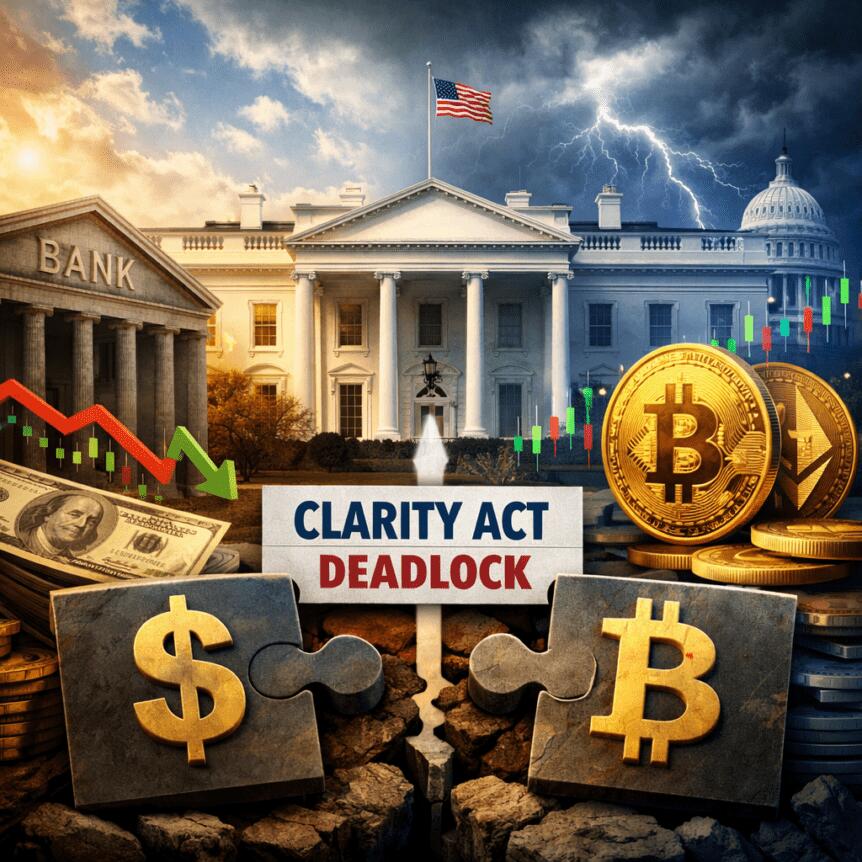
Officials in the Trump administration are preparing a Monday meeting between White House crypto policymakers and senior executives from the banking and digital-asset sectors as lawmakers push to revive the stalled CLARITY Act. People familiar with the plan described a gathering hosted by the White House’s crypto council that will bring together industry trade groups to dissect how the bill treats interest and other rewards tied to dollar-pegged stablecoins. The session comes amid a months-long delay in advancing the legislation through the Senate, where a Banking Committee markup has been postponed amid concerns over the way the proposal handles yield on stablecoins and the broader market-structure questions it raises.
Key takeaways
- The White House is convening banking and crypto trade groups to discuss the CLARITY Act, focusing on how interest and rewards on stablecoins would be regulated under the bill.
- Progress in the Senate has stalled due to disagreements over whether third parties should be allowed to offer yield on stablecoins, a point of tension between banks and crypto firms.
- The GENIUS Act, passed in mid-2025, prohibits stablecoin issuers from paying interest, but leaves open whether intermediaries such as exchanges can provide rewards, creating regulatory ambiguity that fuels debate.
- Banking-industry voices warn that permitting third-party yields could prompt deposit flight and tighten lending, with executives flagging potential macro and financial-system risks.
- Crypto exchanges and some lobby groups argue that the proposed framework should not stifle competition or curb innovative financial products offered on stablecoins.
Sentiment: Neutral
Market context: The ongoing policy discussions come as the broader crypto sector awaits a stable regulatory framework that can balance investor protections with market innovation. The debate on who can offer rewards on stablecoins—issuers, exchanges, or other intermediaries—taps into wider questions about crypto market structure, custody, and the role of traditional banks in a rapidly evolving digital-asset landscape.
Why it matters
The CLARITY Act is conceived as a comprehensive attempt to delineate the regulatory responsibilities for digital assets in the United States, clarifying how oversight would be divided between the Securities and Exchange Commission (SEC) and the Commodity Futures Trading Commission (CFTC). The central friction point—whether third-party yield on stablecoins should be permissible—has become a proxy for broader tensions between incumbents and crypto-native platforms. Banks argue that allowing yields outside issuer bailiwicks could undermine traditional deposit-taking and lending, potentially destabilizing the financial system if not properly constrained. In contrast, exchanges and a swath of industry groups contend that prohibiting or hamstringing yield on stablecoins would hamper innovation and could consolidate dominance among a smaller set of actors.
The GENIUS Act, enacted last year, is clear in prohibiting stablecoin issuers from paying interest. Yet it leaves a policy gap on whether other actors—such as exchanges or wallets—can extend rewards on stablecoins without running afoul of the letter of the law. This ambiguity has become a rallying point for both sides: banks fear a parallel liquidity channel that could siphon deposits, while crypto firms view permissible yields as a competitive faucet that could attract broader participation in dollar-backed digital assets. The standoff has grown into a test of how adaptable U.S. financial regulation can be when confronted with fast-moving blockchain-based products and shifting investor expectations.
The industry’s internal dynamics are telling. Some leading players, including major exchanges and advocacy groups, have urged lawmakers to embrace a more permissive approach that preserves competitive incentives for stablecoins and related services. Others—often representing traditional financial institutions and their lobbying arms—argue for tighter restrictions to preserve the integrity of the banking system and to prevent any unintended erosion of consumer protections. The upcoming discussions aim to translate these competing priorities into a framework that is both technocratic and politically viable, a delicate balance in a year marked by regulatory ferment and evolving market structure concerns.
What to watch next
- Outcomes from the White House-hosted meeting on Monday, including any published recommendations or positions from trade groups.
- Next steps in Congress, particularly any new timetable for the Banking Committee’s consideration of the CLARITY Act and potential amendments on stablecoin yields.
- Public statements from major crypto players and banks about potential policy shifts, including positions from exchanges and advocacy groups.
- Regulatory signals from federal agencies that could influence how stablecoins are treated under market-structure rules and investor protections.
Sources & verification
- Official reports describing the White House crypto council gathering and the bill’s treatment of stablecoin yields (January discussions referenced in coverage of CLARITY Act talks).
- Accounts of the Banking Committee’s postponement of a vote on the CLARITY Act amid concerns about stablecoin yield provisions.
- Background on the GENIUS Act provisions limiting interest payments by stablecoin issuers.
- Public remarks from banking executives and crypto leaders on the potential impact of yield-bearing stablecoins on deposits and lending.
- Public statements from Coinbase and other industry participants regarding their positions on the bill and related policy gaps.
Policy clashes and a pivotal moment for stablecoins: what the CLARITY Act debate means for markets
As lawmakers press to unlock a clear regulatory path for digital assets, the current round of discussions signals a broader shift in how policy team members would like to see market-structure questions addressed. The central question is whether the U.S. should permit yield-bearing activities related to stablecoins through intermediaries, or whether such rewards should be restricted to issuers under a tighter regulatory umbrella. The administration’s outreach seeks to bridge the gap between banking-sector concerns and crypto-industry expectations, attempting to craft a compromise that preserves consumer protections while avoiding a policy bottleneck that could slow innovation across the rapidly evolving stablecoin landscape.
One of the most talked-about issues is how to interpret “interest” in the GENIUS Act framework and whether the term should apply strictly to issuer payments or also to rewards distributed by platforms that hold, exchange, or lend stablecoins. Proponents of a more flexible regime argue that third-party yields could enhance liquidity, reduce search costs for users, and foster a more resilient market. Opponents, conversely, warn that allowing such yields could unintentionally fragment the banking system by siphoning funds away from traditional deposits and complicating the regulator’s ability to monitor systemic risks. The proposed CLARITY Act aims to provide a regulatory compass by clearly allocating oversight responsibilities between the SEC and CFTC, a move that would help align policy with how digital assets are actually traded and used in practice.
The broader implications extend beyond the immediate policy text. If the administration and Congress can reconcile these tensions, the resulting framework could shape how stablecoins interact with conventional financial products, influence custody and settlement standards, and affect the competitive dynamics among exchanges, custodians, and traditional banks. For market participants, clarity would be a missing gear gradually turning into a lever—potentially unlocking institutional participation, influencing product design, and shaping investor expectations in an asset class that has already demonstrated a capacity for rapid leaps in liquidity and use-case adoption. The road ahead remains complex, but the ongoing conversations indicate a willingness to confront difficult questions head-on rather than defer them to a distant regulatory horizon.
As policymakers deliberate, market watchers will be watching not only the letter of the law but also how the text is interpreted in practice. The balance between encouraging innovation and maintaining safeguards will determine the policy’s ultimate effectiveness and its impact on liquidity, risk appetite, and the speed at which regulated markets can accommodate new digital-asset technologies. In the near term, the next set of decisions—whether via a fresh markup, amendments, or executive guidance—will be critical for traders, developers, and users who rely on stablecoins as a bridge between traditional finance and the crypto economy.
This article was originally published as White House Unites Banks and Crypto Firms as CLARITY Act Deadlock on Crypto Breaking News – your trusted source for crypto news, Bitcoin news, and blockchain updates.
You May Also Like

Academic Publishing and Fairness: A Game-Theoretic Model of Peer-Review Bias

MAXI DOGE Holders Diversify into $GGs for Fast-Growth 2025 Crypto Presale Opportunities
