Tourism across Asia is entering a more complex phase. The region is seeing a patchwork of demand shaped by shifting traveler preferences and market segmentationTourism across Asia is entering a more complex phase. The region is seeing a patchwork of demand shaped by shifting traveler preferences and market segmentation

Tourism in Asia is returning, but not in the way it did before

Tourism across Asia is entering a more complex phase. The region is seeing a patchwork of demand shaped by shifting traveler preferences and market segmentation. What is taking shape is a more selective form of growth, in which travelers, intermediaries, and destinations are becoming more deliberate about where, how, and why travel happens. This shift is visible not only in consumer behavior but also in the mechanics of tourism trade itself.

The Travel Exchange, or TRAVEX, held annually alongside the ASEAN Tourism Forum (ATF), offers a clear view of this evolution. Designed as a business platform, TRAVEX brings together tourism suppliers from across Southeast Asia and international buyers through pre-arranged meetings.

Its format is quiet, even austere. What happens inside is closer to market calibration: a series of conversations about pricing, capacity, seasonality, standards, and differentiation.
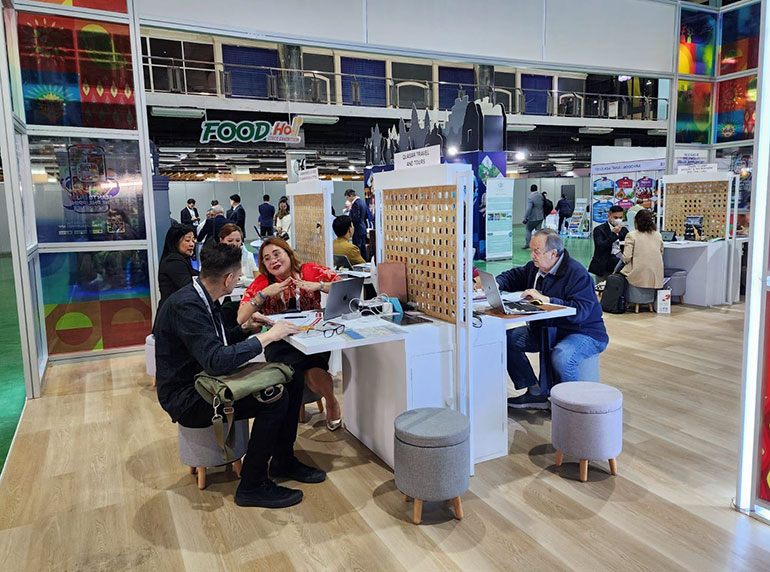
Buyers and sellers engage in one-on-one discussions on the TRAVEX trade floor during ATF 2024 in Vientiane, Lao PDR, where conversations increasingly focus on pricing, capacity, standards, and long-term viability rather than volume-driven growth.

In that sense, TRAVEX has become less a marketplace than a barometer. Across major source markets, the contours of demand are changing. Travelers from Northeast Asia are showing growing interest in longer stays, independent itineraries, and experience-led travel. In parts of Europe, sustainability, comfort, and a sense of place increasingly shape destination choice. Younger travelers prioritize ethics and authenticity alongside value, while mature markets show a willingness to travel less often but more meaningfully.

For buyers, this means the old logic of scale is giving way to a logic of ‘fit.’ The question is no longer how many products can be offered, but which products align with evolving traveler expectations, operational realities, and long-term viability.

That shift places new demands on tourism suppliers, where they are now expected to arrive at the trade table not only with inventory, but with clarity about their market positioning, sustainability practices, pricing discipline, and ability to deliver consistent quality. The competitive edge increasingly lies in coherence rather than abundance.

A cultural performance during Philippine Night at ATF 2023 in Yogyakarta, Indonesia, held alongside TRAVEX, illustrating how trade engagement is complemented by curated experiences that build trust and context beyond the meeting table.

The Philippines’ hosting of ATF 2026 is often understood as a branding opportunity, but in this case, it also functions as a form of strategic positioning for the Philippines within the region’s tourism trade ecosystem. It places the country not only on the trade floor, but within the architecture of regional tourism exchange as a convenor, connector, and testing ground for how tourism trade is evolving.

The addition of post-event familiarization tours, where buyers and media visit destinations and enterprises directly, further blurs the line between transaction and experience. It is an acknowledgment that trust, credibility, and value alignment now carry as much weight as contracts and pricing.

The future of tourism may not be defined by how fast it grows, but by how well it aligns with markets, communities, and the environmental limits of the destinations it depends on. And TRAVEX is one of the places where that recalibration becomes visible.


Spotlight is BusinessWorld’s sponsored section that allows advertisers to amplify their brand and connect with BusinessWorld’s audience by publishing their stories on the BusinessWorld Web site. For more information, send an email to online@bworldonline.com.

Join us on Viber at https://bit.ly/3hv6bLA to get more updates and subscribe to BusinessWorld’s titles and get exclusive content through www.bworld-x.com.

Disclaimer: The articles reposted on this site are sourced from public platforms and are provided for informational purposes only. They do not necessarily reflect the views of MEXC. All rights remain with the original authors. If you believe any content infringes on third-party rights, please contact service@support.mexc.com for removal. MEXC makes no guarantees regarding the accuracy, completeness, or timeliness of the content and is not responsible for any actions taken based on the information provided. The content does not constitute financial, legal, or other professional advice, nor should it be considered a recommendation or endorsement by MEXC.

You May Also Like

Botanix launches stBTC to deliver Bitcoin-native yield

Botanix launches stBTC to deliver Bitcoin-native yield

The post Botanix launches stBTC to deliver Bitcoin-native yield appeared on BitcoinEthereumNews.com. Botanix Labs has launched stBTC, a liquid staking token designed to turn Bitcoin into a yield-bearing asset by redistributing network gas fees directly to users. The protocol will begin yield accrual later this week, with its Genesis Vault scheduled to open on Sept. 25, capped at 50 BTC. The initiative marks one of the first attempts to generate Bitcoin-native yield without relying on inflationary token models or centralized custodians. stBTC works by allowing users to deposit Bitcoin into Botanix’s permissionless smart contract, receiving stBTC tokens that represent their share of the staking vault. As transactions occur, 50% of Botanix network gas fees, paid in BTC, flow back to stBTC holders. Over time, the value of stBTC increases relative to BTC, enabling users to redeem their original deposit plus yield. Botanix estimates early returns could reach 20–50% annually before stabilizing around 6–8%, a level similar to Ethereum staking but fully denominated in Bitcoin. Botanix says that security audits have been completed by Spearbit and Sigma Prime, and the protocol is built on the EIP-4626 vault standard, which also underpins Ethereum-based staking products. The company’s Spiderchain architecture, operated by 16 independent entities including Galaxy, Alchemy, and Fireblocks, secures the network. If adoption grows, Botanix argues the system could make Bitcoin a productive, composable asset for decentralized finance, while reinforcing network consensus. This is a developing story. This article was generated with the assistance of AI and reviewed by editor Jeffrey Albus before publication. Get the news in your inbox. Explore Blockworks newsletters: Source: https://blockworks.co/news/botanix-launches-stbtc
Share
BitcoinEthereumNews2025/09/18 02:37
XRP News: Ripple Lands Saudi Deal to Test Blockchain for Payments, Custody, Tokenization

XRP News: Ripple Lands Saudi Deal to Test Blockchain for Payments, Custody, Tokenization

The post XRP News: Ripple Lands Saudi Deal to Test Blockchain for Payments, Custody, Tokenization appeared on BitcoinEthereumNews.com. Key Insights: The latest
Share
BitcoinEthereumNews2026/01/27 23:03
UK and US Seal $42 Billion Tech Pact Driving AI and Energy Future

UK and US Seal $42 Billion Tech Pact Driving AI and Energy Future

The post UK and US Seal $42 Billion Tech Pact Driving AI and Energy Future appeared on BitcoinEthereumNews.com. Key Highlights Microsoft and Google pledge billions as part of UK US tech partnership Nvidia to deploy 120,000 GPUs with British firm Nscale in Project Stargate Deal positions UK as an innovation hub rivaling global tech powers UK and US Seal $42 Billion Tech Pact Driving AI and Energy Future The UK and the US have signed a “Technological Prosperity Agreement” that paves the way for joint projects in artificial intelligence, quantum computing, and nuclear energy, according to Reuters. Donald Trump and King Charles review the guard of honour at Windsor Castle, 17 September 2025. Image: Kirsty Wigglesworth/Reuters The agreement was unveiled ahead of U.S. President Donald Trump’s second state visit to the UK, marking a historic moment in transatlantic technology cooperation. Billions Flow Into the UK Tech Sector As part of the deal, major American corporations pledged to invest $42 billion in the UK. Microsoft leads with a $30 billion investment to expand cloud and AI infrastructure, including the construction of a new supercomputer in Loughton. Nvidia will deploy 120,000 GPUs, including up to 60,000 Grace Blackwell Ultra chips—in partnership with the British company Nscale as part of Project Stargate. Google is contributing $6.8 billion to build a data center in Waltham Cross and expand DeepMind research. Other companies are joining as well. CoreWeave announced a $3.4 billion investment in data centers, while Salesforce, Scale AI, BlackRock, Oracle, and AWS confirmed additional investments ranging from hundreds of millions to several billion dollars. UK Positions Itself as a Global Innovation Hub British Prime Minister Keir Starmer said the deal could impact millions of lives across the Atlantic. He stressed that the UK aims to position itself as an investment hub with lighter regulations than the European Union. Nvidia spokesman David Hogan noted the significance of the agreement, saying it would…
Share
BitcoinEthereumNews2025/09/18 02:22