

Altcoin Season Index Surges: A Hopeful Signal for Crypto Market Rotation in 2025

BitcoinWorld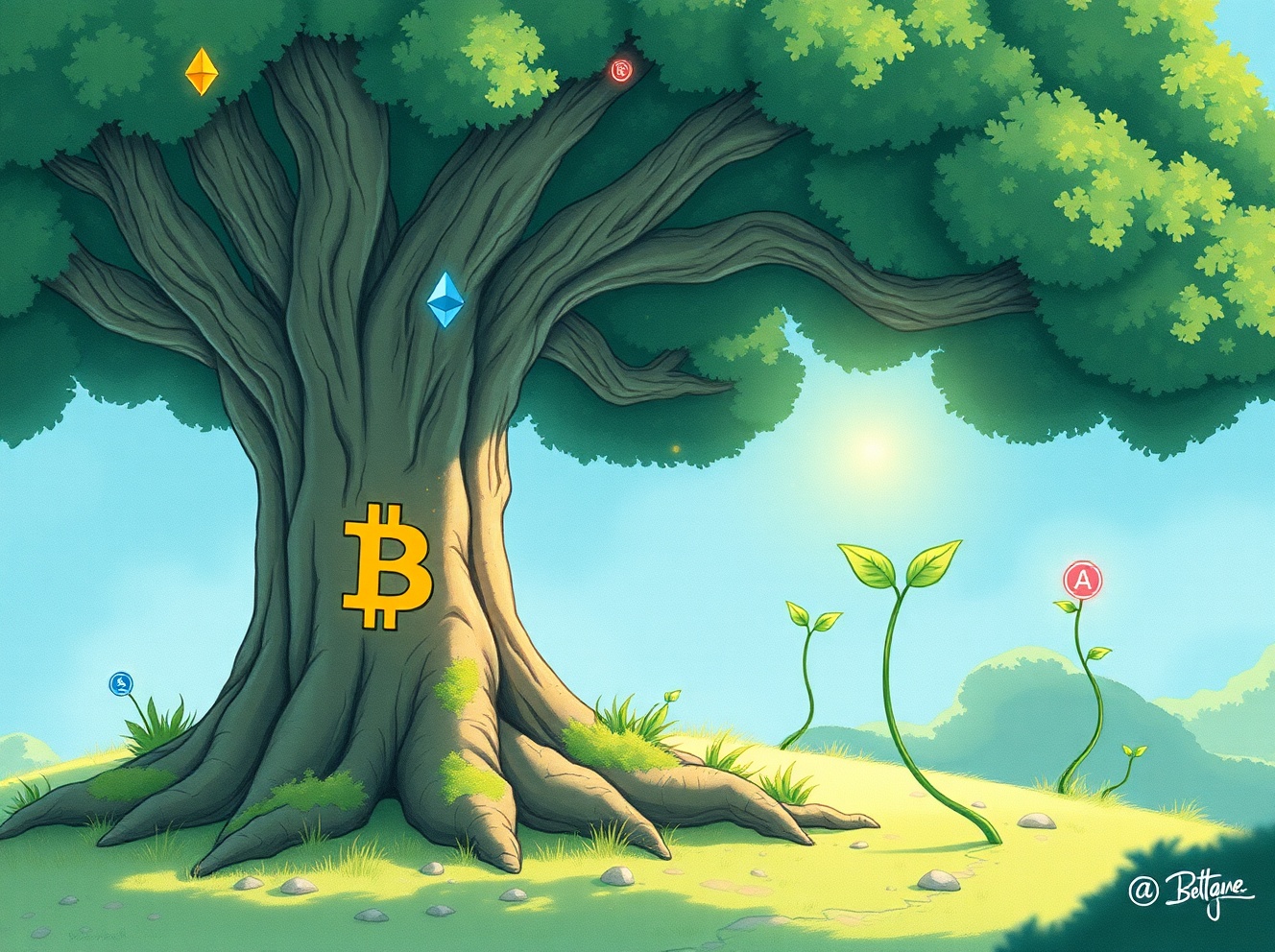
Altcoin Season Index Surges: A Hopeful Signal for Crypto Market Rotation in 2025
Global cryptocurrency markets observed a notable shift on April 10, 2025, as CoinMarketCap’s pivotal Altcoin Season Index climbed two points to reach 29. This incremental yet significant movement provides a crucial data point for investors analyzing the perennial tug-of-war between Bitcoin and alternative cryptocurrencies. Consequently, market analysts are now scrutinizing historical patterns to gauge whether this marks the beginning of a broader altcoin rally or merely a temporary fluctuation. The index serves as a foundational barometer for understanding capital flows within the digital asset ecosystem.
Decoding the Altcoin Season Index Mechanics
CoinMarketCap’s Altcoin Season Index functions as a sophisticated, objective metric designed to quantify market sentiment and performance. The platform calculates this figure by analyzing the price performance of the top 100 cryptocurrencies, deliberately excluding stablecoins and wrapped tokens, against Bitcoin over a rolling 90-day period. A definitive altcoin season is officially declared only when 75% of these major altcoins outperform Bitcoin during that timeframe, which corresponds to an index score of 75 or higher. Therefore, the current score of 29, while rising, remains firmly in “Bitcoin season” territory, indicating Bitcoin’s continued outperformance. However, the recent upward movement suggests a potential weakening of Bitcoin’s dominance, prompting closer examination of underlying trends.
The Historical Context of Market Cycles
Understanding the current index position requires analysis of previous crypto market cycles. Historically, bull markets often begin with Bitcoin leading the charge, as institutional and large-scale capital typically flows into the most established asset first. Subsequently, as investor confidence grows and Bitcoin’s price stabilizes at higher levels, capital begins to “rotate” into altcoins, which are perceived to have higher growth potential. For instance, the last major altcoin season, which peaked in early 2021, saw the index sustain scores above 75 for several months, coinciding with explosive growth in decentralized finance (DeFi) and non-fungible token (NFT) projects built primarily on networks like Ethereum. This historical precedent provides a framework for interpreting today’s data.
Analyzing the Drivers Behind the Index Rise
The two-point increase in the Altcoin Season Index, while modest, is not an isolated event. It correlates with several observable market developments in early 2025. Firstly, Ethereum continues to demonstrate strength following its successful transition to a full proof-of-stake consensus mechanism, which has significantly reduced its energy consumption. Secondly, layer-1 blockchain competitors like Solana and Avalanche have reported sustained growth in developer activity and network usage. Furthermore, renewed interest in specific sectors, such as real-world asset (RWA) tokenization and decentralized physical infrastructure networks (DePIN), is driving capital toward the native tokens of protocols operating in these spaces. These sector-specific rallies can contribute to improved relative performance against Bitcoin, even during a broader Bitcoin-dominant phase.
The table below illustrates a simplified comparison of key metrics during different market phases:
| Market Phase | Altcoin Season Index Range | Typical Bitcoin Dominance | Investor Sentiment |
|---|---|---|---|
| Bitcoin Season | 0 – 74 | High & Rising | Risk-Off, Cautious |
| Transition Phase | 30 – 70 (Fluctuating) | Stable or Slightly Declining | Speculative, Watchful |
| Altcoin Season | 75 – 100 | Low & Falling | Risk-On, Euphoric |
Currently, the market appears to be in a volatile transition phase. Key factors influencing this phase include:
- Macroeconomic conditions: Interest rate decisions by major central banks directly impact liquidity available for speculative assets.
- Regulatory clarity: Evolving regulatory frameworks in jurisdictions like the EU (MiCA) and the US provide a more defined operating environment.
- On-chain activity: Metrics like active addresses and transaction volumes on smart contract platforms offer real-time demand signals.
- Derivatives market data: Funding rates and open interest on altcoin perpetual contracts reflect trader leverage and sentiment.
Expert Perspectives on Market Rotation Signals
Seasoned market analysts emphasize that the Altcoin Season Index is a lagging indicator, confirming trends that have already developed over a quarter. However, its rise is often preceded by early signals. For example, analysts at blockchain analytics firm Glassnode have previously noted that a sustained increase in altcoin trading volume as a percentage of total crypto volume often foreshadows a rising index. Similarly, a narrowing of the performance gap between Bitcoin and the top 10 altcoins can be an early technical signal. Experts from firms like Arcane Research consistently advise investors to use the index as one tool within a broader toolkit, combining it with on-chain analysis, macroeconomic review, and fundamental project research. This holistic approach prevents overreliance on any single metric.
The Impact of Institutional Adoption
The structure of capital entering the market has fundamentally shifted since the last major altcoin season. The approval and subsequent inflows into U.S. spot Bitcoin ETFs in 2024 created a powerful, sustained demand driver for Bitcoin, arguably prolonging its dominance. For a true, broad-based altcoin season to emerge, many analysts believe a similar catalyst is required for altcoins. This could take the form of a spot Ethereum ETF approval, clearer regulatory pathways for other digital assets, or significant institutional adoption of specific blockchain utilities beyond pure speculation. The gradual increase in the Altcoin Season Index may reflect early institutional experimentation with diversified crypto portfolios, moving cautiously beyond Bitcoin-only strategies.
Conclusion
The rise of the Altcoin Season Index to 29 represents a meaningful, though preliminary, signal in the dynamic cryptocurrency market. It underscores a gradual increase in the relative strength of major altcoins compared to Bitcoin, based on a rigorous 90-day performance analysis. While the index remains far from the 75 threshold that defines a full altcoin season, its upward trajectory warrants attention from investors monitoring for phase shifts in market cycles. Ultimately, this metric, grounded in verifiable price data from CoinMarketCap, provides a neutral framework for assessing market structure. Continued observation of the Altcoin Season Index, alongside broader economic and technological developments, will be essential for navigating the evolving digital asset landscape in 2025 and beyond.
FAQs
Q1: What exactly does an Altcoin Season Index score of 29 mean?
An index score of 29 indicates that, over the past 90 days, less than half of the top 100 altcoins have outperformed Bitcoin. The market is still in a “Bitcoin season,” but the rising score suggests altcoins are beginning to close the performance gap.
Q2: How often is the Altcoin Season Index updated?
CoinMarketCap updates the Altcoin Season Index daily, providing a near real-time view of the changing performance dynamics between Bitcoin and the broader altcoin market.
Q3: Does a rising index guarantee that an altcoin season is coming?
No, it does not guarantee it. The index is a lagging indicator that confirms past performance. A rising trend can reverse, and the index must reach and sustain a score above 75 to officially declare an altcoin season.
Q4: Which altcoins are considered in the index calculation?
The index uses the top 100 cryptocurrencies by market capitalization, excluding stablecoins (like USDT, USDC) and wrapped tokens (like WBTC), to focus purely on volatile assets competing for investor capital.
Q5: How should a long-term investor use this index?
Long-term investors should treat the index as a context-setting tool, not a timing signal. It helps understand which phase of the market cycle is occurring, which can inform portfolio rebalancing strategies and risk management, but should not replace fundamental research on individual assets.
This post Altcoin Season Index Surges: A Hopeful Signal for Crypto Market Rotation in 2025 first appeared on BitcoinWorld.
You May Also Like
Bitcoin ETFs Outpace Ethereum With $2.9B Weekly Surge

CME Group to launch options on XRP and SOL futures
