Stellar has partnered with MIT and other leading blockchain projects including Chainlink, Wormhole and Canton on a new whitepaper addressing interoperability. TheStellar has partnered with MIT and other leading blockchain projects including Chainlink, Wormhole and Canton on a new whitepaper addressing interoperability. The

Stellar Teams Up With MIT to Advance Interoperability for Frictionless Asset Movement

For feedback or concerns regarding this content, please contact us at crypto.news@mexc.com
  • Stellar has partnered with MIT and other leading blockchain projects including Chainlink, Wormhole and Canton on a new whitepaper addressing interoperability.
  • The whitepaper proposes new standards that enable any issuer and investor to trade a tokenized asset on any technology and at any time.

Stellar has joined the Massachusetts Institute of Technology (MIT) and dozens of other DLT projects in a new initiative that seeks to establish new global standards of interoperability for tokenization.

The group is working under an umbrella body dubbed Interoperability Standards Organization for Digital Assets (I-SODA). MIT says the project has been under development for years, but it published its first whitepaper on Wednesday, breaking down its approach and proposing the standards.

Stellar MIT InteroperabilityImage Courtesy of Stellar on X

Tokenization has become one of the most pivotal applications of blockchain technology today, and as we reported, the projections for the sector are in the trillions. Every major blockchain project, including Stellar, is now positioning itself as the best network for issuing tokens as they compete for traditional finance clients.

However, tokenization will run into the same brick wall as other novel technologies before it: siloed networks that compete but can’t cooperate. Today, every major global bank is deploying tokenization projects on its own closed ecosystem, attempting to become the industry leader, all on their own. Blockchain networks are also engaged in similar competition, and while Ethereum is the runaway leader, this hasn’t stopped others from investing heavily to catch up.

The MIT whitepaper captures this best, stating:

Can Stellar, MIT and Co. Bring Interoperability to Tokenization?

It’s with the goal of finally getting all tokenization players to work together that MIT has brought together some of the leading institutions to find common standards. These include Stellar, Chainlink, the XRP Ledger, Tokenovate, the Enterprise Ethereum Alliance, Canton, the Cardnao Foundation, ZKSync and the Solana Foundation.
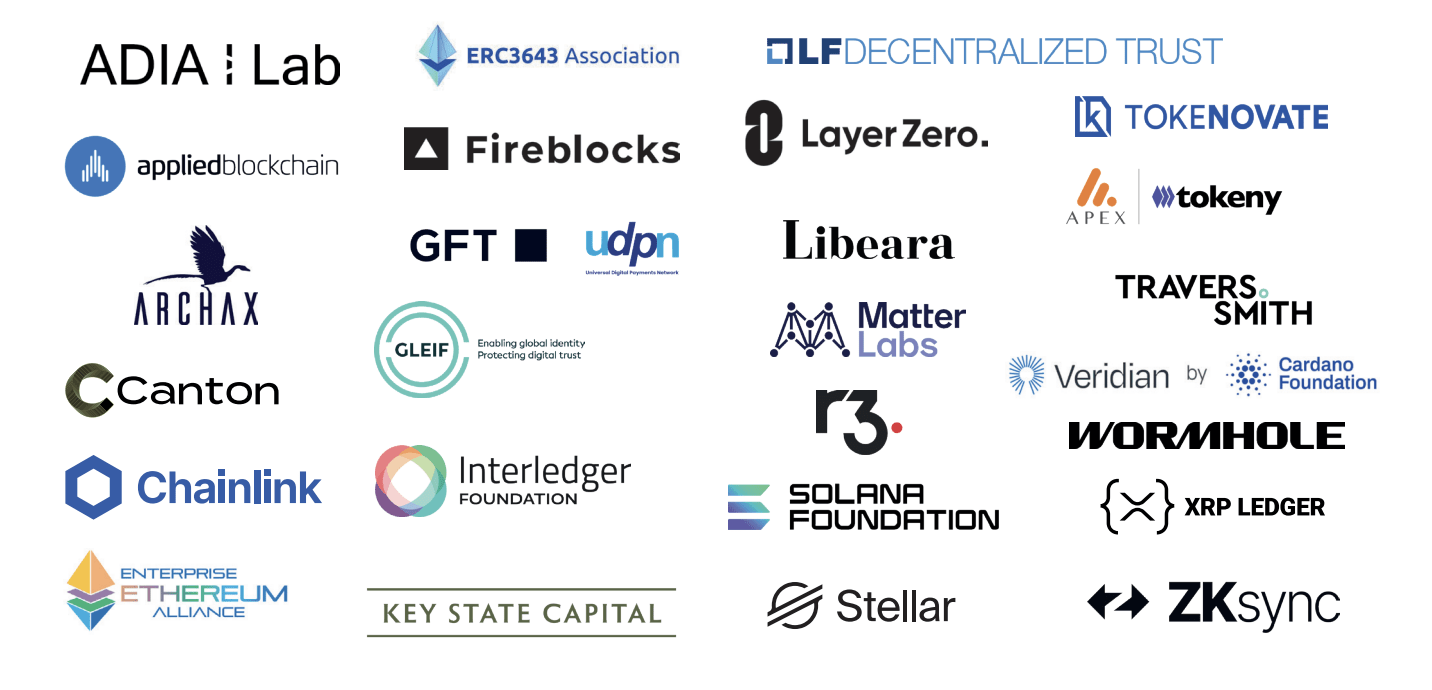
MIT Stellar InitiativeSource: I-SODA

Commenting on the initiative, the Stellar Foundation said that industry standards are critical, not just to promote faster tech deployment, “but also for trust.” Assets tokenized under such standards are “programmable, interoperable instruments capable of moving securely and efficiently across global markets.”

It added:

The Foundation noted that it has been supporting open token standards for years and has been collaborating with other industry organizations to find a middle ground.

Other partners concurred. Digital Asset, the firm behind the Canton blockchain network, says that the future of global finance “will run on networks that can trust and transact across boundaries, without compromising on threshold regulatory issues like privacy.”

Canton is a network built to serve financial institutions. As we reported, it has quietly become one of the world’s main tokenization layers, overtaking established players like Ethereum and Solana by directly targeting Wall Street. It now processes over $6 trillion in monthly volume, with the DTCC’s $100 trillion business set to land on the chain in the near future.

The Solana Foundation, also a member of I-SODA, added:

XLM trades at $0.215, gaining 1.2% in the past day.

]]>


Disclaimer: The articles reposted on this site are sourced from public platforms and are provided for informational purposes only. They do not necessarily reflect the views of MEXC. All rights remain with the original authors. If you believe any content infringes on third-party rights, please contact crypto.news@mexc.com for removal. MEXC makes no guarantees regarding the accuracy, completeness, or timeliness of the content and is not responsible for any actions taken based on the information provided. The content does not constitute financial, legal, or other professional advice, nor should it be considered a recommendation or endorsement by MEXC.

You May Also Like

The $40 Million ‘Free Money’ Glitch in Crypto Prediction Markets

The $40 Million ‘Free Money’ Glitch in Crypto Prediction Markets

The post The $40 Million ‘Free Money’ Glitch in Crypto Prediction Markets appeared on BitcoinEthereumNews.com. In brief Researchers found $40 million in “risk-free” profits from mispriced markets on Polymarket in one year. Prices on some markets didn’t add up to 100%, letting traders lock in guaranteed gains. The same inefficiencies likely exist on other platforms like Myriad and Kalshi, though arbitrageurs help correct them. A new academic paper suggests there’s been a steady stream of “free money” lying around on Polymarket—and smart traders have been scooping it up. The paper, Unravelling the Probabilistic Forest: Arbitrage in Prediction Markets, is the most detailed look yet at how mispricing creeps into crypto’s most popular prediction platform. The researchers combed through a year of data, from April 2024 to April 2025, and found thousands of instances where market prices simply didn’t add up. In some cases, the prices of “Yes” and “No” shares in a single market didn’t sum to one dollar as they theoretically should, creating a risk-free profit for anyone quick enough to pounce.  In other cases, the mispricing was more subtle, involving logically related markets. For example, a market on “Trump wins the presidency” might trade at very different odds than “Republican wins the presidency,” even though those outcomes are tightly linked. By buying and selling combinations of these contracts, a savvy trader could lock in a profit no matter what happens. The researchers estimate more than $40 million in profits have already been pulled from the system by arbitrageurs, traders who specialize in sniffing out and exploiting these kinds of inconsistencies. Far from being a theoretical curiosity, this is a live and lucrative business model. Is this pattern true across all prediction markets? What’s striking is how common these opportunities are. The study found more than 7,000 markets with measurable mispricing, many in highly liquid, closely watched contracts. “Prediction markets are often treated…
Share
BitcoinEthereumNews2025/09/18 14:34
Trump Iran War Resolution: President Claims He Can End Conflict Anytime, Expects Swift Conclusion

Trump Iran War Resolution: President Claims He Can End Conflict Anytime, Expects Swift Conclusion

BitcoinWorld Trump Iran War Resolution: President Claims He Can End Conflict Anytime, Expects Swift Conclusion WASHINGTON, D.C. — President Donald Trump asserted
Share
bitcoinworld2026/03/11 22:50
Will the crypto market rally after February U.S. CPI holds at 2.4% as forecasted?

Will the crypto market rally after February U.S. CPI holds at 2.4% as forecasted?

The crypto market showed a muted reaction after US CPI data held at 2.4%, leaving investors watching Federal Reserve policy and Bitcoin price levels. The latest
Share
Crypto.news2026/03/11 22:37