

Must Read
Today's generation enters the workforce under a different set of legislative and economic constraintsToday's generation enters the workforce under a different set of legislative and economic constraints
[Mind the Gap] The ‘BMW’ dream in America: Is nursing still the Filipino ticket?
For feedback or concerns regarding this content, please contact us at crypto.news@mexc.com
Marry a nurse: “Tsinelas na lang ang dadalhin mo (The only things you need to bring are your slippers).”
When I first arrived in America, my relatives — mostly nurses — gave me the same advice they offered every young man in our clan coming to the United States: “Mag‑asawa ka ng nurse. Tsinelas na lang ang dadalhin mo.”
In the mythology of the Filipino diaspora, this proverb is gospel. The nurse is cast as the ultimate economic engine: the walking mortgage payment, the pathway to citizenship, the anchor of the American Dream. For decades, Filipino nurses built middle‑class lives through the grueling math of 12‑hour shifts, night differentials, and overtime.
“Nurses have big houses, high‑end cars, they send money back home and their kids are in private schools,” said Innie Williams, a veteran nurse and educator in New Jersey who hails from Pateros, describing the economic empowerment many nurses achieved. Had I followed Tita Lulu’s advice, I might now be a so‑called “BMW” spouse — Bring Mommy to Work — driving the latest X5 in Gucci slippers. “Most of their husbands don’t work,” Williams said. “They take care of the kids, drive them to school and after‑school activities.”
Williams’ story represents the high‑water mark of an American Dream built on grit, timing, and manageable costs. She went to graduate school, stacked specialty certifications — MSN, CMSRN, CCM, NATCEP, HH‑I — negotiated her worth, and moved freely across hospitals, earning upwards of $200,000 a year. “I get extra money for the letters after my name,” she said.
Pipeline under pressure
But the ladder she climbed is vanishing for today’s generation now entering the workforce under a different set of legislative and economic constraints.
While nurses can still enter practice with a Bachelor of Science in Nursing (BSN) and pass the NCLEX‑RN, the path to the highest‑paying and most autonomous roles increasingly runs through a gauntlet of graduate degrees and certifications — now at the center of the 2026 policy fight.
There are roughly 150,000 Filipino registered nurses in the United States, the largest group of foreign‑born nurses. They account for about 4% of the nation’s estimated 4.7 million nurses, yet in many urban hospitals they make up 20 to 30% of ICU staff.
These are high‑stress, inflexible roles where balancing graduate school while raising a family is already difficult. Add skyrocketing tuition, remittance obligations, and the high cost of living in states like New Jersey, New York, and California — where Filipino nurses are heavily concentrated — and the pipeline narrows sharply.
The OBBBA squeeze
While nursing under President Trump’s One Big Beautiful Bill Act (OBBBA) remains classified as a profession, changes in how graduate nursing programs are treated under federal loan rules have created a funding gap that effectively bars many American‑born and green‑card‑holding Filipino nurses from advancing.
Under the OBBBA loan limits, a law student can borrow $200,000 to become a lawyer. But a nurse seeking advanced practice is capped at $100,000 amidst the fact that we have more lawyers than we can absorb, yet we face a persistent and dangerous shortage of nurses.
Graduate programs for Nurse Practitioners and Certified Registered Nurse Anesthetists now routinely cost $150,000 to $240,000, leaving private loans as the only option. For many nurses already carrying undergraduate debt and supporting extended families, that gap is insurmountable.
“The system will crumble if you don’t have enough nurses to teach the next generation or support access to care,” said Serena Bumpus, CEO of the Texas Nurses Association. “We are creating a workforce that is overtime‑rich but time‑poor, burning out before nurses ever earn the credentials that give them real bargaining power.”
The Philippine Nurses Association of America has warned that these barriers pose a direct threat to the workforce pipeline, particularly for Filipinos who have historically used nursing as a vehicle for generational wealth.
Bedside trap
Instead of moving into leadership, education, or policy roles, many Filipino nurses actually prefer to remain at the bedside — not by choice alone, but by design.
“Bedside nursing pays more,” Williams said. “We work three 12‑hour shifts, and overtime is time‑and‑a‑half. A lot of Filipino nurses work nights because the differential adds eight to ten dollars an hour. Compare that to administrative jobs — five days a week, eight to five — and often less money. The system rewards staying at the bedside, not moving up.”
The result is a workforce economically incentivized to remain in high‑stress clinical roles rather than transition into leadership, education, or policy positions. Advancement is framed as progress, but for many nurses, it is a financial step backward they cannot afford to take.
Two‑tier future
What emerges in 2026 is a two‑tier nursing system. On one side are legacy nurses like Williams, who advanced through accessible education, manageable tuition, and lower costs of living. On the other is a vulnerable generation — new graduates and US-born Filipino nurses doing the same life‑saving work while facing capped loans, soaring tuition, and diminishing returns on specialization.
“Nurses are the backbone of our healthcare system,” said American Nurses Association president Jennifer Mensik Kennedy. “At a time of historic nurse shortages, limiting access to graduate education threatens the foundation of patient care — especially in rural and underserved communities where advanced practice nurses are often the primary providers.”
The proverb still circulates. Pero hindi na tsinelas na lang ang dadalhin mo. Now, the spouse also has to bring shoes sturdy enough for a second job — and a balance sheet strong enough to survive the climb. – Rappler.com
Oscar Quiambao is a former reporter for the Philippine Daily Inquirer who now lives in San Francisco.


Disclaimer: The articles reposted on this site are sourced from public platforms and are provided for informational purposes only. They do not necessarily reflect the views of MEXC. All rights remain with the original authors. If you believe any content infringes on third-party rights, please contact crypto.news@mexc.com for removal. MEXC makes no guarantees regarding the accuracy, completeness, or timeliness of the content and is not responsible for any actions taken based on the information provided. The content does not constitute financial, legal, or other professional advice, nor should it be considered a recommendation or endorsement by MEXC.
You May Also Like

Indian Rupee Gains Support from Higher Gold Import Tariffs, Says BNY
BitcoinWorld Indian Rupee Gains Support from Higher Gold Import Tariffs, Says BNY Bank of New York (BNY) analysts have noted that the recent hike in import tariffs
Share
bitcoinworld2026/05/13 20:20
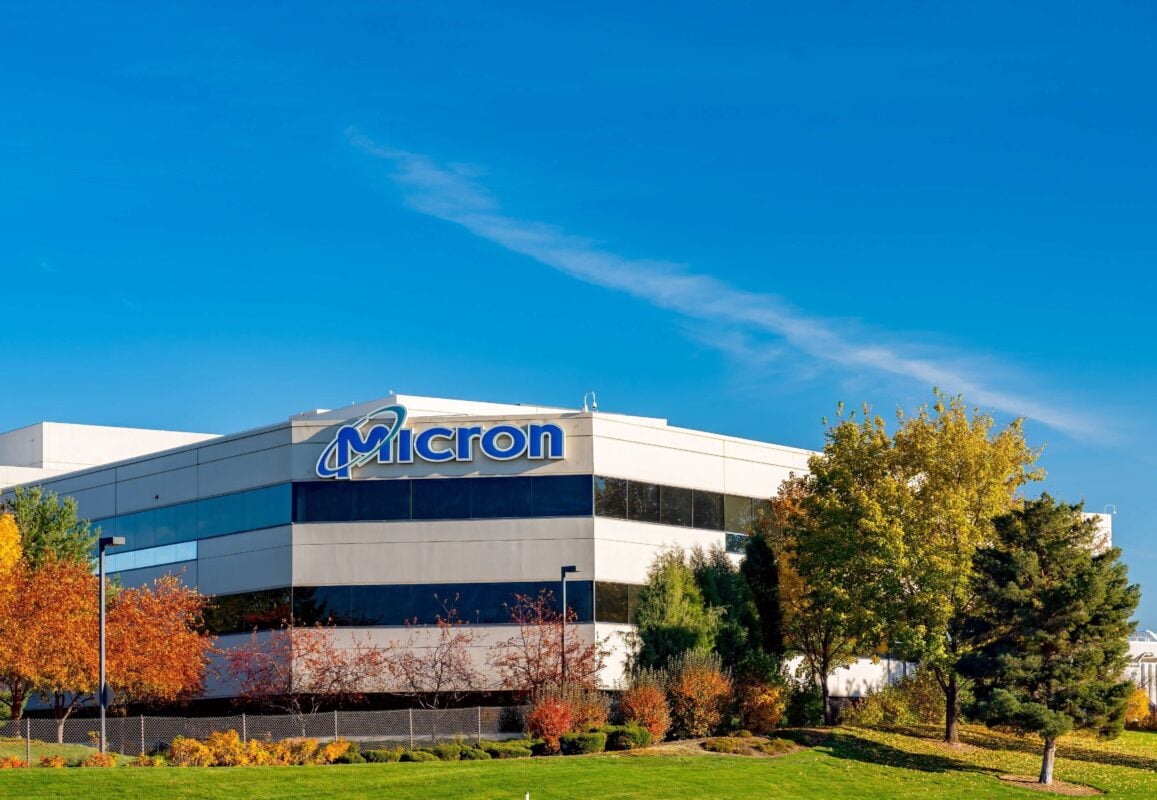
Micron and Sandisk Jump as Samsung Strike Threat Deepens Memory Chip Shortage
TLDR Micron and Sandisk shares rose after Samsung union talks collapsed. Samsung workers are threatening a strike from May 21 to June 7. Jefferies estimates a strike
Share
Coincentral2026/05/13 20:39

Morgan Stanley Raises 2026 S&P 500 Target to 8,000
Morgan Stanley has raised its year-end 2026 target for the S&P 500 index to 8,000, up from its previous estimate of 7,800. The revised forecast suggests
Share
Hokanews2026/05/13 21:10



