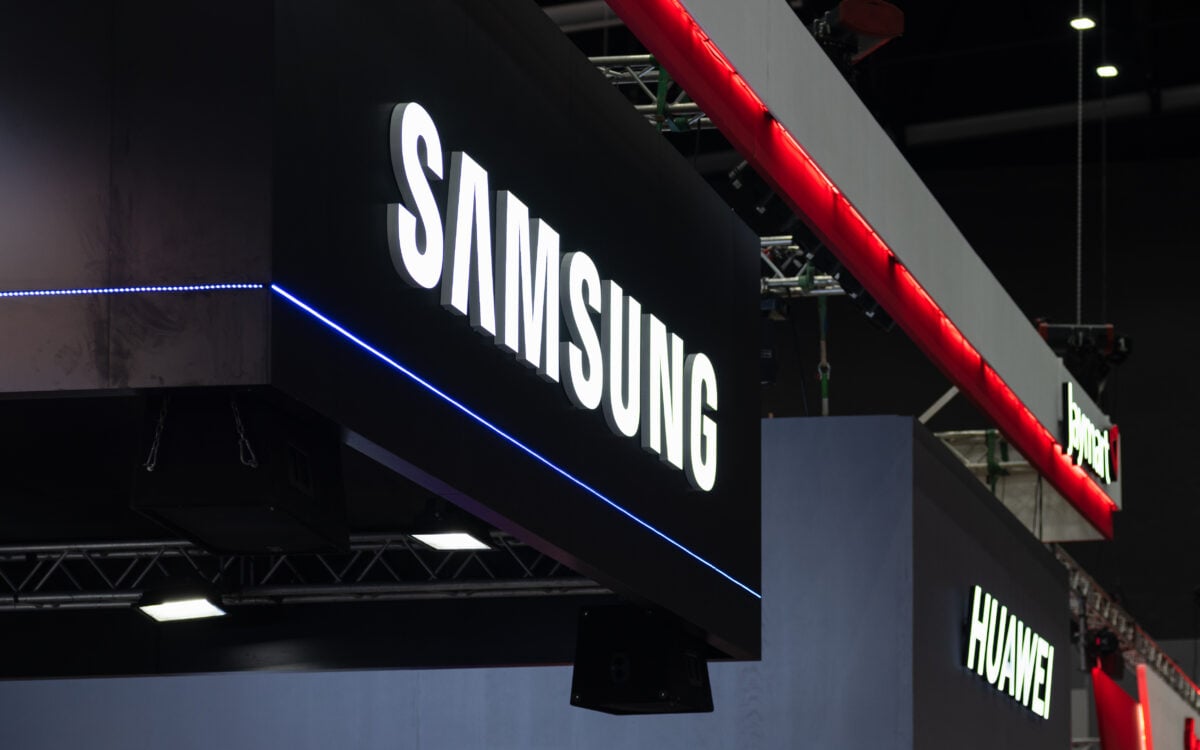
Europe plans to achieve technological self-reliance by phasing out “high-risk” Chinese suppliers and also by reducing its dependence on U.S. technology through Europe plans to achieve technological self-reliance by phasing out “high-risk” Chinese suppliers and also by reducing its dependence on U.S. technology through

EU moves to purge Chinese tech from critical infrastructure

Europe plans to achieve technological self-reliance by phasing out “high-risk” Chinese suppliers and also by reducing its dependence on U.S. technology through the development of local alternatives.

The European Union is preparing to make it mandatory for products from Chinese technology companies to be permanently removed from the continent’s most sensitive infrastructure. 

However, that push could run into some turbulence as countries like Germany have set firm removal dates for 2026 and 2029, while others like Spain continue to sign multi-million euro contracts with Chinese firms for sensitive police hardware.

Is Chinese tech banned in the EU? 

The European Commission is set to propose a new Cybersecurity Act that aims to force all EU member states to replace equipment from “high-risk” vendors, like Huawei and ZTE.

This is due to Brussels’ goal of reducing its dependence on both Chinese suppliers and major U.S. tech companies. However, many member states, such as Spain, continue to deepen ties with these “high-risk” suppliers. 

It was revealed that Spain’s Ministry of the Interior signed a €12.3 million contract with Huawei in July 2025. The contract involves using Huawei’s OceanStor servers to store judicially authorized wiretaps used by Spanish intelligence and law enforcement. 

The United States officials have since warned that sharing intelligence with Spain could become a risk if sensitive police data is stored on Chinese-made hardware.

In April 2024, the EU attempted to reduce Chinese participation in its industries and conducted raids on the Chinese company, Nuctech’s offices in Poland and the Netherlands. 

In December 2025, the Commission opened an investigation into the company under the Foreign Subsidies Regulation, trying to determine whether or not Nuctech used state subsidies to underbid European rivals.

The EU is also investigating some Chinese wind turbine manufacturers, such as Ming Yang, to check if unfair subsidies are helping them dominate the renewable energy market.

Are the EU’s member states in support of a ban?

Germany has been the most reluctant major member state to ban Chinese equipment. This hesitation was due to the Chinese government warning for years that a ban on Huawei would lead to “consequences” for German businesses. The Chinese ambassador to Berlin previously suggested that Beijing could declare German cars “unsafe” in retaliation. 

However, in July 2024, Berlin finally reached an agreement with German operators under which they must strip all Huawei and ZTE parts from their “core” networks by the end of 2026. They will have until 2029 to remove them from “access” networks, such as cell towers. 

German regulator BNetzA released a new consultation paper early this year proposing reclassifying the entire Radio Access Network (RAN) as “critical.” This means that even the physical nuts and bolts of the towers may soon face the same strict bans as the software systems.

If the EU wants to avoid relying solely on U.S. tech, it is left with only two major local options, which are Sweden’s Ericsson and Finland’s Nokia. 

Beijing has consistently called Europe’s measures a violation of market principles and warned that removing their “quality and secure” equipment will only result in heavy financial losses for European citizens.

If you're reading this, you’re already ahead. Stay there with our newsletter.

Market Opportunity
Union Logo
Union Price(U)
$0.002624
$0.002624$0.002624
-0.64%
USD
Union (U) Live Price Chart
Disclaimer: The articles reposted on this site are sourced from public platforms and are provided for informational purposes only. They do not necessarily reflect the views of MEXC. All rights remain with the original authors. If you believe any content infringes on third-party rights, please contact service@support.mexc.com for removal. MEXC makes no guarantees regarding the accuracy, completeness, or timeliness of the content and is not responsible for any actions taken based on the information provided. The content does not constitute financial, legal, or other professional advice, nor should it be considered a recommendation or endorsement by MEXC.

You May Also Like

XRP Whales Accumulation Signals an Explosive Price Rally Above $9-$10 Range

XRP Whales Accumulation Signals an Explosive Price Rally Above $9-$10 Range

XRP is back in the spotlight after a major development. DTCC, the largest post-trade infrastructure company globally, states that tokenized securities would operate
Share
Tronweekly2026/01/18 01:30
Polygon Tops RWA Rankings With $1.1B in Tokenized Assets

Polygon Tops RWA Rankings With $1.1B in Tokenized Assets

The post Polygon Tops RWA Rankings With $1.1B in Tokenized Assets appeared on BitcoinEthereumNews.com. Key Notes A new report from Dune and RWA.xyz highlights Polygon’s role in the growing RWA sector. Polygon PoS currently holds $1.13 billion in RWA Total Value Locked (TVL) across 269 assets. The network holds a 62% market share of tokenized global bonds, driven by European money market funds. The Polygon POL $0.25 24h volatility: 1.4% Market cap: $2.64 B Vol. 24h: $106.17 M network is securing a significant position in the rapidly growing tokenization space, now holding over $1.13 billion in total value locked (TVL) from Real World Assets (RWAs). This development comes as the network continues to evolve, recently deploying its major “Rio” upgrade on the Amoy testnet to enhance future scaling capabilities. This information comes from a new joint report on the state of the RWA market published on Sept. 17 by blockchain analytics firm Dune and data platform RWA.xyz. The focus on RWAs is intensifying across the industry, coinciding with events like the ongoing Real-World Asset Summit in New York. Sandeep Nailwal, CEO of the Polygon Foundation, highlighted the findings via a post on X, noting that the TVL is spread across 269 assets and 2,900 holders on the Polygon PoS chain. The Dune and https://t.co/W6WSFlHoQF report on RWA is out and it shows that RWA is happening on Polygon. Here are a few highlights: – Leading in Global Bonds: Polygon holds 62% share of tokenized global bonds (driven by Spiko’s euro MMF and Cashlink euro issues) – Spiko U.S.… — Sandeep | CEO, Polygon Foundation (※,※) (@sandeepnailwal) September 17, 2025 Key Trends From the 2025 RWA Report The joint publication, titled “RWA REPORT 2025,” offers a comprehensive look into the tokenized asset landscape, which it states has grown 224% since the start of 2024. The report identifies several key trends driving this expansion. According to…
Share
BitcoinEthereumNews2025/09/18 00:40
Why Pepeto Presale Outshines Bitcoin and Ethereum

Why Pepeto Presale Outshines Bitcoin and Ethereum

The post Why Pepeto Presale Outshines Bitcoin and Ethereum appeared on BitcoinEthereumNews.com. Crypto Projects January 2026 presents critical decision point as
Share
BitcoinEthereumNews2026/01/18 01:38