

Crypto Fear & Greed Index Soars: Market Sentiment Shifts to ‘Greed’ for First Time in 100 Days
BitcoinWorld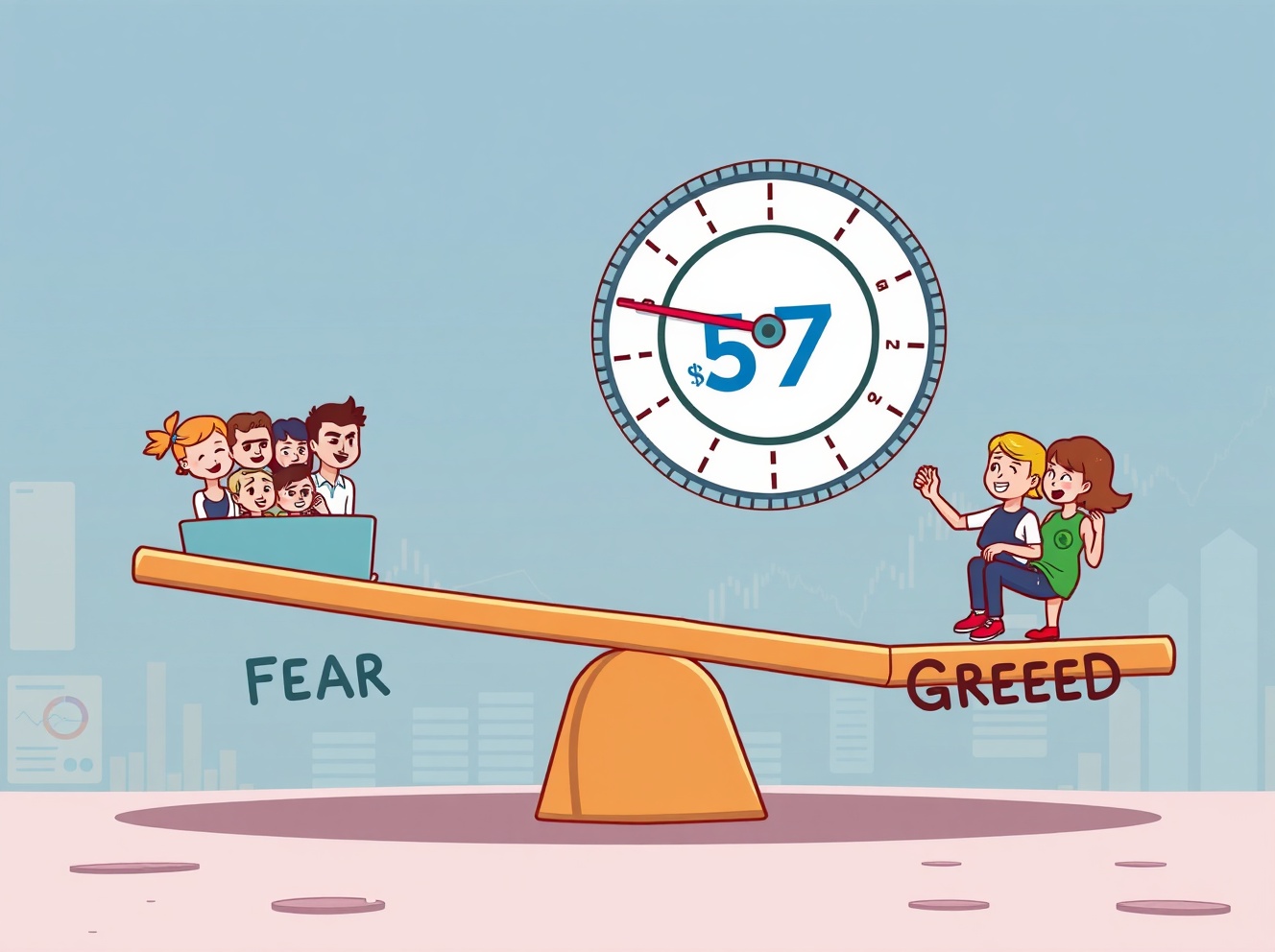
Crypto Fear & Greed Index Soars: Market Sentiment Shifts to ‘Greed’ for First Time in 100 Days
Global cryptocurrency markets witnessed a pivotal psychological shift this week as the widely-tracked Crypto Fear & Greed Index surged 13 points to 61, decisively entering ‘Greed’ territory for the first time since October 10 of last year. This dramatic move, reported by market data provider Alternative.me, marks a significant departure from the prolonged ‘Fear’ and ‘Neutral’ phases that have characterized investor sentiment for over three months. The index’s climb coincides with a notable period of relative stability and cautious optimism across major digital assets, prompting analysts to scrutinize the underlying drivers and potential implications for the 2025 market trajectory.
Crypto Fear & Greed Index Enters a New Phase
The Crypto Fear & Greed Index serves as a crucial barometer for the emotional state of the cryptocurrency market. It operates on a simple yet powerful scale from 0 to 100. A reading of 0 signifies ‘Extreme Fear,’ often seen during severe market downturns and capitulation events. Conversely, a score of 100 represents ‘Extreme Greed,’ typically associated with market tops and euphoric buying. The index’s calculation relies on a sophisticated, multi-factor model designed to quantify sentiment from various data sources.
This model incorporates six primary components, each assigned a specific weight:
- Volatility (25%): Measures current price fluctuations against historical averages. High volatility often correlates with fear.
- Market Momentum/Volume (25%): Analyzes trading volume and price momentum. Sustained high volume on upward moves can indicate greed.
- Social Media (15%): Scans platforms like Twitter and Reddit for the volume and sentiment of cryptocurrency mentions.
- Surveys (15%): Polls market participants directly for their outlook.
- Dominance (10%): Tracks Bitcoin’s share of the total crypto market cap. Shifts can signal changing risk appetites.
- Trends (10%): Analyzes Google search volume for cryptocurrency-related terms.
The jump to 61, therefore, is not a random fluctuation. It represents a measurable consensus shift across these diverse data points. For context, the index spent much of the final quarter of 2024 oscillating between ‘Fear’ (20-45) and ‘Neutral’ (46-54). The last reading above 60 occurred alongside a major market event—a record-breaking forced liquidation cascade that shook investor confidence. The current ascent into ‘Greed’ lacks such a stark, negative catalyst, suggesting a more organic improvement in market psychology.
Analyzing the Drivers Behind the Sentiment Shift
Several concurrent factors likely contributed to this sustained sentiment improvement. First, macroeconomic conditions have shown tentative signs of stabilization. While challenges persist, perceived reductions in systemic risk can increase capital flow into speculative assets like cryptocurrencies. Second, the cryptocurrency sector itself has demonstrated resilience. Key networks have maintained high activity levels, and development progress on major protocols has continued unabated, fostering a sense of fundamental strength beneath price action.
Third, institutional engagement, while measured, has provided a floor of credibility. The maturation of regulated financial products offering exposure to digital assets has created new avenues for investment. Finally, the historical pattern of the market cannot be ignored. Extended periods of fear and consolidation have often preceded new bullish phases, a cycle well-known to veteran participants. The breach of the psychological ‘Greed’ threshold may act as a self-fulfilling signal, attracting sidelined capital and reinforcing the positive trend.
Historical Context and Market Psychology
Understanding this index requires examining its historical performance. The table below shows key sentiment zones and their typical market correlations:
| Index Range | Sentiment Zone | Typical Market Condition | Investor Behavior |
|---|---|---|---|
| 0-24 | Extreme Fear | Severe downturn, panic selling | Capitulation, avoidance |
| 25-45 | Fear | Bearish trend, high uncertainty | Caution, reduced positions |
| 46-54 | Neutral | Sideways consolidation, indecision | Wait-and-see approach |
| 55-74 | Greed | Growing optimism, upward trend | Increasing FOMO, accumulation |
| 75-100 | Extreme Greed | Market euphoria, potential bubble | Speculative frenzy, leverage |
The transition from ‘Neutral’ to ‘Greed’ is particularly significant. It often marks the point where cautious optimism transforms into active accumulation. However, analysts consistently warn that sustained readings in ‘Extreme Greed’ (above 75) have frequently preceded major market corrections. The current level of 61 suggests growing confidence but remains distant from the euphoric extremes that signal overheated conditions. This positioning indicates a market that is warming up rather than boiling over.
Potential Implications for Investors and the Market
The shift to ‘Greed’ carries several immediate implications. For retail investors, it may reduce the perceived risk of entering the market, potentially increasing retail trading volume. For institutional players, it can serve as a data point validating a more risk-on allocation strategy. Furthermore, project developers and companies within the blockchain ecosystem may find it easier to secure funding or launch new initiatives in a more optimistic climate.
Nevertheless, seasoned market observers advocate for a balanced perspective. The Crypto Fear & Greed Index is a superb tool for gauging the market’s emotional temperature, but it is not a standalone timing indicator for buying or selling. Prudent investment strategy combines sentiment analysis with fundamental research on network activity, technological development, and macroeconomic trends. A ‘Greed’ reading suggests the wind is at the market’s back, but it does not guarantee the direction or duration of the journey.
Market participants should also monitor the components driving the score. A rise fueled primarily by surging social media hype and search volume may be less sustainable than one supported by strong fundamentals and measured volume increases. The index’s multi-factor design helps mitigate this, but dissecting the contributors provides deeper insight.
Conclusion
The Crypto Fear & Greed Index’s entry into ‘Greed’ territory after more than three months represents a notable inflection point for cryptocurrency market sentiment. This shift, driven by a composite of volatility, volume, social, and survey data, reflects a measurable warming of investor psychology. While it signals growing confidence and may attract further capital, it also calls for informed caution. Historical patterns show that ‘Greed’ can evolve into ‘Extreme Greed,’ a zone often associated with heightened risk. For 2025, this movement underscores a market in transition, moving from a phase of fear and consolidation toward one of optimism and opportunity, with the Crypto Fear & Greed Index serving as a critical guidepost for navigating the emotional landscape of digital asset investing.
FAQs
Q1: What does a ‘Greed’ reading on the Crypto Fear & Greed Index actually mean?
A ‘Greed’ reading (55-74) indicates that market participants are becoming increasingly optimistic and confident. Data from volatility, trading volume, social media, and surveys collectively point to a risk-on attitude, where fear of missing out (FOMO) may begin to influence buying behavior.
Q2: Is the Crypto Fear & Greed Index a reliable buy or sell signal?
No, the index is not a direct timing signal. It is a sentiment indicator. While extreme readings (both fear and greed) have often coincided with market turning points, it should be used in conjunction with fundamental and technical analysis, not as a standalone tool for making investment decisions.
Q3: How often is the Crypto Fear & Greed Index updated?
The index is updated daily, typically reflecting data from the previous 24-hour period. This allows investors and analysts to track short-term shifts in market mood alongside price action.
Q4: What caused the index to be in ‘Fear’ for the previous three months?
The prolonged ‘Fear’ period was likely driven by a combination of macroeconomic uncertainty, regulatory developments, and a typical cyclical cooling-off period following previous market advances. It represented a phase of consolidation and cautious sentiment.
Q5: Can the index predict a cryptocurrency market crash?
Not predict, but it can warn of conditions that often precede corrections. Sustained readings in ‘Extreme Greed’ (above 75) have historically indicated overly euphoric and leveraged markets, which are more vulnerable to sharp downturns. The current ‘Greed’ reading is a step in that direction but not yet at an extreme level.
This post Crypto Fear & Greed Index Soars: Market Sentiment Shifts to ‘Greed’ for First Time in 100 Days first appeared on BitcoinWorld.


You May Also Like

Best Music AI Websites For Songs And Soundtracks

EUR/GBP Exchange Rate Surges as Bank of England Rate Hike Expectations Intensify – Market Analysis




