

Uganda Election: Internet blackout looms after Starlink’s service restriction
Following the shutdown of Starlink’s service in Uganda due to regulatory challenges, there have been mounting concerns over a potential internet blackout as the East African country heads to the polls on January 15.
For the Ugandan government and its communications regulator (Uganda Communications Commission), the crackdown on Starlink services in the country is a regulatory move over non-compliance.
However, the timing of the activity amid preparations for the general elections has raised questions over human rights violations and the blockage of internet activities.
Experts feared the sitting government was starting to seek favours in a bid to extend its reign. President Yoweri Museveni is in contention to extend his 40-year rule in the 15 January elections. His strongest challenger is expected to be Robert Kyagulanyi, popularly known as Bobi Wine, a former pop star.
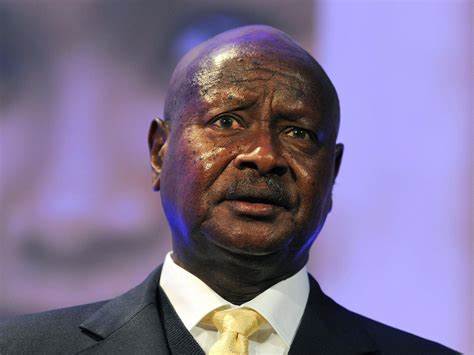 Uganda President, Yoweri Museveni
In addition, concerns are further heightened with fears that this might be a repeat of the 2021 poll, which saw widespread protests with dozens killed, while the internet was shut down for four days.
The development also follows recent internet shutdowns in Tanzania and Cameroon over widespread violence and protests during their respective 2025 general elections.
Also Read: Inside Africa’s internet shutdown economy: why and who pays the price?
Starlink shutdown in Uganda
Starlink’s service disruption in Uganda started with a 19 December 2025 directive from the Uganda Revenue Authority (URA), by restricting the importation and clearance of Starlink’s hardware and equipment. The directive mandated that any of the satellite company’s devices entering the country must require clearance from the Chief of Defence Forces.
The move to place the technology under military oversight comes amid fears of national security concerns and the ability of Starlink’s independent satellite system to bypass local infrastructure. This reportedly makes it hard for authorities to monitor or shut it down.

Meanwhile, Starlink is still under regulatory complications in Uganda.
As of April 2025, Starlink remained unauthorised in the country over delays to secure operating licenses (Public Service Provider and Public Infrastructure Provider) from the Uganda Communications Commission (UCC).
A major hurdle is the inability to comply with Uganda’s Regulation of Interception of Communications Act, which mandates that telecom operators must give the government access to communications for security purposes. However, Starlink’s independence from local terrestrial infrastructure and the company’s structure are against the requirement
The ban now prevents Ugandans from accessing Starlink’s low Earth orbit (LEO) satellite offering. Despite the presence of MTN and Airtel, the service has been critical for Uganda, where nearly 94% of households lack reliable internet access, and around 77% of the population resides in rural areas.
With the shutdown in a critical period where elections are influenced by campaigns and mobilisation across social media platforms, the motive becomes sensitive and raises questions over political agendas.

Potential internet blackout: What the government is saying
After the restriction of Starlink’s operation in Uganda, there are issues over a potential internet blackout as the election approaches. Per BBC reports, opposition candidates raised claims that the government was going to block the internet to prevent supporters from mobilising and sharing election results.
In response to the claims, the UCC said reports of a possible internet blackout were false, tagging it as ‘mere rumours.’ It also noted that the commission’s role was to guarantee uninterrupted connectivity nationwide for the sake of national security.
“As of now, there is no resolution to switch off the internet,” UCC Executive Director Nyombi Thembo said.
Also, Amina Zawedde, the most senior official at the Ministry of Communications and National Guidance, cautioned against the spread of unverified information. She noted that the Computer Misuse Act applied fully to online conduct, including the spread of false information and offensive communication.
“Government has not announced, directed, or implemented any decision to shut down the internet during the election period,” she added.
 Flag of Uganda blowing in the wind. Full page Ugandan flying flag. 3D illustration.
Peradventure an internet blackout occurred during the election, the main opposition party, the National Unity Platform (NUP), has launched an offline vote-monitoring app. The platform, called Bitchart, was unveiled by NUP leader Bobi Wine.
“As we all know, the regime is plotting an internet shutdown, as they have done in past elections, to block communication and prevent citizens from organising, verifying results, and demanding accountability,” he said in his New Year’s address.
The app uses Bluetooth technology to share result images and voting data from polling stations without internet access.
The post Uganda Election: Internet blackout looms after Starlink’s service restriction first appeared on Technext.
You May Also Like

UK Lawmakers Push Starmer to Ban Crypto Donations Amid Foreign Interference Fears

Kalshi debuts ecosystem hub with Solana and Base
