Bitcoin stabilised early 2026 after weak December trading. Rising 3% while equities softened signals possible divergence narrowing, though macro headwinds remainBitcoin stabilised early 2026 after weak December trading. Rising 3% while equities softened signals possible divergence narrowing, though macro headwinds remain

Analysts Say Bitcoin Finds Its Footing as 2026 Opens, Eyes Turn to ETF Flows

  • Bitcoin showed modest stabilisation in early 2026, rising over 3% in the first trading sessions whilst equity markets weakened.
  • December weakness stemmed from year-end market mechanics—thin liquidity, tax-loss selling, and portfolio rebalancing rather than crypto-specific shocks.
  • Bitfinex notes that slowing ETF-related selling into year-end suggests significant de-risking has already occurred, potentially improving liquidity conditions ahead.

Bitcoin (BTC) opened 2026 showing signs of stabilising after a weak, illiquid finish to 2025. 

According to a report from Bitfinex Alpha, early 2026 trading has shown a modest change in the mix. Bitcoin was up more than 3% in the first sessions of the year while equities softened, a shift that traders are watching for signs the short-term divergence could narrow.

What Really Caused Bitcoin’s December Weakness

Bitfinex’s note argues that Bitcoin’s late-December weakness was less about a fresh crypto-specific shock and more about year-end market mechanics. Trading liquidity thinned, volatility dropped, and BTC moved sideways in a relatively tight band. 

Moreover, the report attributes the soft tone to tax-loss selling and portfolio rebalancing as investors closed out the year, especially since equities finished 2025 strongly while crypto lagged.

Read more: Judge Tosses Voyager Investors’ Lawsuit Against Mark Cuban Over Mavericks Crypto Deal

They then point to early 2026 as a small, tentative improvement: Bitcoin rose in the first sessions of the year while stocks eased. Bitfinex treats this as a possible short-term shift, not a confirmed trend. The key indicator they focus on is ETF flow behavior.

They say the pace of ETF-related selling slowed into year-end, which could mean a lot of the de-risking has already happened. If liquidity improves as January progresses, the next ETF flow prints will help show whether new institutional buying is returning or whether investors remain cautious.

Finally, they add context that adoption and positioning are still expanding, even if the price is choppy. They cite continued corporate treasury accumulation. An example of this is Strategy, adding a lot of Bitcoin, even though they reported a US$17.4 billion (AU$25.8 billion) unrealised loss and BitMine building a large Ethereum (ETH) position and moving into staking/validator infrastructure, as Crypto News Australia reported. 
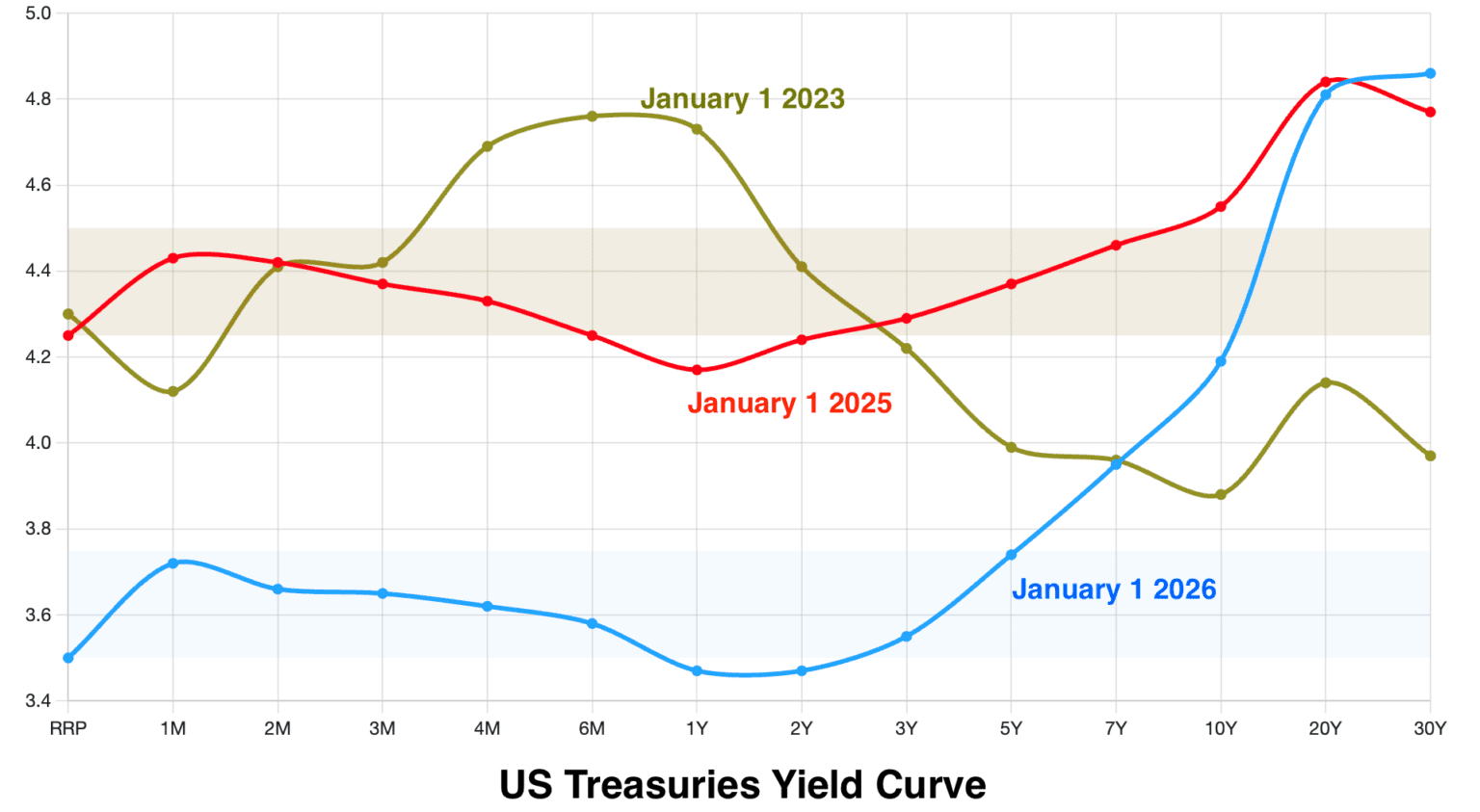
Source: Bitfinex.

What About The Macro Side?

Well, Bitfinex frames the environment as supportive in some ways but still restrictive overall. They highlight a steepening US yield curve, short-term yields expected to fall later with easing, while long-term yields stay elevated because of inflation uncertainty, heavy government issuance, and fiscal concerns. 

They also note a weaker US  dollar year-to-date. Put together, their message is that liquidity may improve, but not evenly across markets, so broad “risk-on” rallies may be harder than in looser conditions.

Anyway, the takeaway is that, yes, price is stabilising, potential selling pressure may be fading, but macro conditions and flow data will determine whether that stabilisation turns into a durable move.

Read more: XRP Breaks $2 as ETF Inflows Fuel Early-2026 Rally

The post Analysts Say Bitcoin Finds Its Footing as 2026 Opens, Eyes Turn to ETF Flows appeared first on Crypto News Australia.


Disclaimer: The articles reposted on this site are sourced from public platforms and are provided for informational purposes only. They do not necessarily reflect the views of MEXC. All rights remain with the original authors. If you believe any content infringes on third-party rights, please contact service@support.mexc.com for removal. MEXC makes no guarantees regarding the accuracy, completeness, or timeliness of the content and is not responsible for any actions taken based on the information provided. The content does not constitute financial, legal, or other professional advice, nor should it be considered a recommendation or endorsement by MEXC.

You May Also Like

ArtGis Finance Partners with MetaXR to Expand its DeFi Offerings in the Metaverse

ArtGis Finance Partners with MetaXR to Expand its DeFi Offerings in the Metaverse

By using this collaboration, ArtGis utilizes MetaXR’s infrastructure to widen access to its assets and enable its customers to interact with the metaverse.
Share
Blockchainreporter2025/09/18 00:07
Solana Price Prediction: Mobile SKR Token Launch as DeepSnitch AI Passes $1.13 Million in 2026

Solana Price Prediction: Mobile SKR Token Launch as DeepSnitch AI Passes $1.13 Million in 2026

Enjoy the videos and music you love, upload original content, and share it all with friends, family, and the world on YouTube.
Share
Blockchainreporter2026/01/11 00:40
UK crypto holders brace for FCA’s expanded regulatory reach

UK crypto holders brace for FCA’s expanded regulatory reach

The post UK crypto holders brace for FCA’s expanded regulatory reach appeared on BitcoinEthereumNews.com. British crypto holders may soon face a very different landscape as the Financial Conduct Authority (FCA) moves to expand its regulatory reach in the industry. A new consultation paper outlines how the watchdog intends to apply its rulebook to crypto firms, shaping everything from asset safeguarding to trading platform operation. According to the financial regulator, these proposals would translate into clearer protections for retail investors and stricter oversight of crypto firms. UK FCA plans Until now, UK crypto users mostly encountered the FCA through rules on promotions and anti-money laundering checks. The consultation paper goes much further. It proposes direct oversight of stablecoin issuers, custodians, and crypto-asset trading platforms (CATPs). For investors, that means the wallets, exchanges, and coins they rely on could soon be subject to the same governance and resilience standards as traditional financial institutions. The regulator has also clarified that firms need official authorization before serving customers. This condition should, in theory, reduce the risk of sudden platform failures or unclear accountability. David Geale, the FCA’s executive director of payments and digital finance, said the proposals are designed to strike a balance between innovation and protection. He explained: “We want to develop a sustainable and competitive crypto sector – balancing innovation, market integrity and trust.” Geale noted that while the rules will not eliminate investment risks, they will create consistent standards, helping consumers understand what to expect from registered firms. Why does this matter for crypto holders? The UK regulatory framework shift would provide safer custody of assets, better disclosure of risks, and clearer recourse if something goes wrong. However, the regulator was also frank in its submission, arguing that no rulebook can eliminate the volatility or inherent risks of holding digital assets. Instead, the focus is on ensuring that when consumers choose to invest, they do…
Share
BitcoinEthereumNews2025/09/17 23:52