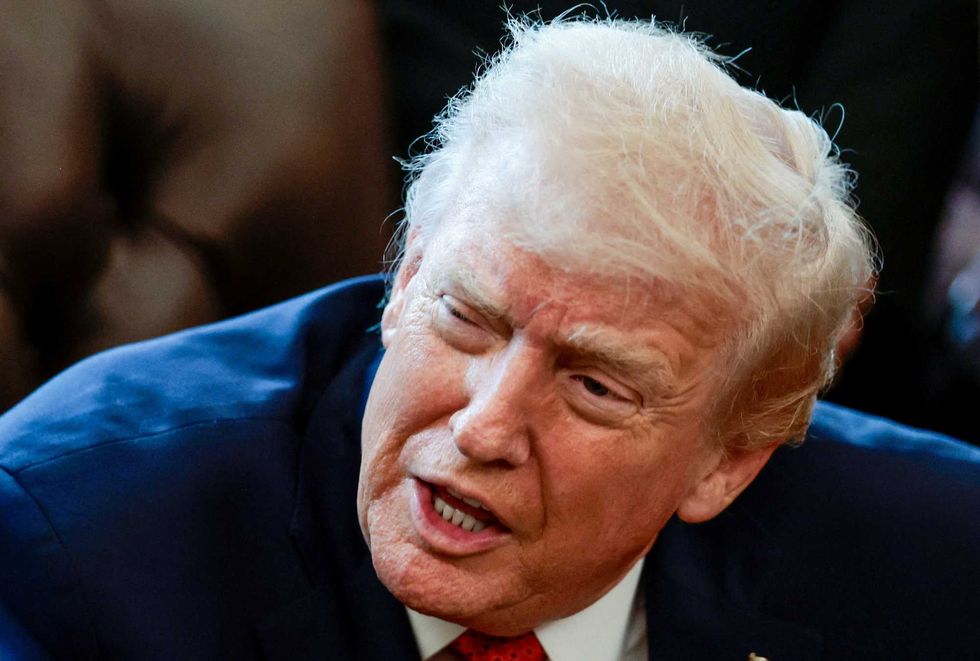
Oil prices edged up on the first day of trade in 2026, after last year posting their biggest annual loss since 2020, as Ukrainian drones targeted Russian oil facilitiesOil prices edged up on the first day of trade in 2026, after last year posting their biggest annual loss since 2020, as Ukrainian drones targeted Russian oil facilities

Oil inches up following biggest annual loss since 2020

2026/01/02 14:38
  • Ukrainian drones hit Russian refineries
  • Venezuela cuts residual fuel exports to minimum
  • US oil production hit record high in October

Oil prices edged up on the first day of trade in 2026, after last year posting their biggest annual loss since 2020, as Ukrainian drones targeted Russian oil facilities and a US blockade pressured Venezuela’s exports.

Brent crude futures climbed 35 cents on Friday to $61.20 a barrel by 04:09 GMT, while US West Texas Intermediate crude was at $57.76 a barrel, up 34 cents.

Russia and Ukraine have traded allegations of attacks on civilians on New Year’s Day despite talks overseen by US President Donald Trump that are aimed at bringing an end to the nearly four-year-old war.

Kyiv has been intensifying strikes against Russian energy infrastructure in recent months, aiming to cut off Moscow’s sources of financing for its military campaign in Ukraine.

And in the latest action by Trump’s administration to increase pressure on Venezuelan President Nicolas Maduro, Washington on Wednesday imposed sanctions on four companies and associated oil tankers it said were operating in Venezuela’s oil sector.

The US blockade aims to keep sanctioned tankers from entering or leaving Venezuela and is forcing state energy company PDVSA to resort to extreme solutions to avoid shutting down refining units as residual fuel inventories build up.

The Brent and WTI benchmarks recorded annual losses of nearly 20 percent in 2025, the steepest since 2020, as concerns about oversupply and tariffs outweighed geopolitical risks. It was the third straight year of losses for Brent, the longest such streak on record.

The muted movement in oil prices reflected a struggle between short-term geopolitical risks and longer-term market fundamentals that point towards oversupply ahead of next week’s Opec+ meeting, Priyanka Sachdeva, a senior market analyst at Phillip Nova said in a note, with WTI prices skewed towards the $55 to $65 per barrel range in the first quarter.

Further reading:

  • IEA cuts 2026 oil glut forecast for first time since May
  • As crude prices fall, Opec+ diplomats brace for an oil glut
  • Saudi Arabia’s policy trilemma: Oil, debt and deficits in 2026

The Organization of the Petroleum Exporting Countries and its allies will meet virtually on January 4.

Traders are widely expecting Opec+ to continue pausing output hikes in the first quarter, said June Goh, a senior analyst at Sparta Commodities.

“2026 will be an important year on assessing Opec+ decisions for balancing supply,” she said, adding that China would continue to build crude stockpiles in the first half that would provide a floor to oil prices.

In the US, oil production hit a record high of 13.87 million barrels per day in October, according to the Energy Information Administration on Wednesday. Crude stocks fell while gasoline and distillate inventories rose last week on robust refining activity, the EIA reported.


Market Opportunity
Polytrade Logo
Polytrade Price(TRADE)
$0.05593
$0.05593$0.05593
+2.06%
USD
Polytrade (TRADE) Live Price Chart
Disclaimer: The articles reposted on this site are sourced from public platforms and are provided for informational purposes only. They do not necessarily reflect the views of MEXC. All rights remain with the original authors. If you believe any content infringes on third-party rights, please contact service@support.mexc.com for removal. MEXC makes no guarantees regarding the accuracy, completeness, or timeliness of the content and is not responsible for any actions taken based on the information provided. The content does not constitute financial, legal, or other professional advice, nor should it be considered a recommendation or endorsement by MEXC.

You May Also Like

The Channel Factories We’ve Been Waiting For

The Channel Factories We’ve Been Waiting For

The post The Channel Factories We’ve Been Waiting For appeared on BitcoinEthereumNews.com. Visions of future technology are often prescient about the broad strokes while flubbing the details. The tablets in “2001: A Space Odyssey” do indeed look like iPads, but you never see the astronauts paying for subscriptions or wasting hours on Candy Crush.  Channel factories are one vision that arose early in the history of the Lightning Network to address some challenges that Lightning has faced from the beginning. Despite having grown to become Bitcoin’s most successful layer-2 scaling solution, with instant and low-fee payments, Lightning’s scale is limited by its reliance on payment channels. Although Lightning shifts most transactions off-chain, each payment channel still requires an on-chain transaction to open and (usually) another to close. As adoption grows, pressure on the blockchain grows with it. The need for a more scalable approach to managing channels is clear. Channel factories were supposed to meet this need, but where are they? In 2025, subnetworks are emerging that revive the impetus of channel factories with some new details that vastly increase their potential. They are natively interoperable with Lightning and achieve greater scale by allowing a group of participants to open a shared multisig UTXO and create multiple bilateral channels, which reduces the number of on-chain transactions and improves capital efficiency. Achieving greater scale by reducing complexity, Ark and Spark perform the same function as traditional channel factories with new designs and additional capabilities based on shared UTXOs.  Channel Factories 101 Channel factories have been around since the inception of Lightning. A factory is a multiparty contract where multiple users (not just two, as in a Dryja-Poon channel) cooperatively lock funds in a single multisig UTXO. They can open, close and update channels off-chain without updating the blockchain for each operation. Only when participants leave or the factory dissolves is an on-chain transaction…
Share
BitcoinEthereumNews2025/09/18 00:09
Sui Ecosystem Gains Spotlight as Taipei Builders Demo Day Highlights New DeFi Ideas

Sui Ecosystem Gains Spotlight as Taipei Builders Demo Day Highlights New DeFi Ideas

Sui Taipei Builders’ Demo Day brings developers, investors, and enthusiasts together to present blockchain projects. The Sui ecosystem will host the Taipei Builders
Share
LiveBitcoinNews2026/01/03 00:00
Stability World AI Makes AI Accessible and Ownable for People

Stability World AI Makes AI Accessible and Ownable for People

Stability World AI blends AI agents with blockchain incentives to promoting trust, accessibility, shared ownership of AI through user-driven governance.
Share
Blockchainreporter2026/01/03 00:00