

Ethereum Reasserts Control of DeFi TVL as Competing Chains Struggle to Close the Gap

Sentora’s tweet landed like a cold splash of water across DeFi feeds on Thursday: “Ethereum DeFi TVL remains dominant, and has become increasingly dominant last year. Do you expect this trend to hold, or could other chains start catching up?” The chart he attached, a stacked share graphic from DeFiLlama, makes the point in one blunt visual: the blue representing Ethereum occupies far more of the picture than any other protocol family, and after the turbulence of 2021–2022, it has settled into a commanding share through 2023–2025.
That rise didn’t happen by accident. Ethereum’s advantage stems from deep liquidity, an entrenched developer ecosystem, and the network effects of composability: things built on Ethereum can easily interoperate with a vast array of smart contracts, wallets, oracles and tooling. When large pools of assets sit in a chain’s protocols, market makers, yield aggregators and traders follow. Those flows, in turn, attract more builders and users, a virtuous circle that has been hard for rivals to break.
The chart suggests two important phases. Early on, many chains carved out slices of the total-value-locked pie as cheaper, faster alternatives to Ethereum appeared. But in the most recent year shown, the blue band expands again, implying capital reconsolidation on Ethereum and on Ethereum-native Layer 2s. That consolidation reflects a broader industry recalibration: where once many actors chased low fees, they increasingly prioritized liquidity and security, and those qualities still tend to live where the bulk of assets and developer attention are.
Still, dominance on a chart is not inevitability in practice. Competing chains and Layer 2 networks are not standing still. A number of rollups and alternative smart-contract platforms have spent the last two years improving developer tools, growing ecosystems, and carving out niche use-cases. Some have succeeded in attracting liquidity through aggressive incentives or by offering differentiated UX for specific verticals like gaming, NFTs, or fast payments. The churn of innovators means market share can shift if users and builders decide the trade-offs are worth it.
Ethereum’s Blue Wave
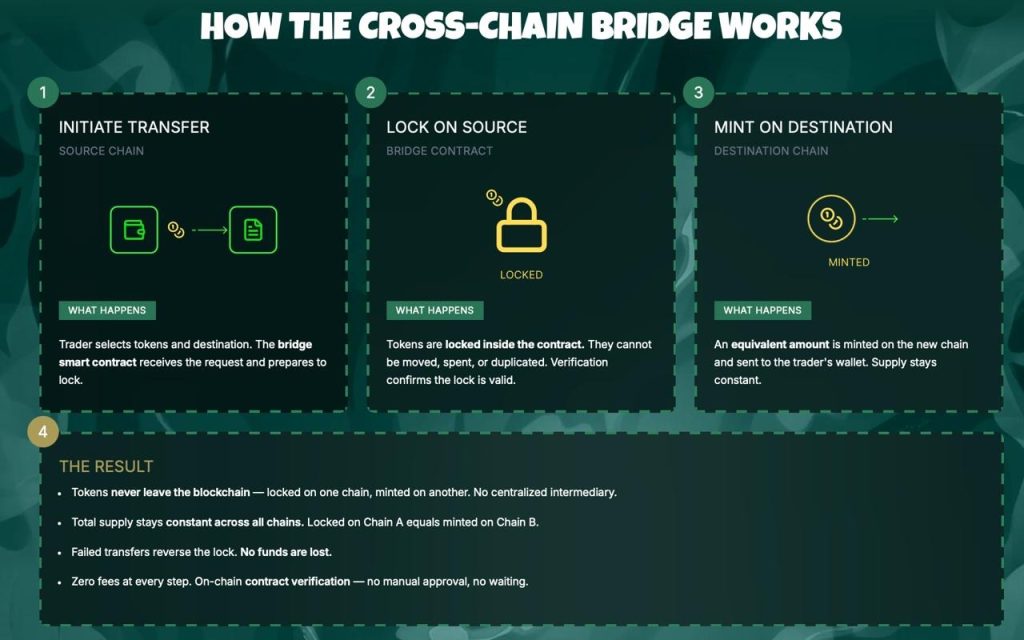
Which factors will determine whether other chains can catch up? Cost and speed matter, but so do composability and capital depth. A new chain can offer near-zero fees and fast finality, but without deep liquidity, its lending markets and AMMs will remain shallow. Bridges and cross-chain liquidity protocols can mitigate that, but bridges introduce their own security risks and fragmentation. Developers, too, weigh the familiarity of Ethereum tooling against the promise of emerging platforms; migration costs aren’t only technical, they’re social and economic.
Regulatory clarity will also play a role. Institutional capital and risk-averse liquidity providers tend to favor environments that feel safer from a compliance perspective. If regulators make lines clearer, or if a rival network builds an easier onramp for fiat and institutions, that could accelerate change. Conversely, regulatory pressure on alternative chains could reinforce Ethereum’s advantage if market participants see it as the safer default.
Layer 2s complicate the narrative in an important way. Many of the gains depicted in the Ethereum band are as much about rollups and scaling solutions that sit on top of Ethereum as they are about the base chain itself. If Layer 2 adoption continues to accelerate, Ethereum’s share of global DeFi TVL could persist even while users benefit from lower costs and faster transactions. In that sense, “Ethereum” in the chart increasingly means the wider Ethereum stack, not only the base-layer transactions that gas fees reflect.
So will the trend hold? For the short-to-medium term, the safest bet is that Ethereum and its Layer 2 ecosystem will remain the gravitational center of DeFi. But the industry is dynamic: a chain that offers a superior user experience, solves for liquidity without undue centralization, or deeply integrates with web2 rails could still carve a meaningful share from the incumbent. The race is less about a single leapfrog moment and more about an accumulation of wins, developer mindshare, security credibility, institutional onramps and pockets of user demand.
Sentora’s question is exactly the kind of provocation that keeps the market honest. Charts capture where value sits today; the next year will show whether those blue swaths are the start of a multi-year hegemony or merely the current shape of a market still in motion. Either way, the map of DeFi is likely to look very different in five years than it does now, but whether it will be more consolidated or more fractured is the argument playing out in real time.


You May Also Like
Pepe Coin Price Prediction 2026: Pepeto Presale Gains as EDX Markets Files for National Bank Charter

Bitcoin Depot Reports $3.7M Loss after Breach of Corporate Wallets




