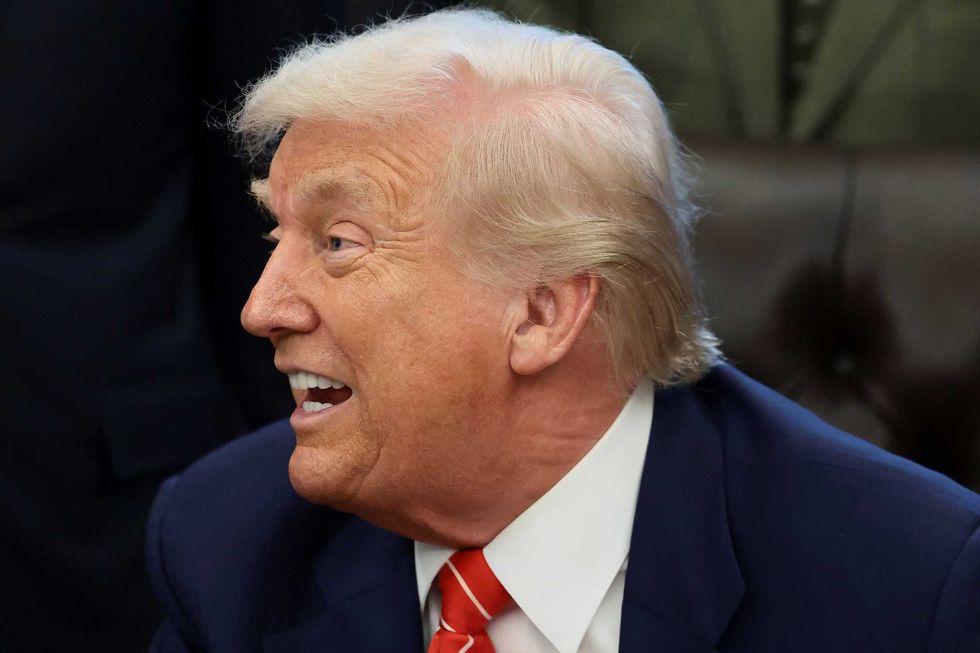
The United States has delayed new tariffs on Chinese semiconductors until 2027, extending a pause that keeps duties at zero while preserving leverage in a long-The United States has delayed new tariffs on Chinese semiconductors until 2027, extending a pause that keeps duties at zero while preserving leverage in a long-

U.S. Pushes China Chip Tariffs to 2027, Keeps Pressure on Semiconductors

2025/12/25 23:08
2 min read

The United States has delayed new tariffs on Chinese semiconductors until 2027, extending a pause that keeps duties at zero while preserving leverage in a long-running trade dispute. The decision gives chip buyers and supply chains temporary certainty, yet it signals that Washington still plans to act later if conditions change.

The move comes as global governments continue to treat semiconductors as strategic assets. As a result, trade tools remain central to broader efforts to reshape technology supply chains.

Tariff Delay Extends Section 301 Action

The delay stems from a Section 301 investigation led by the Office of the United States Trade Representative into China’s semiconductor policies. The probe began in late 2024 and focused on alleged state support for China’s chip industry, including mature or “legacy” semiconductors used in cars, appliances, and industrial equipment.

Under the final decision, the tariff rate stays at zero for 18 months. Any increase will not take effect before June 23, 2027. In addition, U.S. officials must announce the final rate at least 30 days before enforcement, giving companies time to adjust sourcing and contracts.

For now, the delay reduces immediate cost pressure on U.S. manufacturers that still rely on Chinese chips. At the same time, it keeps the threat of future tariffs alive, allowing Washington to revisit the issue as trade talks and industrial policy evolve.

Tariffs Add to a Long History of Chip Tensions

The postponed action does not replace existing measures. A separate 50 percent tariff on certain Chinese semiconductors, introduced earlier, already took effect at the start of 2025. That layer remains in place and continues to shape trade flows between the two countries.

Semiconductors have played a growing role in U.S. trade policy since the late 2010s. Earlier tariff rounds targeted a wide range of Chinese technology goods. More recently, Washington has paired tariffs with export controls and domestic subsidies to reduce reliance on overseas chip production.

By delaying the new tariff until 2027, the United States adds flexibility to that strategy. Officials can monitor market conditions, domestic chip capacity, and China’s policy response before locking in higher duties. Meanwhile, companies face a familiar pattern: short-term stability, followed by longer-term uncertainty.

Together, these steps show how semiconductors remain at the center of U.S.–China economic rivalry, with tariffs used less as a shock tool and more as a calibrated lever.

Market Opportunity
Union Logo
Union Price(U)
$0.000958
$0.000958$0.000958
+9.11%
USD
Union (U) Live Price Chart
Disclaimer: The articles reposted on this site are sourced from public platforms and are provided for informational purposes only. They do not necessarily reflect the views of MEXC. All rights remain with the original authors. If you believe any content infringes on third-party rights, please contact service@support.mexc.com for removal. MEXC makes no guarantees regarding the accuracy, completeness, or timeliness of the content and is not responsible for any actions taken based on the information provided. The content does not constitute financial, legal, or other professional advice, nor should it be considered a recommendation or endorsement by MEXC.

You May Also Like

WSJ demands 'ugly' Trump apologize to the Supreme Court

WSJ demands 'ugly' Trump apologize to the Supreme Court

The conservative learning Wall Street Journal blasted President Donald Trump for “smearing” members of the Supreme Court who overruled his unilateral tariff policy
Share
Alternet2026/02/21 10:31
Logitech G Drops a Wide Array Of New Products And Innovations At Logitech G PLAY 2025

Logitech G Drops a Wide Array Of New Products And Innovations At Logitech G PLAY 2025

Logitech G PLAY 2025 is a live-streamed global gaming event that brings together press, partners, creators, and fans to explore the future of gaming. The array of products and experiences included major innovations across PC and console gaming, esports, sim racing, and streaming tools, along with partnerships with McLaren Racing, NVIDIA and more.
Share
Hackernoon2025/09/18 05:42
Today’s NYT Pips Hints And Solutions For Thursday, September 18th

Today’s NYT Pips Hints And Solutions For Thursday, September 18th

The post Today’s NYT Pips Hints And Solutions For Thursday, September 18th appeared on BitcoinEthereumNews.com. It’s Thursday and I am incredibly sore and tired after really hitting the weights and the yoga mat hard this week. Sore is good! It takes pain to reduce pain, or at least that’s my experience with exercise. We must exercise our minds as well, and what better way to do that than with a fun puzzle game about placing dominoes in the correct tiles. Come along, my Pipsqueaks, let’s solve today’s Pips! Looking for Wednesday’s Pips? Read our guide right here. How To Play Pips In Pips, you have a grid of multicolored boxes. Each colored area represents a different “condition” that you have to achieve. You have a select number of dominoes that you have to spend filling in the grid. You must use every domino and achieve every condition properly to win. There are Easy, Medium and Difficult tiers. Here’s an example of a difficult tier Pips: Pips example Screenshot: Erik Kain As you can see, the grid has a bunch of symbols and numbers with each color. On the far left, the three purple squares must not equal one another (hence the equal sign crossed out). The two pink squares next to that must equal a total of 0. The zig-zagging blue squares all must equal one another. You click on dominoes to rotate them, and will need to since they have to be rotated to fit where they belong. Not shown on this grid are other conditions, such as “less than” or “greater than.” If there are multiple tiles with > or < signs, the total of those tiles must be greater or less than the listed number. It varies by grid. Blank spaces can have anything. The various possible conditions are: = All pips must equal one another in this group. ≠ All pips…
Share
BitcoinEthereumNews2025/09/18 08:59