BitcoinWorld Crucial Bitcoin Long-Term Holder Supply Hits 8-Month Low: What’s Next for BTC Price? New data reveals a significant shift in the Bitcoin market. TheBitcoinWorld Crucial Bitcoin Long-Term Holder Supply Hits 8-Month Low: What’s Next for BTC Price? New data reveals a significant shift in the Bitcoin market. The

Crucial Bitcoin Long-Term Holder Supply Hits 8-Month Low: What’s Next for BTC Price?

2025/12/16 18:50
5 min read
For feedback or concerns regarding this content, please contact us at crypto.news@mexc.com

BitcoinWorld

Crucial Bitcoin Long-Term Holder Supply Hits 8-Month Low: What’s Next for BTC Price?

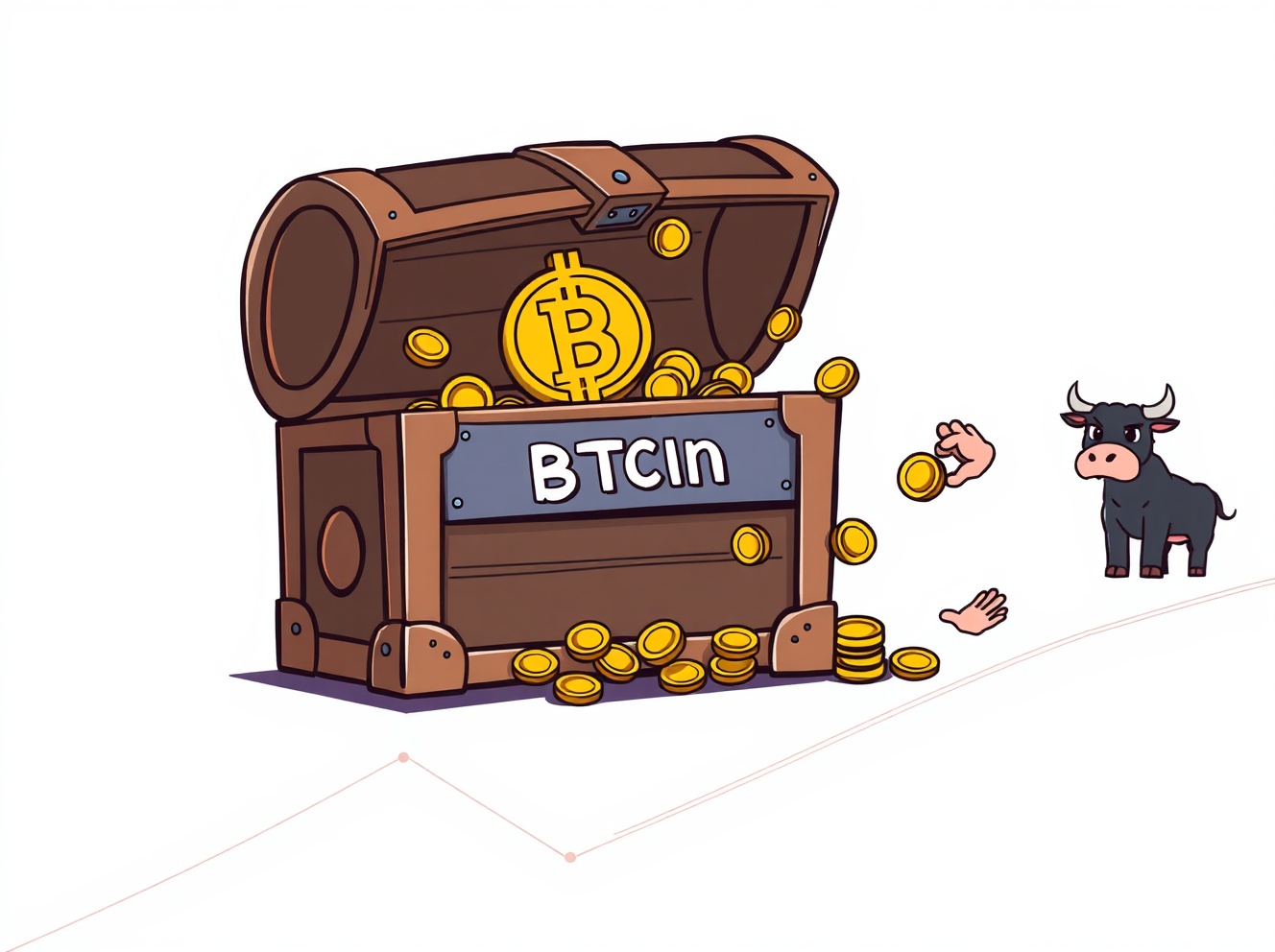
New data reveals a significant shift in the Bitcoin market. The Bitcoin long-term holder supply has just plunged to its lowest point in eight months. This key metric, which tracks coins held for over 155 days, now sits at just 14.3 million BTC. For investors and traders, this movement signals a potential change in market dynamics that could impact price action in the coming weeks.

What Does the Falling Bitcoin Long-Term Holder Supply Mean?

According to on-chain analytics firm Glassnode, the amount of Bitcoin held by long-term investors has dropped by a staggering 760,000 BTC in just 30 days. This cohort now controls 71.9% of the circulating supply, the smallest share since April. Typically, these holders are seen as the bedrock of the market—their conviction often provides stability. Therefore, a sustained decrease in their holdings suggests they are taking profits or redistributing assets, which can introduce selling pressure.

Why Are Long-Term Bitcoin Holders Selling Now?

This trend raises an important question: what motivates these steadfast investors to sell? Several factors could be at play. First, the recent price appreciation may have triggered profit-taking. Second, macroeconomic uncertainty or a shift in risk appetite might be influencing their decisions. Finally, some may be rotating capital into other assets. Regardless of the reason, the effect is clear: a notable portion of the most resilient supply is now in motion.

Here are the immediate implications of this shift:

  • Increased Market Liquidity: More coins are moving from cold storage to exchanges or new wallets.
  • Potential Volatility: This influx can lead to higher price swings as supply meets demand.
  • Sentiment Indicator: It acts as a gauge of confidence among the most committed investors.

Could This Trigger a Bitcoin Price Correction?

Technical analysis adds another layer to this story. Cointelegraph reports that if Bitcoin breaks below key support levels, a correction toward $68,500 could be possible. The reduction in Bitcoin long-term holder supply often precedes such technical moves, as it removes a layer of buy-and-hold support from the market. However, it’s crucial to remember that market cycles are complex. This selling could also represent a healthy redistribution, setting the stage for a new wave of accumulation at different price points.

How Should Investors Interpret This Data?

For the everyday crypto enthusiast, this news isn’t necessarily a cause for alarm. Instead, it’s a critical data point. Understanding the flow of the Bitcoin long-term holder supply helps you gauge market phases. Are we in a distribution phase where early investors cash out? Or is this a temporary shake-out? Monitoring these on-chain metrics provides context that price charts alone cannot offer.

Consider these actionable insights:

  • Watch Key Levels: Pay close attention to the $68,500 support zone mentioned in analyses.
  • Diversify Your Analysis: Combine on-chain data like holder supply with technical and fundamental research.
  • Avoid Emotional Decisions: Market shifts driven by long-term holders are part of normal cycles.

The Bottom Line on Bitcoin’s Market Health

In conclusion, the drop in Bitcoin long-term holder supply to an 8-month low is a pivotal market event. It highlights a period of realized profits and portfolio rebalancing by Bitcoin’s most steadfast investors. While this introduces near-term uncertainty and potential for a price correction, it also reflects the natural, maturing flow of a robust asset. The true test will be whether new, long-term conviction emerges to absorb this supply.

Frequently Asked Questions (FAQs)

What is the Bitcoin long-term holder supply?
It refers to the total amount of Bitcoin held in wallets that have not moved their coins for more than 155 days, indicating a strong holding conviction.

Why is a decrease in long-term holder supply significant?
A decrease suggests these investors are selling or moving coins, which can increase market supply and potentially lead to selling pressure, affecting the Bitcoin price.

Does this mean Bitcoin’s price will definitely fall?
Not necessarily. While it can indicate selling pressure, market outcomes depend on many factors, including new buyer demand and broader macroeconomic conditions.

Where can I track Bitcoin long-term holder supply data?
On-chain analytics platforms like Glassnode and CryptoQuant provide this data and other key metrics for market analysis.

How does this affect my investment strategy?
It serves as a useful sentiment indicator. Conservative investors might see it as a sign to be cautious, while others may view it as a normal market cycle event.

What was the previous low for this metric?
The current level of 14.3 million BTC is the lowest the Bitcoin long-term holder supply has been since April, eight months ago.

Share Your Thoughts

Did this analysis help you understand the current Bitcoin market shift? If you found it valuable, share this article with your network on social media to spark a conversation about on-chain data and market trends. Your insights matter!

To learn more about the latest Bitcoin trends, explore our article on key developments shaping Bitcoin price action and institutional adoption.

This post Crucial Bitcoin Long-Term Holder Supply Hits 8-Month Low: What’s Next for BTC Price? first appeared on BitcoinWorld.

Market Opportunity
Belong Logo
Belong Price(LONG)
$0.00152
$0.00152$0.00152
-2.18%
USD
Belong (LONG) Live Price Chart
Disclaimer: The articles reposted on this site are sourced from public platforms and are provided for informational purposes only. They do not necessarily reflect the views of MEXC. All rights remain with the original authors. If you believe any content infringes on third-party rights, please contact crypto.news@mexc.com for removal. MEXC makes no guarantees regarding the accuracy, completeness, or timeliness of the content and is not responsible for any actions taken based on the information provided. The content does not constitute financial, legal, or other professional advice, nor should it be considered a recommendation or endorsement by MEXC.

You May Also Like

The Role of Reference Points in Achieving Equilibrium Efficiency in Fair and Socially Just Economies

The Role of Reference Points in Achieving Equilibrium Efficiency in Fair and Socially Just Economies

This article explores how a simple change in the reference point can achieve a Pareto-efficient equilibrium in both free and fair economies and those with social justice.
Share
Hackernoon2025/09/17 22:30
Cryptos Signal Divergence Ahead of Fed Rate Decision

Cryptos Signal Divergence Ahead of Fed Rate Decision

The post Cryptos Signal Divergence Ahead of Fed Rate Decision appeared on BitcoinEthereumNews.com. Crypto assets send conflicting signals ahead of the Federal Reserve’s September rate decision. On-chain data reveals a clear decrease in Bitcoin and Ethereum flowing into centralized exchanges, but a sharp increase in altcoin inflows. The findings come from a Tuesday report by CryptoQuant, an on-chain data platform. The firm’s data shows a stark divergence in coin volume, which has been observed in movements onto centralized exchanges over the past few weeks. Bitcoin and Ethereum Inflows Drop to Multi-Month Lows Sponsored Sponsored Bitcoin has seen a dramatic drop in exchange inflows, with the 7-day moving average plummeting to 25,000 BTC, its lowest level in over a year. The average deposit per transaction has fallen to 0.57 BTC as of September. This suggests that smaller retail investors, rather than large-scale whales, are responsible for the recent cash-outs. Ethereum is showing a similar trend, with its daily exchange inflows decreasing to a two-month low. CryptoQuant reported that the 7-day moving average for ETH deposits on exchanges is around 783,000 ETH, the lowest in two months. Other Altcoins See Renewed Selling Pressure In contrast, other altcoin deposit activity on exchanges has surged. The number of altcoin deposit transactions on centralized exchanges was quite steady in May and June of this year, maintaining a 7-day moving average of about 20,000 to 30,000. Recently, however, that figure has jumped to 55,000 transactions. Altcoins: Exchange Inflow Transaction Count. Source: CryptoQuant CryptoQuant projects that altcoins, given their increased inflow activity, could face relatively higher selling pressure compared to BTC and ETH. Meanwhile, the balance of stablecoins on exchanges—a key indicator of potential buying pressure—has increased significantly. The report notes that the exchange USDT balance, around $273 million in April, grew to $379 million by August 31, marking a new yearly high. CryptoQuant interprets this surge as a reflection of…

Share
BitcoinEthereumNews2025/09/18 01:01
A7 leaks reveal Russia’s influence over Eastern European elections with crypto

A7 leaks reveal Russia’s influence over Eastern European elections with crypto

The post A7 leaks reveal Russia’s influence over Eastern European elections with crypto appeared on BitcoinEthereumNews.com. Blockchain analytics firm Elliptic has flagged a cache of leaked data from businesses controlled by sanctioned Moldovan oligarch and Kremlin ally Ilan Shor. The files, leaked earlier this month, provide a detailed look inside the A7 group, an operation based in Russia, operating a specialized “sanctions evasion-as-a-service.” Elliptic’s analysis of the data shows that several crypto wallets have processed stablecoin transactions worth $8 billion over the past 18 months, tracing the digital money flow from Russian-affiliated entities to political operations in Moldova as the country prepares to hold its parliamentary elections. Reports mentioned that Shor’s switch to digital assets was necessary because of his controversial past. A7 document leaks show Russia’s influence using crypto According to several reports, Shor fled Israel after he was convicted in 2017 for his role in the theft of $1 billion from Moldovan banks. Shor ended up in Russia, with the country granting him citizenship. The United States later sanctioned him in 2022, accusing him of making efforts to undermine democracy in Moldova. From his position as a fugitive, Shor started the A7 group in 2024, creating a structured connection for the expertise he had cultivated. In the report released by Elliptic, it claimed that A7 group is partly owned by Russia’s state-owned Promsvyazbank (PSB), a bank that has been sanctioned for financing Russia’s defense industry, tying A7 as a de facto arm of the country’s financial warfare apparatus. The scale of the operation is quite big, with Shor reportedly boasting to Vladimir Putin in a statement earlier this month that A7 had carried out transactions worth 7.5 trillion rubles, which is approximately $89 billion, for Russian businesses in ten months. While the mechanisms of operations were not clear to people at the time, the A7 leaks now provide a detailed look into the blueprint…
Share
BitcoinEthereumNews2025/09/27 18:58