OpenAI became the guy everyone kept running into in 2025, both for good and bad reasons, drawing just as much admiration as it does criticisms.
And now, the company with the biggest losses ever recorded in the history of earth ($1.4 trillion) has become Yahoo Finance’s Company of the Year.
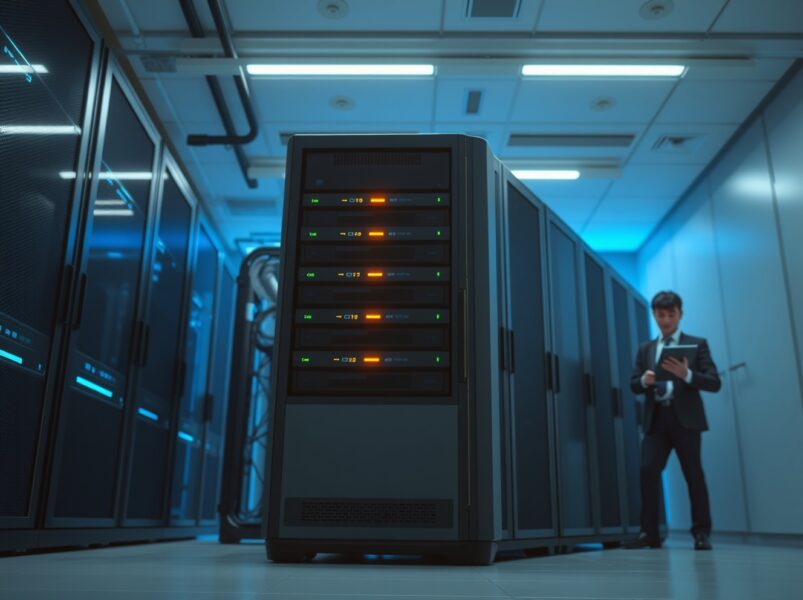
Investors watched OpenAI convert into a for-profit structure, chase its own data centers and hardware, sign huge agreements with Microsoft, Oracle, AMD, and Nvidia, and push toward a possible trillion-dollar IPO.
Private shares jumped 153% this year, landing the startup a $500 billion value. CFO Sarah Friar told Yahoo Finance’s Brian Sozzi, “It’s been a year where we have really hit kind of this day one of the next phase for OpenAI,” adding that the ecosystem had “started to move toward us to help us create this future.”
The award came three years after the launch of ChatGPT 3.5, which set off the latest AI wave.
Tracking OpenAI’s surge through markets
When OpenAI CEO Sam Altman announced a multibillion-dollar deal with AMD on Oct. 6, AMD shares jumped 24% in a single day, just as AMD CEO Lisa Su was saying that the partnership would lay the “foundation” for the AI world.
Oracle stock climbed 38% after revealing a $300 billion data center deal with OpenAI in July, while CoreWeave tripled from March to October on news of three supply deals.
HSBC projected that OpenAI’s consumer LLM revenue would reach $129 billion by 2030 and enterprise LLM revenue would hit $386 billion.
OpenAI now reports 800 million weekly active users, 1 million business customers, and $13 billion in 2025 revenue, but Cryptopolitan had since reported that a $1 trillion IPO could come as early as late 2026, with internal targets placing 2030 revenue at $200 billion. Getting there means aggressive spending.
The company has promised $300 billion to Oracle, $250 billion to Microsoft, $38 billion to Amazon, and $22.4 billion to CoreWeave, with plans to buy up to 6 gigawatts of AMD GPUs at a chip cost of $150 billion and 10 gigawatts of Nvidia GPUs costing around $300 billion for chips and roughly $500 billion total for the full build-out.
A Broadcom partnership adds 10 gigawatts of custom chips to the mix.
Sarah defended the strategy by pointing to growth decisions made years earlier. “The compute that we’ve used in 2025, we didn’t just find in ’25,” she said.
Compute capacity grew from 200 megawatts in 2023 to 2 gigawatts in 2025, while ARR rose from $2 billion to more than $20 billion. She added, “We just see no reason to stop right now in terms of the requirements and the need for compute.”
But the numbers rattled investors. The company has raised nearly $50 billion, and HSBC expects a $207 billion funding gap by 2030. Investor Brad Gerstner asked Sam, “How can a company with $13 billion in revenues make $1.4 trillion of spend commitments?” Sam answered, “If you want to sell your shares, I’ll find you a buyer.”
Sarah later said the U.S. government should guarantee AI-related debt, which triggered backlash and a quick reversal.
Following OpenAI’s new rivals and risks
DA Davidson’s top analyst Gil Luria argued that OpenAI must focus on what it does best; LLMs and chatbots. He said things went sideways when the company tried building chips, hardware, and full data centers. The fear of an AI bubble hit its major partners.
Oracle fell 23% in November and another 11% after earnings.AMD dropped 15%.CoreWeave sank 45%. Microsoft slipped 5%. Luria said Oracle’s price falling below its deal-announcement level showed investors doubted it would ever get paid.
Nvidia revealed a $500 billion chip backlog stretching to late 2026, signaling strong demand despite bubble worries.
Competition also tightened. Google’s Gemini 3 scored industry benchmarks. Salesforce CEO Marc Benioff praised the model, and former Intel CEO Pat Gelsinger did too. Anthropic raised $15 billion from Nvidia and Microsoft and is targeting an IPO.
Sam issued a “code red” memo and shifted resources toward ChatGPT. On Dec. 11, the company released ChatGPT 5.2 and secured a licensing deal plus $1 billion from Disney. Sarah said the focus is speeding up model updates. She expects more personalization, app links, and “super agent” features.
Analysts say Microsoft will likely get priority in any cutbacks because of its ownership rights. RBC estimated that over half of Oracle’s AI backlog comes from OpenAI, putting it at risk. CoreWeave faces even more danger after borrowing heavily for its build-out.
Nvidia and Broadcom remain shielded by diverse customers, while AMD sees its early bet on OpenAI as leverage with new buyers. Benchmark’s Cody Acree said AMD has used a slow, steady playbook to gain server share.
Get $50 free to trade crypto when you sign up to Bybit now
Source: https://www.cryptopolitan.com/openai-is-yahoo-finances-company-of-the-year/