We’ve already surrendered our digital agency to centralized platforms, and with AI, the consequences will be even less reversible.We’ve already surrendered our digital agency to centralized platforms, and with AI, the consequences will be even less reversible.

AI is being built behind closed doors, and that’s a dangerous mistake | Opinion

4 min read

Disclosure: The views and opinions expressed here belong solely to the author and do not represent the views and opinions of crypto.news’ editorial.

Artificial intelligence is quietly reshaping every corner of modern life. From how we search the web to how we invest, learn, and vote, AI models now mediate some of our most critical decisions. But behind the growing convenience lies a deeper, more urgent concern: the public has no visibility into how these models work, what they’re trained on, or who benefits from them.

This is déjà vu.

We’ve lived through this before with social media, entrusting a small group of companies with unprecedented power over public discourse. This resulted in algorithmic opacity, monetized outrage, and the erosion of shared reality. This time, it’s not just our feeds at risk, but our decision-making systems, legal frameworks, and core institutions.

And we’re walking into it with our eyes wide shut.

A centralized future is already taking shape

Today’s AI landscape is dominated by a handful of powerful labs operating behind closed doors. These companies train large models on massive datasets—scraped from the internet, sometimes without consent—and release them in products that shape billions of digital interactions each day. These models aren’t open to scrutiny. The data isn’t auditable. The outcomes aren’t accountable.

This centralization isn’t just a technical issue. It’s a political and economic one. The future of cognition is being built in black boxes, gated behind legal firewalls, and optimized for shareholder value. As AI systems become more autonomous and embedded in society, we risk turning essential public infrastructure into privately governed engines.

The question isn’t whether AI will transform society; it already has. The real issue is whether we have any say in how that transformation unfolds.

The case for decentralized AI

There is, however, an alternative path—one that is already being explored by communities, researchers, and developers around the world.

Rather than reinforcing closed ecosystems, this movement suggests building AI systems that are transparent by design, decentralized in governance, and accountable to the people who power them. This shift requires more than technical innovation—it demands a cultural realignment around ownership, recognition, and collective responsibility.

In such a model, data isn’t merely extracted and monetized without acknowledgment. It is contributed, verified, and governed by the people who generate it. Contributors can earn recognition or rewards. Validators become stakeholders. And systems evolve with public oversight rather than unilateral control.

While these approaches are still early in development, they point toward a radically different future—one in which intelligence flows peer-to-peer, not top-down.

Why can’t transparency wait

The consolidation of AI infrastructure is happening at breakneck speed. Trillion-dollar firms are racing to build vertically integrated pipelines. Governments are proposing regulations but struggling to keep up. Meanwhile, trust in AI is faltering. A recent Edelman report found that only 35% of Americans trust AI companies, a significant drop from previous years.

This trust crisis isn’t surprising. How can the public trust systems that they don’t understand, can’t audit, and have no recourse against?

The only sustainable antidote is transparency, not just in the models themselves, but across every layer: from how data is gathered, to how models are trained, to who profits from their use. By supporting open infrastructure and building collaborative frameworks for attribution, we can begin to rebalance the power dynamic.

This isn’t about stalling innovation. It’s about shaping it.

What shared ownership could look like

Building a transparent AI economy requires rethinking more than codebases. It means revisiting the incentives that have defined the tech industry for the past two decades.

A more democratic AI future might include public ledgers that trace how data contributions influence outcomes, collective governance over model updates and deployment decisions, economic participation for contributors, trainers, and validators, and federated training systems that reflect local values and contexts.

They are starting points for a future where AI doesn’t just answer to capital but to a community.

The clock is ticking

We still have a choice in how this unfolds. We’ve already seen what happens when we surrender our digital agency to centralized platforms. With AI, the consequences will be even more far-reaching and less reversible. 

If we want a future where intelligence is a shared public good, not a private asset, then we must begin building systems that are open, auditable, and fair.

It starts with asking a simple question: Who should AI ultimately serve?
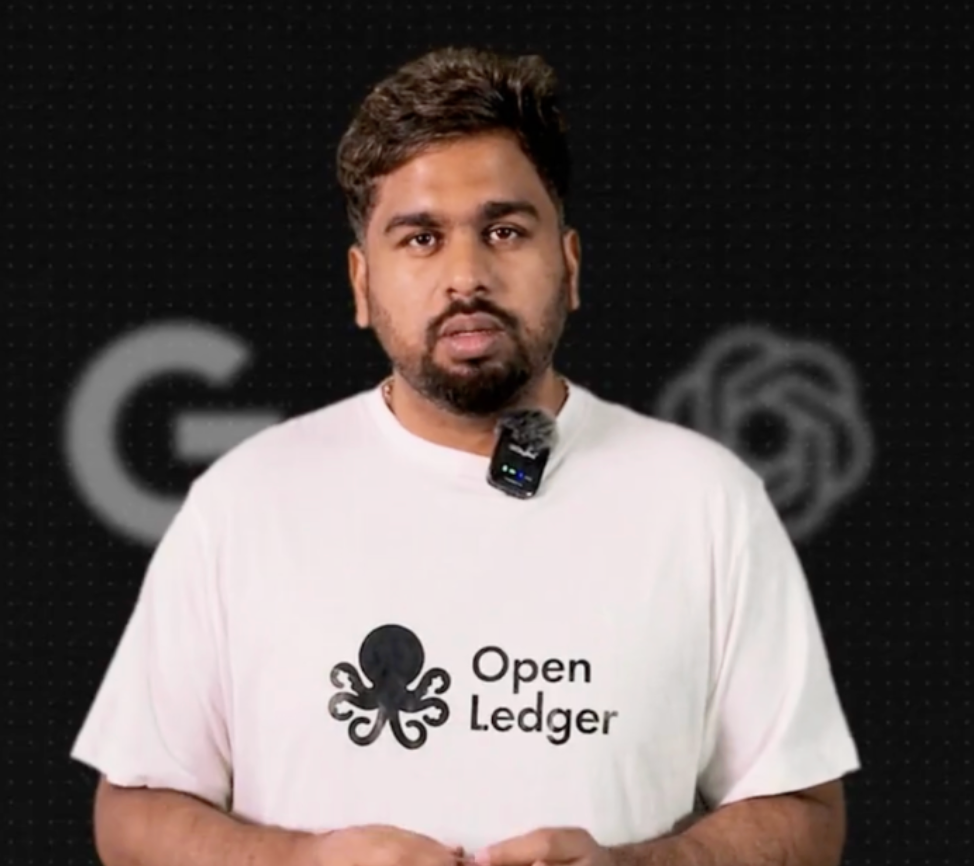
Ram Kumar
Ram Kumar

Ram Kumar is a core contributor at OpenLedger, a new economic layer for AI where data contributors, model builders, and application developers are finally recognized and rewarded for the value they create. With extensive experience handling multi-billion-dollar enterprise accounts, Ram has successfully worked with global giants such as Walmart, Sony, GSK, and the LA Times. 


Market Opportunity
null Logo
null Price(null)
--
----
USD
null (null) Live Price Chart
Disclaimer: The articles reposted on this site are sourced from public platforms and are provided for informational purposes only. They do not necessarily reflect the views of MEXC. All rights remain with the original authors. If you believe any content infringes on third-party rights, please contact service@support.mexc.com for removal. MEXC makes no guarantees regarding the accuracy, completeness, or timeliness of the content and is not responsible for any actions taken based on the information provided. The content does not constitute financial, legal, or other professional advice, nor should it be considered a recommendation or endorsement by MEXC.
Tags:

You May Also Like

‘One Battle After Another’ Becomes One Of This Decade’s Best-Reviewed Movies

‘One Battle After Another’ Becomes One Of This Decade’s Best-Reviewed Movies

The post ‘One Battle After Another’ Becomes One Of This Decade’s Best-Reviewed Movies appeared on BitcoinEthereumNews.com. Topline Critics have hailed Paul Thomas Anderson’s “One Battle After Another,” starring Leonardo DiCaprio, as a “masterpiece,” indicating potential Academy Awards success as it boasts near-perfect scores on review aggregators Metacritic and Rotten Tomatoes based on early reviews. Leonardo DiCaprio stars in “One Battle After Another,” which opens in theaters next week. (Photo by Jeff Spicer/Getty Images for Warner Bros. Pictures) Getty Images for Warner Bros. Pictures Key Facts “One Battle After Another” boasts a nearly perfect 97 out of a possible 100 on Metacritic based on its first 31 reviews, making it the highest-rated movie of this decade on Metacritic’s best movies of all time list. The movie also has a 96% score on Rotten Tomatoes based on the first 56 reviews, with only two reviews considered “rotten,” or negative. The Associated Press hailed the movie as “an American masterpiece,” noting the movie touches on topical political themes and depicts a society where “gun violence, white power and immigrant deportations recur in an ongoing dance, both farcical and tragic.” The movie stars DiCaprio as an ex-revolutionary who reunites with former accomplices to rescue his 16-year-old daughter when she goes missing, and Anderson has said the movie was inspired by the 1990 novel, “Vineland.” Most critics have described the movie as an action thriller with notable chase scenes, which jumps in time from DiCaprio’s character’s early days with fictional revolutionary group, the French 75, to about 15 years later, when he is pursued by foe and military leader Captain Steven Lockjaw, played by Sean Penn. The Warner Bros.-produced film was made on a big budget, estimated to be between $130 million and $175 million, and co-stars Penn, Benicio del Toro, Regina Hall and Teyana Taylor. When Will ‘one Battle After Another’ Open In Theaters And Streaming? The move opens in…
Share
BitcoinEthereumNews2025/09/18 07:35
Best Crypto to Buy as Saylor & Crypto Execs Meet in US Treasury Council

Best Crypto to Buy as Saylor & Crypto Execs Meet in US Treasury Council

The post Best Crypto to Buy as Saylor & Crypto Execs Meet in US Treasury Council appeared on BitcoinEthereumNews.com. Michael Saylor and a group of crypto executives met in Washington, D.C. yesterday to push for the Strategic Bitcoin Reserve Bill (the BITCOIN Act), which would see the U.S. acquire up to 1M $BTC over five years. With Bitcoin being positioned yet again as a cornerstone of national monetary policy, many investors are turning their eyes to projects that lean into this narrative – altcoins, meme coins, and presales that could ride on the same wave. Read on for three of the best crypto projects that seem especially well‐suited to benefit from this macro shift:  Bitcoin Hyper, Best Wallet Token, and Remittix. These projects stand out for having a strong use case and high adoption potential, especially given the push for a U.S. Bitcoin reserve.   Why the Bitcoin Reserve Bill Matters for Crypto Markets The strategic Bitcoin Reserve Bill could mark a turning point for the U.S. approach to digital assets. The proposal would see America build a long-term Bitcoin reserve by acquiring up to one million $BTC over five years. To make this happen, lawmakers are exploring creative funding methods such as revaluing old gold certificates. The plan also leans on confiscated Bitcoin already held by the government, worth an estimated $15–20B. This isn’t just a headline for policy wonks. It signals that Bitcoin is moving from the margins into the core of financial strategy. Industry figures like Michael Saylor, Senator Cynthia Lummis, and Marathon Digital’s Fred Thiel are all backing the bill. They see Bitcoin not just as an investment, but as a hedge against systemic risks. For the wider crypto market, this opens the door for projects tied to Bitcoin and the infrastructure that supports it. 1. Bitcoin Hyper ($HYPER) – Turning Bitcoin Into More Than Just Digital Gold The U.S. may soon treat Bitcoin as…
Share
BitcoinEthereumNews2025/09/18 00:27
Google and PayPal Team Up to Power Next-Gen Commerce for Billions

Google and PayPal Team Up to Power Next-Gen Commerce for Billions

TLDR: Google and PayPal signed a multiyear partnership to integrate payments across Google platforms and boost digital commerce experiences. PayPal’s checkout, payouts, and Hyperwallet will be embedded into Google products, including Ads, Play, and Cloud services. The partnership uses Google’s AI to create agent-based shopping tools and secure, frictionless payment solutions for users worldwide. PayPal [...] The post Google and PayPal Team Up to Power Next-Gen Commerce for Billions appeared first on Blockonomi.
Share
Blockonomi2025/09/18 16:15