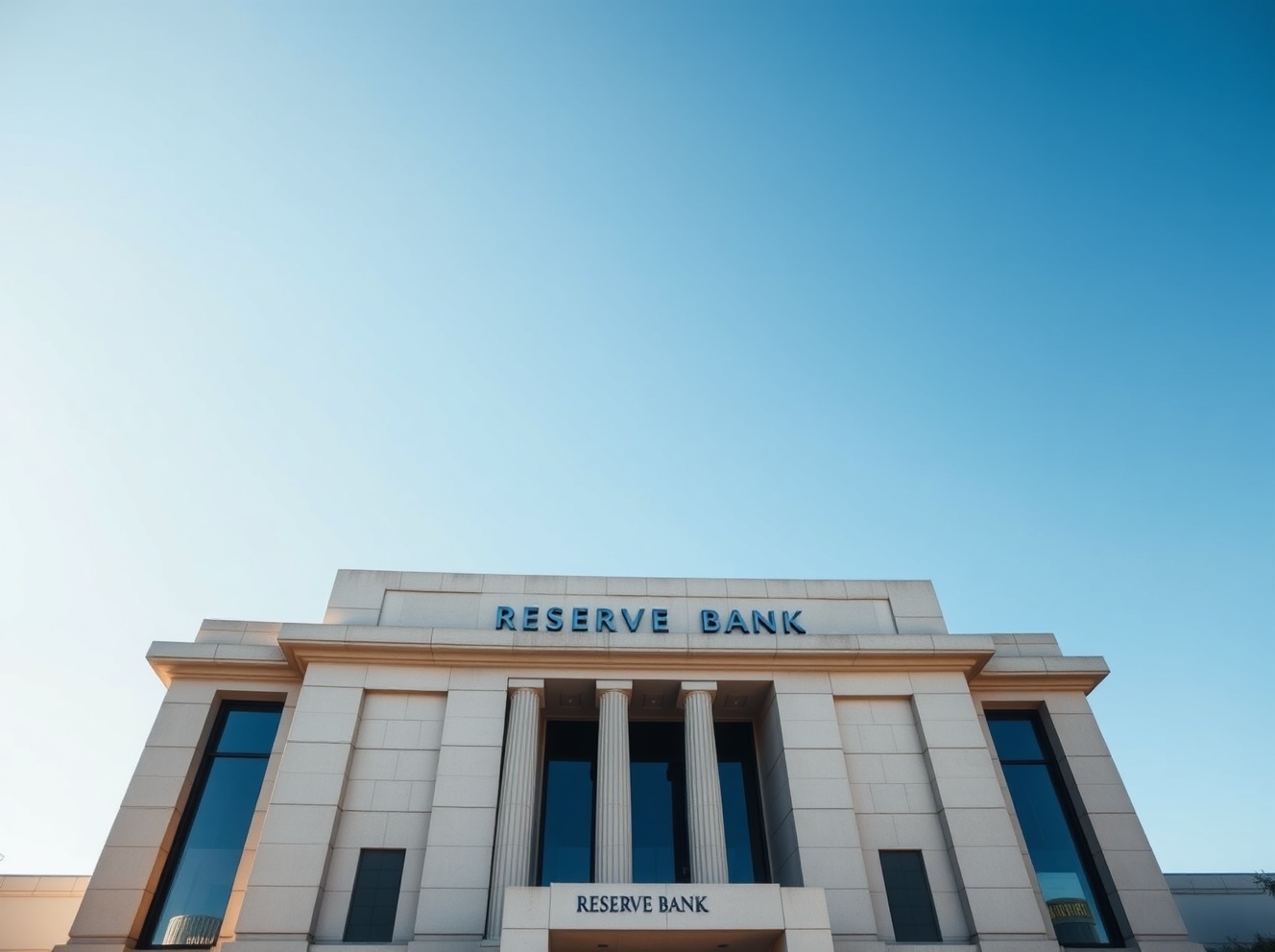
Even as borrowing costs come down, price action has stalled and then slipped, exposing a deeper issue beneath the headlines: […] The post Why Bitcoin Is FallingEven as borrowing costs come down, price action has stalled and then slipped, exposing a deeper issue beneath the headlines: […] The post Why Bitcoin Is Falling

Why Bitcoin Is Falling Even After the Fed Cuts Rates

2025/12/14 02:57
4 min read
For feedback or concerns regarding this content, please contact us at crypto.news@mexc.com

Even as borrowing costs come down, price action has stalled and then slipped, exposing a deeper issue beneath the headlines: liquidity expectations are no longer aligned with reality. This disconnect is becoming the defining feature of the current market phase.

Key Takeaways

  • Bitcoin is no longer reacting positively to rate cuts, signaling fading momentum.
  • Liquidity and capital inflows have weakened, limiting upside potential.
  • Without renewed inflows, the market is likely to remain in a consolidation phase. 

For much of the past two years, Bitcoin behaved like a high-beta macro asset. Softer monetary policy meant easier conditions, and easier conditions translated into higher prices. That relationship is now breaking down.

Instead of extending gains after the latest policy easing, Bitcoin failed to attract follow-through buying. What initially looked like a bullish response quickly turned into distribution, suggesting that traders were using strength to exit rather than build new positions.

The problem isn’t the rate cut itself. It’s what the cut failed to deliver.

Markets were positioned for a faster shift toward accommodation. When that expectation wasn’t met, enthusiasm evaporated.

Ambiguity Has Replaced Confidence

Recent messaging from the Federal Reserve has added to the tension. Rather than offering a clean roadmap, policymakers have delivered mixed signals – acknowledging areas of economic softness while simultaneously pushing back against the idea of aggressive easing.

That ambiguity has left risk markets in limbo. Investors aren’t convinced inflation is beaten, but they’re also wary of leaning into growth trades without clearer confirmation. The result is hesitation, not momentum.

READ MORE:

Crypto’s Biggest Risk Is Back – And It’s Hiding in Plain Sight

In this environment, even good news struggles to generate sustained upside.

Why Momentum Is Slipping

Beyond macro noise, market internals are flashing warning signs. Bitcoin has lost the upward rhythm that carried it through much of 2023 and 2024. Instead of grinding higher, price action is compressing, with rallies getting sold faster and bounces losing energy.

Institutional participation, once the backbone of the rally, appears to be cooling. Activity tied to regulated investment vehicles has slowed, removing a key source of steady demand. Without that bid, price becomes more sensitive to selling pressure.

On-chain data confirms the shift. Capital is no longer consistently flowing into Bitcoin. December marked a rare period where outflows outweighed inflows, a pattern that historically coincides with pauses or pullbacks rather than immediate recoveries.

A Market in Waiting Mode

Rather than bracing for sharp moves, many traders now expect stagnation. As the calendar approaches year-end, large players tend to reduce risk, not add it. That seasonal behavior further limits the chance of a sudden reversal.

From this perspective, sideways movement is not a failure of the bull market, but a symptom of exhaustion. The market needs new fuel, not new narratives.

Without a clear resurgence in capital inflows, upside attempts are likely to remain fragile.

Altcoins Under Pressure

If Bitcoin is struggling to find direction, the broader market faces an even tougher challenge. A steady stream of token unlocks is set to hit the market, adding supply in an environment where demand is already selective.

Institutional capital remains concentrated in a small number of assets, leaving many altcoins exposed to selling without sufficient buyers. In this setup, broad rallies become unlikely, and performance gaps between projects widen.

Some assets may hold up better than others, but the days of indiscriminate risk-taking appear to be on pause.

What Really Determines the Next Phase

Despite ongoing debates about election cycles, halvings, and policy shifts, the deciding factor remains simple: money flow. Markets move when capital commits, not when expectations alone change.

Until liquidity returns with conviction, Bitcoin may continue to drift rather than trend. The rate cut didn’t fail. It just wasn’t enough.

For now, crypto is in a holding pattern – waiting not for another signal, but for real capital to step back in.


The information provided in this article is for educational purposes only and does not constitute financial, investment, or trading advice. Coindoo.com does not endorse or recommend any specific investment strategy or cryptocurrency. Always conduct your own research and consult with a licensed financial advisor before making any investment decisions.

The post Why Bitcoin Is Falling Even After the Fed Cuts Rates appeared first on Coindoo.

Disclaimer: The articles reposted on this site are sourced from public platforms and are provided for informational purposes only. They do not necessarily reflect the views of MEXC. All rights remain with the original authors. If you believe any content infringes on third-party rights, please contact crypto.news@mexc.com for removal. MEXC makes no guarantees regarding the accuracy, completeness, or timeliness of the content and is not responsible for any actions taken based on the information provided. The content does not constitute financial, legal, or other professional advice, nor should it be considered a recommendation or endorsement by MEXC.

You May Also Like

This week, NFT transaction volume rebounded by 1.27% to US$108.6 million, and the number of buyers and sellers increased by more than 50%.

This week, NFT transaction volume rebounded by 1.27% to US$108.6 million, and the number of buyers and sellers increased by more than 50%.

PANews reported on September 21st that Crypto.news reported that CryptoSlam data showed that NFT market transaction volume increased by 1.27% over the past week, reaching $108.6 million. Market participation has rebounded, with the number of NFT buyers increasing by 53.24% to 276,735 and the number of NFT sellers increasing by 67.19% to 206,669. However, the number of NFT transactions decreased by 6.65% to 1,630,579. Ethereum network transaction volume reached $46.7 million, a 42.85% surge from the previous week. Mythos Chain network transaction volume reached $12.15 million, down 21.91%. Bitcoin network transaction volume reached $9.82 million, down 2.17%. This week's high-value transactions include: BOOGLE sold for 1,380 SOL ($324,846 USD) CryptoPunks #8521 sold for 55.48 ETH ($255,288 USD) CryptoPunks #4420 sold for 56.388 ETH ($254,250) CryptoPunks #2642 sold for 52.1 ETH ($239,735) CryptoPunks #1180 sold for 49.89 ETH ($232,394)
Share
PANews2025/09/21 09:01
XRP’s ‘True Value’ Could Be $32, Says BlackRock Executive

XRP’s ‘True Value’ Could Be $32, Says BlackRock Executive

Robert Mitchnick and Susan Athey’s 2018 study valued XRP up to $32 under adoption scenarios. Bitcoin is trading above the modeled fair value of $93,000 at $112,800, while XRP has remained stagnant around $3. A resurfaced research paper co-authored in 2018 by Robert Mitchnick, now Head of Digital Assets at BlackRock, has drawn fresh attention [...]]]>
Share
Crypto News Flash2025/09/22 16:40
Grayscale’s ‘first multi-crypto asset ETP’ in the works: Will BTC, ETH win?

Grayscale’s ‘first multi-crypto asset ETP’ in the works: Will BTC, ETH win?

The post Grayscale’s ‘first multi-crypto asset ETP’ in the works: Will BTC, ETH win? appeared on BitcoinEthereumNews.com. Key Takeaways What does this approval mean for investors? It allows traditional investors to access diversified exposure to major cryptocurrencies without buying tokens directly. Which cryptocurrencies are included in GDLC? Bitcoin, Ether, XRP, Solana, and Cardano. The U.S. Securities and Exchange Commission (SEC) has greenlit the Grayscale Digital Large Cap Fund (GDLC) for stock exchange trading.  The approval, coinciding with relaxed ETF listing standards, opens the door for traditional investors to access the crypto market more easily and signals growing institutional support. Grayscale CEO Peter Mintzberg weighs in Grayscale CEO Peter Mintzberg confirmed the development on X (formerly Twitter), praising the SEC’s Crypto Task Force for providing much-needed clarity to the sector. He said,  “The Grayscale team is working expeditiously to bring the FIRST multi #crypto asset ETP to market with Bitcoin, Ethereum, XRP, Solana, and Cardano.” He further added,  “Thank you to the SEC #Crypto Task Force for their continued, unmatched efforts in bringing the regulatory clarity our industry deserves.” The newly approved Grayscale Digital Large Cap Fund (GDLC) offers investors exposure to five of the world’s largest cryptocurrencies: Bitcoin [BTC], Ethereum [ETH], Ripple [XRP], Solana [SOL], and Cardano [ADA]. Impact on included tokens Following the announcement, markets reacted positively. BTC traded at $117,153.61 after a 0.69% rise in the past 24 hours, Ether climbed 2.02% to $4,579.73, XRP at $3.10 up by 3.07%, Solana at $245.94 up by 4.78%, and Cardano reached $0.9130 up by 4.85%, per CoinMarketCap. By packaging multiple cryptocurrencies into a single ETP, GDLC allows traditional investors to gain diversified crypto exposure without the need to open exchange accounts or purchase individual tokens. This green light comes just months after the SEC had delayed Grayscale’s plan to convert GDLC from an over-the-counter fund to an ETP listed on NYSE Arca. With approval now granted, the fund is…
Share
BitcoinEthereumNews2025/09/19 12:53

Trade GOLD, Share 1,000,000 USDT

Trade GOLD, Share 1,000,000 USDTTrade GOLD, Share 1,000,000 USDT

0 fees, up to 1,000x leverage, deep liquidity